Rolo9458

221 posts

Rolo9458

Rolo9458

@rolo9458

Katılım Mart 2022
118 Takip Edilen4 Takipçiler
Rolo9458
Rolo9458@rolo9458·
@NoraTheBora @SkyNews Disgusting why are we listening to a fat old man’s views on what a woman should be..absolutely appalling
English
1
0
0
1.1K
Nora
Nora@NoraTheBora·
Ann Widdecombe has possibly been murdered, and @SkyNews thinks it’s appropriate to have a man discussing whether she was a virgin. Why would whether a woman had ever had penetrative sex be relevant to her possible murder? He then went on to speculate, on mainstream media, that it was a robbery gone wrong rather than politically motivated. That may ultimately prove to be the case, but speculation about motive before the facts are established has no place in responsible news coverage. The first instinct when discussing a woman who may have been murdered should never be to reduce her to her sexual history. Ann Widdecombe deserved better. Every woman deserves better.
English
1.2K
3.3K
24.3K
1.6M
Rolo9458
Rolo9458@rolo9458·
@francesbarber13 It’s so dreadful the left constantly being kind….I read Tony Ben’s autobiography and it reminded me that people can be friends or respect others even if you don’t believe in their views.. how we have fallen into silo thought streams
English
0
0
1
1.6K
frances Barber
frances Barber@francesbarber13·
Reading, reluctantly the comments from my so called friends ‘on the Left’ Re Ann Widdecombe. I want absolutely nothing to do with you.
English
330
655
9.4K
160.7K
George Galloway
George Galloway@georgegalloway·
Notwithstanding obvious political differences my wife and I were deeply shocked at the terrible end to the life of #AnnWiddicombe with whom I served in parliament for many years and both of us frequently met in television studios. She was a unique political figure who believed strongly in her political views and expressed them most eloquently. May she rest in peace.
English
442
755
13.4K
445.2K
Rolo9458
Rolo9458@rolo9458·
@DreyfusJames Yes I watched it a few years ago..there is some great to from Walter Presents on Channel 4
English
0
0
0
340
James Dreyfus
James Dreyfus@DreyfusJames·
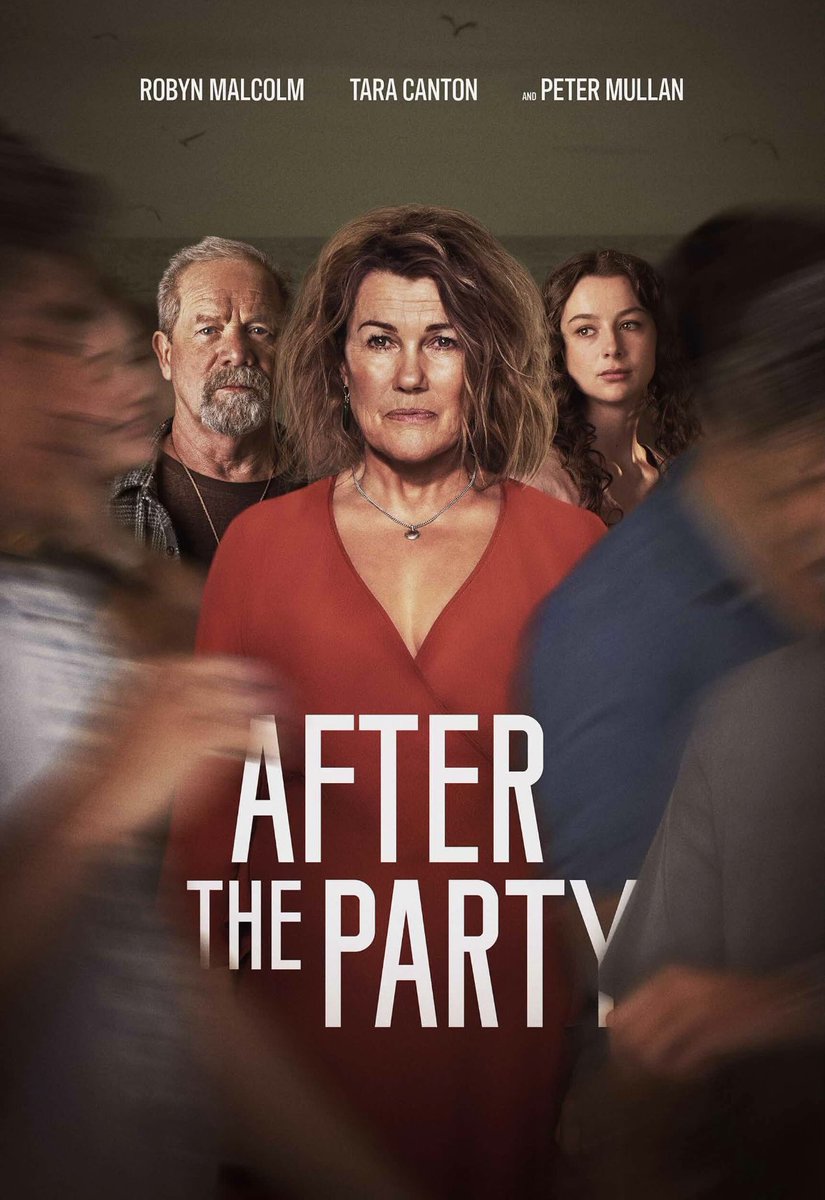
If you missed this a few years ago, it’s absolutely astonishing. With a mighty powerhouse of a performance by co-creator Robyn Malcolm, it’s a truly intense, disturbing & riveting 6 part drama. Not woke. Terrific cast. Go into it blind. On Channel 4 app. “After The Party”
James Dreyfus tweet media
English
99
32
631
30.6K
Rolo9458
Rolo9458@rolo9458·
@BethRigby Notwithstanding the delivery address by Sir Keir, who advised him to wear open necked white shirt sleeves rolled up. Couldn’t even wear a suit and tie
English
0
0
0
310
Beth Rigby
Beth Rigby@BethRigby·
The Prime Minister told a meeting of the Cabinet: “As I said yesterday, I take responsibility for these election results and I take responsibility for delivering the change we promised. “The past 48 hours have been destabilising for government and that has a real economic cost for our country and for families. “The Labour Party has a process for challenging a leader and that has not been triggered. “The country expects us to get on with governing. That is what I am doing and what we must do as a Cabinet.”
English
161
27
170
42.7K
Clive Lewis MP
Clive Lewis MP@labourlewis·
Westminster may finally be about to have the argument it has spent 40 years avoiding. If Andy Burnham returns to Parliament, the political class will know how to cover it. A leadership drama. Who is up, who is down, whether Keir Starmer can survive, whether Labour is once again turning inward. The familiar machinery of Westminster psychodrama will whirr into life. That framing misses the larger point. Burnham’s possible return matters not because of what it says about Labour’s leadership, but because of what it reveals about the British state: what it can still do, what it has forgotten how to do, and what kind of country it must become if it is serious about resilience. Britain is finally having a more serious conversation about national security. The Strategic Defence Review, the pivot back towards Europe, the recognition that hybrid warfare turns citizens, infrastructure and civic institutions into part of the front line: all of it marks a real shift in how the state thinks about its own survival. But at the centre of that conversation lies a question that the defence establishment, and most of Westminster, still does not want to answer. What kind of society do you need to be before resilience is possible? Finland is now the model everyone cites. Comprehensive security. Whole-of-society defence. Civilian preparedness woven into military planning. British strategists admire the Finnish system and ask how it might be copied. But the admiration stops short of the uncomfortable question: why does it work there? The answer is not geography or history or some mysterious quality of Finnish national character. It is structural. Nearly 80% of Finns say they would defend their country if attacked. In Britain, the figure is closer to 33%. That gap is not an accident. It exists because Finland has spent decades building a society in which people have a genuine stake in what they are being asked to defend. Energy is affordable. Housing is available. Public services function. Institutions command trust. The Nordic welfare state is not a sentimental add-on to Finnish security policy. It is the foundation of it. You cannot ask people to defend a country that does not work for them. Britain has spent 40 years building the opposite. The privatisation of essentials – energy, water, transport, housing – transferred wealth upwards from households to shareholders while making the basics of everyday life more expensive. The state, stripped of the tools to control costs at source, has been reduced to compensating after the fact. Out of every pound the Government spends on housing, 88p goes to subsidising private rents. Just 12p goes to building homes. When energy prices spiked in 2022, the Government spent £40bn in a single winter cushioning the blow, not because it had a resilient energy system but because it lacked one. Debt interest now consumes more than £100bn a year. Britain has the highest debt servicing costs in the G7: the compounding price of financing failure rather than eliminating it at source. This is what bond market dependency actually looks like. It is not an abstract fiscal condition. It is the consequence of a state that has been stripped of the supply-side tools that would let it cure the problems it now pays, indefinitely, to manage. And here is the paradox the Treasury refuses to confront. The countries that borrow most cheaply are often those that have retained the public investment model Britain abandoned. The spread between UK and Dutch borrowing costs has widened sharply not because markets fear public investment, but because they have lost confidence in a model that borrows to subsidise private failure while never addressing its causes. This is the connection Britain’s defence debate is missing. The familiar framing, that social spending is what must be sacrificed to meet the NATO target, is not merely politically toxic. It is strategically illiterate. Cutting the foundations of social cohesion to fund the hardware of national defence is self-defeating. You end up with planes and no pilots, submarines and no crew, an army that cannot recruit because the society it is meant to protect has stopped believing in itself. I think Burnham understands this. That is why his programme is more interesting than the leadership gossip suggests. What he has been building in Greater Manchester – public control of transport, expanded social housing, investment in the productive foundations of the city economy – is not a nostalgic rerun of postwar nationalisation. It is a proof of concept for a different kind of state. The Bee Network is the most visible example, but the argument behind it travels. A state that can shape markets is not condemned to subsidise their failures. A state that produces affordable energy through public generation does not need to spend tens of billions cushioning every price shock. A state with a serious public housebuilding programme does not need housing benefit to rise endlessly in line with private rents. A state that builds institutions people can see, use and trust begins to restore the civic confidence on which resilience depends. The real constraint on Britain is not money. It is capacity: the workers, institutions, supply chains and public purpose needed to turn national will into national renewal. Britain’s tragedy is not that it has run out of money. It is that after 40 years of hollowing out the state, it has made itself less able to act. Burnham’s critics will reach for the familiar warning. Borrow more, spend more, spook the gilt markets, repeat the Truss disaster. But this misunderstands both the problem and the opportunity. Bond markets do not have ideological preferences. They have functional ones. They prefer clarity, credible revenue streams, productive investment, and a state with a plan. What they punish is not public ambition but incoherence. A properly designed productive state programme would not be a leap into fiscal fantasy. It would be an attempt to end the much costlier fantasy that Britain can keep borrowing to compensate for broken markets while refusing to repair them. The defence conversation and the economic conversation need to become the same conversation. Finland did not build national resilience by choosing between welfare and security. It built resilience by understanding that they are inseparable: that a country in which the basics work, where people trust one another and the institutions around them, is one that can face danger with something more than anxiety. That is the deeper argument Burnham represents. Westminster will be tempted to treat him as a leadership story. It should resist the temptation. The question is not whether Burnham can return to parliament. It is whether Britain can return to the idea that the state should make life work. Because a country that cannot command the confidence of its people cannot truly defend itself.
English
543
809
3.6K
788.6K
Rolo9458
Rolo9458@rolo9458·
@spectator Sticky tape.. was sellotape…sticky back plastic was fab Lon
English
0
0
0
84
The Spectator
The Spectator@spectator·
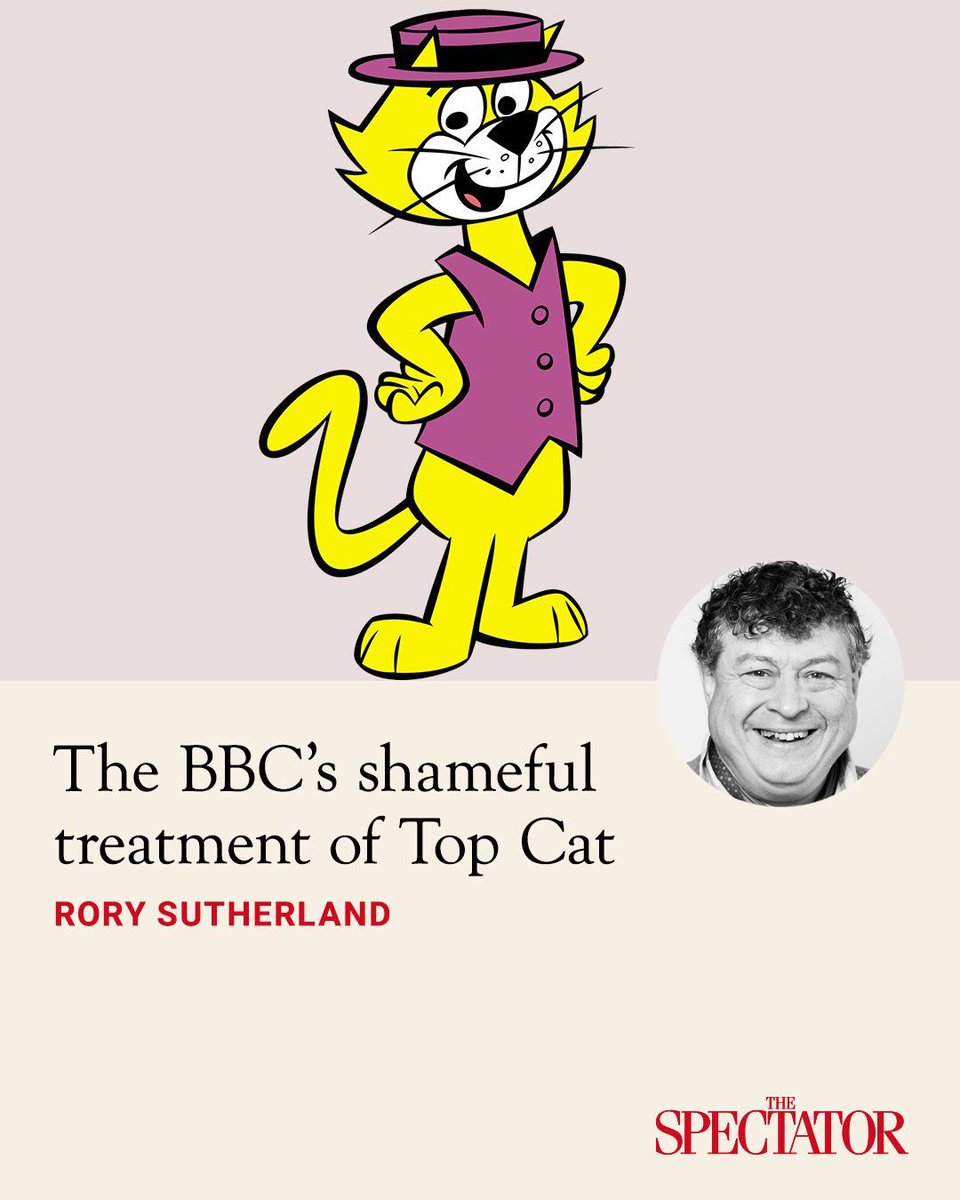
I know that from watching the BBC as a child, when two linguistic absurdities drove the seven-year-old me practically insane. One was the Blue Peter habit of referring to Sellotape as ‘sticky-backed plastic’, a phrase unspoken by anyone else in any other circumstances, except in parodies of BBC children’s programmes. Worse still was the practice of BBC continuity announcers maintaining the pretence that a cartoon which was obviously called Top Cat, which featured a theme song which made repeated reference to its protagonist as Top Cat…was somehow called Boss Cat. ✍️ Rory Sutherland Article | spectator.com/article/the-bb…
The Spectator tweet media
English
179
14
230
219.9K
Rolo9458 retweetledi
Graham Linehan
Graham Linehan@Glinner·
Geoffrey Cox *delivers one of the great English parliamentary speeches that feels lifted from the era of Disraeli and Gladstone* Catherine West *shits her pants in front of everyone*
Madeline Grant@Madz_Grant

If you want to see the best and worst of the Commons, watch Catherine West's snippy response to Geoffrey Cox. Disoriented by a rare display of brilliance in the Commons, she can only call him patronising (inevitably, before reading off a sheet) and her colleagues can only jeer

English
66
447
3.2K
86.9K
Rolo9458
Rolo9458@rolo9458·
@francesbarber13 I thought it was brilliant..didn’t realise quite how realistic it was until recent events
English
0
0
0
67
Sandy Tregent
Sandy Tregent@SandyofSuffolk·
The next tranche of celebrities swanning around the world thinking we'll be interested are: Bill Bailey in Vietnam. Alexander Armstrong in India. Julia Bradbury in Antarctica. And we've only just got over Rylan Clarke and Rob Rinder in India. 🙄 Anyone else sick of these people getting free holidays and thinking we'll somehow be interested in their take on the destinations?
English
295
85
1.6K
54.6K
Rolo9458
Rolo9458@rolo9458·
@KayBurley Hi I really enjoy your travels…do you organise Sth America trip and cruise round Australia as separate or do you organise through something like trailfinders
English
0
0
0
44
Kay Burley
Kay Burley@KayBurley·
Sea Day from South Island to Melbourne - time for a lecture about the rise fall and future of the royal Fab Four…
English
21
7
185
20.6K
Rolo9458 retweetledi
Dinah
Dinah@dinahaddie·
Sorry I can’t. I’m spending the night liking every single tweet about Catherine O’Hara.
English
36
899
20.9K
599.1K
Rolo9458 retweetledi
Amyobecause❤️
Amyobecause❤️@amyobecause·
The love for Cathrine O’Hara on social media right now might be the biggest outpouring of love and grief I’ve seen for anyone in a long time.. It’s unbelievable and so deserved. She was one of a kind.
English
41
703
12.6K
134.4K
Rolo9458 retweetledi
UnHerd
UnHerd@unherd·
‘Beliefs about other people’s beliefs about our own beliefs are usually nested in our minds like Russian dolls.’ @Docstockk on The Traitors👇 buff.ly/4e20hX0
English
0
4
9
3.3K
Sandy Tregent
Sandy Tregent@SandyofSuffolk·
Jane McDonald Pole to Pole. Amanda Holden and Alan Carr in Greece. Monty Don in Switzerland. Michael Portillo in Spain. Ben Fogle. Every bloody where. Lorraine Kelly in Norway. Rob Rinder & Rylan Clarke. Somewhere else. Again. Rick Stein in Australia. Simon Reeve. More places than even Ben Fogle. Susan Calman and Robson Green holidaying around the UK. Is this it now? Is this all TV has to offer? We're supposed to be entertained by watching rich people swan off around the world for free? And get paid for it. Really? 🙄😠🤬
English
666
681
7.5K
350.1K
Piers Morgan
Piers Morgan@piersmorgan·
Merry Christmas from the Morgans!
Piers Morgan tweet media
English
3.4K
593
22.1K
3.5M
Rolo9458
Rolo9458@rolo9458·
@strictlyxtweets He is in character ..!!!!! what if every actor/ actress came into strictly as a character they had played …
English
0
0
0
120