

Ron Funch
2.3K posts


@coffeeblack28 i find mfs like u really interesting bro. i ain't gon lie this spot is kinda like a personal thing to me you get what i'm saying. it's just like a personal vibe u feel me. what's really crazy is you wouldn't even wanted this if u ain't see me post it u get what i'm saying.
English
Probably best burger I've had in Milwaukee in recent memory

English
@chainlink4132 @ChainLinkGod @AJH_1957 How’s it easy when we’ve had a micky mouse version of staking for years? We don’t have the infrastructure in place for the volume to flow
English

@ronfunch @ChainLinkGod @AJH_1957 The tokenomics are the easiest part once there's volume flowing through the network I believe
English

x.com/i/grok/share/0…
@ChainLinkGod has nearly 200k followers. This is a very good and important example of why blindly following someone simply because of internet clout is dangerous. While Zach is likely well-intentioned, he simply doesn’t know what he’s talking about. Even Grok agrees. Read for yourself.
@Ripple is a transformative company. The #XRPL is revolutionary technology, and its design *specifically as a payments rail* is intentional… its meant to be a lean network consisting of a few trusted nodes, allowing fees to be minimal for participants. It’s NOT designed to extract fees from users. That’s the entire point. It’s meant to allow users to make payments cheaply and efficiently.
I’ll concede that #xrp influencers are just as irresponsible when they make outrageous claims of $10k a token. This is equally irresponsible and stupid.
The *main* driver of XRP price appreciation is adoption and usage of the XRPL. That’s it.
The world is a big place. Connecting every market requires liquidity in THOUSANDS of currency corridors. Historically the reserve currency (#USD) has filled that role, but digital assets like XRP can help provide neutral liquidity between markets where direct liquidity doesn’t exist.
While #RLUSD (and other stables) are used for settlement where liquidity already exists, XRP bridges where liquidity doesn’t exist.
English
@chainlink4132 @ChainLinkGod @AJH_1957 In theory the tokenomic potential sounds great. But its simply nonexistent. And I fear it won’t exist for a very long time.
English
@ronfunch @ChainLinkGod @AJH_1957 I wouldn't say $LINK has the best tokenomics but there's certainly nothing stopping them from improving
English
@chainlink4132 @ChainLinkGod @AJH_1957 Its concerning that we are having this conversation after 9 years…
English
English
@ronfunch @ChainLinkGod @AJH_1957 "Lots of other countries putting together regulation" like I said. I'd tell you to look into Japan, Australia, UAE, etc. and how they're preparing for the transition but you wouldn't listen. Go ahead and keep accumulating XRP.
English
@chainlink4132 @ChainLinkGod @AJH_1957 So why isn’t the project generating token holders revenue in those other countries?
English
@ronfunch @ChainLinkGod @AJH_1957 This is like saying what if the internet was never invented. Completely and utterly inconsequential. America also isn’t the only country in the world. Lots of other countries putting together regulation.
English
@chainlink4132 @ChainLinkGod @AJH_1957 So what, the chainlink project was dependent on Donald Trump being elected president? What if Kamala won?
English
@ronfunch @ChainLinkGod @AJH_1957 CCIP general access came out ~2 years ago, and there is not sufficient regulatory framework for the TradFi institutions testing it to implement it today (SWIFT, DTCC for example).
English
@chainlink4132 @ChainLinkGod @AJH_1957 Its been 9 years and none of that has had a positive impact on token price
English
XRP has no staking whatsoever - and staking is only one part of $LINK tokenomics. For example CCIP incentivizes holding $LINK reserves for fee payment by discounting the fee when paid in $LINK. Not to mention it's capable of being the universal gas token - no other token is positioned to contest that.
English
English
@ronfunch @ChainLinkGod @AJH_1957 Do you understand the $LINK tokenomics? This narrative is half a decade old, lots has changed.
English
@ChainLinkGod @BlackberryXRP Would love for you to bring this energy when people ask about $link tokenomics
English

@BlackberryXRP Provide an actual rebuttal to the arguments I made, or sit back down
English
@ChainLinkGod @AJH_1957 @ChainLinkGod with all due respect why are you attacking another projects tokenomics when the $link tokenomics are so poor?
English
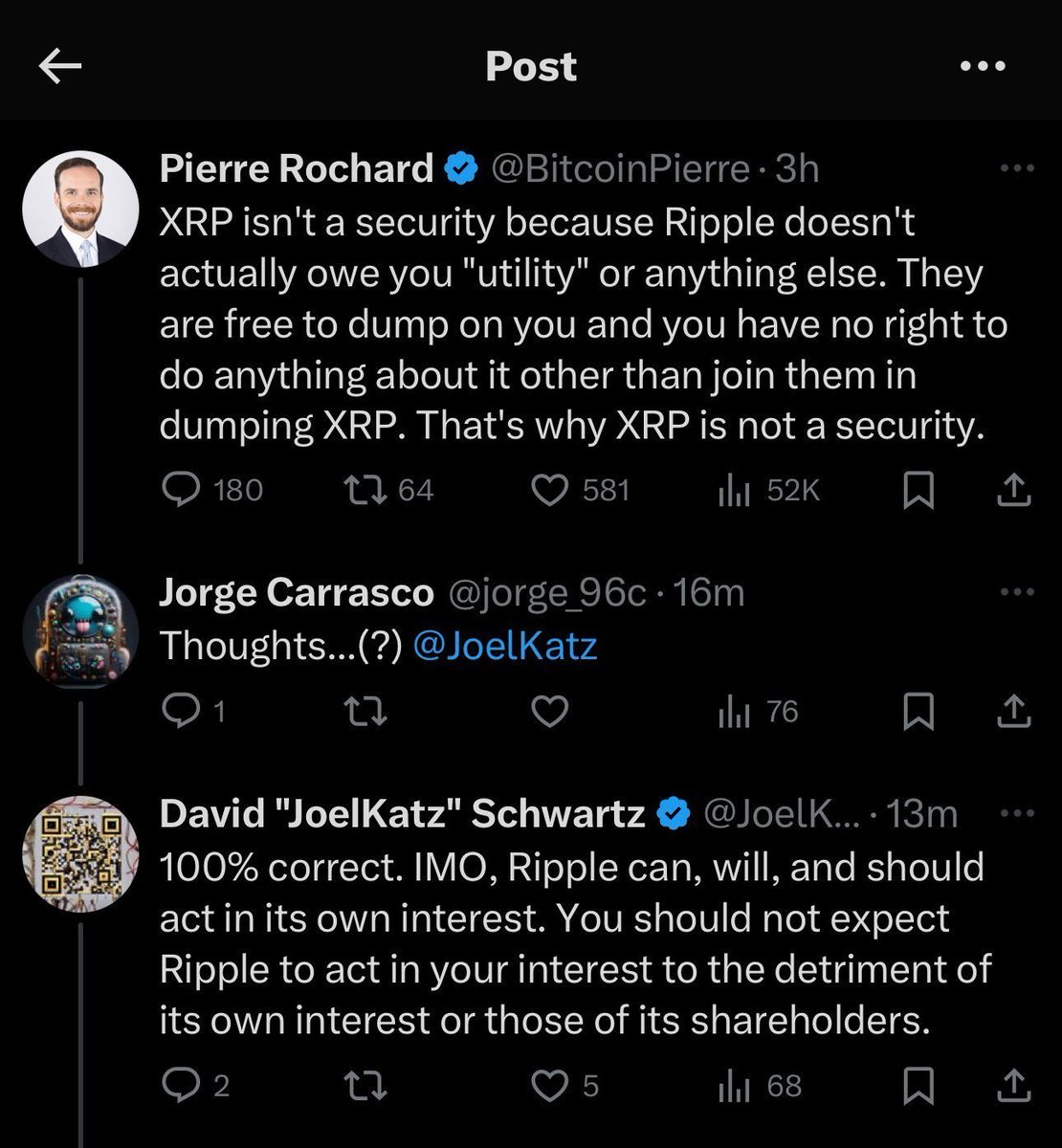
Please explain in clear terms why it is good that Ripple uses the proceeds of XRP sales (selling premined coins) to acquire real companies and fund Ripple Labs stock buybacks, to the sole benefit of Ripple Labs shareholders
x.com/ChainLinkGod/s…
Ripple Labs socializes its costs to XRP holders to fund product launches and corporate acquisitions, then privatizes the value for its own shareholders
Zach Rynes | CLG@ChainLinkGod
By owning $XRP, you are funding a company that has openly stated it will prioritize its equity shareholders over you Ripple wrote the playbook on this. Let me walk you through how it works👇 When a company sells both tokens and equity to investors, it creates two competing stakeholder groups whose economic interests may not, and often do not, align For example, when there’s excess revenue or profits, where does that value ultimately go: to equity holders via buybacks/dividends, to token holders via buybacks/staking rewards, or some split between the two? There is a fixed pot of revenue to distribute, and equity investors often have superior, clearer economic rights to that revenue that can be legally enforced, while token investors often do not Look at Circle’s recent acquisition of Interop Labs (Axelar team), Coinbase’s acquisition of Tensor, PumpFun’s acquisition of Padre, Ripple vs XRP. etc These are all situations in which equity holders benefited at the expense of, or isolation from, token holders In Ripple’s case, they have spent the past decade+ systematically selling XRP to retail while spinning a story of inevitable institutional adoption In reality, Ripple uses the proceeds of XRP sales to acquire real companies and fund Ripple Labs stock buybacks, to the sole benefit of Ripple Labs shareholders No value is created for the XRP token, even Ripple admitted under oath in court filings that the bridge currency use case of XRP is demand neutral and does not impact price Ripple Labs socializes its costs to XRP holders to fund product launches and corporate acquisitions, then privatizes the value for its own shareholders XRPL is an obsolete ghost chain that's not even in the top 40 chains by usage. It has less than 1% marketshare in RWAs and less than 0.01% in stablecoins. There is no metric the chain leads in Ripple themselves issued 90% of RLUSD on Ethereum and have now expanded it to even more chains outside of XRPL including BNY Mellon's private EVM chain and L2s The list goes on By owning XRP, you do not have complete exposure to the success of the ecosystem Ripple is building, because you do not own the equity, you own some undefined percentage of the success This issue doesn’t exist for Chainlink, because there are no equity investors. There is only the $LINK token to accrue value from the network’s growth. Even CLL employees receive long-term incentives rewards in LINK, not equity Unfortunately, depending on how you want to put it, there is no mass social media misinformation campaign driving retail towards Chainlink like we see with XRP However, Chainlink‘s clear dominance in DeFi (70%+ marketshare w/ $60B in DeFi TVL secured) and its tangible verifiable institutional adoption by the largest institutions in the world (Swift, DTCC, Euroclear, SBI, UBS, JP Morgan, Fidelity, ANZ, etc) will inevitably become too impossible to ignore While the XRP army comes up with bizarre conspiracy theories about why institutions don’t talk about XRP, enterprises adopting Chainlink have no issue publicly talking about their use of Chainlink And before you say Chainlink and Ripple/XRP are not competitors bc they do different things, I would agree from tech perspective, Chainlink actually offers useful products for banks and isn’t a retail grift Chainlink is the only unified platform that provides the critical data, interoperability, compliance, privacy, and orchestration standards that financial institutions need for advanced tokenization use cases None of these institutional use cases Chainlink powers have ever required a “bridge currency”, that is a fantasy narrative dreamt up by retail This has been proven time and time again The reality is that $LINK is the best index bet on the institutional adoption of blockchain, while $XRP is a bank themed memecoin that Ripple sells to retail to fund corporate acquisitions and stock buybacks Documented.📝
English
@ChainLinkGod @Don_ChainLink By owning $link you are funding a company with zero roadmap to repay its investors.
English
By owning $XRP, you are funding a company that has openly stated it will prioritize its equity shareholders over you
Ripple wrote the playbook on this. Let me walk you through how it works👇
When a company sells both tokens and equity to investors, it creates two competing stakeholder groups whose economic interests may not, and often do not, align
For example, when there’s excess revenue or profits, where does that value ultimately go: to equity holders via buybacks/dividends, to token holders via buybacks/staking rewards, or some split between the two?
There is a fixed pot of revenue to distribute, and equity investors often have superior, clearer economic rights to that revenue that can be legally enforced, while token investors often do not
Look at Circle’s recent acquisition of Interop Labs (Axelar team), Coinbase’s acquisition of Tensor, PumpFun’s acquisition of Padre, Ripple vs XRP. etc
These are all situations in which equity holders benefited at the expense of, or isolation from, token holders
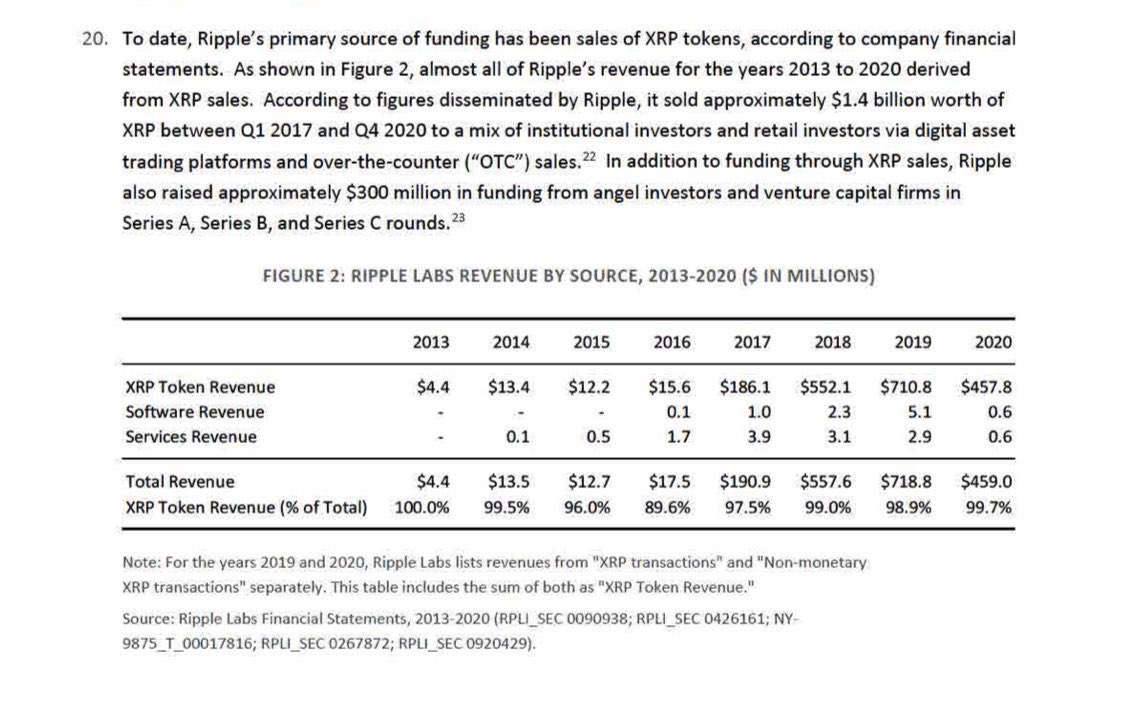
In Ripple’s case, they have spent the past decade+ systematically selling XRP to retail while spinning a story of inevitable institutional adoption
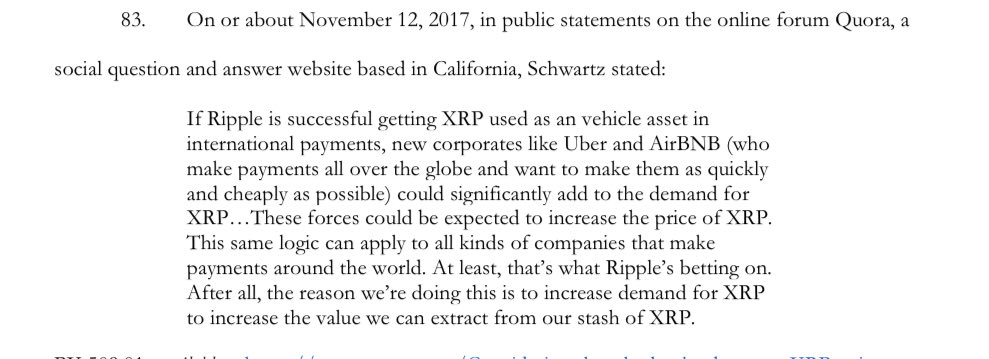
In reality, Ripple uses the proceeds of XRP sales to acquire real companies and fund Ripple Labs stock buybacks, to the sole benefit of Ripple Labs shareholders
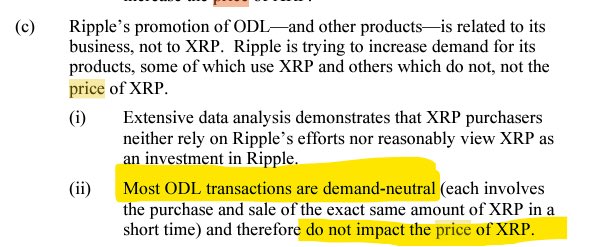
No value is created for the XRP token, even Ripple admitted under oath in court filings that the bridge currency use case of XRP is demand neutral and does not impact price
Ripple Labs socializes its costs to XRP holders to fund product launches and corporate acquisitions, then privatizes the value for its own shareholders
XRPL is an obsolete ghost chain that's not even in the top 40 chains by usage. It has less than 1% marketshare in RWAs and less than 0.01% in stablecoins. There is no metric the chain leads in
Ripple themselves issued 90% of RLUSD on Ethereum and have now expanded it to even more chains outside of XRPL including BNY Mellon's private EVM chain and L2s
The list goes on
By owning XRP, you do not have complete exposure to the success of the ecosystem Ripple is building, because you do not own the equity, you own some undefined percentage of the success
This issue doesn’t exist for Chainlink, because there are no equity investors. There is only the $LINK token to accrue value from the network’s growth. Even CLL employees receive long-term incentives rewards in LINK, not equity
Unfortunately, depending on how you want to put it, there is no mass social media misinformation campaign driving retail towards Chainlink like we see with XRP
However, Chainlink‘s clear dominance in DeFi (70%+ marketshare w/ $60B in DeFi TVL secured) and its tangible verifiable institutional adoption by the largest institutions in the world (Swift, DTCC, Euroclear, SBI, UBS, JP Morgan, Fidelity, ANZ, etc) will inevitably become too impossible to ignore
While the XRP army comes up with bizarre conspiracy theories about why institutions don’t talk about XRP, enterprises adopting Chainlink have no issue publicly talking about their use of Chainlink
And before you say Chainlink and Ripple/XRP are not competitors bc they do different things, I would agree from tech perspective, Chainlink actually offers useful products for banks and isn’t a retail grift
Chainlink is the only unified platform that provides the critical data, interoperability, compliance, privacy, and orchestration standards that financial institutions need for advanced tokenization use cases
None of these institutional use cases Chainlink powers have ever required a “bridge currency”, that is a fantasy narrative dreamt up by retail
This has been proven time and time again
The reality is that $LINK is the best index bet on the institutional adoption of blockchain, while $XRP is a bank themed memecoin that Ripple sells to retail to fund corporate acquisitions and stock buybacks
Documented.📝
English
Swift namedropping Chainlink for the 100x time and reaffirming their ongoing work together on blockchain interoperability
And yet XRP retail will read this and delude themselves into thinking this is secretly good for their bags, somehow
Funny how institutions never have an issue mentioning Chainlink publicly, but it's always a grand conspiracy about why XRP is never mentioned
something something 1,700 NDAs
Swift@swiftcommunity
What if the future of finance wasn’t just digital, but truly interoperable? Our latest trials show how Swift is helping make that a reality. We’ve completed pioneering digital asset interoperability trials with leading institutions, including BNP Paribas Securities Services, Intesa Sanpaolo and Societe Generale – FORGE, showcasing how Swift can orchestrate tokenised asset transactions across multiple platforms. This milestone builds on a broader set of recent trials, such as: ✅ ISO 20022 interoperability between blockchains with HSBC and Ant International ✅ Fiat and digital currency settlement with Citi ✅ Digital asset transaction exchange with Northern Trust and the Reserve Bank of Australia ✅ Bridging tokenised assets with UBS Asset Management and Chainlink Labs With these trials complete, we’re now adding a blockchain-based ledger to our infrastructure stack to enable real-time, 24/7 cross-border payments, in collaboration with more than 40 global banks. 👉 Read the full story: swift.com/news-events/ne… #DigitalAssets #Blockchain #Interoperability #SwiftLedger
English

Swift’s work with Chainlink & UBS is a major milestone for institutional adoption of onchain finance.
Together, Swift & Chainlink enable institutions to access blockchains while continuing to use the systems they already rely on today.
This is how global finance moves onchain.
Swift@swiftcommunity
What if the future of finance wasn’t just digital, but truly interoperable? Our latest trials show how Swift is helping make that a reality. We’ve completed pioneering digital asset interoperability trials with leading institutions, including BNP Paribas Securities Services, Intesa Sanpaolo and Societe Generale – FORGE, showcasing how Swift can orchestrate tokenised asset transactions across multiple platforms. This milestone builds on a broader set of recent trials, such as: ✅ ISO 20022 interoperability between blockchains with HSBC and Ant International ✅ Fiat and digital currency settlement with Citi ✅ Digital asset transaction exchange with Northern Trust and the Reserve Bank of Australia ✅ Bridging tokenised assets with UBS Asset Management and Chainlink Labs With these trials complete, we’re now adding a blockchain-based ledger to our infrastructure stack to enable real-time, 24/7 cross-border payments, in collaboration with more than 40 global banks. 👉 Read the full story: swift.com/news-events/ne… #DigitalAssets #Blockchain #Interoperability #SwiftLedger
English

No one’s talking about it but these types of players are no longer deserving of 10-15mil a year contracts


English

UPDATE: Swift just announced a major cross-border payments upgrade.
25+ banks will go live by June across 11 countries with faster retail cross-border payments.
Swift also confirmed the system will connect to a blockchain-based shared ledger for 24/7 tokenised payments.
English
NEW: DTCC, Clearstream, Euroclear, and BCG published a new interoperability framework for digital asset securities.
It’s now industry consensus that issuing assets on one ledger isn’t enough. Assets must move across systems while preserving ownership, lifecycle events, and compliance.
This is exactly what Chainlink is built to solve.
Chainlink is the only all-in-one platform enabling interoperable workflows across blockchains and traditional market infrastructure with built-in data, compliance, privacy, and security that meets institutional standards.
DTCC@The_DTCC
Interoperability is essential to unlocking the full potential of digital asset securities – but what does it take to embed it and support connectivity across TradFi and DeFi? We’ve collaborated with @BCG, @Clearstream and @EuroclearGroup on a new white paper that introduces a practical solution-neutral interoperability framework for capital markets. It explores how shared foundations, common interoperability building blocks, and real-world use cases can help reduce fragmentation across DLT networks and support secure, scalable adoption of digital assets securities. Read more: dtcc.com/dtcc-connectio…
English

VISA, ANZ, CHINAAMC, AND FIDELITY COMPLETE CROSS-BORDER SETTLEMENT USING CHAINLINK $LINK
English
@XassetshodlR @nicucrypto What opinion? He’s openly admitting to having shilled an asset to build a mass audience. Why believe anything he says moving forward
English
@ronfunch @nicucrypto i think that was just his opinion., we have different opinions and perspectives.
English