Roy Van Der Weide

1.3K posts

Roy Van Der Weide

Roy Van Der Weide

@rroyji

@wb_research development economist working in the areas of #inequality and #poverty reduction + love for tennis, golf and brother's art

Washington, DC Katılım Temmuz 2015
555 Takip Edilen565 Takipçiler
Roy Van Der Weide retweetledi
Jesús Fernández-Villaverde
Jesús Fernández-Villaverde@JesusFerna7026·
Let me explain why I believe modern economics is such a powerful tool for understanding the world. I’ll do this by discussing a great paper by Simone Cerreia-Vioglio, @UncertainLars, Fabio Maccheroni, and Massimo Marinacci, “Making Decisions Under Model Misspecification,” published in the Review of Economic Studies a few months ago. Imagine I want to drive from UC San Diego to UCLA, but I’ve never driven that route before. I need to build a “model of the world” to guide me, which we usually call a map. Maps are simplified representations of reality. They can’t include every detail if they’re to be useful. Borges, in his short story On Exactitude in Science, makes this point beautifully. (In practice, I don’t draw the map myself—I use an app—but someone still had to make it.) Because maps simplify, I can’t fully rely on them. Maybe last night’s storm knocked down a tree and closed a street, or there’s construction and the ramp off the highway in LA is shut down. This uncertainty matters. Suppose I’m driving to UCLA for an important talk at 11 a.m. If the ramp is closed, I might need 15 extra minutes. When should I set my alarm to arrive on time, while still getting enough sleep to give a good talk? The problem is that I can’t assign precise probabilities to all these contingencies. How likely is the fallen tree? Or new roadwork? Even the best traffic apps can’t capture every disruption, and some might happen after I’ve already left. In economic terms, my “model of the world” (the map) is misspecified—and no matter how hard I try, I can’t fully fix that. But sitting down and crying about misspecification doesn’t answer my basic question: when do I set the alarm? Too early, and I’m exhausted. Too late, and I’m late. Simone and his co-authors offer a way to think about this. They start from the idea that we often hold several structured models of an economic phenomenon, grounded in theory. For example, a central bank might use a standard New Keynesian model and a search-and-matching model of money. Yet, aware that each model is misspecified by design, the bank adds a protective belt of unstructured models—statistical constructs that help it gauge the consequences of misspecification. The beauty of the paper is that it provides an axiomatic foundation for this protective belt (and even generalizes it to include a Bayesian approach). It shows that if a decision-maker’s preferences meet certain conditions —reflecting both rational and behavioral features— then those preferences can be represented by an augmented utility function that formally accounts for misspecification. Crucially, we don’t assume that augmented utility function; we derive it. We start with general, plausible properties of preferences and prove that they imply such a representation. That’s real progress. Instead of writing endless critiques of expected utility or rational expectations (as many have done for decades, with little to show), we now have a formal way to reason about misspecification—precise definitions, clear boundaries of validity, and awareness of what we still don’t know. Take, for instance, a brilliant Penn graduate student on the market, Alfonso Maselli economics.sas.upenn.edu/people/alfonso… His job-market paper pushes this frontier further. He studies cases where a decision-maker not only faces model misspecification but is also unsure which model best fits the data and can’t assign probabilities to them—what we call model ambiguity. In my example, the central bank is unsure whether the New Keynesian or the search-and-matching model fits better, and it worries that both might be incorrect. If you read Simone et al. or Alfonso’s paper, you’ll see how misguided—and, frankly, cartoonish—many of the recent criticisms of economics on X have been. First: the idea that economists don’t understand math or have “physics envy.” The math in these papers is subtle and advanced—utterly different from what physicists do (neither better nor worse, just distinct). An engineer transitioning into economics would find these tools unfamiliar. Second: claims of ideological bias are unfounded. I have no idea about the political views of the authors, and I’d be surprised if anyone could infer them from the analysis—beyond vague guesses about typical academics. Third: This has almost nothing to do with what one learns as an undergraduate, or even in first-year graduate school. If your knowledge of economics stops at an intro textbook, it’s best not to pontificate on the field’s frontiers. Fourth: Is this science? Debating that word’s boundaries is pointless; every definition of “science” breaks down somewhere. The Germans solved this long ago with the idea of Wissenschaft—the systematic pursuit of knowledge, whether of nature, society, or the humanities. By that measure, modern mainstream economics is clearly a Wissenschaft: a disciplined, cumulative, and highly useful effort to understand how the world works. Simone and his co-authors have demonstrated that beyond any reasonable doubt.
Jesús Fernández-Villaverde tweet media
English
43
473
1.8K
345.3K
Roy Van Der Weide retweetledi
David Evans
David Evans@DaveEvansPhD·
"An independent research function at the World Bank isn’t a luxury; it is a necessity for the integrity, learning, and credibility of the institution."
Charles Kenny@charlesjkenny

The World Bank Group is planning to reorganize its research functions. The results could be even uglier than the powerpoint: an end to independent research at the institution and conflicts of interest all over... New blog with @eeshani, link in reply.

English
1
15
79
16.2K
Roy Van Der Weide retweetledi
Econometrica
Econometrica@ecmaEditors·
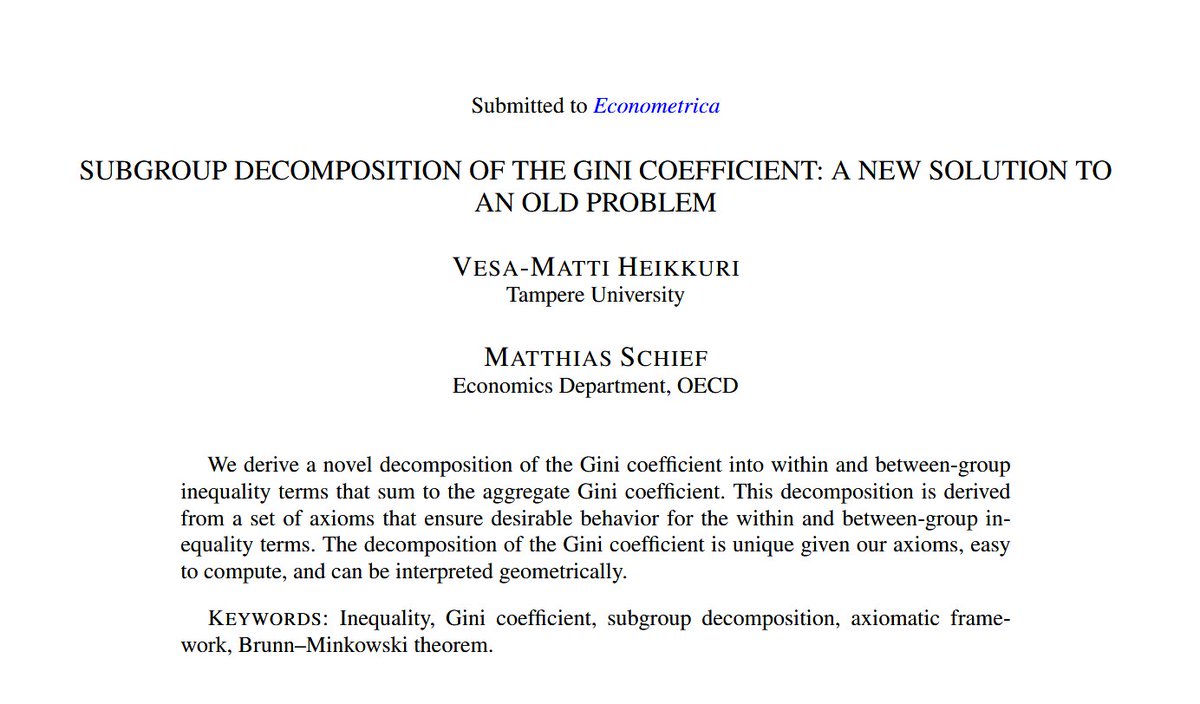
A widely held view is that the Gini coefficient is not decomposable by subgroups. This paper proposes an axiomatic framework that ensures well-behaved within and between-group terms under which the Gini is decomposable with a novel and unique formula. econometricsociety.org/publications/e…
Econometrica tweet media
English
2
101
454
103.1K
Roy Van Der Weide retweetledi
Luis Felipe López-Calva
Luis Felipe López-Calva@LFLopezCalva·
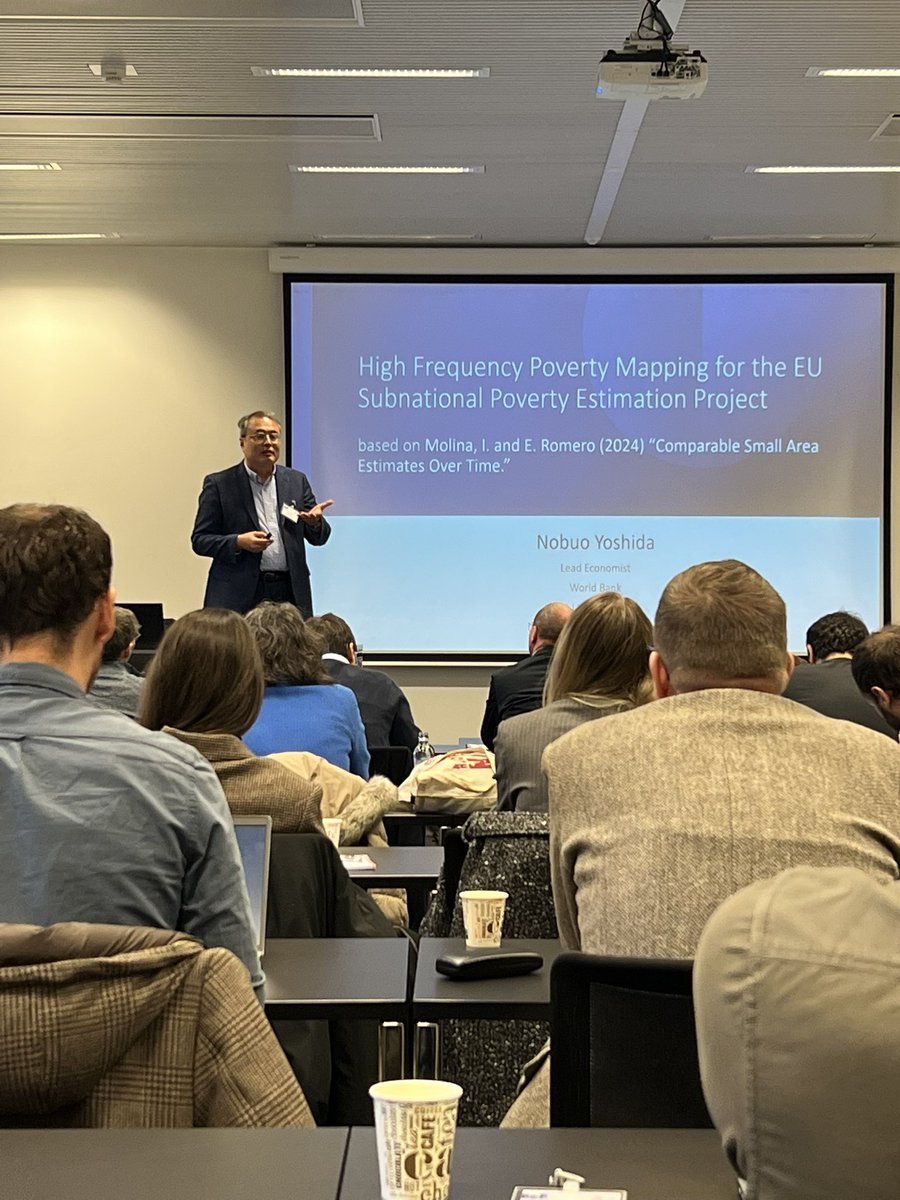
In Luxembourg at @LISERinLUX for the conference “Fighting Poverty: Measurement and Policy Challenges” with my colleagues @ChristophLakner @rroyji and Nobuo Yoshida to present our “Poverty, Prosperity and Planet Report and discuss poverty mapping, survey-to-survey imputation for poverty measurement, and evidence-based policy making for poverty eradication @WBG_Poverty @wb_research @IndermitGill
Luis Felipe López-Calva tweet mediaLuis Felipe López-Calva tweet mediaLuis Felipe López-Calva tweet mediaLuis Felipe López-Calva tweet media
English
0
3
8
649
Roy Van Der Weide retweetledi
UChicago | Stone Center on Inequality & Mobility
Last week, at the Recent Advances in Inequality and Mobility Conference, the spotlight was on the extraordinary record of accomplishments of Stone Center Director @sndurlauf. A distinguished lineup of social scientists presented innovative work on inequality and mobility while reflecting on Durlauf's foundational contributions to econometrics and empirical research. His colleagues, students, and friends recognized him as an "intellectual adventurer," "selfless mentor," and "compassionate friend," highlighting his impact as a collaborator and advisor. #Inequality #Mobility #Mentorship #ResearchImpact
UChicago | Stone Center on Inequality & Mobility tweet mediaUChicago | Stone Center on Inequality & Mobility tweet mediaUChicago | Stone Center on Inequality & Mobility tweet mediaUChicago | Stone Center on Inequality & Mobility tweet media
English
0
4
27
3.1K
Roy Van Der Weide retweetledi
Justin Sandefur
Justin Sandefur@JustinSandefur·
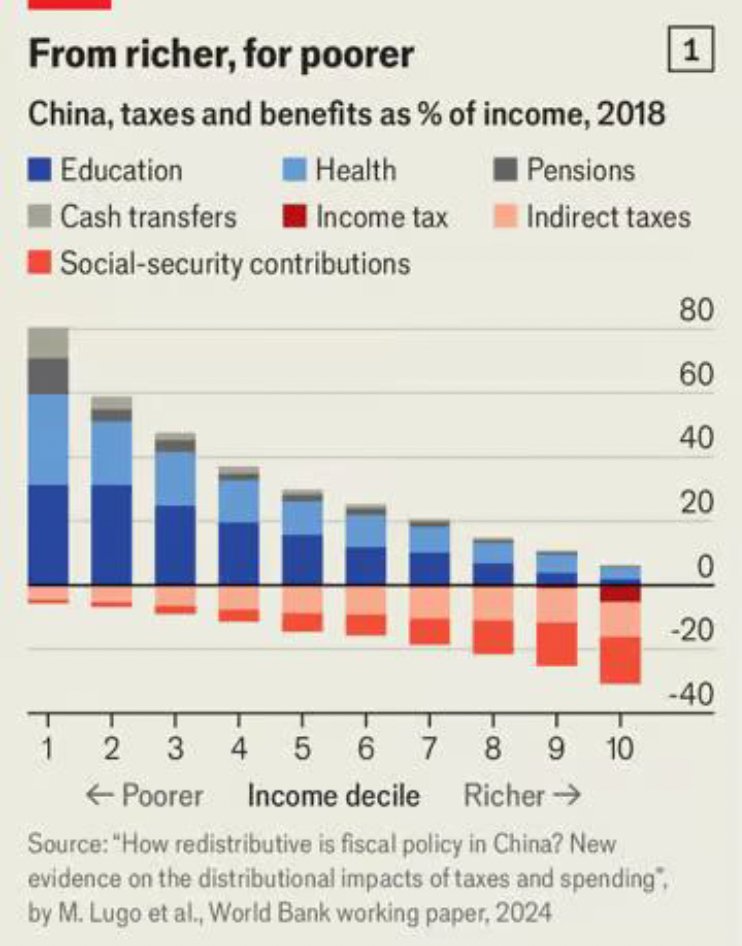
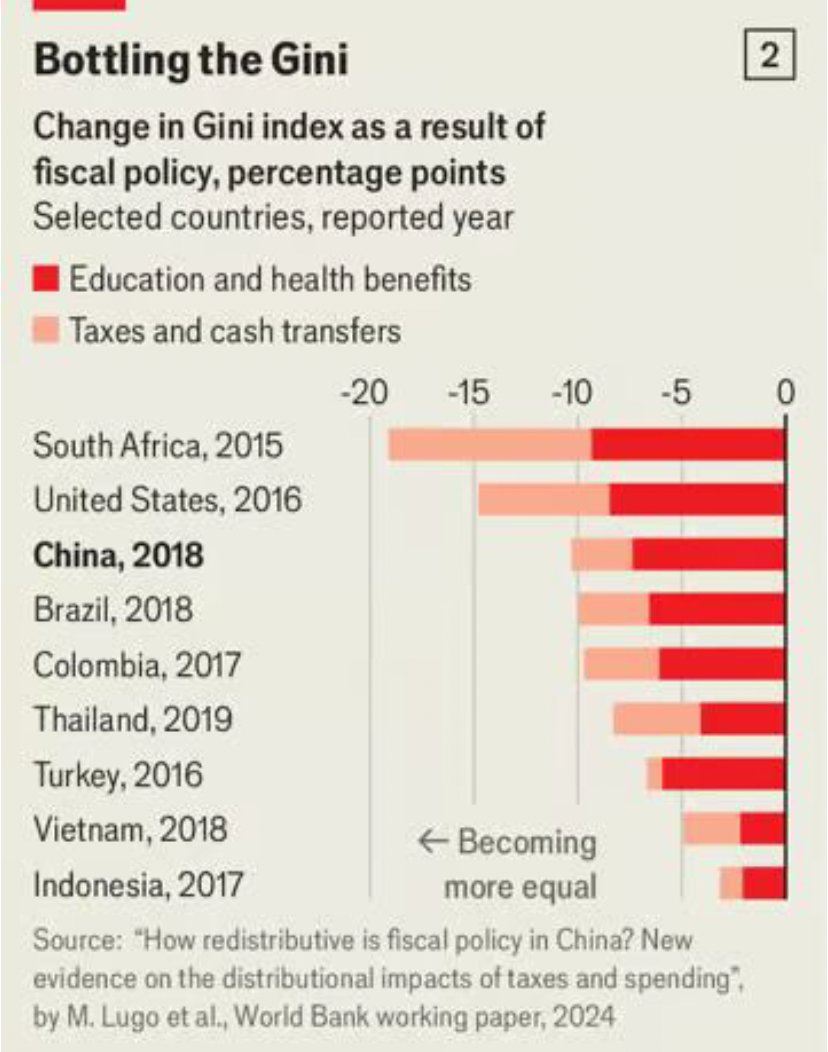
When people think about distinguishing features of the Chinese economic model, I don't think many think of unusually progressive, i.e. pro-poor, education and health spending, but it's true.
Justin Sandefur tweet mediaJustin Sandefur tweet media
English
9
89
275
29K
Roy Van Der Weide retweetledi
Vijayendra Rao
Vijayendra Rao@bijurao·
Some years ago Michael Woolcock and I argued that the disciplinary monopoly held by economics @wb_research and other places was bad for policy (and no one listened). jstor.org/stable/27800677 Today, an @FT editorial makes a similar (if ‘slightly weaker’) point on whether “economics is in need of trustbusting” ft.com/content/d973dc… Research is subject to the same concerns of elite dominance, clientelism, and clubbiness as any other social system. And - as with anything else - it results in bad outcomes.
English
2
27
108
13K
Roy Van Der Weide retweetledi
Andrés Barrios Fernández
Andrés Barrios Fernández@andres_bafer·
Thrilled that my paper with @ChrisANeilson and Seth Zimmerman on elite universities and the intergenerational transmission of human and social capital is conditionally accepted at AER @AEAjournals. Below a short threat summarizing it...
Centre for Economic Performance@CEP_LSE

Elite colleges help lower-status students gain social capital but also create a persistent academic elite, revealing tensions between meritocracy and equal opportunity. @andres_bafer @ChrisANeilson and Seth Zimmerman Read more: ow.ly/Tt1550T9x8f

English
7
36
246
47.2K
Roy Van Der Weide retweetledi
David McKenzie
David McKenzie@dmckenzie001·
I've just done the annual update of the curated posts on the Development Impact blog: 1) Technical topics and methods for experiments and non-experimental analysis, and how to publish 1/3 (blogs.worldbank.org/en/impactevalu…)
English
1
55
125
16.3K
Roy Van Der Weide retweetledi
World Bank Data
World Bank Data@worldbankdata·
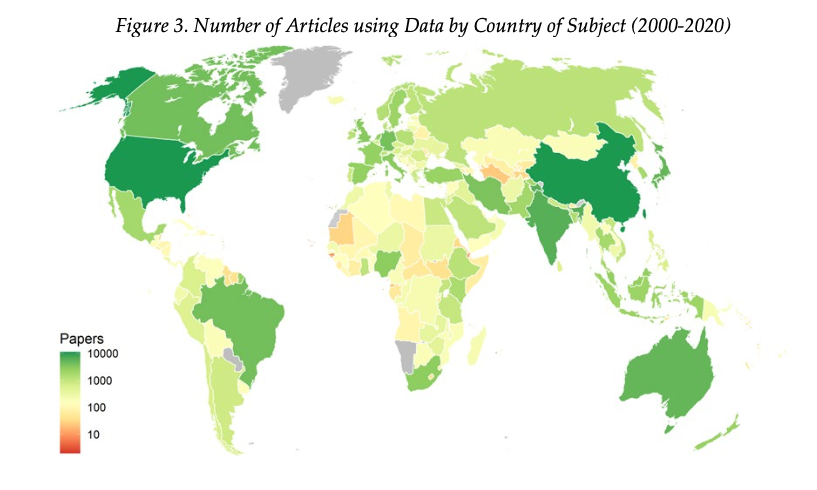
Analyzing over 1 million academic articles, this paper proposes a novel method to track academic data use by country, revealing correlations with GDP, population, & statistical systems. Explore how nations can leverage data for better policymaking: wrld.bg/fEFN50SXzwj
World Bank Data tweet mediaWorld Bank Data tweet media
English
1
63
163
14.2K
Roy Van Der Weide retweetledi
David Evans
David Evans@DaveEvansPhD·
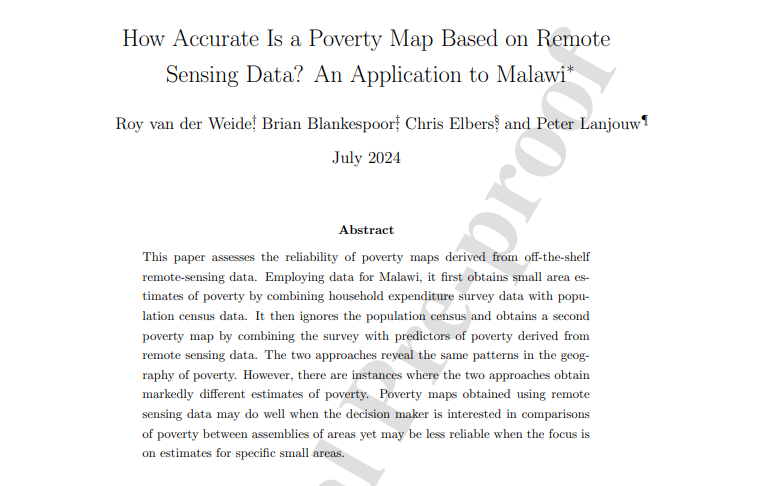
"Poverty maps obtained using remote sensing data may do well when the decision maker is interested in comparisons of poverty between assemblies of areas yet may be less reliable when the focus is on estimates for specific small areas." sciencedirect.com/science/articl…
David Evans tweet media
English
1
29
81
6.5K