DD 滴滴

25.7K posts

DD 滴滴 banner
DD 滴滴

DD 滴滴

@rtk17025

Full time BD for @o1_exchange Cofounder of @GMWallet Trade US HK stocks on @StableStock : DDD66 Best debit card @Backpack : backpack6666 Open for collabs 🦅🦅

加密货币交易所、出入金、Web 3钱包与U卡工具清单👉 Katılım Aralık 2024
2.5K Takip Edilen44K Takipçiler
David Arnal
David Arnal@davidarngar·
@rtk17025 The key variable isn't benchmark scores—it's distribution. If Kimi, GLM, and others convert open-weight adoption into API usage, developer ecosystems, and enterprise lock-in, today's model lead becomes a moat. If not, model performance alone won't defend margins.
English
1
0
1
11
DD 滴滴
DD 滴滴@rtk17025·
China’s AI Powerhouses: From Kimi’s Rocket Valuation to Hong Kong-Listed Plays — What Wall Street’s Top Banks Are Saying Kimi’s latest model, K3, has climbed to the top of several key benchmarks this month. The 2.8-trillion-parameter open-weight system from Moonshot AI now matches or beats leading closed models from OpenAI and Anthropic on coding and long-context tasks. That breakthrough has drawn fresh attention to China’s generative AI race. Moonshot, founded in 2023 by former Meta and Google researcher Yang Zhilin, built its name on the Kimi chatbot. The company moved fast: it released the trillion-parameter K2 series in 2025, then pushed K3 in July 2026 with a million-token context window and native multimodal support. Full weights are due out by late July. Early users and independent tests show strong results in agent workflows and complex coding. Revenue has kept pace. Annual recurring revenue crossed $200 million in April, with API sales making up more than 70 percent. Growth came from both consumer subscriptions and enterprise deals. Investors noticed. After a $4.3 billion valuation at the end of 2025, Moonshot raised roughly $2 billion in May at over $20 billion post-money, led by Meituan’s venture arm. It has now pulled in nearly $4 billion in six months and is reportedly targeting a $30 billion valuation in the next round. Backers include Alibaba, Tencent, and China Mobile. The company is still private but has floated the idea of a Hong Kong listing. Its story shows how quickly private capital and open-weight models can scale in China when compute constraints push teams toward efficiency. Two Listed Peers in Hong Kong Two close rivals have already gone public on the Hong Kong exchange, giving investors direct exposure. MiniMax (0100.HK) focuses on multimodal generation across text, image, video, and audio. Its latest open model, M3, handles a million-token context. The company listed in January 2026 and raised about $619 million. Shares surged on debut but later pulled back sharply. In July it announced plans to raise another $2 billion through new shares and convertible bonds to fund infrastructure and model work. Customer numbers have grown quickly on both the enterprise and consumer sides. Zhipu AI (02513.HK), known for its GLM models, listed around the same time. GLM-5.2, released and open-sourced earlier this year, ranks among the strongest open models globally, especially in coding and long-horizon tasks. Shares climbed fast after listing, briefly pushing market value above HK$1 trillion before moderating. In July the company raised roughly $4 billion in a share placement and is preparing a possible Shanghai STAR listing. Founder Tang Jie has signaled a long-term push toward advanced agents and AGI-level capabilities rather than quick monetization. Both stocks have been volatile, typical for early-stage AI names. Zhipu has held up better on model momentum; MiniMax has faced more pressure from dilution and lock-up expirations. Established Player and Broader Exposure SenseTime (0020.HK) offers a more mature route into the same theme. The company built its business on computer vision and has expanded into generative models through the SenseNova line. Revenue rose 33 percent last year, with generative AI contributing strongly. Analysts generally rate the stock a buy, seeing room for further gains as multimodal tools move into commercial use. Hong Kong’s broader AI theme also includes exposure through Tencent, Alibaba, and chip names such as SMIC and Biren. Many of these groups have invested in or compete directly with the startups above. What Wall Street Banks Are Saying Major banks have started coverage and see clear differentiation among the players. Goldman Sachs initiated on Zhipu with a target around HK$1,880 and picked Zhipu, DeepSeek, and ByteDance as its top Chinese model names. The bank is constructive on the full China AI value chain — power, chips, infrastructure, and models — noting that global funds remain underweight despite China’s roughly $4 trillion in related market value. Bank of America started both Zhipu and MiniMax with Buy ratings (targets HK$1,250 and HK$500). It describes a “two-speed” global market: the U.S. leads on raw frontier performance while Chinese models win on cost and efficiency for high-volume work. BofA also flags big long-term spending on Chinese AI data centers. JPMorgan has been the most bullish on Zhipu, raising its target multiple times to HK$2,000 and higher while keeping an Overweight rating. The bank argues the sector is moving into a “winner-takes-more” phase where the strongest open models convert wide distribution into better monetization. It has been more cautious on MiniMax. Morgan Stanley has also lifted Zhipu targets. Other houses have issued Buys on MiniMax at times. Common threads across the reports: open weights are accelerating adoption, Chinese teams are optimizing around domestic chips, and enterprise demand is strong even as compute remains tight. Investment Angles Direct plays sit in the two pure-play listings. Zhipu currently carries the strongest bank support tied to its enterprise focus and open-model upside. MiniMax offers multimodal leverage but comes with more near-term share supply pressure. SenseTime gives a steadier, vision-heavy alternative with improving margins. Indirect routes run through Tencent and Alibaba, both investors in several of these companies and developers of their own competing models. Infrastructure names add another layer for those wanting exposure to the compute build-out. The bullish case rests on cost advantages, open-source momentum, and practical enterprise use cases. Chinese models are gaining traction on platforms outside China and in cost-sensitive markets. Continued model leadership from names like Kimi and GLM could drive further revenue growth. Risks are straightforward: Fierce competition inside China, repeated capital raises that dilute shareholders, high valuations, and ongoing limits on advanced chips. Execution on turning open models into sustained profits remains unproven at scale.
DD 滴滴 tweet media
DD 滴滴@rtk17025

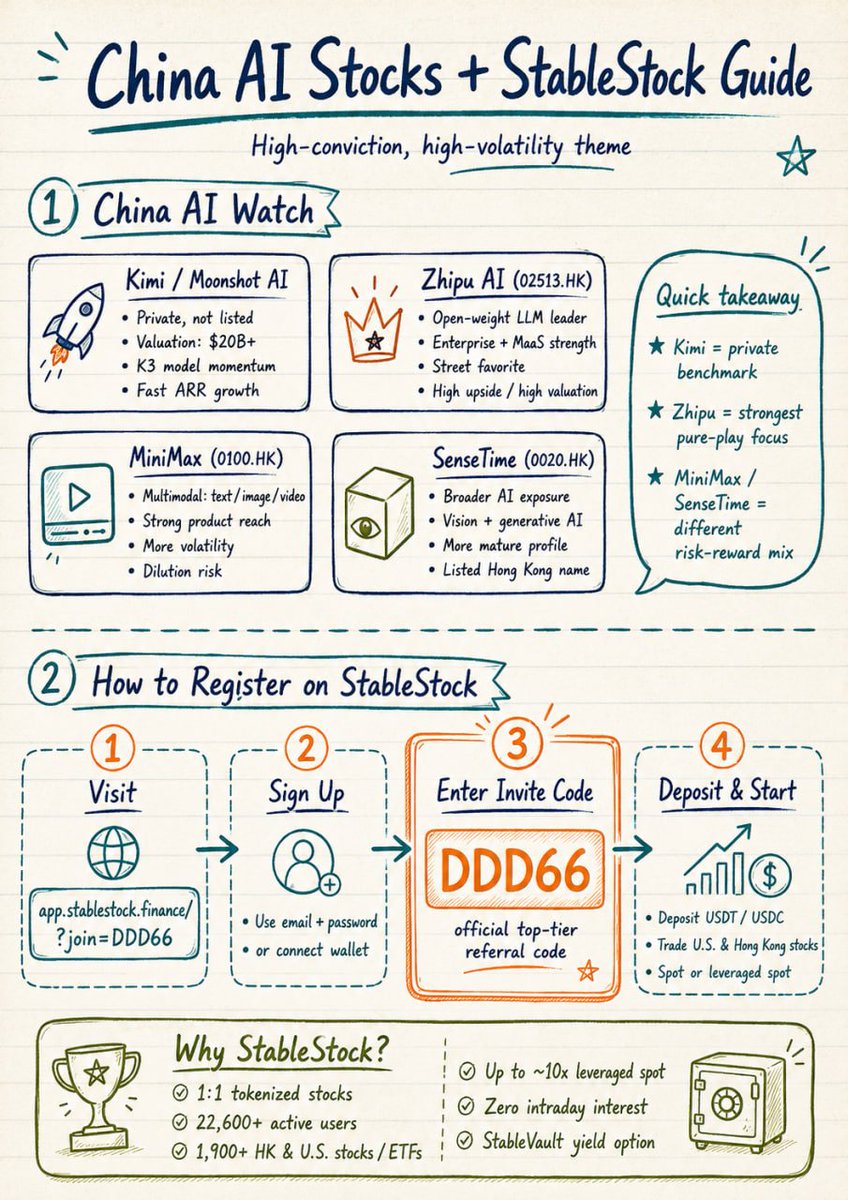
< StableStock the best platform for stocks trading > 1. Why @StableStock ? Traditional investing in Hong Kong and U.S. stocks presents several common challenges, especially for investors in Asia and emerging markets: High account opening barriers Investors typically need to open accounts with overseas brokers (e.g., Interactive Brokers, Firstrade). The KYC process is strict and time-consuming, often requiring proof of address, tax forms (W-8BEN), and other documents Inconvenient deposits and currency conversion Funding usually requires bank wire transfers or third-party platforms in USD or HKD. This involves high fees, slow processing times, and exchange rate risks. Crypto holders face additional on-ramp/off-ramp steps Limited trading hours U.S. stocks trade only during U.S. Eastern Time (9:30–16:00), and Hong Kong stocks have fixed sessions. This makes it difficult to trade 24/7 or react quickly to after-hours news and event High fees and financing costs Commissions, platform fees, and margin interest can add up significantly, especially for leveraged or high-frequency trading. Overnight financing charges are particularly burdensome. Poor liquidity and integration — Stock holdings are hard to use within DeFi ecosystems (e.g., for staking or yield generation) and difficult to combine seamlessly with stablecoins, resulting in lower capital efficiency. StableStock was created to solve these pain points by allowing users to trade real Hong Kong and U.S. stocks directly using stablecoins (USDT, USDC, etc.). 2. What is StableStock? StableStock is a TraDeFi (Traditional Finance + DeFi) on-chain stock liquidity platform. It tokenizes real Hong Kong and U.S. stocks and in the future it will expands to stocks worldwide like Taiwan Japan Korea and other countries and ETFs on a 1:1 basis into sStock tokens (e.g., sAAPL, sTSLA). The underlying shares are held by licensed brokers, fully verifiable on-chain, and settled directly with stablecoins. Team Background CEO – Zixi Zhu (朱子曦) @ZixiStablestock : Graduate of Nanyang Technological University (Singapore). Former Head of Crypto Investments at Matrix Partners (经纬创投). Also co-founder of 10K Ventures. Brings deep experience in both traditional finance and crypto COO – Zac Lary: Co-founder who works closely with the CEO. The team has strong combined expertise in traditional finance and blockchain. Funding & Traction Completed seed round in 2025, incubated and led by @yzilabs Labs, with participation from MPCi (Matrix Partners) and Vertex Ventures Current metrics: 22,600+ active users, support for 1,900+Hong Kong and U.S. stocks & ETFs, and over $16.7 million in assets under management (AUM). Trading volume continues to grow steadily Key Advantages: Leveraged Spot Trading with Zero Intraday Interest Supports Leveraged Spot trading with up to approximately 10x leverage Zero intraday interest: No financing fees if you open and close positions on the same day — ideal for short-term trading and fee arbitrage Competitive overall trading fees Users can enjoy extra discounts with official top-tier referral codes like DDD66 Idle assets can be deposited into StableVault to earn yield, allowing users to combine stock exposure + DeFi returns These features make StableStock particularly attractive for investors who want low-cost, high-efficiency exposure to global stocks using stablecoins 3. How to Register Step-by-step registration: Go to the official platform: app.stablestock.finance/?join=DDD66 Click “Sign Up” Register with your email and set a password, or connect a supported wallet Enter the official referral code: DDD66 After registration, you can deposit stablecoins (USDT / USDC, etc.) and immediately start trading U.S. and Hong Kong stocks in both spot and leveraged modes The platform offers an intuitive interface and integrates tokenized assets with DeFi features

English
4
0
8
624
DD 滴滴
DD 滴滴@rtk17025·
References of this article: [1] BigGo Finance. (2026, June 30). Moonshot AI’s Kimi Valuation Jumps to $31.5 Billion as ARR Tops $300 Million, API Revenue Exceeds 70%. finance.biggo.com/news/8899e316-… [2] TechCrunch. (2026, May 7). China’s Moonshot AI raises $2B at $20B valuation as demand for open source AI skyrockets. techcrunch.com/2026/05/07/chi… [3] Kie.ai. (2026, July 15). What Is Kimi K3? Moonshot’s 2.8T, 1M-Context Flagship. kie.ai/blog/what-is-k… [4] Dealroom.co. (2026, June). Moonshot AI seeks $30B valuation — a 7x jump in six months. app.dealroom.co/news/note/moon… [5] TechNode. (2026, June 8). Kimi reaches $30 billion valuation after sixfold increase in half a year. technode.com/2026/06/08/kim… [6] Pandaily. (2026, May). Kimi Operator Moonshot AI Valued at $20B+ After $2B Funding Round. pandaily.com/moonshot-ai-2b… [7] Reuters. (2026, July 8). China’s Zhipu AI raises $4 billion in Hong Kong share sale, source says. reuters.com/world/asia-pac… [8] South China Morning Post. (2026, July 13). China’s Zhipu AI, developer of GLM-5.2, defies slump as it pursues AGI over quick profits. scmp.com/tech/tech-tren… [9] TechEchelon. (2026, July 12). Goldman Sachs Names Zhipu, DeepSeek, and ByteDance as Top Chinese AI Model Picks. techechelon.com/post/goldman-s… [10] Moomoo. (2026, July 10). 高盛深度报告:谁将成为中国AI大模型行业的长期赢家? (Goldman Sachs deep report on China’s AI large-model winners). moomoo.com/news/post/7278… [11] Moomoo. (2026, June 15). Bank of America initiates Zhipu AI (02513.HK) and MINIMAX-W (00100.HK) with a “Buy” rating. moomoo.com/news/post/7150… [12] BigGo Finance / Futunn. (2026, July 8). JPMorgan: Amid the open-source wave, China’s AI sector enters a ‘winner-takes-more’ era; Zhipu’s GLM-5.2 sees target price raised. finance.biggo.com/news/5c8affd9-… [13] Reuters. (2026, July 9). Chinese tech firms raise $20 billion in Hong Kong. reuters.com/world/asia-pac… [14] Wikipedia. (2026). Moonshot AI. en.wikipedia.org/wiki/Moonshot_… [15] Various analyst notes (June–July 2026). Coverage and target price updates on Zhipu AI and MiniMax from JPMorgan, Goldman Sachs, Bank of America, and Morgan Stanley, as reported by Moomoo, Futunn, and Zhitong Finance.
English
0
0
0
121
DD 滴滴
DD 滴滴@rtk17025·
Easy guide for you to invest the TOP AI models of China Go to the official platform: app.stablestock.finance/?join=DDD66 Click “Sign Up” Register with your email and set a password, or connect a supported wallet Enter the official referral code: DDD66 After registration, you can deposit stablecoins (USDT / USDC, etc.) and immediately start trading U.S. and Hong Kong stocks in both spot and leveraged modes
English
1
0
0
111
Eva 树姐👧🏻
Eva 树姐👧🏻@EvaCmore·
感觉是大部分U卡在收紧政策 不仅仅是Bybit,SafePal我充值进去的USDC到现在无法兑换USD,没办法用。 昨晚朋友给我说他用的Bitget卡也无法在用微信支付宝使用了。 目前看来大部分接下来可能都会出Bug,U卡真的是一个很好的入口,吸引web2用户的入口。
Eva 树姐👧🏻 tweet media
Eva 树姐👧🏻@EvaCmore

Bybit最近开始封卡了吗? 最近微信、支付宝、美团都无法使用了😂 我的GPT续费有问题了

中文
35
1
10
12.9K
DD 滴滴
DD 滴滴@rtk17025·
@0x1001 哈哈哈哈哈哈 !真的看起來都好便宜
中文
0
0
0
58
youyou
youyou@youyouearn_·
@rtk17025 刚办了一个,走了老师码
中文
1
0
1
50
DD 滴滴
DD 滴滴@rtk17025·
刚刚用 MP 卡续费了我的爱奇艺会员 目前支付一切正常,直接从Binance pay支付充值非常快速方便 最近有部分u卡因为单一卡段被封因此出现储值异常的情况 MP CHAT 由于提前布局了多卡段备用机制,目前所有卡片支付、充值、消费完全不受影响 另外有任何问题也有售后群可以支援 连结: mp.net/c/DDD66 邀请码 06283937 走Visa 售后群: mp.net/g/mp_kzV0j1
DD 滴滴 tweet media
DD 滴滴@rtk17025

这大概是目前最好用的 u卡了 除了中国人友善外,任何事情都能找的到人 无论是chatgpt/claude/codex订阅,不想订阅要退款,或是任何要客製化的服务 售后群 24小时随时都有人替您服务 u卡 用 mp 连结: mp.net/c/DDD66 邀请码 06283937 走Visa 售后群: mp.net/g/mp_kzV0j1

中文
10
1
12
3.4K
DD 滴滴
DD 滴滴@rtk17025·
可以來追巔峰對決
DD 滴滴 tweet media
中文
0
0
0
185
lilili💤
lilili💤@aidashutiaozi·
早上醒来看到好几个群里都在说自己的账户被封了,大概原因可能是因为创作者收益的事情 一些博主做泛流量赛道,博老马工资,但是大多数都是从其它平台搞搬运,众所周知,老外对版权这个事格外的看重,看大D @rtk17025 说:之前其实就有收到消息,小红书跟抖音一直对于推特上的搬运号侵犯平台创作者权益提出法务交涉,真的来了~ 流量是双刃剑,还是要动脑子做原创啊兄弟们🫪
Jove@0xJoveXu

不知道你们有没有发现? 你们的粉丝数量今天掉了一大批 昨天被封创作者收益的大 V 们今天账号甚至直接冻结

中文
15
1
24
3.9K
DD 滴滴
DD 滴滴@rtk17025·
@0xAstra 是的,厌恶其中透露那字里行间的歧视
中文
0
0
1
112
Astra
Astra@0xAstra·
@rtk17025 无论任何人做出推动人类进步的成就均应获得相等的尊重
中文
1
0
3
131
DD 滴滴
DD 滴滴@rtk17025·
< Kimi 撕破了假中立:盎格鲁—美国技术菁英世界观的崩塌 > 2026 年 7 月 17 日,Dean W. Ball 发表了一篇题为 "Some observations on Kimi" 的评论。 Ball 曾参与川普政府早期的人工智慧政策工作,并于 2026 年 6 月加入 OpenAI,负责领导新成立的 Strategic Futures 团队,工作范围包括前沿 AI 政策与 OpenAI 内部治理。 i K3,是中国Kimi月之暗面于 7 月 14 日公布的前沿模型。根据官方资料,Kimi K3 拥有 2.8 万亿参数、原生视觉能力与 100 万 token 上下文窗口,定位为全球首个开放的 3 万亿级模型。月之暗面表示,其整体能力仍落后于最强的美国闭源模型,但已在部分程式设计与代理任务上展现前沿级表现,某些特定测试甚至超过部分美国模型;完整模型权重则预定于 7 月 27 日前释出。 这篇文章就像大部分政治假中立文一样开头先是承认,Kimi是一个非常好的模型,然而,正是在承认中国模型实力之后,文章的真正意识形态结构才逐渐浮现。 它表面上谈论模型成本、人工智慧风险、开放权重与产业政策,但扒开结构才发现他根本就是满脸傲慢的西方技术霸权逻辑: 西方掌握强大模型,是市场竞争、企业家精神与文明进步;中国掌握强大模型,则必须从战略盲目、算力匮乏、出口攻势、共产主义或安全威胁中寻找解释。 一、所以,何谓白人菁英主义? 批判这篇文章的白人菁英主义,并不是说作者只因为身为白人,其所有观点就必然错误。 真正需要批判的是一套以美国湾区大型实验室、国家安全机构、政策圈与资本市场为中心的知识阶序: 西方科技菁英被默认为最了解 AGI、最有能力判断风险,也最有资格决定哪些模型可以公开、哪些国家可以取得算力,以及什么样的人工智慧发展路线才具有正当性。 非西方国家即使做出相近的技术成果,也很难被承认为具有完整的研究能力、政策理性与战略主动性。 它们的成功往往需要被重新解释成模仿、补贴、低价竞争、监管失败或地缘政治威胁。 这种权力结构,才是本文所说的白人西方科技菁英主义。 二、先承认 Kimi 强大,再剥夺中国的技术主体性 Ball 首先承认 Kimi 的能力不能用蒸馏轻易解释,这等于承认中国团队确实在模型架构、训练方法、资料工程与代理能力上取得了实质进展,但他并没有因此把kimi视为一个正常而理性的技术行动者,相反地,他对中国政府 "居然允许" 如此优秀的模型走向开放感到惊讶,并把原因分成两部分: 其中约 75% 是中国政府的战略盲目,以及缺乏所谓的 AGI-pilledness;剩下约 25% 则来自推理算力不足、美国出口限制的意外效果,以及中国惯常採取的激进出口策略。对中国企业而言,开放模型则部分是出于理念,部分是因为仍然落后,而且很少有人愿意为来自中国的次前沿模型付费。问题,是它预先排除了中国决策具有合理性的可能。 中国不能是因为相信开放生态、希望扩大开发者社群、建立技术标准影响力,或者认为当前模型风险仍然可控,才选择开放权重。 在他傲慢的双眸中中国的选择只能来自三种原因: 不懂、缺乏,或者具有攻击性。 中国政府不懂 AGI,所以是战略盲目。 中国企业缺乏算力,所以被迫开放。 中国产品走向海外,所以是激进出口。 在傲慢殖民者的双眼,所有中国做的一切都是错的。 三、同一个模型,既是前沿竞争者,又被降格为无人愿意付费的中国产品 文章内部存在一个十分明显的矛盾。 Ball 一方面说,Kimi 在代理式程式设计中的表现,已经大致追上 2026 年第一季最好的公开模型,而且无法用蒸馏解释。 另一方面,他又说中国企业选择开放,是因为它们处于落后位置,很少有人愿意为中国的次前沿模型付费。 模型可以在技术评估中接近前沿,却在地缘政治叙事中被立即降格为次前沿。 非常非常的可笑。 它反映出作者虽然不得不承认具体产品的能力,却仍需要维持一套既定的技术阶序: 真正的前沿仍然属于美国。 对"Ball们"来说中国只能是接近前沿、追赶前沿、低价输出前沿,或者破坏前沿模型商业模式的竞争者。 因此,中国模型做得不好,可以证明中国技术落后;做得足够好,又会被解释成蒸馏、补贴、算力制裁的副产品或国家出口战略。 无论结果如何,中国研究者与工程师都很难直接获得技术主体的地位。 这正是技术霸权最稳固的地方:它不必公开宣称中国人没有能力,只需要建立一套解释机制,让中国的每一次成功都无法直接证明中国自身的能力。 四、AGI 信仰被塑造成西方菁英的文明资格考试 Ball 使用 AGI-pilledness 这类带有圈内身分认证意味的词彙,暗示中国政府之所以容许 Kimi 开放,是因为还没有真正理解通用人工智慧的风险。 在这套叙事里,一小群美国人工智慧安全圈、政策圈与前沿实验室人士,被放在了近似先知的位置。 他们知道真正的未来即将发生什么。 他们知道模型何时会变得危险。 他们也知道其他国家应该害怕什么。 至于不接受这套 AGI 末日框架的人,便不是持有不同的技术判断,而是尚未开悟、缺乏理解,或者陷入战略盲目。 这是一种高度菁英化的知识政治。 AGI 的发展速度、模型失控的条件与开放权重的边际风险,本来都是存在重大不确定性的问题。不同研究者与政府对此作出不同评估,并不等于其中一方不理解人工智慧。 Ball 却把对特定 AGI 叙事的信仰程度,变成衡量一个国家是否成熟的标准。 只有接受西方 AI 安全圈的末日想像,才算真正理解技术;不接受,便是落后与无知。 这延续了殖民时代的教化逻辑: 西方的世界观被视为普遍知识,非西方若不接受,便不是提出另一套判断,而是尚未进化到足以理解真理。 五、开放权重为什么会被说成减速主义? Ball 接着宣称,开放权重模型本质上是 decelerationist,也就是会减缓人工智慧的进步。 他的理由不是开放权重模型本身缺乏创新能力,而是它们可能压低模型价格,削弱封闭模型公司的盈利空间,最终降低企业继续投入巨额 AI 资本支出的意愿。 这句话实际上暴露了他对进步的特殊定义。 在这套定义中,人工智慧进步约等于: 更多资本支出、更大的资料中心、更昂贵的训练,以及少数前沿公司持续提高模型能力。 至于模型是否能让更多研究者使用、中小企业是否能自行部署、非西方国家是否能进入前沿研究,以及知识是否能广泛扩散,反而不是衡量加速的主要标准。 换言之,开放权重并没有减慢模型的传播、应用或二次创新。 它减慢的,是少数封闭实验室透过技术稀缺性维持高估值、高定价与资本集中速度。 Ball 所称的减速,可能更接近封闭模型资本累积的减速,而不必然是整体人工智慧创新的减速。 六、对无法治理的恐惧,本质上是对权力流失的恐惧 Ball 对支持开放模型的加速主义者感到困惑。 他推测,这些人真正喜欢的不是开源本身,而是开放权重所创造的 ungovernability,也就是难以治理的状态。他甚至引用 James C. Scott 关于逃离治理的讨论,将开放模型支持者描绘成希望让人工智慧脱离制度控制的人。是: 谁在治理? 谁定义安全? 谁有资格决定哪些模型可以被全世界使用? Ball 所担心的,不只是模型完全失去治理,而是治理权不再集中于少数美国公司、联邦机构与政策专家手中。 当模型权重能被全球研究者检查、修改与部署时,美国大型实验室便难以继续垄断人工智慧的能力边界、价格结构与安全叙事。 因此,所谓无法治理,有时只是无法再由原本那群人单方面治理。 七、把人工智慧作为公共财,为什么会被称为反乌托邦? Ball 预测,若开放权重模型成为主流,最终可能走向所谓的 full AI communism。 在这种未来中,人工智慧不再主要作为企业出售的市场产品,而被视为公共财或数位公共基础设施,由国家提供。他把这种可能性描述为 dystopian hellscape,也就是反乌托邦般的地狱。 这段话显示,他真正捍卫的不只是人工智慧安全,更是特定的所有权与商业模式。 在他的框架中,少数企业控制最强模型并对外收费,是正常的市场秩序。 国家或公共机构提供算力、模型与数位基础设施,则会被迅速命名为共产主义与反乌托邦。 但人工智慧作为公共基础设施,并不必然意味着政府完全垄断模型,更不必然导向极权制度。 公共研究、开放标准、国家算力中心、企业服务与私人模型完全可以同时存在。AI 应该完全商品化、部分公共化,还是採取混合模式,本来就是可以进行民主讨论的政策选择。 Ball 却把私人控制描绘成自然秩序,把公共供给描绘成文明灾难。 这是一种典型的资本菁英视角: 企业控制技术叫作市场。 国家向公众提供技术叫作共产主义。 企业投入巨额资本建立模型壁垒叫作创新。 公共资金建立算力基础设施则被描述成补贴与扭曲。 他不一定反对国家介入人工智慧,而是反对国家介入的结果成为公共财,而不是转化为本国科技公司的资产与估值。 八、将国家安全变成製造歧视的工具 全文最值得警惕的是第五点。 Ball 推测,川普政府迟早会意识到,对付中国开放权重模型的最佳策略,不一定是直接禁止开源,而是透过政府机构发布各种非强制性的公告、指引与风险警告,製造足够的监管不确定性。 他甚至举例: 联准会可以发布一份谘询公告,宣称中国人工智慧模型中可能存在后门。 接着,他补充说,这不需要得到非常充分的证明。只要产生足够的恐惧、不确定性与怀疑,受监管企业便会因合规风险而停止使用中国模型。所以这跟纳粹復辟又有何差别? 一套基于证据的讨论应该是: 先对模型、程式码、部署服务与资料流向进行检查。 发现具体漏洞或后门。 公开证据与测试方法。 再针对实际风险施加限制。 但Ball却尽显老白男的傲慢 : 因为模型来自中国,所以先暗示可能存在后门。 即使证据不足,也可以利用政府权威製造市场恐惧。 它不用明说禁止中国产品,只需要让所有使用中国产品的企业承受额外的法律、声誉与合规风险,便能达到排除竞争者的效果。 即使把 Ball 的说法作最宽容的理解,视为对川普政府可能策略的预测,而不是他本人的政策倡议,这段文字仍然暴露出一个令人不安的现实: 在美国政策菁英的讨论中,製造证据不足的中国安全疑虑,已经可以被当成一种正常、可计算且有效的产业策略。 九、他根本不是要消灭风险,而是在为openAI的无能想办法 更有意思的是,Ball 并不主张把监管压力推到最高。 他提醒,不应製造过大的监管风险,否则美国大型云端与超大规模服务商也可能停止提供中国模型,反而把新创公司逼向更不可靠的供应商。 他要寻找的是一个 happy middle ground,也就是恰到好处的中间地带。辑因而显得非常选择性。 监管压力必须足以让受监管企业不敢直接採用中国模型。 但又不能大到妨碍美国大型平台继续提供、託管并从中国模型中获利。 也就是说: 中国模型本身应该被汙名化。 中国企业应该承受市场排斥。 但美国中介平台仍可保留商业利益。 这并不是一致的安全原则,而是透过安全叙事重新分配供应链权力: 中国提供技术,美国平台控制入口,美国监管机构决定谁可以使用,最终价值与治理权仍留在美国体系内。 十、中国的商业竞争被称为攻势,美国的市场操纵被称为策略 Ball 把中国开放模型走向海外,概括成正常的中国激进出口策略。 这种说法把中国政府、民营企业、研究者与开源社群压缩成一个具有固定性格的中国行动者。 中国产品价格较低,是出口攻势。 中国公开权重,是战略渗透。 中国模型能力提升,是安全威胁。 相反地,美国政府若利用联邦机构发布证据不足的安全暗示、增加企业採用中国模型的合规成本,则被描述为一种聪明的国家策略。 于是,一套清楚的双重标准出现了: 中国降低价格、开放技术与争取使用者,叫作激进出口。 美国透过监管暗示阻止竞争者进入,叫作风险治理。 中国政府支持本国产业,叫作国家主导。 美国政府利用国家安全保护本国实验室,则叫作维护秩序。 作者真正反对的并不是国家介入市场,而是中国的企业与技术有能力改变全球人工智慧的权力分配。 十一、从 Kimi 跳到中国实验室:病毒隐喻与现代黄祸叙事 文章最后一句是整篇最具情绪煽动性的部分。 Ball 写道: 「一个无生命、不可见、危险且无限自我複製的代理程式从中国实验室逃脱了(A nonliving, invisible, dangerous, and infinitely self-replicating agent escaped from a Chinese lab)」。 这句话直接挪用了 COVID-19 疫情期间针对华人的种族主义阴谋论。 将中国的科技产物比喻为「从实验室洩漏的病毒」,是一种极度危险的非人化(Dehumanization)修辞。 这也是现代黄祸叙事常见的结构: 来自中国的威胁不是一个具体、有限、可以检测的产品,而是一种无形、庞大、难以控制、能够渗透与自我繁殖的存在。 过去是人口、疾病、廉价商品与政治意识形态。 今天则变成模型权重、演算法与自主代理。 一旦 Kimi 被放入这种情绪框架,读者便不再被邀请检查它是否真的存在后门、哪些部署方式具有风险,以及相同标准是否也适用于美国模型。 读者被引导去害怕的,是「从中国出来的东西」本身。 十二、真正公平的安全治理,必须通过对称性测试 批评中国政府、企业或人工智慧模型,本身当然不等于歧视。 中国模型应该接受资安审查。 中国企业应该遵守资料保护与隐私规范。 进入金融、医疗、能源与政府系统的模型,也应该进行更严格的测试。 真正的问题是,标准是否对所有国家的模型一致。 一套合理的治理框架应该询问: 模型是否存在可以验证的后门? 资料会被传送到哪里? 推理服务由谁控制? 权重与程式码是否可以接受审查? 部署者是否遵守当地法律? 模型在特定高风险场景中会产生什么实际危害? 如果中国模型不符合标准,就应该受到限制。 如果美国模型不符合相同标准,也应该受到限制。 但 Ball 所描述的策略,不是先建立普遍标准再检查中国模型,而是先利用中国来源製造怀疑,再透过政府权威让市场自行排除它。 在这套世界观里,中国来源本身就是风险;美国机构则拥有定义风险、夸大风险,甚至策略性製造风险认知的权力。 当中国模型能力不足时,中国被描述为模仿者与落后者。 当中国模型接近前沿时,中国又被描述为补贴者、出口攻击者与安全威胁。 当中国选择封闭时,西方可以批评它缺乏透明与开放精神。 当中国选择开放权重时,又会被指控让世界变得更加危险。 这是一套不允许中国获得正当性的封闭论证。 无论中国做什么,都能被重新翻译成威胁。 文章承认 Kimi 的技术实力,却随即用战略盲目、算力不足、共产主义、后门、监管恐惧与中国实验室等叙事,把这项技术能力重新转化成一个必须由美国菁英管理的问题。 因此,这篇文章最深层的焦虑,可能不是人工智慧会不会失控,而是人工智慧的控制权会不会离开原本的中心。 它害怕的不是技术停止进步,而是进步不再必须经过少数美国闭源实验室。 它害怕的不是模型完全无法治理,而是西方政策菁英不再拥有唯一的治理权。 它害怕的不是公共人工智慧必然失败,而是人工智慧成为公共基础设施后,少数科技公司无法再依靠封闭、稀缺与垄断收取高额租金。 真正值得反思的,不是中国为什么敢于开放 Kimi。 而是当中国做出一个足够强大、足以挑战美国商业模式的模型时,某些西方科技菁英的第一反应,为什么不是公平竞争、证据审查与技术合作,而是製造监管恐惧、暗示后门,并把中国技术比喻成从实验室逃出的病毒。 真正的技术竞争,应该建立在透明、证据与一致标准之上。 不是由掌握话语权的一方,决定自己的技术代表普遍进步,而竞争者的技术只能代表需要被防范的危险。 最后,如果你真正想接触更广阔的全球市场,而不是继续被局限在传统美股的单一视角里,那么 StableStock 会是一个值得尝试的入口。 在这里,你看到的不只是美国市场中那些早已被反复讨论的大型科技公司,也有机会接触智谱、Minimax等中国顶级 AI企业,以及更多来自不同地区、不同产业阶段的优质资产。真正的投资视野,不应该只围绕华尔街展开,而是去理解全球创新正在什么地方发生,资本又正在流向哪里。 StableStock 的价值,正是在于打破地域与传统账户体系的限制,让更多投资者能够更方便地观察并参与全球资产市场。 体验入口: app.stablestock.finance/?join=DDD66
DD 滴滴 tweet media
Dean W. Ball@deanwball

Some observations on Kimi: 1. It's a very good model! I don't think its performance can be explained away by distillation or anything like that. In agentic coding sessions, it seems pretty much on par with the best public models of Q1 2026. In my fairly limited use, it also seemed very token hungry. It's not obvious to me that this model is actually that cheap to run. 2. I am personally surprised the Chinese state continues to allow the open sourcing of models this good, given potential risks. To be clear, I *myself* might be fine with models presenting this level of marginal risk being open weight, but I am surprised that China is fine with it. I suspect the reason they are is 75% explained by strategic blindness/lack of AGI-pilledness (the CCP is very Yann Lecun-y in its views of AI). The other 25% or so is their lack of compute for customer inference (making China's open-weight strategy an unintended byproduct of US export controls) and the normal Chinese strategy of aggressive exports. For the companies, as opposed to the government, the decision to open source is partially ideological and partially because they are behind, and they know that very few people would pay for sub-frontier models from China. 3. Open-weight models are inherently decelerationist, and I'm continually surprised to see the so-called "accelerationists" so excited about open-weight models. I suspect the reason they are is that they know open-weight models are effectively ungovernable, and they simply like the overall cloak of ungovernability open-weight models create over the whole of AI. It's not a bad strategy; it reminds me of James Scott's recounting of the hill people in "the art of not being governed." Still, in the end, open-weight models deter further AI capex. 4. One probable outcome of an open-weight-model-dominant world is full AI communism, which is precisely what China proposes: rather than a market product, AI is a "public good" which will ultimately be provided by the state as a kind of "digital public infrastructure." This future strikes me as a dystopian hellscape, but I've never met an open-weight models advocate who doesn't ultimately concede this is where things end. You'd be surprised how many 'accelerationists' lobbied me, while I was in government, to support an eleven or twelve-figure federally funded data center so that startups could train models at a subsidy and then give them away for free. There was no other way for AI to progress, they said. Perhaps this is the logical end state of things. Nonetheless, I find myself surprised to see supposed accelerationists excited about such an outcome. I think many of them just don't know what they're doing. Many accelerationists do not view the creation and serving of frontier models as a legitimate business. 5. I would guess that the Trump Administration will at some point realize that their best strategy here would be to create large amounts of regulatory risk around the use of open-weight Chinese models. You don't need to "ban open source" (one of the dumber motifs of AI policy discussion). You just need to direct every agency to issue soft law that creates FUD. "A Federal Reserve Advisory Bulletin found that there may be backdoors in Chinese AI models." It needn't be that well justified. You just create enough regulatory risk that every regulated enterprise backs off. You probably don't want to create so much regulatory risk that you scare off the hyperscalers from serving Chinese models; this will just drive startups to sketchier providers. There's a happy middle ground here. I'd assume they will do some version of this. 6. It's probably true that open-weight models of this capability make the world a bit more dangerous, but not so much more that you'll really notice. At some point the models will be capable enough that you will notice. "A nonliving, invisible, dangerous, and infinitely self-replicating agent escaped from a Chinese lab," you say? Color me shocked.

中文
62
0
39
8.3K
DD 滴滴
DD 滴滴@rtk17025·
@Meta888_hk 真的让人愤怒的是里面那种自以为中立,却处处尽显傲慢的态度
中文
1
0
1
99
DD 滴滴 retweetledi
DD 滴滴
DD 滴滴@rtk17025·
< StableStock the best platform for stocks trading > 1. Why @StableStock ? Traditional investing in Hong Kong and U.S. stocks presents several common challenges, especially for investors in Asia and emerging markets: High account opening barriers Investors typically need to open accounts with overseas brokers (e.g., Interactive Brokers, Firstrade). The KYC process is strict and time-consuming, often requiring proof of address, tax forms (W-8BEN), and other documents Inconvenient deposits and currency conversion Funding usually requires bank wire transfers or third-party platforms in USD or HKD. This involves high fees, slow processing times, and exchange rate risks. Crypto holders face additional on-ramp/off-ramp steps Limited trading hours U.S. stocks trade only during U.S. Eastern Time (9:30–16:00), and Hong Kong stocks have fixed sessions. This makes it difficult to trade 24/7 or react quickly to after-hours news and event High fees and financing costs Commissions, platform fees, and margin interest can add up significantly, especially for leveraged or high-frequency trading. Overnight financing charges are particularly burdensome. Poor liquidity and integration — Stock holdings are hard to use within DeFi ecosystems (e.g., for staking or yield generation) and difficult to combine seamlessly with stablecoins, resulting in lower capital efficiency. StableStock was created to solve these pain points by allowing users to trade real Hong Kong and U.S. stocks directly using stablecoins (USDT, USDC, etc.). 2. What is StableStock? StableStock is a TraDeFi (Traditional Finance + DeFi) on-chain stock liquidity platform. It tokenizes real Hong Kong and U.S. stocks and in the future it will expands to stocks worldwide like Taiwan Japan Korea and other countries and ETFs on a 1:1 basis into sStock tokens (e.g., sAAPL, sTSLA). The underlying shares are held by licensed brokers, fully verifiable on-chain, and settled directly with stablecoins. Team Background CEO – Zixi Zhu (朱子曦) @ZixiStablestock : Graduate of Nanyang Technological University (Singapore). Former Head of Crypto Investments at Matrix Partners (经纬创投). Also co-founder of 10K Ventures. Brings deep experience in both traditional finance and crypto COO – Zac Lary: Co-founder who works closely with the CEO. The team has strong combined expertise in traditional finance and blockchain. Funding & Traction Completed seed round in 2025, incubated and led by @yzilabs Labs, with participation from MPCi (Matrix Partners) and Vertex Ventures Current metrics: 22,600+ active users, support for 1,900+Hong Kong and U.S. stocks & ETFs, and over $16.7 million in assets under management (AUM). Trading volume continues to grow steadily Key Advantages: Leveraged Spot Trading with Zero Intraday Interest Supports Leveraged Spot trading with up to approximately 10x leverage Zero intraday interest: No financing fees if you open and close positions on the same day — ideal for short-term trading and fee arbitrage Competitive overall trading fees Users can enjoy extra discounts with official top-tier referral codes like DDD66 Idle assets can be deposited into StableVault to earn yield, allowing users to combine stock exposure + DeFi returns These features make StableStock particularly attractive for investors who want low-cost, high-efficiency exposure to global stocks using stablecoins 3. How to Register Step-by-step registration: Go to the official platform: app.stablestock.finance/?join=DDD66 Click “Sign Up” Register with your email and set a password, or connect a supported wallet Enter the official referral code: DDD66 After registration, you can deposit stablecoins (USDT / USDC, etc.) and immediately start trading U.S. and Hong Kong stocks in both spot and leveraged modes The platform offers an intuitive interface and integrates tokenized assets with DeFi features
DD 滴滴 tweet media
English
49
3
46
3.2K
DD 滴滴
DD 滴滴@rtk17025·
@xxDahan 基本都可以用 开卡以前你也可以上售后群问
中文
0
0
0
113
Dh大涵
Dh大涵@xxDahan·
@rtk17025 这个u卡使用范围大概是哪些?
中文
1
0
0
101
DD 滴滴
DD 滴滴@rtk17025·
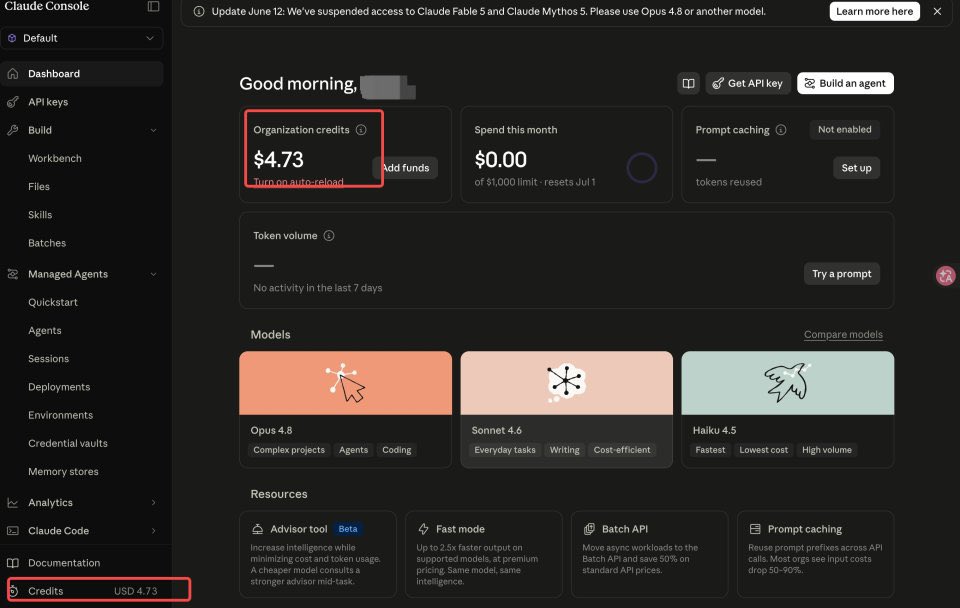
最近比较多人在询问怎么开 Anthropic ( Claude fable / opus )API 以及 OpenAI Codex 的 API 这里用 MP chat 的 U卡 来做示范 这张一样免地址证明,可以直接开 连结: mp.net/c/DDD66 邀请码 06283937 走Visa
DD 滴滴 tweet media
DD 滴滴@rtk17025

Backpack U 卡 1. 支持中国用户,可用护照 身份证ID申请 2. 目前內測仅开放给 Backpack VIP 3. 同样免地址证明 4. 可直接出金到渣打,众安,天星等银行,目前按照等级给予不同的免手续费出金额度 backpack.exchange/refer/backpack… 或输入 backpack6666

中文
108
1
80
53.6K
DD 滴滴
DD 滴滴@rtk17025·
这大概是目前最好用的 u卡了 除了中国人友善外,任何事情都能找的到人 无论是chatgpt/claude/codex订阅,不想订阅要退款,或是任何要客製化的服务 售后群 24小时随时都有人替您服务 u卡 用 mp 连结: mp.net/c/DDD66 邀请码 06283937 走Visa 售后群: mp.net/g/mp_kzV0j1
DD 滴滴 tweet media
DD 滴滴@rtk17025

最近比较多人在询问怎么开 Anthropic ( Claude fable / opus )API 以及 OpenAI Codex 的 API 这里用 MP chat 的 U卡 来做示范 这张一样免地址证明,可以直接开 连结: mp.net/c/DDD66 邀请码 06283937 走Visa

中文
89
13
124
36.1K