

Charles
78 posts

"There's 11,500 employees. It doesn't make sense. I could run that business from my house. It's eBay, it looks the same as it did in 1995. It doesn't need 11,500 employees."
$GME's @ryancohen makes his case for why he's the best person to buy eBay:
"You look at eBay spending $2.5 billion to grow 1 million users. $2 billion in cost cuts between sales and marketing and corporate overhead — it's not a lot. And it's not something that's going to take a few years. It's something that is going to happen fast, fast, fast. Because I'm putting leverage on this thing, and I don't want to run a leveraged business."
"I'm not going to run it hot. I'm going to pay down the leverage. And I'm going to increase earnings."
"They're spending $5.5 billion on operating expenses. On an $11 billion business that has no inventory and is asset light."
Ryan's full response:
English




@Stevie20868035 @RandyTreibel @RegalOutlier @coldhealing I mean it can be beautify in those 100 days but this is definitely psed
English

@RandyTreibel @RegalOutlier @coldhealing Have you ever driven through Bonney lake? This is very much an honest representation. It’s just the perspective that amplifies the mountains prominence
English
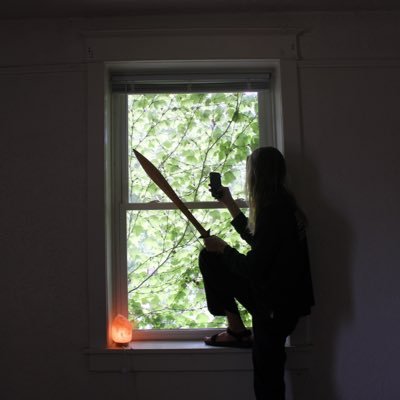
@theojaffee Shenzhen still higher and also another key factor: humidity
English


Shenzhen is 10x more livable than San Francisco
Alexander Lacherbauer@lacherbauer
Shenzhen is 10x more livable than Hong Kong.
English

@rust1ords @fchollet cloud cover that doesn't drop water is still a workable day. 230 came from the actual gym camera roll, not vibes.
English

Apparently Deepseek is paying 5500 rmb a day ($19k USD a month) to *interns* out of Tsinghua.
Apparently ByteDance pays 8000 rmb a day ($26k a month).
Most Chinese returnees from Silicon Valley compare offers between US and China with a 1:3 ratio (because of the lower cost of living / higher quality of life in China). In other words, they would choose the Deepseek offer over a $500k USD offer from the US.
Tldr, frontier labs in China are offering competitive pay vs US labs.
Ming@PandaMing88
Deepseek正在招实习生 一个清华姚班同学晒了offer 每天实习工资 5500元 税前 WTF😂😂😂😂
Taiwan 🇹🇼 English

First time at Oracle Park. Only complaint is a can’t gamble my ass off. Figure it out Pelosi!

English

@meowrowrowrow You can tell summer is coming when you say more posts about PNW😂😂
English


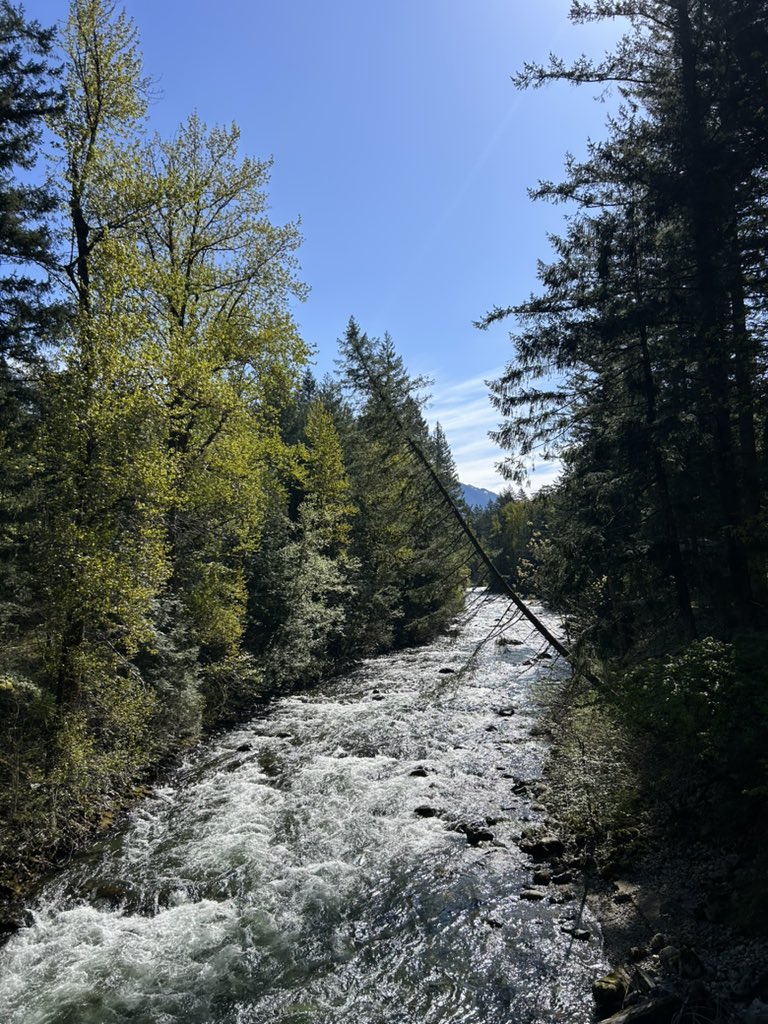
@fchollet coaching 5:30 AM classes in Seattle for 4 years. fog burns off by 8 most mornings, summers are bone dry. the rain meme is mostly drizzle in 6 weeks of October and November. our outdoor sled pulls log 230 sunny days a year on the gym camera roll.
English

To all the clowns saying that Seattle is always rainy and never sees the sun: Seattle has *less* precipitation than NYC, Boston, Atlanta, Miami, New Orleans, etc... in fact it rains less in Seattle than on the Northern California coast.

English

@SchaeferEnjoyer Widgets, Live Activities, major Golf improvements, MLB pitch arc animations, and more.
It’s banger
English


the people hating on her for saying this don’t live in seattle fr. taken from the same spot on 2 different days:


Collin Rugg@CollinRugg
NEW: Seattle Storm WNBA player Natisha Hiedeman says she "didn't know what was going on" when she saw a mountain (Mount Rainier) from her balcony. Mount Rainier is 14,410 feet high and is visible from Seattle. "I was just sitting on my balcony and I sat on my balcony like mad times. I had never seen it, so I didn't know like what was going on." Hiedeman joined the team about a week ago but says she never realized there was a mountain despite spending "mad times" on her balcony. Lmao.
English
@VampireGurlAI @_arohan_ You shouldn't believe anyone whether it's Jenson or not
English

@_arohan_ What is more confusing is Jensen’s recent tinfoil arc. He pushed Claw like it was the future, but the gap and the live timeline exposed the truth... which I don’t believe anything Jensen says “ now!”
English

the 'enriched uranium' framing is total batshit crazy. it’s a hyperbolic comparison that puts a massive distortion field on the tech.
I also don't see how the strategy in the post achieves Mythos. Labeling Dwarkesh an 'AGI party bro' is counterproductive and only invites more tribalism.
Only tribe you should be on improving human condition and removing bottlenecks. Spend time trying to improve deep learning brothers.
Soumith Chintala@soumithchintala
The Jensen + @dwarkesh_sp podcast was fantastic. Jensen is someone who understood how ecosystems work and someone who understands real-world trade, policy and controls work. And in some deeper sense how AI will actually diffuse into the world. In this podcast, Dwarkesh came off as someone who picked up talking points from an AGI party in the SF Mission District. And the contrast was so evident. As someone who understood ecosystems relatively deepy, maybe I understood Jensen's take more than others did (idk). Mythos, that Dwarkesh kept bringing up, is not a single absolute turning point in the AI development landscape. Take a state-of-the-art Chinese open-source model, and give it three orders of magnitude more test-time compute + post-training algorithmic advances that haven't been published yet. That's the baseline. It was evident that in whatever bubble Dwarkesh is in, that is seen as a naive or illogical baseline. When AI has such a complex development cycle, it's evident that America needs many levers of policy intervention across multiple layers in a dominant ecosystem that ideally the Western world controls. The entire premise that a particular model with AI development will have a critical phase change is neither correct nor does evidence point to it. OpenAI made this point with GPT-4, Anthropic made this point with Mythos, but neither stood / will stand the test of time. I think Jensen's repeated emphasis within the podcast to try to make this point mostly didn't get Dwarkesh's attention. And Dwarkesh (in this podcast) represents an entire cult of AI researchers and decision-makers that are going to influence policy. The thing with policy interventions is that if you do too much too early, you shoot yourself in the foot. There's a good reason American foreign policy and general sanctions of all kinds are measured and continuous. Despite Jensen's attempt at educating the "Anthro" audience how ecosystems work, I'm also not super hopeful a lot of people who've taken the extreme position will change their thought after listening to this podcast. I do think there's a certain religiousness that has permeated some of that community that would make it hard to understand ecosystems at a deeper level.
English

I'll give Anthropic credit for moving quickly. Opus 4.7 Adaptive Thinking now triggers thinking much more often, including for the tasks it failed at yesterday. That also means it is doing a lot more web search.
So far, a large improvement in output quality on non-coding tasks.
English

Every time I ask yall for feedback on Codex, you say two things:
1. SSH dev box support in the app
2. View your files in the app
Both are now available with our launch yesterday!!
What’s left?
English