Ruslan Rust

4K posts

Ruslan Rust banner
Ruslan Rust

Ruslan Rust

@rust_ruslan

Asst Prof @USC with interest in the brain, BBB, stem cells, AI + what can go wrong after stroke & AD. Alum @ETH_en. Fixing science @ResearchHub

Los Angeles, USA Katılım Haziran 2019
2K Takip Edilen3.1K Takipçiler
Ruslan Rust
Ruslan Rust@rust_ruslan·
A rare pre-existing progenitor-like Primed SMC compartment is the dominant inferred source of SMC-derived cellularity in vascular injury and atherosclerosis researchhub.com/paper/11337401…
English
0
0
2
259
Ruslan Rust
Ruslan Rust@rust_ruslan·
Amazing work by @jdpereira and his lab! We'll have better science if all scientists share their work while doing it, instead of condensing it into a paper telling a "story" at the end. Beautiful organoids and a great preview on organoid patterning!
Joao Pereira@jdpereira

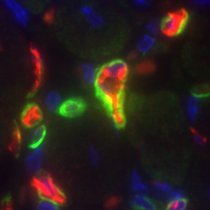
Ok, so a few months ago we proposed a systematic approach to spatial patterning of organoids, kindly funded by @ResearchHub @ResearchHubF . Today we got the first results. Pax6 green. This isn’t the full thing: it’s just activin as the fgf2 beads are delayed. Patterned right
English
0
3
13
1.5K
Ruslan Rust retweetledi
Eric Topol
Eric Topol@EricTopol·
The science of human aging is flourishing, perhaps best exemplified by remarkable advances in organ and cellular clocks, tracked from proteins in the blood. These clocks tell us about the pace of aging within an individual and are linked to healthspan, longevity, and diseases. @wysscoray and I reviewed the field of biological clocks, published today @NatureMedicine free access rdcu.be/fsZ3h
Eric Topol tweet media
English
22
194
824
119.1K
Anne Scheel
Anne Scheel@annemscheel·
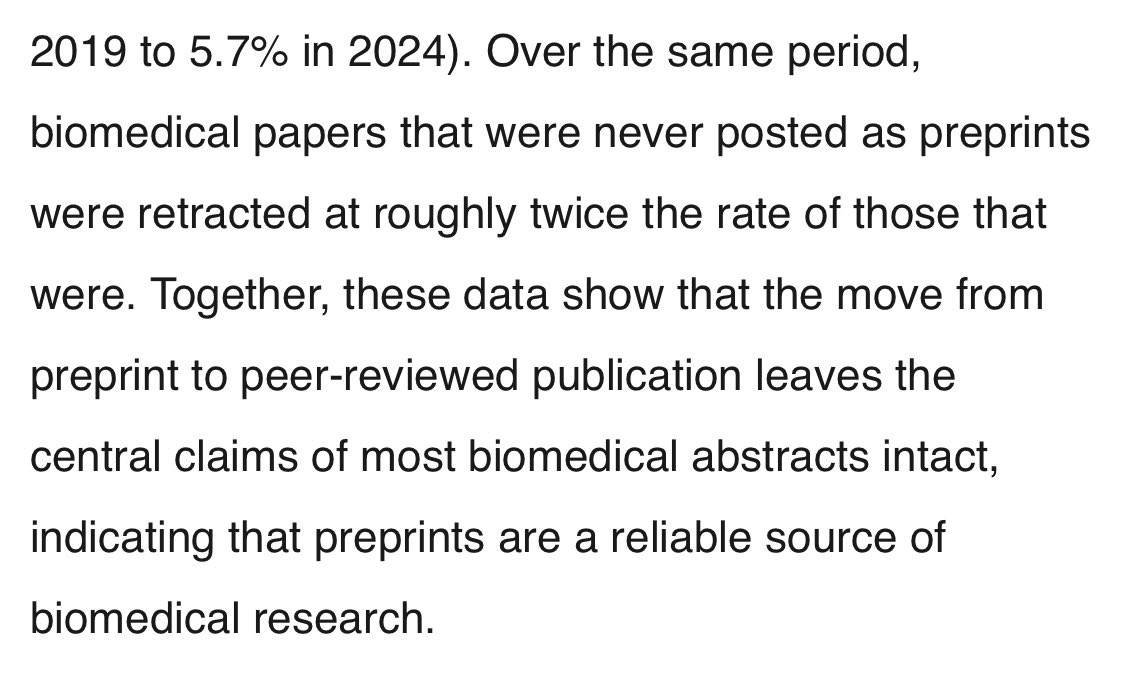
Looks like a cool analysis, but note that it excludes preprints that were never published. So this last sentence in the abstract amounts to ‘conditioning on preprints accepted by the scientific community, preprints are good enough to be accepted by the scientific community’.
Anne Scheel tweet media
Ruslan Rust@rust_ruslan

How much does a scientific claim actually change between the preprint and the final published paper? We used a large language model to track it across all available 72,644 bioRxiv -> journal pairs from 2018 - 2025 in this new work with @HaoYin. 🧵
English
3
6
15
2.6K
Ruslan Rust retweetledi
ResearchHub Foundation
ResearchHub Foundation@ResearchHubF·
Today’s the day. Welcome to #CatalystNYC! We’re bringing together academics, funders, founders, and builders to reimagine how scientific discoveries get funded and turned into real-world impact. See you soon.
English
0
10
39
1.5K
Ruslan Rust
Ruslan Rust@rust_ruslan·
@Nature Thank you for the great interview and highlighting our research 🙏
English
0
0
2
855
nature
nature@Nature·
Preprints don’t change much after peer review — and are rarely retracted. go.nature.com/3R05ZZj
English
8
114
429
87.2K
Ruslan Rust
Ruslan Rust@rust_ruslan·
Persistent and transient senescent cells contribute to brain-barrier development in @CellPressNews The highlights: - Distinct senescent states arise across brain-barrier cell lineages - Endothelial cells and macrophages engage a transient inflammatory senescent state - Choroid plexus epithelium maintains a persistent non-inflammatory senescent state - Senescent cell ablation alters vascular patterning and CSF homeostasis cell.com/cell/fulltext/…
Ruslan Rust tweet media
English
1
15
40
2.9K
Ruslan Rust
Ruslan Rust@rust_ruslan·
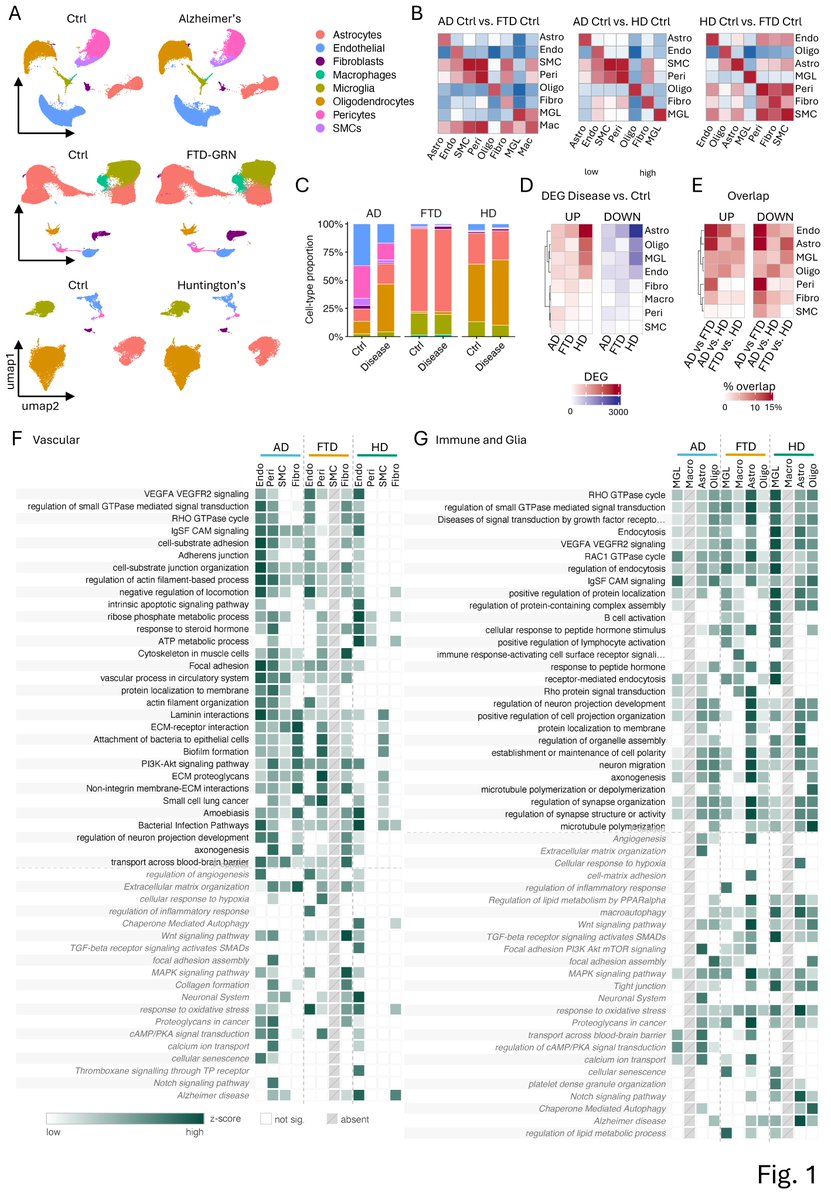
Super excited to share a new work from our lab: Blood-brain barrier damage shows up as a common feature across many neurodegenerative diseases. But we still don't understand whether the underlying mechanism is shared or disease-specific at the neurovascular level. So we compared vessel-enriched human brain transcriptomes across Alzheimer's, frontotemporal dementia, and Huntington's to map what is shared and what is unique. Here are few highlights: 🔹 A partially conserved signature of vascular dysfunction runs across all three diseases, on top of disease-specific changes in endothelial, pericyte, and perivascular cells. 🔹 Endothelial remodeling was strongest in capillary and venous segments, pointing to segment-specific vulnerability along the arteriovenous axis. 🔹 We resolved the two human pericyte subtypes and found that matrix-type pericytes were consistently lost across every disease. 🔹 Endothelial-pericyte signaling was altered, with big shifts in ECM pathways (LAMININ, COLLAGEN, FN1, NCAM) and vascular signaling like NOTCH and VEGF. Together this positions BBB-associated pathways as a shared feature of neurodegeneration, and hopefully a useful resource for diagnostics and therapies down the line. Great collaborative work with Patrycja Forster and Oliver Bracko. @USC @KECKSchool_USC @ATRI_USC @KU_Leuven Preprint and an interactive web browser are in the comments!
Ruslan Rust tweet mediaRuslan Rust tweet mediaRuslan Rust tweet mediaRuslan Rust tweet media
English
2
23
107
11.3K
Ruslan Rust
Ruslan Rust@rust_ruslan·
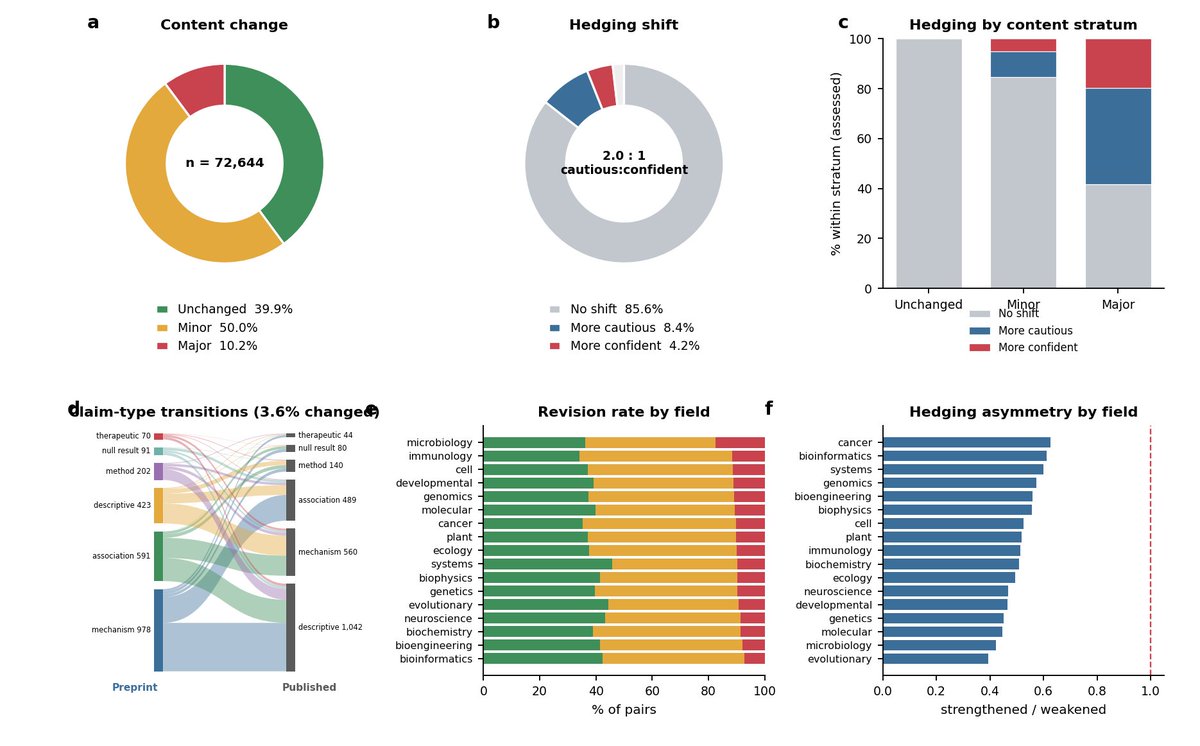
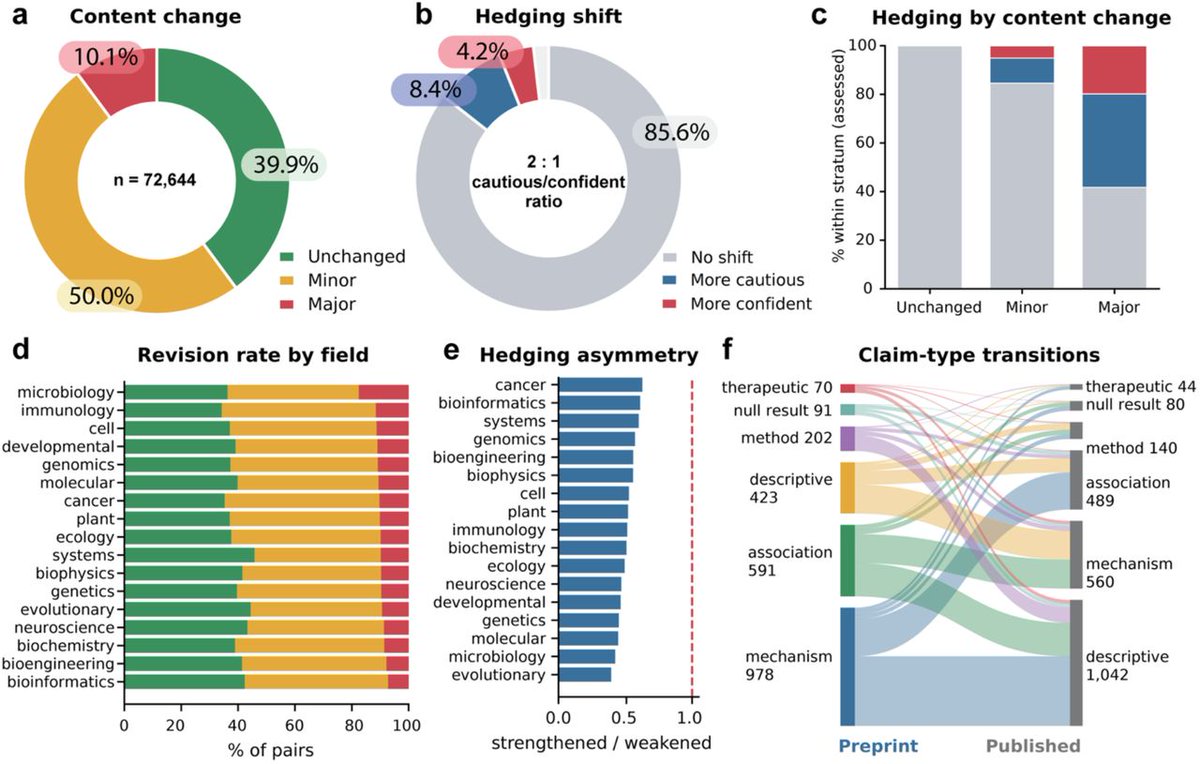
How much does a scientific claim actually change between the preprint and the final published paper? We used a large language model to track it across all available 72,644 bioRxiv -> journal pairs from 2018 - 2025 in this new work with @HaoYin. 🧵
Ruslan Rust tweet media
English
9
62
200
78.2K
Ruslan Rust retweetledi
Ruslan Rust
Ruslan Rust@rust_ruslan·
Few limitations of our study: we compared claims at the abstract level, not full results, so subtler changes in the data or figures aren't captured. We also only see preprints that got published, and the LLM labels, while validated against experts, aren't perfect.
English
2
1
7
1.3K
Ruslan Rust
Ruslan Rust@rust_ruslan·
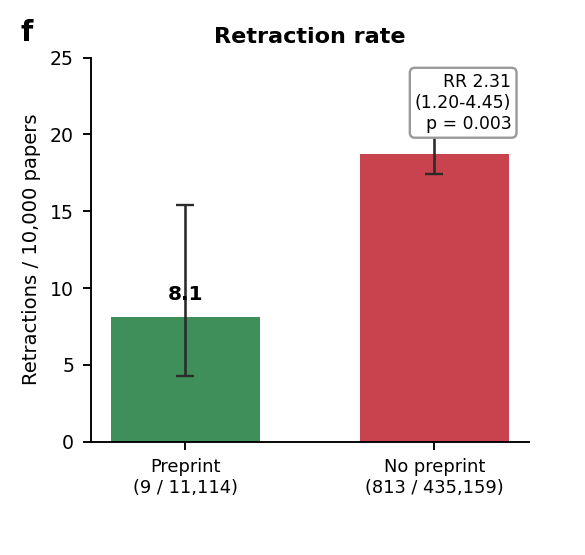
Does preprinting mean sloppier science with more retractions? We actually see quite the opposite: Preprinted papers were retracted about half as often as never-preprinted ones (8.1 vs 18.7 per 10,000). It's associational, but no sign that posting early lowers quality.
Ruslan Rust tweet media
English
1
9
32
2.2K