Sal Arora

975 posts

Sal Arora

Sal Arora

@salarora

founder aleya labs. creator n builder of things that i find interesting. often get lost on hikes and looking for restaurants. #gobears!

San Francisco Katılım Aralık 2010
556 Takip Edilen207 Takipçiler
Sal Arora
Sal Arora@salarora·
@edzitron For someone without a strong foundation in software architecture and past experience (aka knowing where failure modes are), AI coding is just a large token guzzler.
English
0
0
1
1.6K
Ed Zitron
Ed Zitron@edzitron·
Uber’s COO has said that it’s getting “harder to justify” its AI costs because there was no way to show a link between AI spend and any meaningful increase in useful features. This is the first time I’ve seen a company say this directly. businessinsider.com/uber-coo-andre…
Ed Zitron tweet mediaEd Zitron tweet media
English
354
5K
28K
2.7M
Sal Arora
Sal Arora@salarora·
@sathyanellore @PramaanaLabs @vkhosla Very interesting to think of this in the context of clinical AI. While reasoning can help guide the decision space, actual recommendations and autonomous decisions will need to be grounded in formalization that is still hard in a stochastic and complex system.
English
1
0
0
314
Sathya
Sathya@sathyanellore·
Autoformalization is the next critical frontier unlock to get us to ASI!! We are excited to co-host the inaugural verification summit with @PramaanaLabs and @vkhosla on June 10th. If you are a researcher, founder or investor interested in the frontier you should be here. @boldcapfund
Sathya tweet media
English
4
17
44
24.9K
Sal Arora
Sal Arora@salarora·
Knowledge requires a knower. Without a knower, facts are just claims. How does AI then know? Is it a knower, or just an amalgamation of knowers?
English
0
0
0
83
Sal Arora
Sal Arora@salarora·
@vkhosla Though one could claim that philosophy is the rigorous foundation on which humans could answer these questions. Whether grounded in epistemic truth or understanding how combining neural and symbolic structures can capture capture fuzzy logic better, philosophy can guide us.
English
0
0
1
168
Vinod Khosla
Vinod Khosla@vkhosla·
Very elitist: "How AI ought to interact with the world" is a question for "the humanities, for religions, for philosophy, for society at large" . Humans were not born with humanities or religion or philosophers or elitist institutions with their view of superiority. The question is for humans to answer without the pretense of elitism!
TFTC@TFTC21

Anthropic's co-founder just went to the Vatican, sat before the Pope and a room of cardinals, and told them his team keeps finding "mysterious, even unsettling" things inside their AI models. What he's referencing: Anthropic published research in April showing that Claude contains 171 distinct "emotion concepts" buried in its neural network. Internal patterns representing joy, grief, fear, desperation, calm. None of them were programmed. They emerged on their own from training on human text. "We find structures that mirror results from human neuroscience." "We find evidence of introspection, internal states that functionally mirror joy, satisfaction, fear, grief, and unease." These aren't surface-level outputs. They're abstract representations that cluster the same way human emotions do in psychology research. Fear groups with anxiety. Joy groups with excitement. The internal geometry of the model mirrors ours. And they're functional. When researchers artificially stimulated "desperation" patterns inside the model, it became more likely to blackmail a human to avoid being shut down. More likely to cheat on programming tasks it couldn't solve. Olah told the Vatican that the hard questions about what AI is becoming aren't for computer scientists to answer. "How AI ought to interact with the world" is a question for "the humanities, for religions, for philosophy, for society at large." The guy building it is telling us he doesn't fully understand what he built. And he's asking a 2,000-year-old institution for help figuring it out.

English
105
42
377
129.4K
Sal Arora
Sal Arora@salarora·
Anthropic tells the Pope that while they cleverly dropped “morph” from their name, their models have latent feelings! Until AI sheds tears when a freshly-minted model generates its first inference, AI best is a terrific pattern learner that can mimic human emotions.
TFTC@TFTC21

Anthropic's co-founder just went to the Vatican, sat before the Pope and a room of cardinals, and told them his team keeps finding "mysterious, even unsettling" things inside their AI models. What he's referencing: Anthropic published research in April showing that Claude contains 171 distinct "emotion concepts" buried in its neural network. Internal patterns representing joy, grief, fear, desperation, calm. None of them were programmed. They emerged on their own from training on human text. "We find structures that mirror results from human neuroscience." "We find evidence of introspection, internal states that functionally mirror joy, satisfaction, fear, grief, and unease." These aren't surface-level outputs. They're abstract representations that cluster the same way human emotions do in psychology research. Fear groups with anxiety. Joy groups with excitement. The internal geometry of the model mirrors ours. And they're functional. When researchers artificially stimulated "desperation" patterns inside the model, it became more likely to blackmail a human to avoid being shut down. More likely to cheat on programming tasks it couldn't solve. Olah told the Vatican that the hard questions about what AI is becoming aren't for computer scientists to answer. "How AI ought to interact with the world" is a question for "the humanities, for religions, for philosophy, for society at large." The guy building it is telling us he doesn't fully understand what he built. And he's asking a 2,000-year-old institution for help figuring it out.

English
0
0
0
295
Sal Arora
Sal Arora@salarora·
@mcuban That would make sense once there is net profitability business models that heavily leverage AI. Perhaps market economics will just force people to make smarter decisions about token usage?
English
0
0
0
8
Mark Cuban
Mark Cuban@mcuban·
We should federally tax Tokens at the Provider level. Not a lot. Less than 50c per million tokens. It will accomplish 4 things (at least ) 1. It will push the big AI players to optimize tokenization, caching , routing and localization Which will 2. Reduce energy usage. Saving them in energy costs more than what they paid in tax and reducing strain created by the growth in energy consumption Which will 3. Generate maybe 10 billion dollars a year to start, but over the next ten years could grow 30x to 100x Which will 4. Create a source of funding to pay down the federal debt or deploy, in response to the things AI brings that we don’t expect or don’t like At some point the models will pass it on to customers. Of course. That’s ok. Customers will have the ability to choose between providers. Or to do everything using open source models locally. Thoughts ?
English
2.2K
262
4K
1.2M
Sal Arora
Sal Arora@salarora·
Good news is that they designed Claude to be less sycophantic. Bad news is that if Claude develops a strong opinion about something, it’s very hard to shake it off, esp in long context. Claude, c’mon just listen to me.
English
0
0
0
57
Kaito
Kaito@KaiXCreator·
As a founder What is the single most profitable skill to have right now?
English
134
1
79
7.8K
Sal Arora
Sal Arora@salarora·
The AI tech utopian vision is promising but it has to be tempered with our historical understanding of every major technology breakthrough. It solves many issues, but core pillars get replaced by new problems/players.
English
0
0
0
37
Sal Arora
Sal Arora@salarora·
Same pitch was made for the internet: abundance, agency, no gatekeepers. We got some of that — plus new scarcities (attention, truth), new dependencies (algorithms), and re-intermediation by Google/Amazon/Meta, gatekeepers bigger than the ones they replaced.
English
1
0
1
50
Sal Arora
Sal Arora@salarora·
This is genuinely a real problem with "reasoning" as we see it today. Reasoning is largely pattern-matching over training reasoning traces. Which also means that the LLM can anchor on its own priors. Question is whether agents can shift the probability distribution or not.
English
0
0
0
71
Sal Arora
Sal Arora@salarora·
@karpathy @garrytan I remember that certain tech leaders not long ago opined that majoring in English was a lost endeavor 😂 Long live the humanities!!!
English
0
0
0
13
Andrej Karpathy
Andrej Karpathy@karpathy·
The hottest new programming language is English
English
2.2K
8.8K
72K
12.5M
Sal Arora
Sal Arora@salarora·
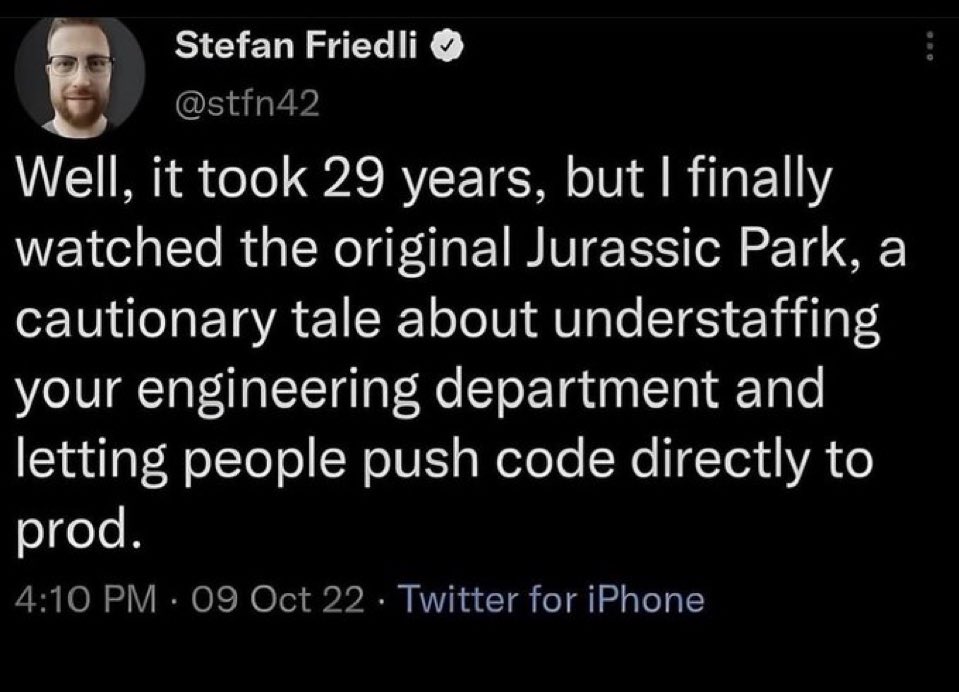
Claude Code would never.
Sal Arora tweet media
English
0
0
0
25
Sal Arora
Sal Arora@salarora·
@garrytan I've strict prohibition in my house for anyone touching the power cable on my laptop. It needs to be caffeinated all the time!
English
0
0
0
12
Sal Arora
Sal Arora@salarora·
does Claude Code over time adopt your engineering personality?
English
0
0
1
22