Samir Singh

1.1K posts

Samir Singh banner
Samir Singh

Samir Singh

@samirsingh

Making Home Ownership More Accessible as COO and Chief Product Officer @vestaequityvpm. Attorney (NB: not your attorney), Founder, Multifamily Owner/Operator.

San Diego, CA Katılım Mayıs 2007
717 Takip Edilen262 Takipçiler
Samir Singh
Samir Singh@samirsingh·
@awrigh01 Enjoyed this. How do you know this statement is true? “They are the first systems we have ever built that can read a paragraph of statutory text, an evolving fact pattern, and a precedent, and produce a structured output that is good enough most of the time to act on.”
English
0
0
1
26
Samir Singh
Samir Singh@samirsingh·
💪🏽
Anthony Moro@anthonymoro111

Hate the picture but love the article. Thanks to @CoinDesk and @sndr_krisztian for covering the launch of @NUVAFinance. Combining world-class financial assets from @Figure and others with the Web3 community building capabilities of @animocabrands Brands is a total game changer. I had the incredible opportunity to help grow the ADR business into a $1 trillion asset class at @BNYglobal. This moment in Web3 feels very similar to those early days.

ART
0
0
0
33
Samir Singh
Samir Singh@samirsingh·
Great illustration of an alternative economic model for accessing AI compute, enabled by blockchain and digital assets.
Erik Voorhees@ErikVoorhees

DIEM & VVV tokenomics... • 1 DIEM = $1/day of daily renewing AI compute credits, spendable on any model from Qwen to Opus 4.7 to Grok to Nano Banana via Venice (app or api) • As demand for AI compute rises, DIEM is bid up. Supply is very constrained (see DIEM price chart below since inception last fall). How does this relate to VVV? • VVV has the exclusive right to "print" DIEM, which locks the VVV until DIEM is paid back (and thus burned). • Every VVV holder basically has a growing pile of instant cash/liquidity, because at any time they can lock some or all of their stash and get DIEM to sell on the market. • Thus as AI compute demand rises, DIEM price rises, and temptation to lock up VVV and mint DIEM grows. • Fundamental to DIEM's design, is the "mint curve." This defines an exponential curve specifying the rate at which VVV can be locked to mint 1 DIEM. • The higher the DIEM supply goes, the further up this curve we go, meaning exponentially more VVV must be locked for a marginal increase in DIEM. • This keeps Venice's liability constrained (remember each DIEM is a liability to Venice, which must provide $1/day of compute) • And this also means an increasing amount of VVV is taken out of supply and locked up until some day in the future if DIEM is paid back. In the image below, price of DIEM has risen gradually along demand for AI compute at Venice, and the tan portion of the VVV bars shows the locked supply, rising from ~5m in Nov to ~9m today. For that VVV supply to ever unlock, DIEM must be bought back and burned... but doing so raises DIEM price and thus tempts more VVV back into locked position. Equilibrium is hereby established and both VVV and DIEM price should ultimately correlate a) to demand for AI compute generally and b) to quality of Venice's AI compute offering specifically.

English
0
0
0
16
Samir Singh
Samir Singh@samirsingh·
Couldn't agree more @singhabhinav. And it's not just orchestration infrastructure generally but infrastructure that specifically integrates traditional financial rails and blockchain rails. As large scale fintechs adopt this infrastructure stablecoin TVL will increase even more rapidly. The positive feedback loop then really kicks in. Exciting time to be building in the space.
English
0
0
0
43
Abhinav Kumar
Abhinav Kumar@singhabhinav·
Mastercard just paid $1.8 billion for BVNK. Not for a wallet. Not for a token. For stablecoin infrastructure — the layer that bridges fiat payment rails to onchain settlement across 130+ countries. Mastercard's stated goal: "24/7 stablecoin settlement for processors and acquirers, and stablecoin checkout across Mastercard's payment gateway." Translation: Mastercard wants every terminal it touches — 140+ billion transactions per year — to have a stablecoin settlement option underneath. This is the largest stablecoin infrastructure acquisition in history. And it follows a pattern that's been building for 18 months. Stripe paid $1B for Bridge (settlement routing). Mastercard paid $1.8B for BVNK (fiat-to-onchain bridging). Rain raised $250M for enterprise stablecoin infrastructure. Ripple built Palisade and Rail for custody and treasury automation. Read the pattern: nobody is acquiring wallets. Nobody is acquiring tokens. Every major financial institution is acquiring or building the orchestration layer. The token is the commodity. The infrastructure is the moat. The acquisitions always follow the value. They're telling you exactly where the value lands.
English
2
6
28
1.2K
Samir Singh retweetledi

Rebecca Rettig
Rebecca Rettig@RebeccaRettig1·
Very apt discussion by the inimitable @DrNickA about the specific features that make a network an actual *blockchain* versus a permissioned database -- especially good read given the timeline rn ⬇️
Nick Almond@DrNickA

x.com/i/article/2037…

English
8
18
128
20.2K
Samir Singh retweetledi
Nick
Nick@NickPlaysCrypto·
I have 56 $DIEM staked on @AskVenice 1 $DIEM staked gives you $1 worth of AI inference usage per day. 56x30=$1680 worth of AI inference per month. I do not pay a cent. I can use claude opus 4.6 all day with this. The underlying asset continues to go up. I invested under 10k My openclaw agent automations all run off this.
Nick tweet media
English
54
40
447
79.8K
Samir Singh
Samir Singh@samirsingh·
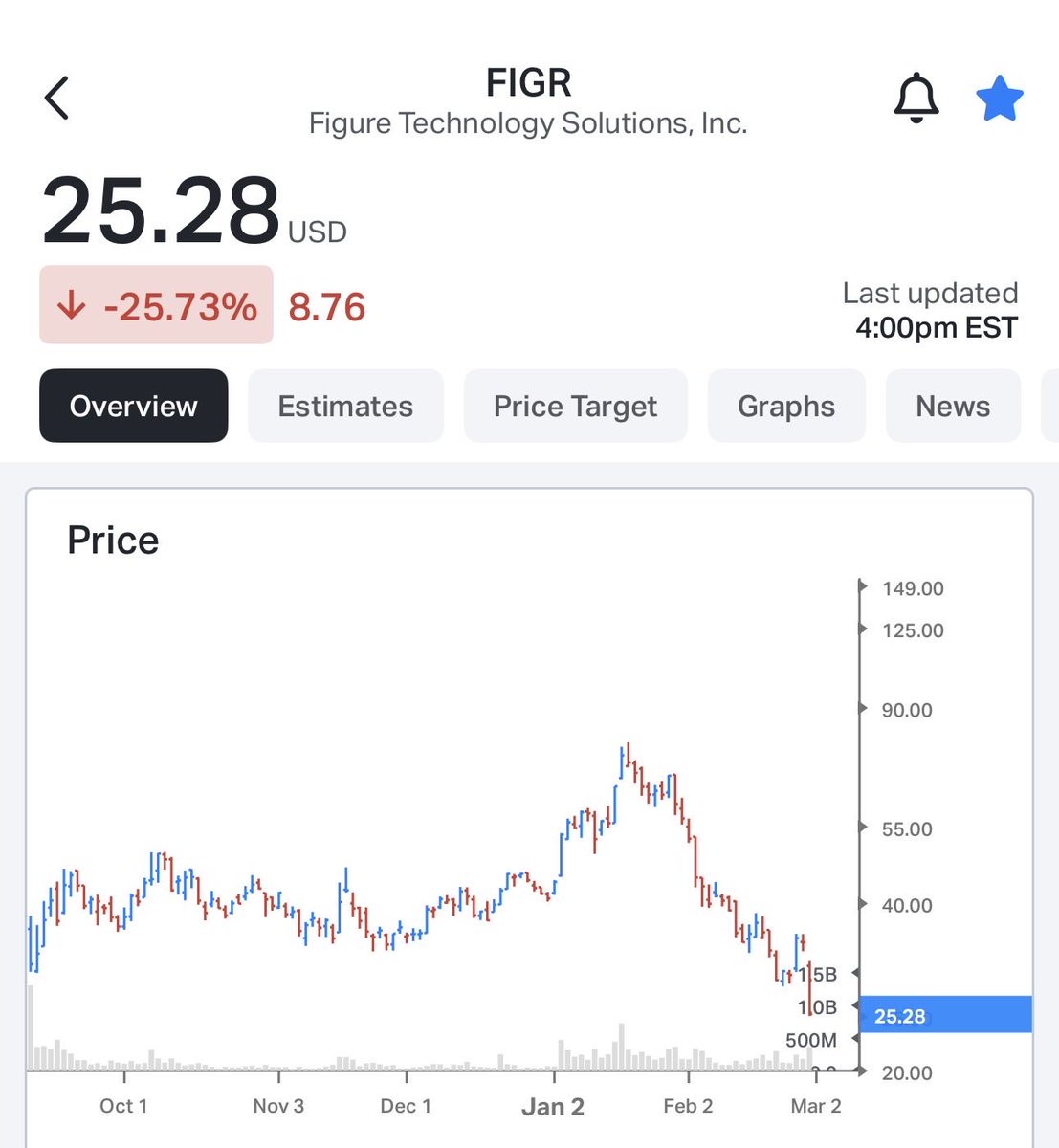
You say “markets are efficient” and miss that this is the point entirely. Figure is building markets and doing it with blockchain infrastructure to increase efficiency and decrease risk. To do that, you need a high quality starter asset (HELOC, check). Next you need compliant infrastructure (again, check, see Provenance blockchain and YLDS which is the *only* yield bearing stable registered with SEC); see also Figure Markets and DemoPrime ($340M in Solana TVL funding US mortgage lending from cold start ~120 days ago), see also OPEN (for Public Equities). FIGR is creating onchain markets. Does it have competition? Yes. But it isn’t HELOC originators. (Disclosure: I’m a founder building on Provenance).
English
1
0
0
118
Samir Singh
Samir Singh@samirsingh·
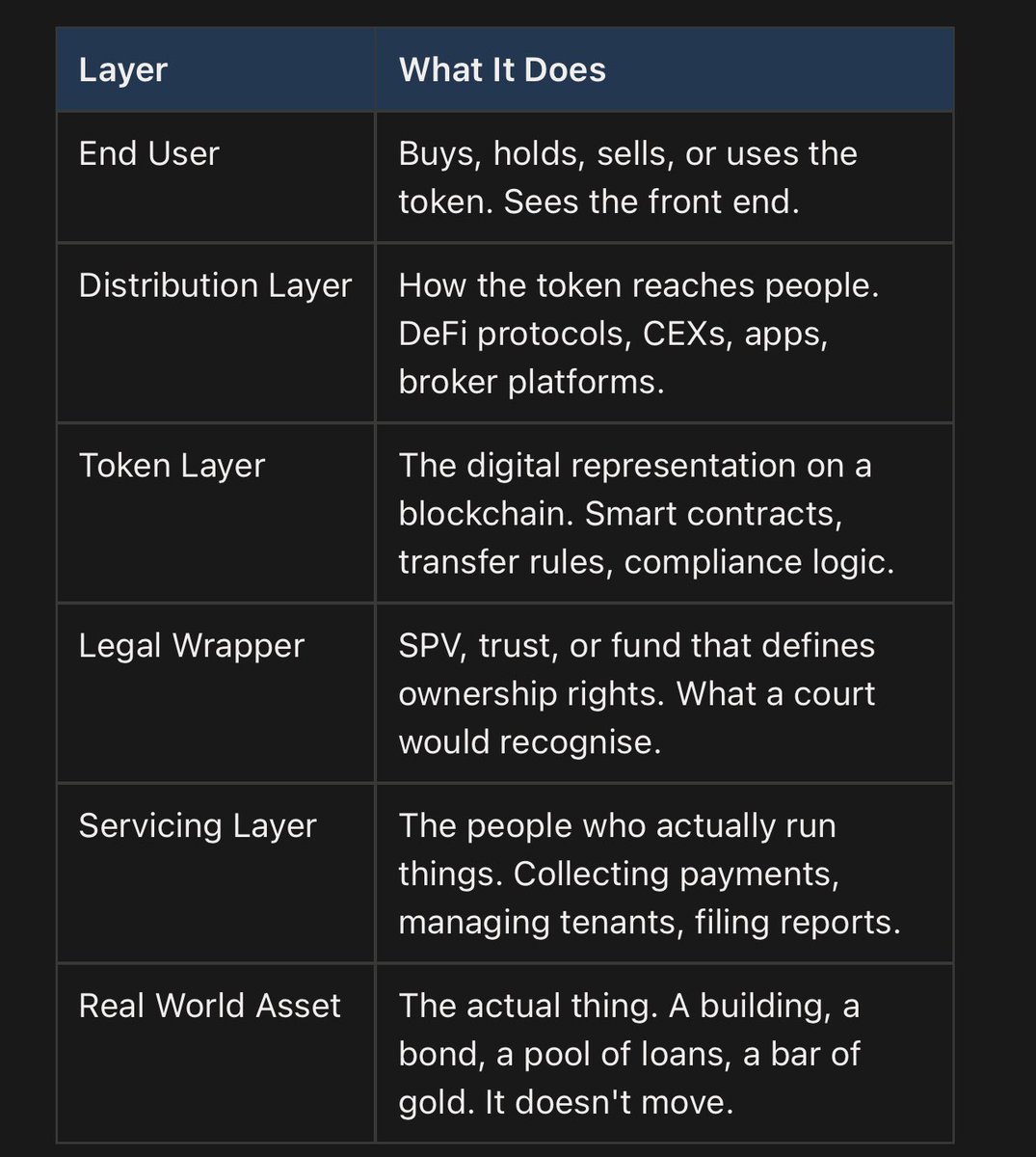
Good stack list. Wrappers are optional and hide risk (who administers the wrapper? What’s actually in it?) so direct tokenization removes the wrapper layer. I’d also add liquidity, leverage, and yield mechanisms that the tokenized “primitive” enables access to as part of the stack. Without that, why invest?
English
0
0
0
11
Zeus 🇬🇧
Zeus 🇬🇧@ZeusRWA·
The RWA Stack - What Sits Under Every Tokenized Asset When you buy a tokenized asset, you're not just buying a token. You're buying into an entire stack - layers of infrastructure, legal agreements, and human operations that all have to work together for that token to mean anything. The token is just the surface. Underneath it sits a legal wrapper, typically an SPV, a trust, or a fund that defines what you actually own in the eyes of a court. Below that, there's a servicer collecting payments, managing the asset, and filing reports. And at the very bottom? The real world asset itself. A building. A bond. A pool of loans. Whatever it may be. Most people only interact with the top two layers, the token and whatever app or protocol they used to buy it. But the bottom four layers are where things are difficult. The question isn't "is this tokenized?" It's "what's holding it all together and what happens when a layer fails?"
Zeus 🇬🇧 tweet media
English
15
5
75
2.5K
Samir Singh
Samir Singh@samirsingh·
Great summary post by @lex_node
_gabrielShapir0@lex_node

this @goodalexander post is a very good* overview of current crypto doldrums/thesis erosion I'd say real situation is even worse than portrayed here in some ways--for example, even on private RWA blockchains the blockchain is not actually the 'settlement layer' for "tokenized stocks" and most "tokenized stocks" are not "tokenized stocks" all that being said, the hopium in the post is also real: (a) crypto 'done right' is still the world's best bet for truly empowering individuals, (b) individuals have more reason to care about (and pay for/value) self-sovereignty than ever before as trust in institutions/governments erodes, and (c) with AI individuals have a chance at becoming even more self-sovereign as they are no longer limited by their own skill--for example, anyone with a ChatGPT subscription can now be an onchain power-user just by asking the right questions, which means less dependence on "DeFi web apps" etc. and fewer true attack vectors for governments so why is crypto faltering? why are OGs capitulating and fintechs taking over with unsatisfactory shortcut solutions that don't accrue any value to 'real crypto'? I personally think the issue is the same one identified by Andreas in his talk "Blockchain vs. Bullshit" 8 years ago about enterprise blockchain (youtube.com/watch?v=SMEOKD…) - -->to wit, many people don't understand (and have a vested interest in not understanding) the real unique value proposition of blockchains--what some call 'trust minimization,' or 'self-sovereignty' or 'social scalability'--and aren't building and investing accordingly the difference is that Andreas' talk once seemed obviously true and most crypto investors agreed with it, now most crypto investors disagree with it and get mad if you make similar points--they are heavily invested in 'neobanks', custodial stablecoins, and other centralized cooptions of 'crypto' & they're not wrong for finding some value there--surprisingly, the "bullshit" identified by Andreas has become a bit useful & is causing a lot of confusion about how to build in crypto and what the ultimate value prop of crypto is. How can this be? Doesn't it mean that actually "the self-sovereign crypto thesis is disproven" and instead some new "fintech thesis" has been proven? Doesn't it mean that "crypto is just some new rails for finance" and you just need to accept this? I say, no. But then I am left to explain 'okay so why is all the 'bullshit' actually thriving'? i.e., why is it not actually "bullshit" but actually has some value? My personal framework for understanding this phenomenon revolves around two reasons/causes: (1) -->private-key infrastructure (PKI) is actually a pretty useful, direct, app auth technology, even if the app is a centralized fintech app -->the "crypto UX" is a pretty good UX for finance--look at your "wallet" and see what assets are "in it" and press a button to do stuff with them, even if those assets are centralized -->crypto wallets with the two above features are widely distributed and so it makes sense to build even very centralized fintech things that use them as the auth & delegate some aspects of UX & functionality to them so that every small fintech startup doesn't have to independently build something similar all of these things can be largely independent of "blockchain" and the self-sovereign/cypherpunk uses of "blockchain", you get the same auth and the same UX and the same distribution even if, when all is said and done, there is some centralized fintech company or monopolistic "institution" that can 100% rug you / censor you / deplatform you at any time there is real value in all the PKI and 'crypto UX' and tooling, as a form of path dependence & non-wheel-reinvention, even if it otherwise doesn't 'make sense' because this stuff was built for decentralization and autonomy in the first place & if designing a *centralized* finance system from scratch, you'd probably just use servers and open APIs instead of blockchains (2) An additional reason the "bullshit" (as Andreas called it) can seem or be useful is a 'halo effect' or what one might even see as a kind of cuckoo-bird strategy aka "brood parasitism" (en.wikipedia.org/wiki/Brood_par…). Regulators/legislators are *not* very good at distinguishing between centralized and decentralized "crypto", so currently there is a legal arbitrage "halo effect" where something that has "crypto flavor" can get the same beneficial regulatory treatment as "real crypto". . .this naturally leads to a "just build a good product using crypto" mindset as in the short term it appears you can "unlock" all kinds of interesting things by just putting it in a "crypto format" even if it's not decentralized/autonomous. The problem is the "unlocks" are not some new structural legal workaround but simply law-breaking in a specific format. Likewise, it just so happens that right now it is politically unpopular to prosecute law-breaking if it happens to occur in a "crypto format". So, personally I believe this is a temporary phenomenon--it's an arb that exploits a time-limited vuln in regulator psychology rather than tying into deep policy rationales that might ultimately get embraced by society as a fair way to draw legal perimeters. To see this, check how crypto market structure legislation is shaping up--it's still based on the idea that a token with its value coming from a decentralized autonomous system presents different trust issues than a security, which should drive a difference in regulation and *can* do so without simply becoming a functional abrogation of the legal system ("different risks, different rules" is the corollary of "same risks, same rules"). It turns out this kind of principled reasoning is the only way Dems and Republicans can align on a fair way to regulate crypto, and there's probably good reason for that (i.e., it probably *is* a fair way). I am still here building & supporting the real stuff as are a bunch of others, because I still believe crypto builder principles (best embodied here imo chaser.eth.link/nikolais-princ…) can lead to significant value beyond the conveniences of mere 'composability on a blockchain'. It's just the timelines for this outperforming have been dramatically lengthened and so you will continue to see a lot of depression/skepticism/crashouts as you simply cannot get rich off the real stuff on any kind of short timeline and you can get very rich off of the "bullshit" on short timelines. Personally, I think everyone in crypto should probably be pursuing a mix of both, as they do synergize to some extent, but we must never lose sight of the end-game as without the cypherpunk fundamentals, as irrelevant as they might currently appear, the 'other stuff' would collapse from the weight of its own psyops. . .all of that stuff is dependent on halo effect and cuckoo bird strategy re: the 'real' crypto. . .

English
0
0
1
51
Samir Singh retweetledi
Erik Voorhees
Erik Voorhees@ErikVoorhees·
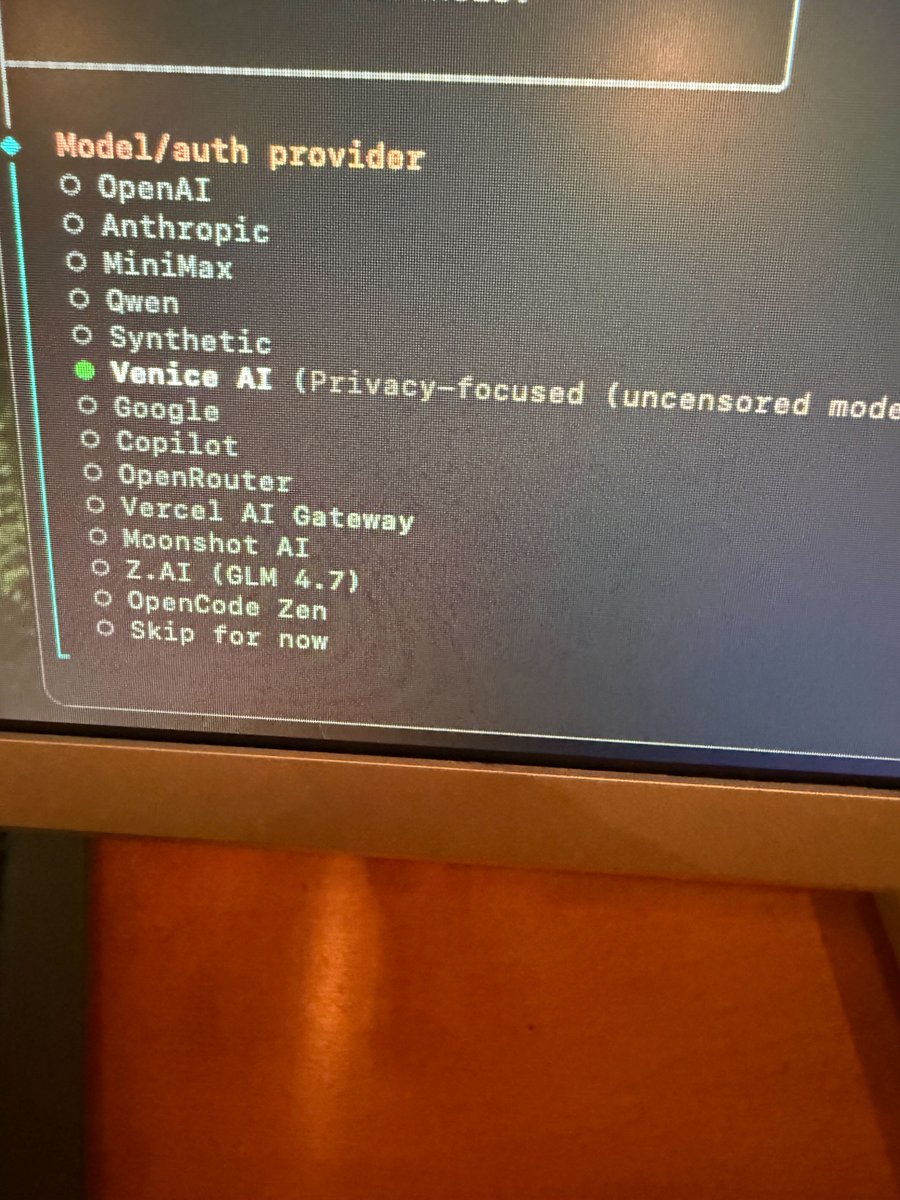
DIEM is the only crypto token that enables free (and private) use of Clawdbot/@openclaw 1. Create Venice.ai account and stake DIEM 2. Install @openclaw and select Venice as inference provider 3. Choose Opus 4.5 or Kimi K2.5 (latter is nearly as intelligent but totally private) as model Each DIEM staked gets you 100 credits renewing daily of inference. You can sell the DIEM when you're done. Get DIEM here on @base @AerodromeFi aerodrome.finance/swap?from=eth&…
Erik Voorhees tweet media
English
75
79
728
73.3K
Samir Singh
Samir Singh@samirsingh·
Love this @brian_armstrong From the article: “The ultimate goal is clear: a world where anyone, regardless of their economic background, can easily convert spare earnings into fractional ownership of productive global assets.” Asset tokenization broadens access to prosperity. Grateful to be building in this space.
Brian Armstrong@brian_armstrong

We’ve released a detailed paper on how tokenization can unlock wealth creation for billions of people Read it here: coinbase.com/blog/bridging-…


English
0
0
0
33
Samir Singh
Samir Singh@samirsingh·
Excited to share that @vestaequityvpm and @nuvalab executed the first-ever home equity investment fully onchain. AlphaHEI™ gives homeowners debt-free access to their home equity and offers investors exposure to a compliant home equity based RWA. go.vestaequity.net/49mR9Ta
English
1
0
1
34