
Brandon Davidson retweetledi
Brandon Davidson
168 posts



Brandon Davidson retweetledi

I used to wave away quantum computing (QC) risks to Bitcoin as far-fetched. I don’t anymore.
The usual pushback goes like this: QC isn’t a threat for years, and if it is, then the whole financial system is in trouble anyway. That line of nihilistic thinking may be comforting to some, but it misses the point.
Big banks aren’t sitting idle. They’re already investing in quantum research, building internal teams, partnering with QC developers, and thinking about how to harden their systems over time. They’re not “quantum-safe” today — but they’re not starting from scratch either.
Bitcoin is different. It can upgrade, technically. But doing so requires slow, messy coordination across a decentralised network. There’s no risk committee, no mandate, no one who can just say “we’re switching now.”
So this isn’t about panic or pretending I know the precise timelines. Maybe QC is five years away. Maybe it’s fifteen. The problem is that quantum risk is low-probability but massive-impact — and those are exactly the risks decentralised systems struggle to deal with early.
Add AI into the mix, and it’s at least plausible that timelines compress rather than extend.
What’s interesting is the growing gap between developer confidence and institutional behaviour. Even if developers think there’s a zero percent chance of a quantum threat in the next five years, some institutions are clearly pricing it higher.
The recent decision by CLSA strategist Chris Wood to remove BTC from his widely followed portfolio due to QC risk may look like “paper hands,” but it matters. It signals that quantum risk is entering institutional risk frameworks — even if views differ widely.
And those views do differ. There’s plenty of counter-evidence. Harvard’s reported decision to increase its exposure by roughly 280% shows institutional support for Bitcoin isn’t disappearing. What’s changing isn’t demand, but dispersion — my guess is that institutional alignment on how to price tail risks diverges further as the QC threat rises.
It’s also plausible that Harvard’s decision had nothing to do with quantum risk at all. Falling volatility alone, consistent with their asset-allocation framework, would justify a higher weighting.
There’s nuance and a lot of in-depth technical understanding, which I’m still working through. But asking these questions is reasonable. @caprioleio has been pushing on this for a while, and he’s right to challenge the shrug-it-off attitude.
What is unreasonable is pretending that JPMorgan and Bitcoin face the same problem. One can prepare in advance and mandate change. The other has to convince everyone, in advance, that a future threat is worth acting on.
Which brings me to the incentive problem.
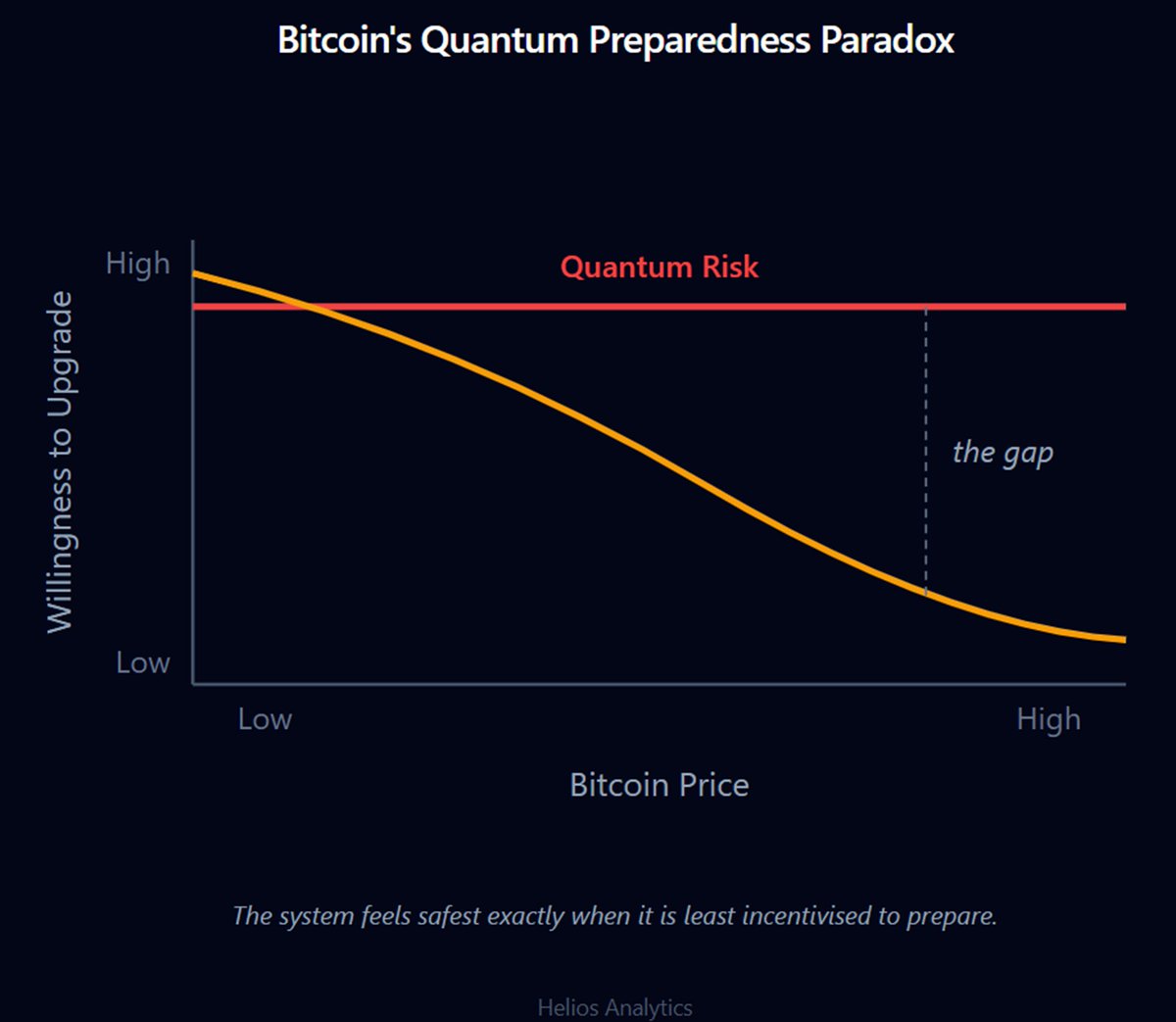
As Bitcoin’s price rises, confidence rises — and the willingness to push through disruptive, precautionary upgrades falls. The system feels safest exactly when it is least incentivised to prepare.
Quantum risk doesn’t move with price, but the gap does.
English
Brandon Davidson retweetledi


Brandon Davidson retweetledi

Concentrated liquidity coming to @THORChain is absolutely huge.
Liquidity inefficiency has been a big problem.
This will result in better quotes, and so more volume.
codehans@codehans1
A little bird tells me @THORChain is getting Concentrated Liquidity supported swap execution tomorrow 🤷♂️
English
Brandon Davidson retweetledi

Brandon Davidson retweetledi

Brandon Davidson retweetledi

October 7, 2025 edition of FFTT full report: "This is not a gold 'rally', it's a gold 'phase change.'"
Gold price: $3,971.
"Gold will be repriced once in life, and that will be much more than enough." -ANOTHER, 1997

English
Brandon Davidson retweetledi

While the crypto bill might be delayed to keep working on it, I am very confident that a bill will get done soon. I have spoken to over 10 senators on both sides of the aisle in the past 24 hrs and I believe they all are working in good faith to get something done. Always gets tense at the end.
English
Brandon Davidson retweetledi

Thanks for coming to our new HQ!
CBS Evening News with Tony Dokoupil@CBSEveningNews
GM CEO Mary Barra tells @TonyDokoupil the auto industry’s push toward electric vehicles is still “on a journey,” acknowledging regulators moved faster than consumers on affordability. Here's what Barra also said about the impact of tariffs.
English
Brandon Davidson retweetledi

Thanks for the response! I disagree, so addressing each:
1. I don’t think there a mechanical reason to suggest that you are long and currency if you own an assets in it. The difference between local FX and foreign investing is a huge deal. When you buy a house in USD- you give up, you USD for the house. The house is denominated in the USD. If the dollar rises 50% against all currencies— it doesn’t have a direct pricing link to your house. You can make many macro cause-and-effect theses here ofc, but those are not at all direct pricing links. If you’re a local investor, you’re just not taking on FX risk.
2. What you’ve described is correct— but I think you missed that the cost of capital is the dominator for the present value of equities. What benefits cash/USD holder? Higher cash rates. But that *hurts* equities. This is why typically a falling dollar via easing vs RoW has come alongside strong equities. Does this always hold? No- but that’s the point, the macro links are time varying and inconsistent. But the thing we do know for sure— if USD cash rates are higher, equities are being discounted at a higher discount. The drivers operate in opposing directions. Are there arguments for the dollar and equities to be more correlated in today’s era? Yes for sure. But they are not from the cost of capital changes, because those are mechanically opposed to stock prices.
3. I think this visual is actually misleading, and dare I say, may even contain some fuckery. Not blaming you at all! but the original author may have take some liberties. They have compared a ratio of US to non-US stocks vs the real effective change rate of the dollar.
If we look at both items individually:
US vs non-US: this is denominated in USD, which is a big problem. What you have is:
(US Stocks, local FX - Foreign Stocks, local FX) + USDFX Rate
The us and foreign stock are actually *very* correlated over time. But the US has a stronger drift upwards. So, a lot of the upwards trajectory is just US stock outperformance. The remainder of the variance is just USD, which will dominate. So it’s literally the dollar
Real Dollar: you have a similar situation here. Nominal Exchange Rate + Inflation Differential. The inflation differentials play very little role in the variance over time. The primary driver is again, the nominal dollar
So what you’re really looking at is a comparison of the dollar, to the dollar. No wonder they correlate!
English
Brandon Davidson retweetledi

The Points module was one of the most requested features from Orderly One DEXs.
You asked for it so we built it.
A fully customizable points system, bespoke for your users.
Orderly@OrderlyNetwork
NEW: Introducing Orderly’s native points module 💜 Points work when they do one thing well. They show users that effort today leads to value tomorrow. We want Orderly powered DEXs to thrive. So we’ve launched a native points module that every Orderly DEX can activate in seconds. Built to reward real trading activity.
English
Brandon Davidson retweetledi

Pro tip: You're probably overthinking what stocks to buy
Autopilot@joinautopilot
If you invested $100K the day Trump invested in Intel $INTC You'd be up 97%
English
Brandon Davidson retweetledi


Brandon Davidson retweetledi




Brandon Davidson retweetledi


Brandon Davidson retweetledi

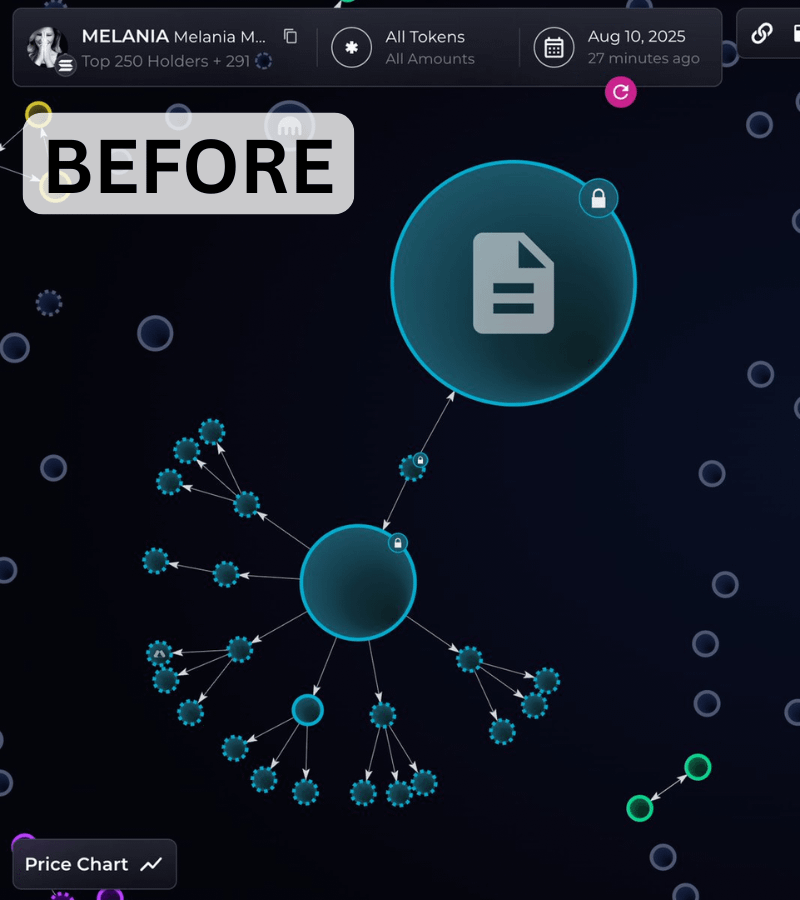
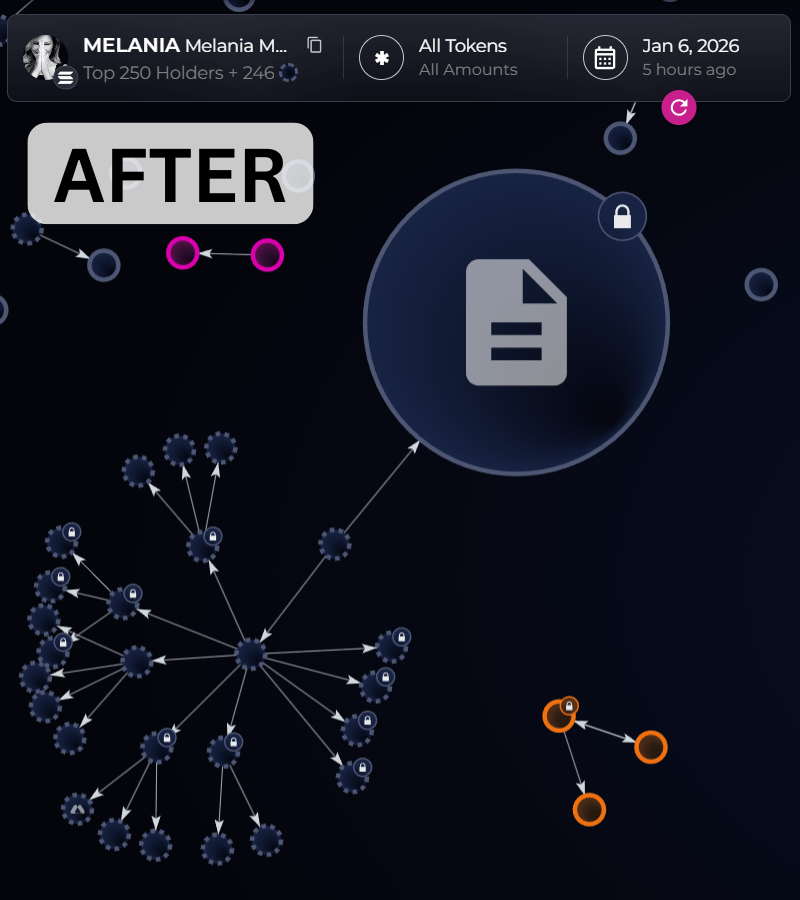
• $16M community tokens sold
• $30M team tokens sold
1 year of complete silence
Happy $MELANIA anniversary 🍰 🎉
Bubblemaps@bubblemaps
It's been 7 MONTHS And still no explanation from $MELANIA team on why: • $30M tokens from team wallets were sold • $10M tokens were removed from the community pool and sold
English
Brandon Davidson retweetledi

In the latest issue of State of the Network, Tanay Ved observes from @CoinMetrics data that #crypto capital is concentrating in larger assets and liquidity pools as the investment universe expands, with #Bitcoin dominance rising and the #altcoin segment narrowing, highlighting structural shifts in market composition.
Key Takeaways:
🔹 As the crypto investment universe expands, capital is becoming more selective across a smaller set of assets: Bitcoin dominance is in a sustained uptrend, while growth in stablecoins and onchain derivatives compresses the space for the altcoin segment.
🔹 The altcoin segment is narrowing and becoming more top‑heavy, with the top 10 altcoins now representing about 82% of its value, up from roughly 70% over the prior five years.
🔹 Large caps have decisively outperformed mid and small caps since 2023, and post‑shock behavior has reinforced a preference for more liquid, established assets.
➡️ Read the full issue: ow.ly/ref750Y0ify
English
Brandon Davidson retweetledi

Peggy walks into your room at 3am holding a candlestick from the 1800s wyd ⋆˙⟡🕯️.𖥔 ܁ ˖

English
Brandon Davidson retweetledi

Gm fam
$BTC chart is aging well from the previous post. If we hold this area and get a close above $96k, we should be in a good spot to push higher.

The Web3 Dojo@defidojo_
Gm and happy weekend fam. $BTC is trying to reclaim the $95k area and if it holds, we could finally see some relief and strength flow back into #Altcoins as well. Let’s see how this plays out 👀
English
Brandon Davidson retweetledi

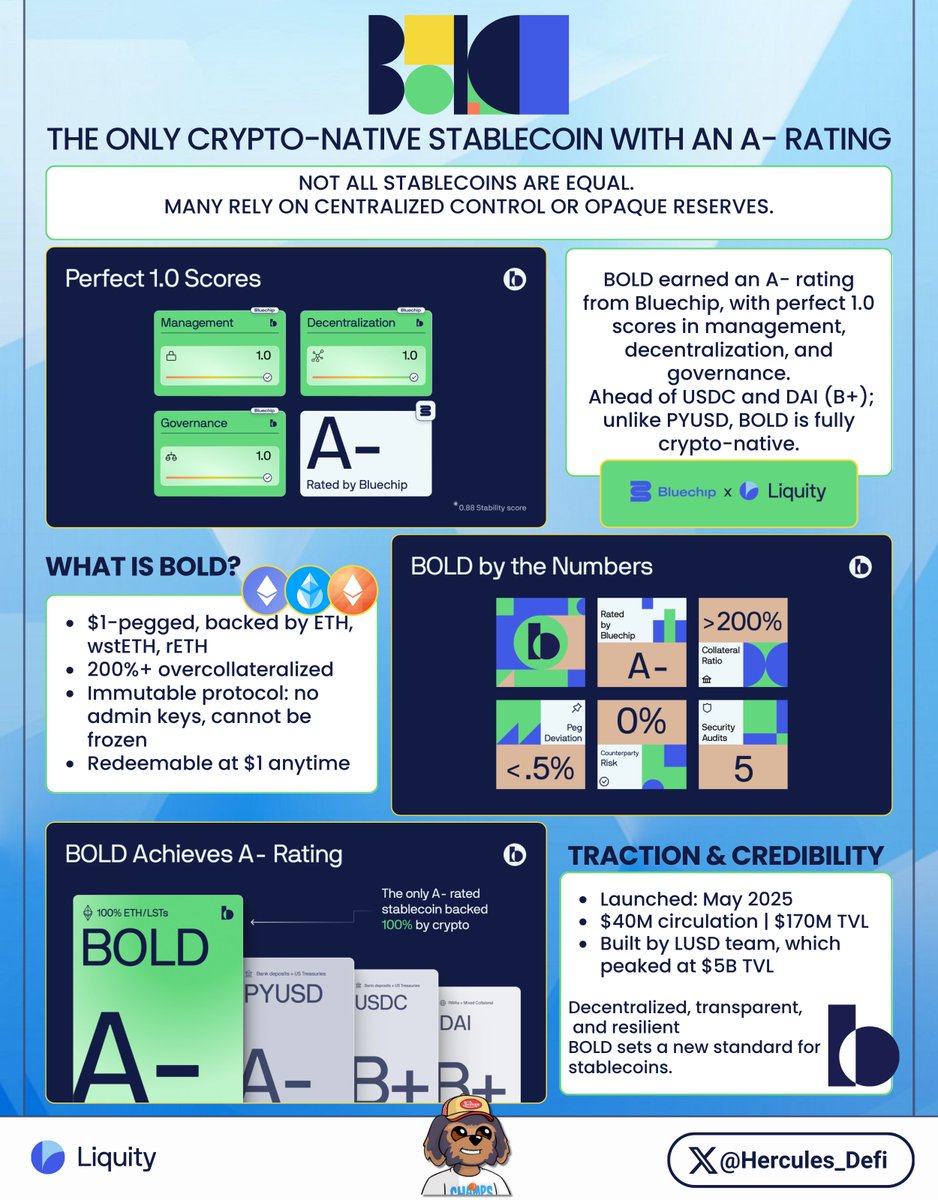
Not all stablecoins are created equal, many rely on centralized control, opaque management, or fragile backing.
@LiquityProtocol's $𝘉𝘖𝘓𝘋 𝘴𝘵𝘢𝘣𝘭𝘦𝘤𝘰𝘪𝘯 𝘫𝘶𝘴𝘵 𝘮𝘢𝘥𝘦 𝘸𝘢𝘷𝘦𝘴 𝘣𝘺 𝘳𝘦𝘤𝘦𝘪𝘷𝘪𝘯𝘨 𝘢𝘯 𝘈- 𝘳𝘢𝘵𝘪𝘯𝘨 𝘧𝘳𝘰𝘮 𝘉𝘭𝘶𝘦𝘤𝘩𝘪𝘱.
𝘛𝘩𝘪𝘴 𝘪𝘯𝘤𝘭𝘶𝘥𝘦𝘴 𝘢 𝘱𝘦𝘳𝘧𝘦𝘤𝘵 1.0 𝘴𝘤𝘰𝘳𝘦𝘴 𝘪𝘯 𝘮𝘢𝘯𝘢𝘨𝘦𝘮𝘦𝘯𝘵, 𝘥𝘦𝘤𝘦𝘯𝘵𝘳𝘢𝘭𝘪𝘻𝘢𝘵𝘪𝘰𝘯, 𝘢𝘯𝘥 𝘨𝘰𝘷𝘦𝘳𝘯𝘢𝘯𝘤𝘦.
That’s higher than USDC and DAI, both rated B+, making BOLD the only crypto-native stablecoin with an A- rating.
While PYUSD also has A- rating but it relies on bank deposits and U.S Treasuries.
--------------------------
𝐖𝐡𝐚𝐭 𝐁𝐎𝐋𝐃 𝐢𝐬 ?
BOLD is a stablecoin pegged to $1, fully backed by Ethereum-native collateral including ETH, wstETH, and rETH,
Also maintained at over 200% overcollateralization to ensure stability.
It is built on an immutable protocol with no admin keys or governance control, BOLD cannot be frozen or blacklisted, giving users confidence in its reliability.
At any time, it is redeemable at $1 for its underlying collateral, combining transparency, security, and predictable value in a truly decentralized way.
And with all this, it received an A-rating
--------------------------
𝐇𝐞𝐫𝐞’𝐬 𝐰𝐡𝐲 𝐭𝐡𝐢𝐬 𝐫𝐚𝐭𝐢𝐧𝐠 𝐢𝐬 𝐰𝐨𝐫𝐭𝐡 𝐩𝐚𝐲𝐢𝐧𝐠 𝐚𝐭𝐭𝐞𝐧𝐭𝐢𝐨𝐧 𝐭𝐨:
𝐆𝐨𝐯𝐞𝐫𝐧𝐚𝐧𝐜𝐞 & 𝐌𝐚𝐧𝐚𝐠𝐞𝐦𝐞𝐧𝐭 𝐌𝐚𝐭𝐭𝐞𝐫
A stablecoin isn’t just a token, it’s a complex financial protocol that needs strong oversight and clear decision-making.
BOLD’s perfect 1.0 in Management, this shows the absence of discretionary control, and also no admin keys
This perfect score also highlight that BOLD isn’t controlled by a single entity.
Decision making is onchain and influenced by the community, meaning users can see, participate in, and influence protocol choices.
For a stablecoin, this is critical,the risk of sudden freezes, arbitrary liquidity changes, or backdoor interventions is drastically reduced, giving users a predictable, reliable system.
--------------------------
𝐃𝐞𝐜𝐞𝐧𝐭𝐫𝐚𝐥𝐢𝐳𝐚𝐭𝐢𝐨𝐧 𝐈𝐬 𝐕𝐞𝐫𝐲 𝐈𝐦𝐩𝐨𝐫𝐭𝐚𝐧𝐭
BOLD’s perfect score in Decentralization shows it’s more than a marketing claim, it’s core to its risk profile.
The stablecoin is backed entirely by onchain collateral, meaning it doesn’t rely on banks, fiat reserves, or custodial intermediaries.
This makes the protocol immune to regulatory freezes, banking crises, or counterparty failures that could impact centralized stablecoins.
Additionally, decentralization in BOLD ensures:
➢ Transparent, algorithmic stability mechanisms
➢ All collateral ratios, issuance, and redemption processes are verifiable on-chain
This allows anyone in the community to audit and understand the protocol in real time.
--------------------------
𝐖𝐡𝐲 𝐓𝐡𝐞𝐬𝐞 𝐑𝐚𝐭𝐢𝐧𝐠𝐬 𝐌𝐚𝐭𝐭𝐞𝐫?
Most people compare stablecoins based on market cap or liquidity, but those metrics don’t reflect quality, governance, or decentralization.
Bluechip ratings, on the other hand, give a quantitative measure of protocol integrity.
BOLD outranking USDC and DAI shows the unique design and serious diversification it has and also how far it can perform.
And really, BOLD’s design guarantees like can’t be frozen are more than slogans, they are verifiable outcomes of decentralized governance and crypto-native backing.
In practice, this means your capital is protected from unilateral decisions and structural vulnerabilities that affect centralized alternatives.
BOLD’s stats also underscore its credibility, launched in May 2025, it now has $40M in circulation and $170M TVL.
And to reiterate, this is built by the liquidity team behind LUSD which peaked at $5B TVL
LUSD has been in operation for four years also.
BOLD was developed to upgrade the borrowing protocol and this provides growth to Liquidity core principles
At this point, you should already know that BOLD is huge and the standards outperform many big stables.
Liquity@LiquityProtocol
A decentralized stablecoin just outranked USDC. @bluechip_org rated BOLD A-, placing it above USDC (B+) and DAI (B+). The only A- rated stablecoin backed 100% by crypto. How did this happen? 🧵
English