

Sarnova 🧡
114 posts

Getting the tokenomics flywheel to work is an important milestone, Mainnet launch soon and much more
Rayls@RaylsLabs
Today, Rayls begins activating its tokenomics as designed. The Rayls Foundation just burned 15,659,073.48 $RLS permanently removing it from supply. This is not a one-off event. It is the start of a recurring mechanism tied to real network activity. Track it via the transparency portal: transparency.rayls.com
English
English

English

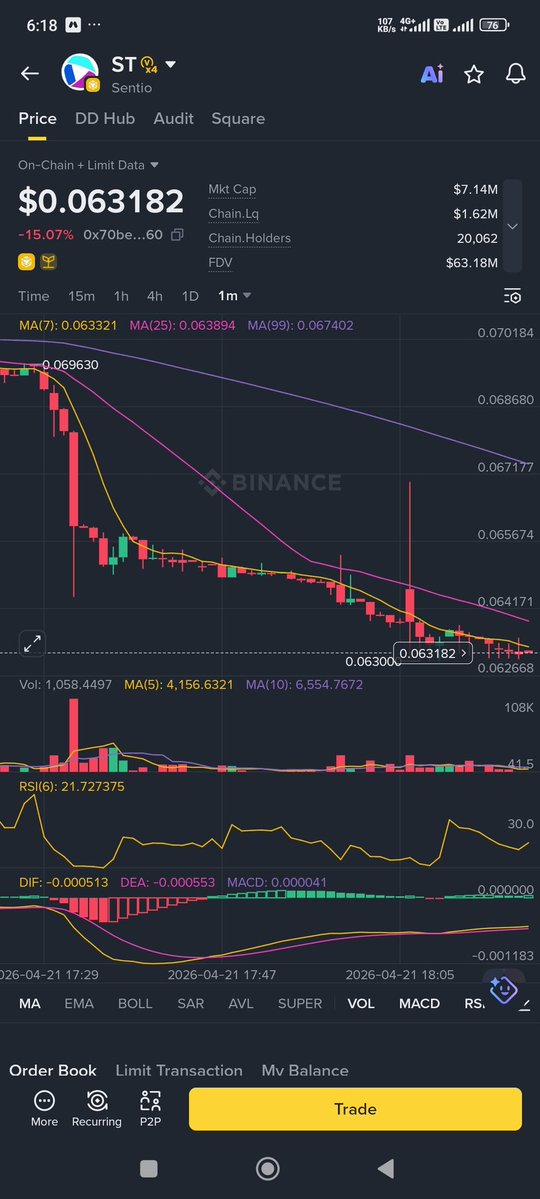
$ST is live.
➡️ Now trading on Binance Alpha & @Gate
➡️ Trading pair: $ST / $USDT
➡️ Convert with 0 fees on @Gate
Phase 1 & 2 Booster rewards are claimable on @BinanceWallet.
💡Discover > Booster > My Total Rewards > Batch Claim.
The owl has been watching since day one. This is what building quietly looks like.
#BinanceAlpha #Kraken #Gate

English
@DripandRizz @RaylsLabs @GoPlusSecurity haha, they will pull of something else. these are cheap ass scammers.
English

@RaylsLabs @GoPlusSecurity $RLS may be pull off Rave move
English

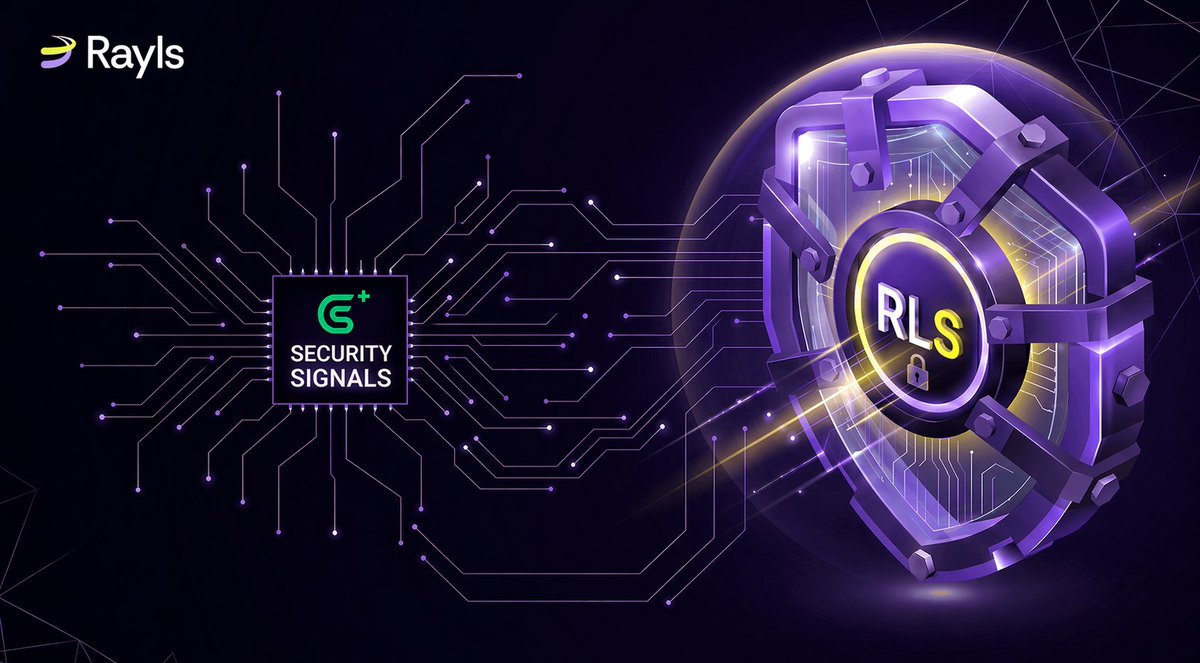
A useful way to assess token security is to focus on the actual contract controls.
Token-level checks from @GoPlusSecurity on $RLS show a straightforward picture:
> verified source code
> no proxy
> no mint function
> no hidden owner
> owner cannot change balances
> no self-destruct function
On the trading side:
> no honeypot behavior
> no blacklist
> no whitelist
> no trading cooldown
> 0% buy / sell / transfer tax
> tax cannot be modified
Clear permissions. Clean trading conditions. Transparent contract logic.
That is the standard that matters.
English
@RaylsLabs @GoPlusSecurity You, yourself is honey pot. Why looking for scammers outside effers
English
@mcvviriato @RaylsLabs Why don't just fuck off instead of scamming for living. Find a decent way of providing for your family, if you had one, and still they are with you. Despicable team
English
Burn coming to play an important part of @RaylsLabs tokenomics!
Rayls@RaylsLabs
Today: @x10xalex joins us to break down the first $RLS burn, how the mechanism works, and what it means for Rayls tokenomics as mainnet approaches. We’ll cover: >the burn mechanism >what happens next > how this fits into the broader Rayls tokenomics model Don't miss it 🔔
English
@RaylsLabs You have been delisted officially from Binance future scammers 🫶🏼
English
April 30th, 3 PM UTC.
Nothing changes here. . . until everything does 🚊
Rayls Public Chain Mainnet 🔔
Alex Buelau@x10xalex
BREAKING: Rayls Public Chain Mainnet goes live April 30th at 3pm UTC. Tokenomics finally activates: real usage → fees → automated burns + validator rewards. The deflationary flywheel starts now. After building through all the noise, this is where it gets real. Full details: rayls.com/blog/rayls-pub… Who’s ready? 🚀🚅🔥
English


BREAKING: Rayls Public Chain Mainnet goes live April 30th at 3pm UTC.
Tokenomics finally activates: real usage → fees → automated burns + validator rewards. The deflationary flywheel starts now.
After building through all the noise, this is where it gets real. Full details: rayls.com/blog/rayls-pub…
Who’s ready? 🚀🚅🔥
English

@RaylsLabs Some garbage meme coins are doing better than you. You are first class scammers with not an ounce of morals.
English
$15-20 trillion in unpaid invoices exist right now.
That's more than short-term bank lending in most economies.
It's the invisible infrastructure financing global commerce, and until now, you couldn't access it.
Rayls is changing that. Receivables are coming onchain.

English

@RaylsLabs rayls foundation dumped 110,000,000 rls yesterday. be careful, rugpull signal😀
English
We're going to see entirely new organizational forms emerge.
Companies that can't be shut down.
Communities that own their own platforms.
Economic systems where exit and voice are both real options, not just theory.
The hard part is making sure we're encoding the right values as we build.
I want internet capitalism that doesn't require surveillance.
Internet democracy that actually scales participation.
Internet privacy that's the default, not a luxury.
We're not just replacing the old order.
We're discovering what's possible beyond it.
Balaji@balajis
I have never been more bullish on crypto. Because the rules-based order is collapsing and the code-based order is rising. So the short term price doesn’t matter. As international law breaks down, we will need not just onchain currencies, but onchain companies. As the post-war order breaks down, we’ll similarly need the post-internet order. States will fail, and the network will take their place. We need internet capitalism, we need internet democracy, and we need internet privacy. So we need cryptocurrency.
English
@KylerSteele8 @mcvviriato These guys are professional scammers. Don't think it's the market selling. Been there and seen that. It's the team dumping. No other rational explanation. Guess karma will catch upto them in some ways of forms. Maybe not financially, may be the health of someone close one
English

@mcvviriato Why are they even partnered with rayls. Gives tether a bad name! Rayls blockchain has been dumping the project since launch. Using cookies as a cover up!
English
When you spend long enough around real systems, you learn that reliability beats rhetoric every time.
Things either work, or they don’t.
That’s why Tether stands out to me.
Not because of what people say about it, but because it became part of how real money moves around the World, day in and day out.
Rayls was built with that assumption: design for what’s already real, not what sounds good on slides.
And seeing Parfin, Rayls core developer, backed by Tether, feels like natural alignment.
This progress comes in waves, the momentum has been building at Rayls, that's usually a good sign.
Rayls@RaylsLabs
In our latest AMA with Nimofast, we talked about why @tether is becoming the backbone of how money actually moves. Not theory. Real settlement. Real cross-border flow. That belief is baked into Rayls. Our core developer, Parfin, is proud to be backed by Tether. Quietly building. Systemically scaling 🚊
English
English

@terembun @injective institutions are about to flood into injective for this composability
English

Hydro Protocol solves liquid staking's core capital efficiency problem on Injective
Stake INJ through @injective, receive hINJ or yINJ, and deploy that liquidity across DeFi without sacrificing staking rewards
hINJ maintains 1:1 peg for composability, yINJ auto-accrues yield over time
Key mechanisms:
• Loop Staking: Borrow against hINJ, restake, amplify returns
• Auto-Compound: Gas-free reward reinvestment
• Money Market: Decentralized lending for capital optimization
• Full DeFi composability while maintaining staking yield
Most LST protocols treat staking and liquidity as competing activities
Hydro integrates both, enabling simultaneous yield generation and capital deployment across the entire ecosystem.

English


On a day when Crypto Twitter is dominated by the "The Death of InfoFi" narrative.
Its great to see that traditional press can still cut through the noise.
@RaylsLabs trending on Twitter yesterday through earned media shows channel effectiveness is cyclical.
Its not just about the next big thing, maybe its the previous big thing that brings the alpha.

English
@oxkagee @CantonNetwork This guy again! Full of shit. You must be getting paid for such bullshit shilling
English
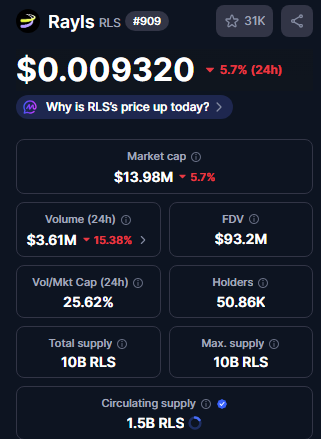
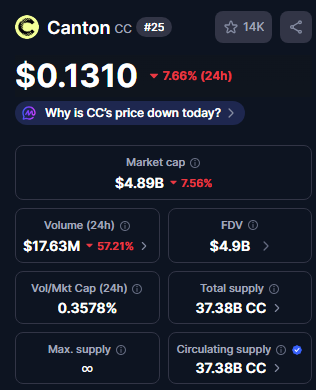
same target, with a 350× valuation gap. $CC sits around ~$5b. $RLS is near ~$14m.
@CantonNetwork has spent the last two years accumulating institutional commitments. consortium members, live production flows, and reported trillions in on-chain value pushed price discovery early.
@RaylsLabs is earlier in that cycle. mainnet is planned for q1 this year, pilots are active, and validation is still coming through proofs of concept rather than sustained balance-sheet usage.
both target banks, rwa, privacy, and compliant settlement. timing explains most of the gap, along with who has already deployed capital versus who is still evaluating infrastructure.
now what? the gap only gets tested when rayls shows repeat settlement at scale.
that’s also why rayls can close it: private subnets, native compliance, and direct bank workflows are built for daily settlement. if those flows keep running month after month, valuation starts following usage.
Kage@oxkagee
wall street doesn’t have a privacy problem. it has a dead capital problem. that’s the outcome i keep seeing around @CantonNetwork. trades finalize cleanly. data stays restricted. capital usually stops moving. the system is built for agreement, not reuse. once settlement completes, interaction paths narrow fast. that keeps risk contained. it also keeps assets parked. privacy there works by limiting who can touch the state. external protocols stay out. secondary use rarely happens. the contrast shows up when privacy allows verified outputs to leave. balances stay hidden. results still interact elsewhere. this is where @RaylsLabs takes a different route. confidential state stays private. settlement outputs remain usable. after settlement, assets can move into other venues under constraints. compliance is enforced through disclosure rules. institutions already know how to settle safely. their harder problem is keeping capital productive afterward. tldr; canton is strong at private coordination but limits what assets can do afterward. rayls keeps privacy while allowing assets to keep moving.
English
@RaylsLabs Every time there is an AMA, $RLS price tanks. I guess the scam team is paying the participants by selling some tokens. It's surreal how the team is selling the tokens to oblivion.
English
Rayls is partnering with Nimofast Global to bring large-scale, real-world asset tokenization to Brazil’s energy and agribusiness markets.
Through this collaboration, Nimofast Global will leverage Rayls’ institutional blockchain infrastructure to structure and scale tokenized financial instruments.
It is backed by real assets, real cash flows, and real economic activity, targeting up to $100B in assets over time.
This is infrastructure built for governance, compliance, and long-term capital formation.
A concrete step toward modernizing how the physical economy accesses global, onchain liquidity.
English
I don’t think tokenization is about moving assets onchain.
I think it’s about rebuilding the financial rails that move the real economy.
Partnering with Nimofast Global reflects that belief.
This is long-term capital, real infrastructure, and governance-first execution, applied to sectors that actually power nations.
Energy and agribusiness will still matter decades from now.
The question is whether the financial systems around them evolve.
This partnership is a step toward that future, where the physical economy and global capital finally operate on the same rails.
Rayls@RaylsLabs
Rayls is partnering with Nimofast Global to bring large-scale, real-world asset tokenization to Brazil’s energy and agribusiness markets. Through this collaboration, Nimofast Global will leverage Rayls’ institutional blockchain infrastructure to structure and scale tokenized financial instruments. It is backed by real assets, real cash flows, and real economic activity, targeting up to $100B in assets over time. This is infrastructure built for governance, compliance, and long-term capital formation. A concrete step toward modernizing how the physical economy accesses global, onchain liquidity.
English
English

¬ @RaylsLabs is live on @CoinMarketCap but listings aren’t the milestone.
The real shift is structural.
Global finance is replatforming as banks, assets, and money move onchain with permanence, not experimentation.
Rayls is built for that phase.
When trillions require compliant execution, privacy, and deterministic settlement, infrastructure becomes the differentiator not narratives.
Track $RLS on CMC.
The systems that endure are being defined now.
Which chains are actually engineered for institutional capital?

Kenny@rykenny
The market is converging on a simple truth: privacy is the control layer for real onchain finance. @RaylsLabs is built around that reality. Assets move easily across chains. Intent, strategy, and counterparties do not and that asymmetry is where durable financial networks are formed. As institutional capital scales onchain, transparency stops being a virtue and becomes a risk. Rayls makes privacy native, provable, and composable, so execution can happen without signaling intent while settlement remains verifiable. This isn’t a pivot. It’s the architecture Rayls has been building toward from day one. The real question is how many chains are still optimizing for visibility instead of control.
English
@oxkagee @cookiedotfun @RaylsLabs You are doing wrong. For promoting garbage projects and tryna create exit liquidity for the fraud team. Maybe you are one of them. Who knows!
English
.@cookiedotfun is cooked
im literally not earning any @RaylsLabs mindshare in last 14d
even though my post got engaged from several sf and top lbs, and was liked by the Rayls team, I still got nothing
am i doing it wrong?

English