

satoshicamelmoto
157 posts

satoshicamelmoto
@satocamoto
Technically, I love camel 🐫 Return to Mainnet 🐫 @cypher_ethereum
Katılım Mayıs 2026
50 Takip Edilen44 Takipçiler


You've attracted an audience.
Remilio

Camel Cabal@camel_cabal
Camel massive potential 😱 One hump good 👍 Two hump insane 🤯 Big things cooking 🍳 Retardio artist and remilo dev 🤫 WAGMI 🚀
English

@infiniteREDACT @camel_cabal Most people probably think, now comes a chart forecast. Ha ha ha ha
English

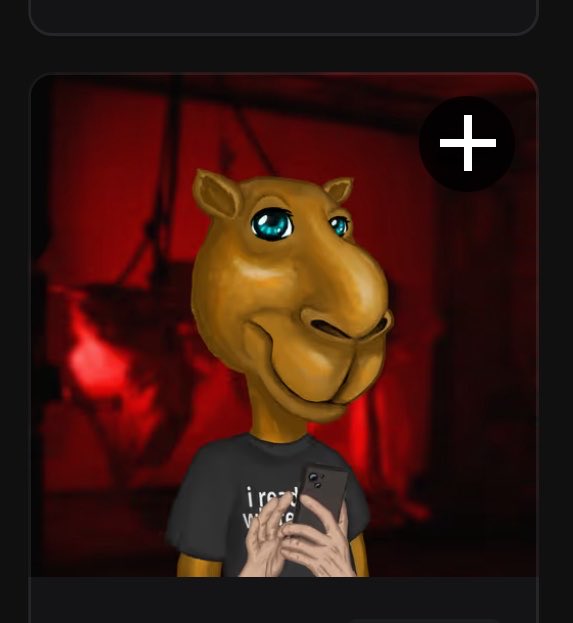


what happens when they find out there are only 2222 camels?
what happens when they find out only 1023 of those are minted?
what happens when they find out the treasury bought back over 500 camels that it'll never sell?
camel mode 🐫

English
Camel massive potential 😱
One hump good 👍
Two hump insane 🤯
Big things cooking 🍳
Retardio artist and remilo dev 🤫
WAGMI 🚀

English



@satocamoto @camel_cabal love to see
Grails are in gooood hands
English


it's possible to bridge the gap between VCs and onchain funding, and we can use it as an opportunity to filter out the extractive slop
where you launch matters. it determines a lot of things that cannot be changed later on. anyone claiming to have the perfect launch method for instant success is retarded or thinks you're retarded. there is no universal solution because every project has different requirements, costs, timelines, and goals.
the real question is whether the structure is aligned with the long-term success of the protocol, and if users truly benefit from that success
this is why launches need to reflect the actual values of a team. you cannot do that on platforms designed purely to extract from launches or with no real values at all. a lot of the problems with onchain fundraising are not even technical, they come down to intention and incentives. just because something is onchain does not make it fair or aligned.
at the same time, a lot of people are also delusional about what sustainable funding actually looks like.
projects can raise 7figs privately w/o any product live or anything even built, so it's obvious that something like that would not be well suited to launching onchain with the same terms. the market demands instant value justification, whereas through VCs the same project can spend several years before being liquid.
on the other side, you have people who think larger teams can sustainably launch a bonding curve token and survive entirely off trading fees. that can work for smaller experimental or vibecoded projects, but for serious teams with real costs, salaries, infrastructure, audits, and long development cycles, it provides almost zero certainty.
the math makes this obvious: a team can raise $1m privately and get years of runway to build without immediate market pressure. to generate that same amount purely from trading fees, you'd need hundreds of millions in volume before a product or roadmap is even there.
this is why the convo around fundraising needs to become more nuanced than "VC bad" or "launchpad good", because there really is no easy answer for either.
raising capital is supposed to be difficult. launching a token is supposed to be difficult. there should be pressure, risk, and accountability. but it's possible to structure these things in a way that aligns teams and users instead of extracting from both.
we've already proven it's possible to avoid the traditional VC route and build entirely onchain, that was entire goal of launching $CYPH on our own infrastructure, after we gained first-hand experience supporting the launch of over 15 projects on L2s across the past several years. we have seen many failures and successes specifically for this, this is not our first rodeo.
Cypher spent over a year building with no private investment before fair-launching through a public ICO. the raise was structured around what was genuinely needed to build out the roadmap, and the market responded accordingly.
post-launch price obviously matters, but the launch itself should not be optimised purely around short-term chart performance. the real goal is giving a team enough resources and alignment to continue building regardless of what happens in the market over the following months.
this is why i believe onchain ICOs are the best path forward, but only if done properly and in a highly curated way.
maybe one project only needs to raise $50,000. maybe another genuinely requires 100x more. the important part is that the structure reflects reality instead of forcing every team into the same launch meta. even before Cypher, we spent several years doing this as the largest DeFi protocol on one of the largest L2s, so we have gone through countless launches to know what works and doesn't. this is why we're building bespoke market infrastructure at Cypher, and doing it only on L1.
you inherit the values of the chain you launch on, and you also inherit the values of the platform you raise and trade on. the most bullish approach is building an approach that rewards users, aligns teams to the success of the protocol, and still gives builders enough foundation to actually execute long-term.
we've been very deliberate about making our values clear, so that when teams look at Cypher they understand the intention behind everything we do:
- only built natively on L1
- no VCs or private investors
- fair-launched once the product was live through a public ICO
- all value accrues back to the token
- everything built is designed to support real builders
- driven by long-term alignment instead of extraction
if you actually care about what you're building and want to do it in the fairest way possible, the structure matters just as much as the product itself.
it won't be easy, but we'll continue proving why we believe so strongly in Cypher's vision of rebuilding capital markets on Ethereum L1.
Return to Mainnet 🐫
English