Kejun Liu (刘珂君)

278 posts

Kejun Liu (刘珂君) banner
Kejun Liu (刘珂君)

Kejun Liu (刘珂君)

@sci_liu

Professor at Functional Nano&Soft Institute, Soochow University, China

Suzhou, China Katılım Haziran 2019
560 Takip Edilen239 Takipçiler
Kejun Liu (刘珂君) retweetledi

Nature Synthesis
Nature Synthesis@NatureSynthesis·
Now online: Article by Junfeng Gao, Xinliang Feng, Renhao Dong & co-authors On-liquid-gallium surface synthesis of ultrasmooth thin films of conductive metal–organic frameworks nature.com/articles/s4416… ($)
English
0
6
14
2.7K
Kejun Liu (刘珂君) retweetledi
Communications Chemistry
Communications Chemistry@CommsChem·
On-water synthesis of a crystalline monolayer 2D polyimide and its incorporation into organic–inorganic hybrid van der Waals heterostructures nature.com/articles/s4200…
Communications Chemistry tweet media
English
0
5
21
1.7K
Kejun Liu (刘珂君) retweetledi
COF_Papers
COF_Papers@COF_papers·
Terahertz Conductivity of Free‐standing 3d Covalent Organic Framework Membranes Fabricated via Triple‐Layer‐Dual Interfacial Approach onlinelibrary.wiley.com/doi/10.1002/ad…
English
1
2
12
1.5K
Hao Zeng
Hao Zeng@HaoZeng_Group·
What do I do if my student often tells me that my ideas aren't good?
English
9
0
12
5.7K
Kejun Liu (刘珂君)
Kejun Liu (刘珂君)@sci_liu·
@asalleo I remember some meathods, such as THz, have shown the distance of charge transfer is very short, roughly also several monomers.
English
0
0
0
266
Alberto Salleo
Alberto Salleo@asalleo·
Just out, probably some of the most fundamental and intricate work from the group! We prove that the conventional mid-gap model used for decades to interpret the absorption of field-induced polarons in conjugated polarons is incorrect …1/5 pubs.rsc.org/en/content/art…
English
4
10
91
13.1K
Ye Wang
Ye Wang@Yewang92·
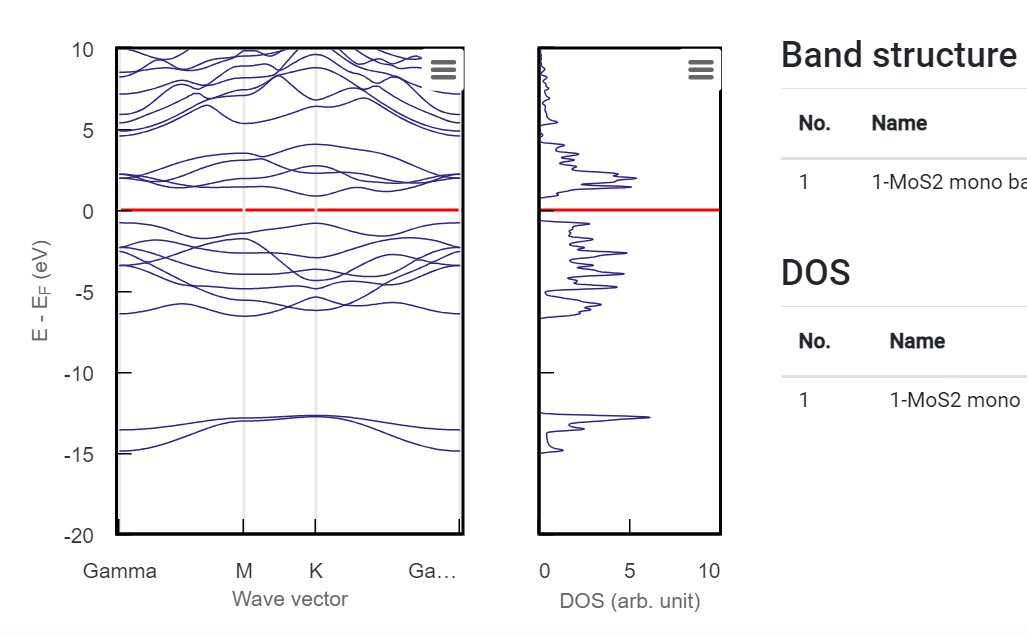
After being a (desperate) experimentalist for 7 years, I started to follow DFT tutorials to calculate band structure myself!
Ye Wang tweet media
English
17
10
362
40.4K
Kejun Liu (刘珂君)
Kejun Liu (刘珂君)@sci_liu·
First time using AI to generate a wonderful cover picture for my research proposal presentation. Guess what the topic is related to?
Kejun Liu (刘珂君) tweet media
English
0
0
1
329
flyingfox
flyingfox@flyingfox44·
@Andercot No one seems to be paying much attention to the peer reviewed paper from the 90s showing actual resistance transitions in doped lead oxides. A bit premature to call it over.
flyingfox tweet media
English
3
2
29
9.9K
Andrew Côté
Andrew Côté@Andercot·
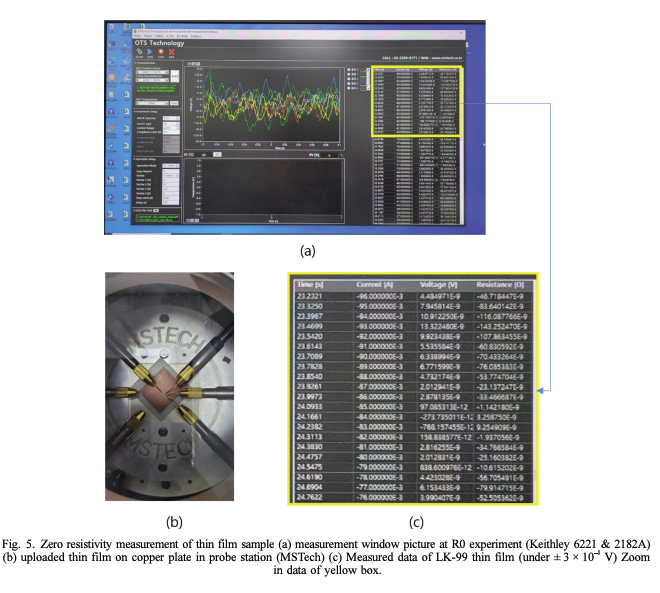
LK-99: The Case for Skepticism By now there's been a number of replications, videos, pre-prints on arxiv, and at-home or at-work attempts to reproduce the original findings of Lee and Kim. Here's why I'm increasingly skeptical on LK-99 and my reasoning: #1 - The Videos There's been a number of videos produced and circulating the internet showing partial levitation or full levitation, the kind of thing you see in cryogenic superconductors that 'quantum lock' or 'flux pin' and float in mid-air. The issue with all these videos is that the visual behavior is completely indistinguishable from a diamagnetic. I was initially under the impression that you could not produce stable levitation from two simple dipoles, according to a time-honored theorem from physics by Earnshaw, and so levitation above a single magnet was 'proof positive'. However, as it turns out, there is a less well-known exception to this rule called Brauenbecker extension which provides a mathematical proof that levitation is possible with a simple diamagnetic in a dipole field so long as the diamagnetic material mass is very small relative to the strength of the magnetic field. (Note that there are plenty of videos of a diamagnetic floating above a grid of magnets, but those magnets have a more complicated field than a dipole and so Earnshaw's theorem does not apply. Here is the derivation of Brauenbecker's result for the curious: cds.cern.ch/record/535810/… ) The suspicious thing in the levitation of LK-99 videos is that the 'stable equilibrium point' is directly above the center of the magnet. This is what you'd expect via the Brauenbecker derivation - that the only stable point is in the center. A flux-pinned super conductor could levitate in many different orientations including off to the side of the magnet. Conclusion - the videos do NOT show flux-pinning. #2 The Simplest Measurements are Missing By now there have been several replications of the material by laboratories of professional scientists with high quality equipment that yield a high purity of LK-99, higher purity than the original reports by Lee and Kim. None of these measurements have accomplished the most direct and obvious result of room-temperature superconductivity, which is zero resistance at room-temperature. Lee and Kim's original paper had badly formatted plots, not the best choice of plot axes, and in general it was overall rushed to arxiv. They reported absolute resistance but not physical dimensions of the sample, and claimed a resistivity in the text of their article that was on the order of a superconductor but it isn't clear where that calculation came from. Subsequent teams have published results claiming 'zero resistance' but at 110K - which is great, but not that impressive - tons of materials superconduct at very low temperatures and so it is not indicative of much special about LK-99. Conclusion - Measurements are the proof and they haven't materialized #3 - Simulations are suggestive and not predictive Much of my initial enthusiasm came from reading simulations performed by well-respected scientists like @sineatrix at LBNL and others are University of Boulder Colorado and TU Wien - their results didn't rule out LK-99 entirely! I thought this was incredible. However, this was always tempered by the knowledge that the physical properties as measured by lab equipment would be soon to follow and support the proposed mechanisms of superconductivity as described in the preprints on simulations. Notably those simulation results are also congruent with other more mundane interpretations like magnetism and diamagnetism, as mentioned by the original authors themselves. Conclusion - Simulations are suggestive but we don't live in a simulation ~~~~~~~~~ Overall Takeaway: I first wrote about my initial take on the LK-99 publication in this tweet here: x.com/andercot/statu… I expressed a few concerns in that original tweet and so far none of them have been adequately addressed, despite several replication attempts and follow-ups. If this material was the holy grail of materials science then it seems likely at least some of the missing results would have manifested by now. Summary: - Videos are explainable by more mundane everyday effects - Key measurements are missing - Simulations are nice but we don't live in one. ~~~~~~~~~~ As I've said before I'm deferring any real conclusions until the results of Argonne National Lab, but right now my mental model is: LK-99 is a diamagnetic semiconductor. This doesn't change my conviction that ambient-pressure room-temperature superconductors can very well be discovered and manufactured at-scale within our lifetimes, and that such a development would be a watershed moment for humanity.
Andrew Côté tweet mediaAndrew Côté tweet media
English
138
440
2.6K
1.4M
kidariiii_193
kidariiii_193@kidariiii_193·
@alexkaplan0 The measurement method is different. While we measured a pellet sample, the Koreans used a thin film sample. in Korean Paper
kidariiii_193 tweet media
English
2
0
3
1.5K
Alex Kaplan
Alex Kaplan@alexkaplan0·
It's as close to official as we'll probably get: LK-99 is likely simply a ferromagnetic material, which explains its levitating properties, according to new research from Peking University. The room temperature superconductivity revolution will have to wait another day.
English
284
1.2K
11.6K
3.9M
Kejun Liu (刘珂君)
Kejun Liu (刘珂君)@sci_liu·
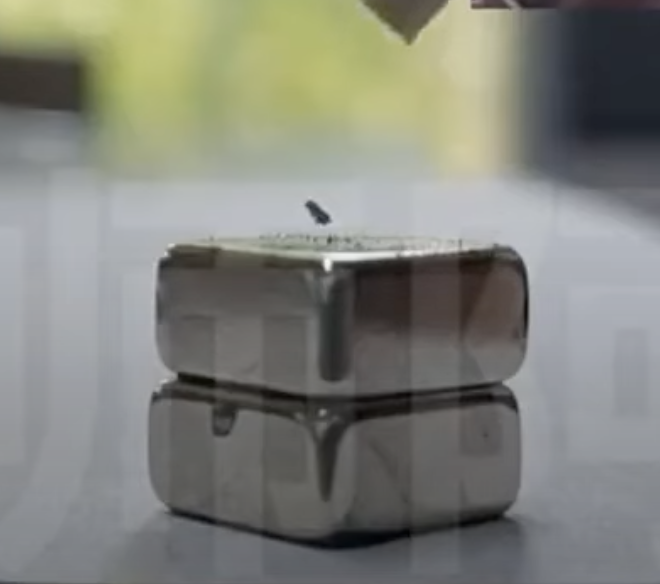
@lere0_0 The sample held obliquely shows severe shaking , but this sample don't fell out of stability or stuck to the magnet. This is a very typical "quantum locking" of a superconducting state, which can "pin" magnetic field lines, preventing them from falling down.
English
0
0
16
4.6K
Green Pill
Green Pill@DarkPillDigest·
Video of #lk99 levitating below a magnet from University of Science and Technology Beijing
English
68
89
692
514.2K