Scott Gerber

17.3K posts

Scott Gerber banner
Scott Gerber

Scott Gerber

@scottgerber

🌐 Chief Executive, https://t.co/62kWUmYETE, 📣 Managing Partner, https://t.co/UKxHEQtJry 🍕 Owner, https://t.co/lS6lYUEprb

Hamptons & NYC Katılım Nisan 2009
487 Takip Edilen14K Takipçiler
Sabitlenmiş Tweet
Scott Gerber
Scott Gerber@scottgerber·
Alright, I’ve lurked long enough on X. It’s time to stop consuming and start talking about the things I care about… Community building and brand extensions… (and maybe a little about our family pizza business from time to time 🍕). Over the last 20 years I’ve built teams across various industries, wrote a few books, built businesses that have generated hundreds of millions of $$$, and—most importantly—have an incredible family. I have to imagine I can share something of value here…. I’ll try my best to be as useful to follow in the footsteps of some the people I respect on this platform (like @thesamparr, @brianbeers, @alexisohanian, @sweatystartup, @businessbarista, @Codie_Sanchez & @McFranchisee)… and I guess we will see how I do… So, if you care about community or pizza, give me a follow.
English
0
0
2
170
Scott Gerber
Scott Gerber@scottgerber·
@McFranchisee @McDonalds What’s average ticket now compared to 12 months and 24 months ago? What average store profit now compared to 12 months and 24 months ago?
English
2
0
3
3.1K
McFranchisee
McFranchisee@McFranchisee·
🚨 My @McDonalds AMA starts now. Drop your weird and curious questions below. I’ll answer every non-duplicate serious question (nothing confidential, related to my bank account, or who I am… 🥸). No DMs - let’s go! 🍔🍟
English
201
4
134
43.1K
Scott Gerber
Scott Gerber@scottgerber·
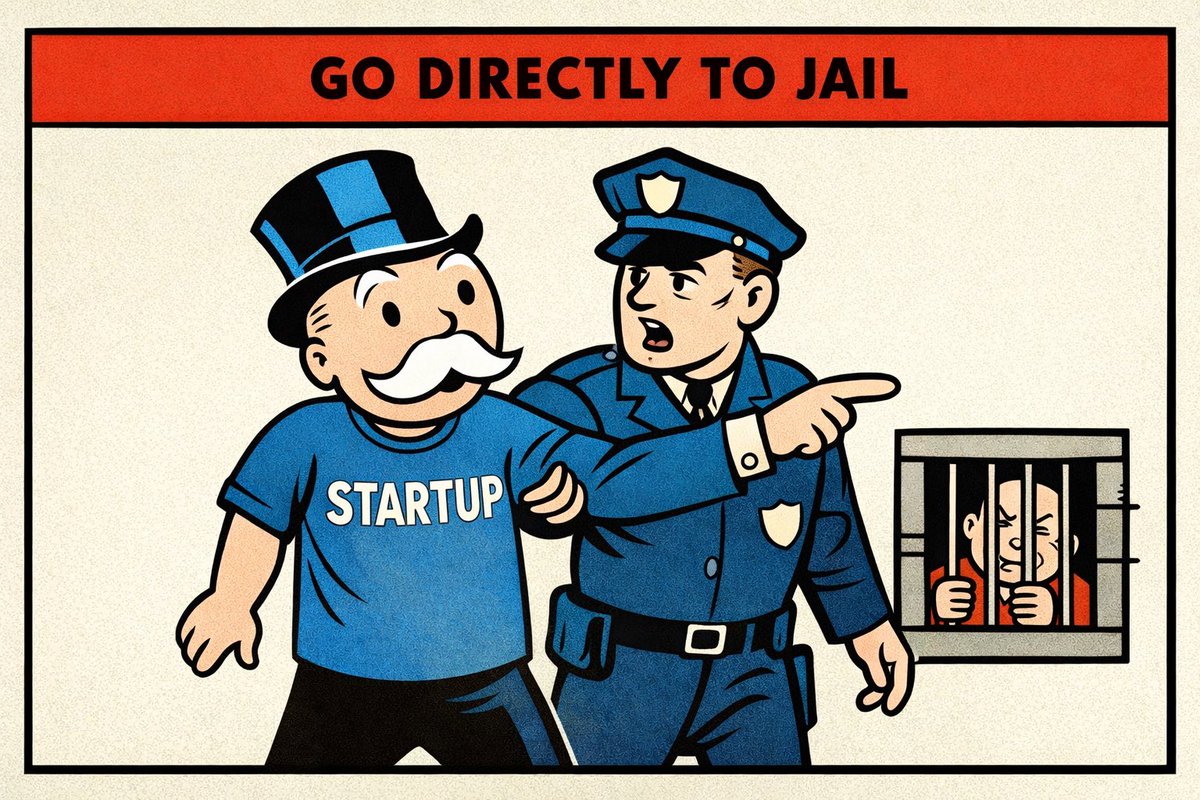
Fraud is showing up far too often in startups. Not exaggeration. Not optimism. Fraud. There’s barely a week that goes by without another story of manipulated numbers, misleading sales processes, exaggerated traction, or founders claiming to have a product that either doesn’t exist yet or doesn’t actually work. And when the truth comes out, the most astonishing part is often the reaction. Some people seem genuinely shocked that they’re being held accountable—especially when shareholder capital or customer trust is involved. Recent examples make the point. The founder of clothing-tech startup CaaStle recently pleaded guilty in a fraud scheme involving more than $300M after prosecutors said investors were misled through fabricated audits and false financials. We’ve seen similar patterns before—from Theranos to the collapse of FTX to the implosion of Terra/Luna. Different sectors. Same underlying problem: trust being abused. And even this week there are new conversations circulating around startups like Delve, where allegations about fraudulent compliance documentation and misleading representations to customers are being debated across the ecosystem. But this isn’t only a founder problem. Investors, advisors, and board members share responsibility too. We can’t celebrate “growth at all costs,” demand hockey-stick metrics, and then act surprised when ethics get sacrificed along the way. Young founders need to hear something clearly: Growth should never come at the expense of honesty. A real company starts with a real product. Not a pitch deck. Not a narrative. Not a story about what might exist someday. Even the best sales pitch in the world must be backed by something real and valid in the market. And this brings me to something personal. Years ago, I wrote about the idea of “fake it till you make it.” It was a widely celebrated startup mindset—including by me in my first book. But “fake it till you make it” was never supposed to mean lie your way to the top. It meant having the confidence to step into the market before you feel fully ready. Believing in your ability to build something meaningful. It was never supposed to mean misleading investors. It was never supposed to mean deceiving customers. And it was never supposed to mean fabricating reality. Somewhere along the way, parts of startup culture twisted confidence into dishonesty. We need to correct that. We need to mentor founders better. We need to teach leaders better. And we need to expect more from them. Because trust is the foundation of entrepreneurship. And when trust disappears, the entire ecosystem starts to break.
Scott Gerber tweet media
English
0
1
0
33
Scott Gerber
Scott Gerber@scottgerber·
I want to talk about something uncomfortable. I agree with Sam Altman’s view that in the coming months, we’re going to see more and more companies use AI as a scapegoat for workforce reductions. And that’s where leadership matters. There’s no question AI will dramatically reshape the workforce in the months and years ahead. It will change workflows. It will eliminate certain roles. It will create entirely new ones. That’s reality. But there’s a difference between real structural change and PR spin. Over-hiring during COVID. Staffing up for growth that never materialized. Chasing strategies that didn’t pan out. Now suddenly it’s framed as: “AI efficiencies.” AI is powerful. It’s transformative. But in most organizations today, it’s still augmentation before annihilation. The idea that massive portions of teams became obsolete overnight because of breakthroughs in the last 24 months is, in many cases, a convenient narrative. The harder truth? Sometimes leadership made the wrong calls. Letting people go is brutal. I’ve had to do it. My executive team has had to do it. It’s never fun. It’s never clean. It’s never something you celebrate. It’s a responsibility — and when it happens, you own it. You don’t blame a technology trend. You don’t spin it to juice the stock. You don’t pretend it was always part of the master plan. Markets may reward optics. But leadership isn’t about optics. It’s about integrity. And while we’re on the topic — the Twitterati narrative doesn’t help. Every day it’s: “This company is cooked.” “That business is done.” “AI just ate their lunch.” Yes — AI will absolutely take a bite out of companies that are slow, rigid, or unwilling to adapt. That has happened in every technological shift in history. But AI is not going to eat every company on earth overnight. It’s not going to replace every function instantly. Not every business is “cooked.” There’s a difference between disruption and extinction. As leaders, we have to learn to separate signal from noise. We have real companies to run. Real products to improve. Real clients to serve. And most importantly — real people who built these organizations. My advice? Deploy AI inside your teams. Empower them. Augment them. Make them faster, smarter, more effective. I would rather protect my team and supercharge their output than use AI as a reason to remove them. If efficiency needs to improve, consider a hiring freeze before a hiring purge. AI will absolutely change the workforce. That’s inevitable. But leaders need to be honest about whether they’re responding to long-term transformation — or correcting past decisions under the cover of innovation. AI is a tool. It is not a scapegoat. And people can tell the difference.
Scott Gerber tweet media
English
0
0
0
115
Sam Parr
Sam Parr@thesamparr·
I have a massive favor, Twitter. My friend has cancer. He needs access to a particular drug. I’m trying to get them introduced to someone at one of these companies: - Bristol-Myers Squibb - Merck - GSK My email is: sam@joinhampton.com Can anyone help?
English
64
68
529
112.8K
Scott Gerber
Scott Gerber@scottgerber·
Associations are heading toward a massive reset. For too long, many have confused software with community. Buying another SaaS platform isn’t the same as curating a room. Sending another newsletter isn’t the same as developing leaders. Hosting a conference isn’t the same as convening the right people in the right conversations. And now AI is accelerating the pressure. AI can: •Deliver learning and development instantly. •Personalize education at scale. •Connect professionals across industries in seconds. •Provide on-demand insights faster than any committee ever could. If an association’s primary value is information, access to a directory, or lightly structured networking… AI will outcompete that — quickly. But here’s the opportunity: Associations can win where AI cannot — in intentional curation. The future belongs to organizations that: •Carefully select who is in the room. •Facilitate meaningful, high-trust conversations. •Design events around outcomes, not agendas. •Create environments where the right people meet the right people at the right time. Because if the room isn’t special, AI will eat that too. This is the great association reset. Some will evolve into high-trust, high-curation conveners that thrive in an AI-powered world. Others will continue mistaking tools for value — and slowly fade. The question isn’t whether AI changes associations. The question is whether associations are willing to change first.
Scott Gerber tweet media
English
0
0
0
63
Scott Gerber
Scott Gerber@scottgerber·
When I hear a community-based business is raising VC, I get it — capital can help. But the minute growth becomes the mandate, the model shifts. Community isn’t blitzscaling. It’s referrals, trust, constant human touch. The second you treat members like numbers… the numbers fall. You can’t force intimacy at scale without breaking the very thing that made it special. Raise too early, and you risk optimizing for growth over belonging — and that’s a hard thing to win back.
English
0
0
0
37
Scott Gerber
Scott Gerber@scottgerber·
Super Bowl ads don’t win because of production value. They win because of community. Coinbase proved simplicity + participation beats glitz. Dunkin’ wins every year because its fans do the amplifying. The ad starts the convo. The community turns it into a movement. That’s the real brand moat.
English
0
0
0
84
Scott Gerber
Scott Gerber@scottgerber·
End State A media company with: •Multiple $10M+ ARR vertical business lines •Deep journalistic authority •Private rooms that shape outcomes •Conferences that feel more like institutions than events Jim nailed the journalism reset. This is how you turn that authority into durable, high-margin community businesses. The next era of media won’t be built on reach alone. It’ll be built on access, trust, and the right rooms — priced accordingly.
English
0
0
0
16
Scott Gerber
Scott Gerber@scottgerber·
6. Protect the Wall, Increase the Value This only works if trust remains intact: •Reporters do not sell •Editors curate access •Business teams monetize structure, not coverage •Clear ethical lines around participation The credibility of the journalism is what makes the membership valuable.
English
2
0
1
22
Scott Gerber
Scott Gerber@scottgerber·
.@axios CEO @JimVandeHei laid out a clear, opinionated blueprint for rebuilding the journalistic core of the Washington Post. I agree with almost all of it. Here’s how I’d extend that thinking into a durable, high-ARR business model built around community and convening power--and when I say community, I’m not talking about free Slack groups, comment sections, or “membership” as a marketing tactic. I’m talking about paid, verticalized membership products priced in the thousands of dollars per year, designed around access, privacy, and connectivity. A thread…
English
1
0
1
44
Scott Gerber
Scott Gerber@scottgerber·
7. Scale Within Verticals Before Expanding Across Them Growth happens by: •Adding tiers inside a vertical •Increasing frequency, not size, of small rooms •Letting demand pull scale, not forcing it Each vertical becomes a self-sustaining ARR engine.
English
0
0
0
11
Chris Cillizza
Chris Cillizza@ChrisCillizza·
As I have said before: The next time a big media company needs an actual visionary leader who understands this industry, VandeHei needs to be at the top of the list.
Jim VandeHei@JimVandeHei

My breakfast crack at it…You’re on the clock… Mission: Restore @washingtonpost to its glory  • 2 reporters on every federal agency, small WH team w/ 3 top-tier reporters and governmentwide specialists in federal rule-making and contracting and spending • Entice Post stars who left to return as service to their city, profession and nation.  They talk a big game on X - call their bluff!  • Two reporters on each of top local biz sectors: defense, tech, HC, lobbying & influence, etc.  • Buy @PunchbowlNews to anchor Hill. Make @apalmerdc CEO and you head of Hill + Sports + smack-talking • Bonus thought: buy @theinformation and make @Jessicalessin EIC.  DC and Silicon Valley are essentially merging.  • Poach @peterbakernyt as DC news chief… • Work w philanthropists or @propublica to fund investigative public trust w stories made available to other outlets upon publication. Team w Post staff reporters on most consequential projects.  Ask @PostBaron and @realBobWoodward unit and train a new generation of diggers and grinders… • Reporters in top dozen global capitals covering interplay w US/DC - make @IgnatiusPost central to this  • Fortify War unit  • 2 reporters on each of the pro sports teams w daily newsletter by team. Lure @SallyJenki back for sweep… • Go hyper local w local w coverage by parts of city, DMV or neighborhood (other than DC govt) • Sunday print only or preferably none at all. AI-first for all operations beyond reporting, editing, sales, leadership.  • Scrap opinion: city has enough noise. • Two tier pricing: current lowest price for consumer and $1000+ for insider coverage produced by above team that’s not of broad citywide interest.  • Set up as future profit share for all employees to be incentivize w shared business mindset and goal of permanent durability.  • First step last: sell it to someone who will do this… then declare war on @Politico to retake what we took and make peace w/ inevitability and distinctiveness of @Axios… what say you fella?

English
24
1
30
48K
Scott Gerber
Scott Gerber@scottgerber·
Great take from Axios’ CEO. But here’s the bigger miss across legacy media—including WaPo: journalism alone isn’t the growth strategy anymore. The New York Times adapted by bundling lifestyle, games, and daily habits. B2B media is building conference real estate. Trade pubs are expanding into products and services. All smart moves. But the biggest miss? Convening community. Axios figured it out early: events + private rooms = leverage. The Washington Post should be hosting the most consequential, invite-only conversations in the world—off-the-record salons, policy and industry summits, and members-only communities around power and influence. Journalism remains the core. But the future business model is premium ARR layered on top: verticalized events and private communities people will happily pay $2.5K–$10K/year for—just to be in the right room, at the right time, with the right people. Media doesn’t just inform culture anymore. The winners convene it.
Jim VandeHei@JimVandeHei

My breakfast crack at it…You’re on the clock… Mission: Restore @washingtonpost to its glory  • 2 reporters on every federal agency, small WH team w/ 3 top-tier reporters and governmentwide specialists in federal rule-making and contracting and spending • Entice Post stars who left to return as service to their city, profession and nation.  They talk a big game on X - call their bluff!  • Two reporters on each of top local biz sectors: defense, tech, HC, lobbying & influence, etc.  • Buy @PunchbowlNews to anchor Hill. Make @apalmerdc CEO and you head of Hill + Sports + smack-talking • Bonus thought: buy @theinformation and make @Jessicalessin EIC.  DC and Silicon Valley are essentially merging.  • Poach @peterbakernyt as DC news chief… • Work w philanthropists or @propublica to fund investigative public trust w stories made available to other outlets upon publication. Team w Post staff reporters on most consequential projects.  Ask @PostBaron and @realBobWoodward unit and train a new generation of diggers and grinders… • Reporters in top dozen global capitals covering interplay w US/DC - make @IgnatiusPost central to this  • Fortify War unit  • 2 reporters on each of the pro sports teams w daily newsletter by team. Lure @SallyJenki back for sweep… • Go hyper local w local w coverage by parts of city, DMV or neighborhood (other than DC govt) • Sunday print only or preferably none at all. AI-first for all operations beyond reporting, editing, sales, leadership.  • Scrap opinion: city has enough noise. • Two tier pricing: current lowest price for consumer and $1000+ for insider coverage produced by above team that’s not of broad citywide interest.  • Set up as future profit share for all employees to be incentivize w shared business mindset and goal of permanent durability.  • First step last: sell it to someone who will do this… then declare war on @Politico to retake what we took and make peace w/ inevitability and distinctiveness of @Axios… what say you fella?

English
0
0
0
79