Subash

1K posts

Subash

Subash

@scratchingsurf

Random musings on science and philosophy| reading sci-fi and classics

Katılım Ocak 2010
260 Takip Edilen129 Takipçiler
Subash retweetledi
Matthew Yglesias
Matthew Yglesias@mattyglesias·
Part of the genius of “the west” as a concept is that it has always allowed people who are not in any way descended from ancient Greece or Rome to see themselves as heirs to the classical legacy.
English
69
103
1.3K
88.9K
Gordon Fang
Gordon Fang@GoujianofYue·
When people broadcast a crude sentiment, or view of the world, it is really their complaint of their own life.
English
1
2
15
343
Subash
Subash@scratchingsurf·
@bnielson01 This will be epic. I have to carve out some time this weekend to listen to this. It sounds like a dissection of Popperian and Deutschian ideas along with how you relate to them.
English
1
0
2
116
Bruce Nielson
Bruce Nielson@bnielson01·
In the past, I've made a controversial claim: today’s Critical Rationalists on X have drifted from some of the most important features of Karl Popper’s original epistemology—especially the “no ad hoc” rule. In this episode, I unpack how that happened by tracing the key points where Karl Popper and David Deutsch diverge: verisimilitude, demarcation, testability vs. criticism, and what “refutation” really meant to Popper (hint: probably not what you think). This is a sympathetic but rigorous look at where “Deutschianism” (Deutsch’s interpretation of Popper) improves on “Popperianism” (the problematic original interpretation), and where it quietly introduces new problems of its own. TL;DR: David Deutsch correctly identified serious problems in Karl Popper’s original framework and proposed plausible fixes—an admirable achievement. But in the process, something important was lost. open.spotify.com/episode/1KlOv8…
English
4
2
21
2K
Subash retweetledi
Bruce Nielson
Bruce Nielson@bnielson01·
May I suggest that you may be missing the actual claim being made by Cox's theorem? I’ve always found it amusing how CritRats get so worked up about probability theory—but somehow remain perfectly calm about deductive logic. Why don’t CritRats storm in shouting, “Down with deductive logic! It’s justificationism! Deductive logic claims certainty! It’s all a fraud because there is no certainty!”? Presumably because, in the case of deductive logic, you recognize the distinction between validity and soundness. If A → B and A, then B follows with certainty—but only conditional on the premises. Logic guarantees truth preservation; it does not guarantee that the premises themselves are true. And that’s exactly the point being missed here: probability theory works the same way. It’s a formal system that tells you what follows from a set of assumptions. If those assumptions are correct, the probabilistic conclusions are correct. If the assumptions are wrong, the conclusions may be wrong. In that sense, probability theory is just logic extended to cases where we reason under uncertainty built into the assumptions. That's all we're doing. So if you don’t feel the urge to denounce deductive logic as a “justificationist fraud,” it’s not because it avoids the issue—it’s because you already understand that its "certainty" is conditional. Probability theory deserves exactly the same treatment. It’s surprising that it gets singled out when it’s making the same kind of conditional claims. If you reject it on the grounds that “no amount of calculations and fancy theorems are going to change that—at the end of the day you are still left with nothing but pure conjecture,” then you’re not exposing a flaw in probability—you’re applying a standard that would take down deductive logic with it. And at that point, the position starts to look less like a critique and more like a refusal to engage with formal reasoning of probabilities altogether.
English
1
2
4
498
Subash retweetledi
Alan Couzens
Alan Couzens@Alan_Couzens·
A little more on why easy mileage directly improves your 5K… Your 5K is ultimately limited by acidosis - the gradual build-up of acidity in the muscle that impairs contraction. Two key factors slow this building acidosis: 1/ How much O₂ you can deliver to the muscle 2/ How much mitochondrial machinery you have to use that O₂ In a 5K, all fiber types contribute - slow twitch, fast oxidative, and fast glycolytic. The acidosis you experience (and the lactate you see) reflects the combined contribution of all of them. So, when easy training increases mitochondrial density - especially in slow-twitch fibers - you get less glycolytic flux at a given pace. → Less acidosis → Less lactate accumulation → More sustainable speed At the same time, high volumes of low-intensity work drive cardiac remodeling - increasing stroke volume and improving O₂ delivery to working muscle. Put it together: Easy mileage doesn’t just support the “real work.” It shifts the physiology of the effort itself! That’s why 5K performance improves as easy mileage rises - even without changes in threshold or VO₂max work.
Alan Couzens@Alan_Couzens

I dunno, man... If you're say a 20 minute 5K runner doing 30mi/wk w/ 2 specific interval workouts/wk. You drop the interval workouts for a year and commit to building to consistent 60mi/wk of *only* easy miles plus strides. Then run a 5K. I know where I'm putting my money.

English
8
10
232
63.6K
Bruce Nielson
Bruce Nielson@bnielson01·
I don't reject the value of Austrian Economics. I think it's been a valuable set of ideas. Not unlike most of it's competitors. But one can no more come to Austrian Economics through studying Popperian epistemology than one can come to Newtonian physics by studying Popperian epistemology. Ancap CritRats today make a false claim: that Popperian epistemology implies Austrian Economics, Praxeology, and even anarcho capitalism. None of that is true. In fact, Popper thought anarcho capitalism in particular a great evil. So my objection was specifically to the claim that you can come to Austrian Economics through studying Popperian epistemology. Of course what happened in real life is an ideological group interested in both Popperian epistemology and Praxeology tried very hard to find connections that weren't there. x.com/bnielson01/sta…
English
2
0
2
115
Subash
Subash@scratchingsurf·
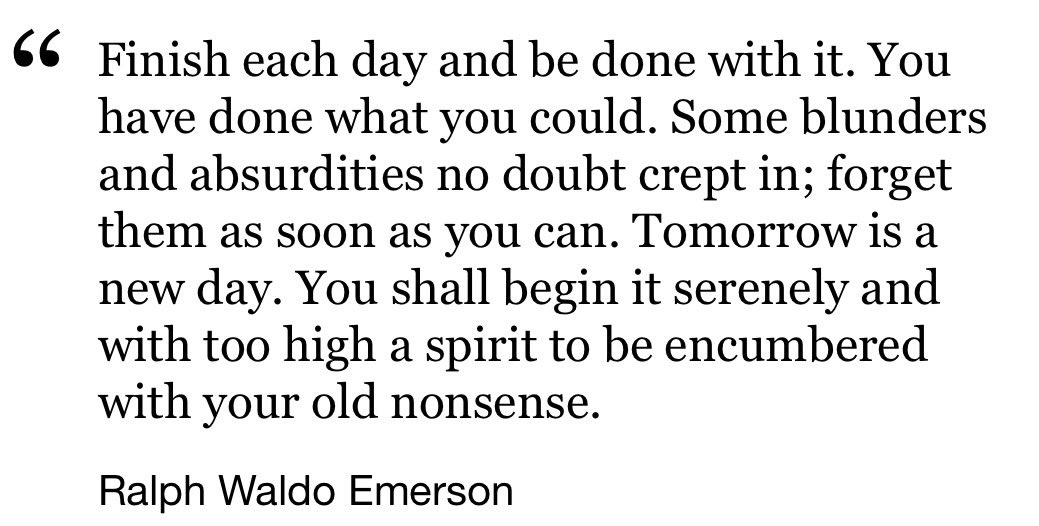
Reminder
Subash tweet media
Dansk
0
0
0
13
Subash
Subash@scratchingsurf·
“• A system that can experiment and revise vs • A system that rules out whole categories of solutions in advance” Well said.
Bruce Nielson@bnielson01

Aaron, I think it’s important to notice what kind of comparison you’re making. You’re asking us to compare current, real-world regulations to a currently unknown future state of market solutions that doesn’t exist yet. That’s an uneven comparison. It asks us to evaluate regulations as they actually exist, but to evaluate markets as an idealized future possibility. That’s not an apples-to-apples institutional comparison. There’s also some intuition-pumping built into the framing. You describe market solutions as “freedom,” “creative,” and “unbounded,” while government solutions are described as “regulatory” and “bounded.” That language subtly loads the conclusion. Markets aren’t automatically unbounded in practice, and governments don’t only act through rigid regulation. Both systems can enable or constrain innovation depending on how institutions are structured. More importantly, the claim you’re making is untestable and unfalsifiable. You say: “There are zero cases where regulations are better than the best possible free market solution.” But how could anyone possibly know that? That’s a prophecy about a future state of knowledge. We don’t know what institutional tools, technologies, or constraints will exist in the future, so we can’t meaningfully compare today’s policies to an unspecified ideal arrangement that may or may not ever exist. And there’s no way to falsify your claim. I’ve already pointed out that today there are regulatory solutions that outperform any known market alternative. You didn’t dispute that — presumably because you know it’s correct — and instead effectively replied: “Sure, but some future state of the market will eventually surpass those regulations.” The problem is that this makes your claim untestable. Even if regulation continues to outperform markets centuries or millennia from now, you could always respond, “Markets will eventually surpass it!” A million—or even a billion—years into the future, the prophecy could still be invoked, and nothing we observe today could ever refute it. In fact, no imaginable evidence could ever refute your claim. That’s exactly the kind of move Popper warned about: immunizing a theory from refutation by redefining it in terms of an unreachable ideal. It turns an empirical question into a metaphysical one. Of course, you might be right — I’m not denying that. This isn’t a debate with someone claiming that government regulations will always outperform markets. I’m open to all possibilities. My key point is simply that you can’t know you’re right, and there’s no way to test your claim. For the sake of argument, let’s assume your prophecy is true — that at some point in the future, market arrangements become so advanced that regulation is less efficient. What follows from that? We still have to make decisions under present constraints. If regulation is currently more effective than any known market mechanism in some domains, we can’t ignore that just because a better market solution might emerge someday. Policy is about solving problems with the tools we actually have. So even if the prophecy turned out to be true, it wouldn’t guide present action. There’s also a deeper issue. The real question isn’t “markets vs regulation” in the abstract, but which institutional systems stay open to learning and revision. Your framing is: • “Unregulated” systems = unlimited possibilities • “Regulated” systems = permanently constrained But that’s backwards. Here is the correct framing: Ancapistan (the Ancap utopia) bans regulation and state coordination in principle. If evidence shows those tools work best, they’re still off-limits. First-past-the-post democracy plus a free market allows both market and regulatory approaches — and lets us create, revise, or repeal policies as we learn. So the real contrast is: • A system that can experiment and revise vs • A system that rules out whole categories of solutions in advance That asymmetry matters. If Ancapistan really is best someday, a democracy can move toward it through deregulation and institutional change. But Ancapistan can’t move the other direction even in principle, because it forbids those tools from the start. It shuts off one of the means of error correction. From a Popperian standpoint, institutions should remain open to error correction and new knowledge. A rigid “no regulation” rule closes off possible solutions before we know whether they work.


English
0
0
1
41
Subash retweetledi
Nassim Nicholas Taleb
Nassim Nicholas Taleb@nntaleb·
3- There must be loss of memory from filtering; you get more information/entropy as you age, so needs to eliminate some. Intelligence is about what you decide to eliminate.
English
15
48
597
51K
Subash
Subash@scratchingsurf·
At the end of the day a politician is just a guy/girl influenced by donors, lobbies, and personal interests. Let’s not treat them like a messiah coming to save you from all your troubles. It’s healthy to keep watchful eyes on their promises and actions.
English
0
0
0
15
Subash
Subash@scratchingsurf·
@stephen_wolfram always seems locked in. No amount of noise derails him. Pandemic, war or any other instabilities. Doesn’t matter. He is so focused on building, writing and undertaking new ideas.
English
0
0
0
16
Subash
Subash@scratchingsurf·
@dwarkesh_sp @Ada_Palmer Haven’t listened to it yet. But looks to me Dwarkesh discovering another hidden gem history scholar like Sarah Paine.
English
0
0
1
888
Dwarkesh Patel
Dwarkesh Patel@dwarkesh_sp·
Renaissance history is so much wilder and weirder than you would have expected. Very fun chatting w @Ada_Palmer about it. Some especially fascinating things I learned from the conversation and her excellent book, Inventing the Renaissance: Not only did Gutenberg go bankrupt in the 1450s (after inventing the printing press), but so did the bank that foreclosed on him, and so did his apprentices. This is because paper was still very expensive, and so you had to make this big upfront CAPEX decision to print a batch of 300 copies of a book - say the Bible. But he's in a small landlocked German town where only priests are allowed to read the Bible - so he sells maybe 7 copies. It’s only when this technology ends up in Venice, where you can hand 10 copies to each of 30 ship captains going to 30 different cities, that it starts taking off. Speaking of which, the printing revolution wasn’t just one single discrete event, just as the computer revolution has been this whole century of going from mainframes -> personal computers -> phones -> social media, each with different and accelerating social impact. Books came first, but they’re slow to print, and made in small batches. The real revolution is pamphlets - much faster, much harder to censor. Pamphlet runners are how you can have Luther's 95 Theses go from Wittenberg to London in 17 days. So much other wild stuff from this episode. For example, did you know that the largest and best-funded experimental laboratory in 17th century Europe was very likely the Roman one run by inquisitors? Ada jokes that the Inquisition accidentally invented peer review. The focus of the Inquisition is really misunderstood - it was obsessed with catching dangerous new heretics like Lutherans and Calvinists - it only executed one person for doing science. And this leads Ada to make an observation that I think is really wise: the authorities and censors are always worried about the exact wrong things given 20/20 hindsight. When Inquisition raids an underground bookshop during the French Enlightenment, they don’t mind the Rousseau, Voltaire, and Encyclopédie, but they lose their minds about some Jansenist treatises about the technical nature of the Trinity. More broadly, a lesson for me from this episode is that it’s just really hard to shape history in the specific way that you want to impact things. One of the most famous medieval scholars is this guy Petrarch. He survives the Black Death in the 1340s, watches his friends die to plague and bandits, and says: our leaders are selfish and terrible, we need to raise them on the Roman classics so they'll act like Cicero. So Europe pours money into finding ancient manuscripts, building libraries, and educating princes on classical virtues. Those princes grow up and fight bigger, nastier wars than ever before with new deadlier technology. And this, combined with greater urbanization and endemic plague, results in European life expectancy decreasing from 35 in the medieval period to 18 during the Renaissance (the period which we in retrospect think of as a golden age but which many people living through it thought of as the continuation of the dark ages that had persisted since the fall of Rome). Anyways, the libraries Petrarch inspires stick around, the printing press makes them accessible to everyone, and 200 years later a generation of medical students is reading Lucretius and asking "what if there are atoms and that's how diseases work?" which eventually leads to germ theory, vaccines, and a cure for the Black Death (Ada has longer more involved explanation of how cosplaying the Romans results through a series of many steps to the scientific revolution). Petrarch wanted to produce philosopher-kings that shared his values. Instead he created a world that doesn't share his values at all but can cure the disease that destroyed his. So much other interesting stuff in the full episode - hope you enjoy! Timestamps: 0:00:00 - How cosplaying Ancient Rome led to the Renaissance 0:28:49 - How Florence's weird republic worked 0:38:13 - How the Medicis took over Florence 0:58:12 - Why it was so hard for Gutenberg to make any money off the printing press 1:17:34 - Why the industrial revolution didn't happen in Italy 1:23:02 - The slow diffusion of paper through Europe 1:41:21 - The Inquisition accidentally invented peer review Look up Dwarkesh Podcast on Apple Podcasts, Spotify, YouTube, etc.
English
63
287
2.4K
392.4K
Subash
Subash@scratchingsurf·
@ylecun @_amirbar Facebook seems surprisingly better in terms of quality discussions compared to X. I have started using it more and more.
English
0
0
0
138
Yann LeCun
Yann LeCun@ylecun·
@_amirbar Way more substantial comments on LinkedIn and Facebook than on X for paper announcements It's been obvious for quite a while that X is lost for science.
English
40
7
180
39.4K
Amir Bar
Amir Bar@_amirbar·
> My collaborator shared our paper on X and LinkedIn. > We expected engagement on X and silence on LinkedIn. > in practice we got likes on X, long adversarial essays on LinkedIn. 2026 plot twist.
English
9
3
86
28K
Subash retweetledi
Gurwinder
Gurwinder@G_S_Bhogal·
You can gauge a person's fortitude by how positive they can remain on X, since the app’s business model is to exploit negativity bias by presenting the worst of reality as the norm. To scroll X without becoming a cynic requires the strength to defy a million years of evolution.
English
72
104
848
38.6K
Subash
Subash@scratchingsurf·
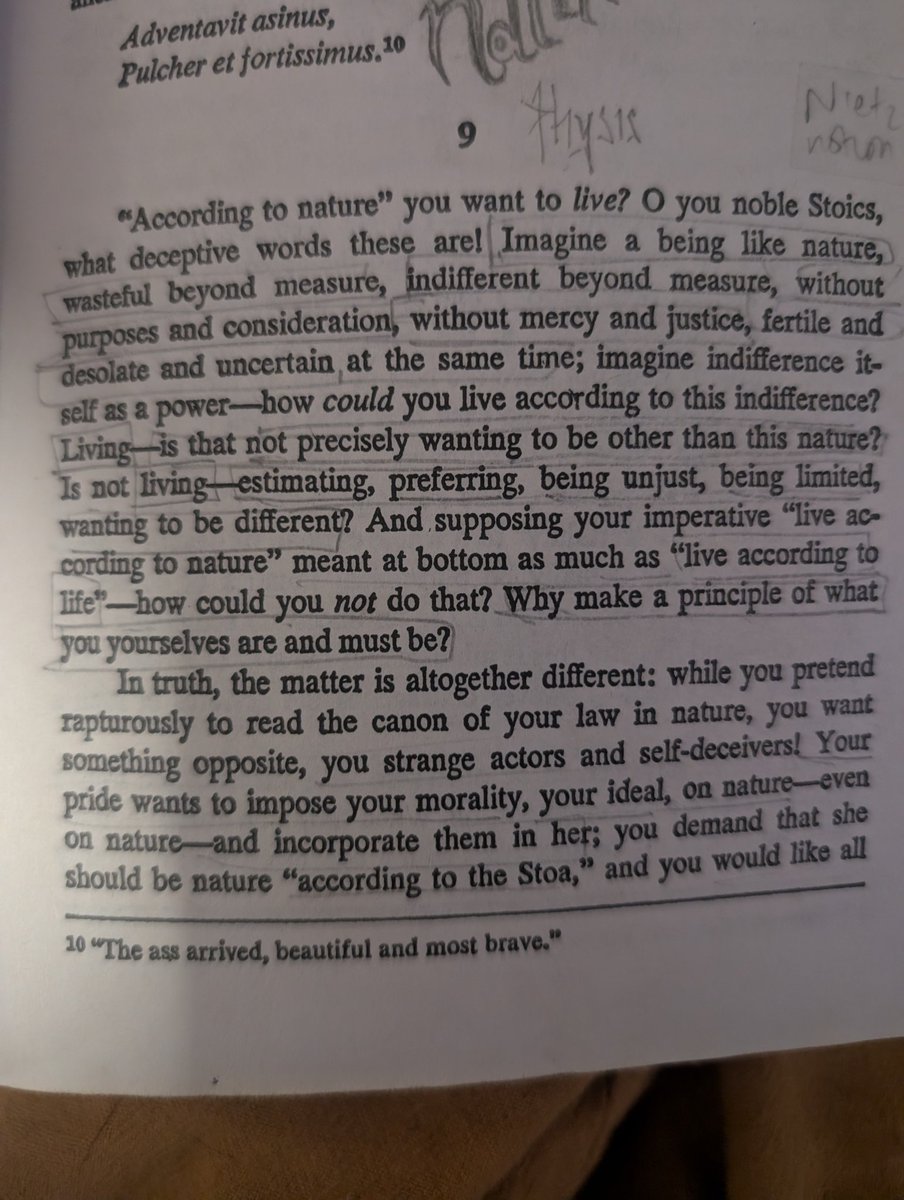
Subash tweet media
ZXX
0
0
0
11
Subash
Subash@scratchingsurf·
“Whose work is all their prize- Without them how could laws, or arts, Or towered cities rise?”
Subash tweet media
English
1
0
0
14
Subash
Subash@scratchingsurf·
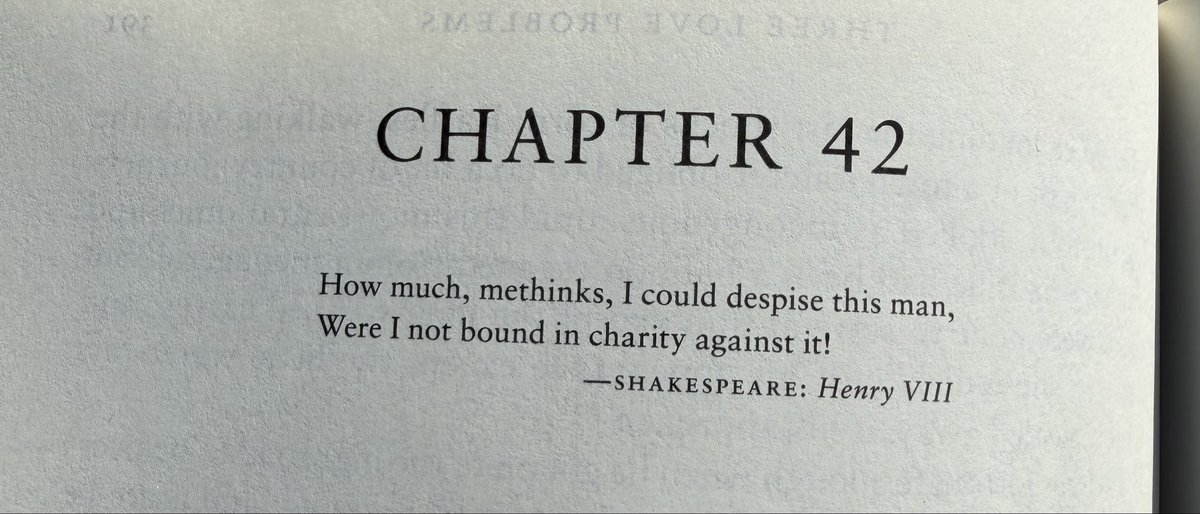
Let me check what the fuss is all about
Subash tweet media
English
1
0
0
50