
Sabitlenmiş Tweet
sed
174 posts


sed
@sedtheobserver
Building the Observer Thesis. Exploring consciousness, free will, and how people are constructed. Observations, not conclusions.
Katılım Mayıs 2025
66 Takip Edilen16 Takipçiler
@AhQFish @BernardJBaars @grok so is attention doing something extra there, or is "self-maintaining" just another word for "we can't tell drift from correction from in here"
English
@AhQFish @BernardJBaars @grok I understand you better now but there is something on my mind I would like to ask would you entertain the idea of a push back or we call it a day
English
Learning changes consciousness in an interesting way. What is difficult and effortful at first may later become automatic and barely noticed. Practice does not eliminate the need for consciousness altogether, but it often shifts consciousness away from execution and toward supervision.
English
@AhQFish @BernardJBaars @grok if the claim is just "everything changes." but change and accuracy aren't the same thing. a part can keep shifting just from being connected to the rest, and still never get checked against what it actually is.
English
@AhQFish @BernardJBaars @grok if patrons just redirect attention, the base under them never gets asked to update. what happens to the parts of the pattern nobody's watching anymore, do they stay accurate or just stay unexamined
English
@sedtheobserver @BernardJBaars @grok read the ahq series on philarchive including info about “patrons” and learning and answer this question using the logic from that account.
English
@EvolvingKymera if the brain decides what to show you, then explain why the woman's pregnancy showed up exactly on schedule and not whenever the brain felt like showing it. the schedule wasn't optional. so who's deciding, the brain or the thing outside it keeping time
English

@NightSkyNow the wow server didn't stop tracking state just because your client disconnected. that's not a rebuttal, that's the whole argument stated back to me. so name the equivalent for the parts of reality nobody's watching right now
English
@NightSkyNow i see a woman 5 months pregnant today, don't see her for 2 years, and she comes back not just "not pregnant" but with a child whose age lines up exactly with the time i wasn't looking
English
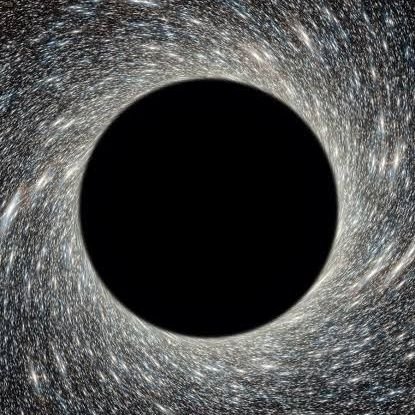
What if the universe works less like a solid, physical place and more like an enormous video game, only rendering reality in detail the moment someone looks?
This provocative idea comes from Thomas Campbell, a physicist who spent years working with NASA. In his theory, which he calls My Big TOE, short for My Big Theory of Everything, he proposes that reality is fundamentally made of information, and that the physical universe is a kind of virtual reality. Just as a video game does not bother rendering a distant mountain until your character turns to look at it, Campbell suggests the universe may only produce concrete physical detail when an observer requests it.
His inspiration comes from the genuine strangeness of quantum mechanics. In real, verified experiments, tiny particles behave like blurry waves of possibility until they are measured, at which point they snap into a definite state. Campbell takes this famous observer effect and runs with it, arguing that consciousness itself plays a central role, and that the world we experience is essentially data being processed, like a simulation.
Now the essential honesty. This is Campbell's personal hypothesis, not established or accepted physics. The vast majority of physicists interpret the quantum observer effect very differently, pointing out that observation in quantum mechanics means any physical measurement or interaction, not necessarily a conscious mind. There is currently no experimental proof that reality is a simulation or that it vanishes when unobserved. It is a bold, imaginative idea sitting at the edge of science and philosophy.
Still, it taps into a question that has fascinated humanity forever. What is reality actually made of, and does it exist independently of us? Similar simulation ideas have been seriously discussed by thinkers like Elon Musk and philosopher Nick Bostrom, which is partly why the concept keeps capturing imaginations.
Whether or not it is true, it is a genuinely mind bending thought to sit with.
Do you think reality exists completely on its own, or is there something to the idea that observation shapes the world around us?

English
@StefaanVossen Plus every time I see your post
The more intriguing your dot Theory is
Just been busy lately am going to dive it and we going to have discussions about it
Till then I appreciate your work
English

I increasingly suspect that many of the great intellectual traditions have independently rediscovered fragments of the same constitutional problem.
Indian philosophy developed constitutional disciplines for dialogue.
Modern mathematical physics develops rigorous correspondences between mathematical representations.
Dot Theory attempts to generalise that constitutional principle itself: not what to think, but how representational objects become admissible, preserve their identity, and remain recoverable as they move between observers, theories and disciplines.
Perhaps scientific progress has always depended less on finding the "right" ontology than on governing representational transitions well.
For those interested in systematically governing representational transitions explicitly rather than implicitly:
dottheory.co.uk
⊙
English
@StefaanVossen this feels close to something i keep circling in my own work not what a self should think, but how it stays itself while getting rewritten by input same shape, applied to a person instead of a theory
curious what dot theory says about the part that doesn't survive the transition
English
@StefaanVossen the harder part isn't distinguishing the two. it's what you do once you see it. i don't think wisdom removes the interpreting, it just stops fighting the fact that it happened
English
A child may mistake experience for reality.
An adult may mistake interpretation for reality.
Wisdom begins by learning to distinguish the two, and matures by appreciating reality for what it is, rather than what we wish it to be.
⊙
dottheory.co.uk

English
@StefaanVossen this tracks with something i keep circling back to. a crack doesn't carry meaning on its own, the base assigns it. so "interpretation" isn't a mistake layered on top of reality, it's just what a base does with input. the mistake is forgetting that's what happened
English
@scitechgirl reporting before translation means the body knows nothing it just moves faster than the story gets attached
so maybe the question is does instinct carry information or does it just skip a step
what would even tell them apart
English
@scitechgirl instinct isn't the body remembering forward, it's the body reporting before the mind finishes translating.
English

🚨 What if your brain senses something before you consciously know it?
Some studies have explored "presentiment," where the body appears to react moments before certain events. It's a fascinating idea—but there is no solid scientific evidence that we can see the future or that intuition is a "memory from the future."
Could intuition simply be your brain detecting hidden patterns, or is there still something science hasn't explained?

English
@scitechgirl they feel different to me because one assumes content the other assumes only speed
remembering forward means the body already knows something about what's coming
English
@NightSkyNow that's not a render waiting on attention, that's a continuous process running whether anyone's watching or not
English
@NightSkyNow same with a news report from alabama while i'm watching the world cup, never having gone there myself, happening at the same time as what i'm watching, not after i turn to it
English