Seha Islam⚡

4.6K posts

Seha Islam⚡ banner
Seha Islam⚡

Seha Islam⚡

@sehaislam

bitcoin, banking, and capital markets | @ey_us consulting | views mine

🗽🍎 Katılım Ekim 2009
650 Takip Edilen1.3K Takipçiler
Sabitlenmiş Tweet
Seha Islam⚡
Seha Islam⚡@sehaislam·
The stablecoin yield debate is too narrow and increasingly a red herring. Even if rewards are banned, the market can separate the product: stablecoin = settlement tokenized MMF = cash management sweep = customer experience The real question is who controls the interfaces for money, payments, and banking services that customers seek?
English
2
1
3
117
Seha Islam⚡
Seha Islam⚡@sehaislam·
The stablecoin yield debate is too narrow and increasingly a red herring. Even if rewards are banned, the market can separate the product: stablecoin = settlement tokenized MMF = cash management sweep = customer experience The real question is who controls the interfaces for money, payments, and banking services that customers seek?
English
2
1
3
117
Seha Islam⚡ retweetledi
ZEUS
ZEUS@ZeusLN·
LIGHTNING ECONOMICS: The Bridge Between Bitcoin's Two Identities The first published ROIC framework for Lightning-deployed capital. Co-published with @axiombtc. Free download, no email required. zeusln.com/lightning-econ…
ZEUS tweet media
English
4
27
93
27.1K
Seha Islam⚡ retweetledi
BTC Sessions 😎
BTC Sessions 😎@BTCsessions·
"Show me the servers" I gotchu, fam.
BTC Sessions 😎 tweet mediaBTC Sessions 😎 tweet media
English
145
214
2.9K
113.1K
Seha Islam⚡ retweetledi
Bloomberg
Bloomberg@business·
Former Treasury Secretary Henry Paulson called on US authorities to prepare a back-up plan in order to avert a potential collapse in demand for Treasuries bloomberg.com/news/articles/…
English
128
691
1.7K
695.6K
Seha Islam⚡ retweetledi
Akshay 🚀
Akshay 🚀@akshay_pachaar·
from weights → context → harness engineering (evolution of agent landscape from 2022-26) the biggest shift in AI agents had nothing to do with making models smarter. it was about making the environment around them smarter. here's how agent engineering evolved in just 4 years, across three distinct phases: 𝗽𝗵𝗮𝘀𝗲 𝟭: 𝘄𝗲𝗶𝗴𝗵𝘁𝘀 (𝟮𝟬𝟮𝟮) everything was about the model itself. bigger models, more data, better training. scaling laws told us that progress = more parameters. RLHF and fine-tuning shaped behavior. if you wanted a better agent, you trained a better model. this worked great for single-turn tasks. ask a question, get an answer. but it hit a wall fast. updating one fact meant retraining. auditing behavior was nearly impossible. and personalization across millions of users from one frozen set of weights? not happening. 𝗽𝗵𝗮𝘀𝗲 𝟮: 𝗰𝗼𝗻𝘁𝗲𝘅𝘁 (𝟮𝟬𝟮𝟯-𝟮𝟬𝟮𝟰) the realization: you don't always need to change the model. you can change what the model sees. prompt engineering, few-shot examples, chain-of-thought, RAG. suddenly the same frozen model could behave completely differently based on what you put in front of it. developers stopped fine-tuning and started iterating on prompts and retrieval pipelines instead. it was cheaper, faster, and surprisingly effective. but context windows are finite. long prompts get noisy. models attend unevenly (the "lost in the middle" problem is real). and every new session starts fresh with zero memory of what happened before. context made agents flexible. it didn't make them reliable. 𝗽𝗵𝗮𝘀𝗲 𝟯: 𝗵𝗮𝗿𝗻𝗲𝘀𝘀 𝗲𝗻𝗴𝗶𝗻𝗲𝗲𝗿𝗶𝗻𝗴 (𝟮𝟬𝟮𝟱-𝟮𝟬𝟮𝟲) this is where we are now, and the shift is fundamental. the question changed from "what should we tell the model?" to "what environment should the model operate in?" the model is no longer the sole location of intelligence. it sits inside a harness that includes persistent memory, reusable skills, standardized protocols (like MCP and A2A), execution sandboxes, approval gates, and observability layers. the model stays the same. what changes is the task it's being asked to solve. a concrete example: a coding agent asked to implement a feature, run tests, and open a PR. without a harness, the model must keep repo structure, project conventions, workflow state, and tool interactions all inside a fragile prompt. with a harness, persistent memory supplies context, skill files encode conventions, protocolized interfaces enforce correct schemas, and the runtime sequences steps and handles failures. same model. completely different reliability. 𝘁𝗵𝗲 𝗽𝗮𝘁𝘁𝗲𝗿𝗻 𝗮𝗰𝗿𝗼𝘀𝘀 𝗮𝗹𝗹 𝘁𝗵𝗿𝗲𝗲 𝗽𝗵𝗮𝘀𝗲𝘀 𝗶𝘀 𝘀𝗶𝗺𝗽𝗹𝗲: - weights encoded knowledge in parameters (fast but rigid) - context staged knowledge in prompts (flexible but ephemeral) - harnesses externalized knowledge into persistent infrastructure (reliable and governable) each phase didn't replace the previous one. it layered on top. weights still matter. context engineering still matters. but the center of gravity has moved outward. the most consequential improvements in agent reliability today rarely come from changing the base model. they come from better memory retrieval, sharper skill loading, tighter execution governance, and smarter context budget management. building better agents increasingly means building better environments for models to operate in. there's a great paper on this: Externalization in LLM Agents: A Unified Review of Memory, Skills, Protocols and Harness Engineering paper: arxiv.org/abs/2604.08224 i also published this deep dive (article) on agent harness engineering, covering the orchestration loop, tools, memory, context management, and everything else that transforms a stateless LLM into a capable agent.
Akshay 🚀 tweet media
Akshay 🚀@akshay_pachaar

x.com/i/article/2040…

English
42
207
1.1K
153.5K
Seha Islam⚡ retweetledi
Saifedean Ammous
Saifedean Ammous@saifedean·
Value is not a physical thing To all the people who think bitcoin can’t have value because it’s not tangible... Tangible assets constitute the following percentage of the Mag7 market caps: Nvidia: 0.66% Apple: 1.38% Tesla: 4.06% Microsoft: 7.29% Alphabet: 8.39% Meta: 9.56% Amazon: 16.28% Combined weighted average: 5.79% If you liquidated all of these companies’ physical assets, they wouldn’t amount to 6% of their valuation. There have been days in which the market caps of these companies have moved by more than the total value of their physical assets. If 94% of the value of the most valuable companies on earth is non-physical, then value does not have to be physical. If digital things have no value, then you should have no problem with giving me your computer to erase all the data from it. I will return your computer to you in the same exact physical form. I will just press a few buttons that remove all your data, photos, and contacts, and make it impossible for you to restore them. If value can only be tangible, then all of these digital things have no value, and you shouldn’t mind me deleting them as long as the devices return in their original state. I don’t think you would. Technology, data, business knowledge, customer base, brands, and so much more are non-physical assets whose value likely exceeds that of all the planet’s physical objects and land. This is something most people understand in their daily lives, but because most people have no understanding of money, they do not understand how it applies to money, too. Most people think their money is physical, but in reality, most fiat currencies today are 90%+ digital, and usually less than 10% of the supply is physical paper money. There are no stacks of dollars in your bank sitting in a box under your name, available for you to pick up at any time. A tiny fraction of the money is physical, and the rest is digital, manufactured in various quantities by your bank, government, central bank, and other pedophiles, in quantities based on pure vibes. People still give this non-physical fiat money value because it is the only money they can use with a bank account, since governments only license banks that use their local fiat shitcoin. There is no need for the money to be physical to work; digital fiat money works as well as physical fiat money; or as badly. Bitcoin is an entirely digital money, but it is given value for far more intelligent and peaceful reasons than fiat money. You can read more about that in my books The Bitcoin Standard and The Fiat Standard, which you can buy from Amazon or TheSaifHouse.com. A common objection to bitcoin’s value is: “But if people stop believing in the value of bitcoin it can lose all value.” But that is true of everything. If people stop believing in the value of gold, it would lose value and just become another worthless rock. If people stop believing in the value of electronic devices then Apple and Nvidia go to zero. If people stop believing in the value of Manhattan, then all Manhattan real estate goes to zero. If people discover that tomatoes are poisonous, they stop believing in the value of tomatoes, and the entire planet’s tomato industry goes to zero. Just because something is physical does not guarantee its value, as we can see from the infinite amount of sand and rocks on our Earth left completely untouched by human hands. Physical things can be valueless and non-physical things can have value. Value and physicality are two independent things that are orthogonal to each other. You are doing yourself a disservice if you are unable to benefit from the world’s most advanced money and best saving technology because you are unable to see that value can be non-physical in this one instance, when you have no problem seeing it elsewhere.
English
127
501
2.3K
111.8K
Seha Islam⚡ retweetledi
Olaoluwa Osuntokun
Olaoluwa Osuntokun@roasbeef·
in the face of quantum adversary, a commonly discussed emergency soft fork for Bitcoin would be to disable the Taproot keyspend path (eprint.iacr.org/2025/1307), effectively turning it into something that resembling BIP-360 assuming an existing precautionary soft-fork to add a pq signature scheme, this would safely allow holders to maintain unilaterally custody of their funds a downside to this proposal is that any keyspend-only (normal schnorr sig) would be locked indefinitely inspired by eprint.iacr.org/2023/362, I set out to address the option problem in section 6, to create a variant of seed-lifting that doesn't reveal the wallet's master secret! 🤓 the end result is a zk-STARK proof that proves: "public key P was generated using a private key k, which itself was derived via BIP-32/BIP-86 with a master wallet secret S" this generalizes beyond Taproot, and would allow the rightful owners of any BIP-32 derived wallets to move their funds in het case of a spend disabeling emergency softfork 🛡️ the final proof takes 50 seconds to run on my MacBook with Metal GPU acceleration, uses 12 GB of RAM during proving, with a final proof size of 1.7 MB the proving code/statement is largely unoptimized, and it's possible to aggregate several proofs into a single smaller proof ⨻ an actual production deployment would likely use a smaller optimize circuit for this specific statement, this demo serves to demonstrate that such a proof is well within reach w/ today's hardware+software to generate the proof I forked TinyGo to add a risc0 RISC-V ELF compilation target for TinyGo: github.com/Roasbeef/tinyg… then I used some helper utilities and a C FFI wrapped risc0 library to create a generalized toolkit for TinyGo zk-STARK proofs: github.com/Roasbeef/go-zk… the final guest+host lives in the bip32-pq-zkp repo: github.com/Roasbeef/bip32… such a proof scheme is yet another tool in the post quantum toolkit for Bitcoin developers to prepare for an eventual PQ world 🤠 full details in my post to the Bitcoin dev mailing list: groups.google.com/g/bitcoindev/c…
English
37
84
476
124.3K
Seha Islam⚡ retweetledi
Adam Back
Adam Back@adam3us·
@spectator Back not Black, if you can correct.
English
367
74
3K
248.9K
Seha Islam⚡ retweetledi
River
River@River·
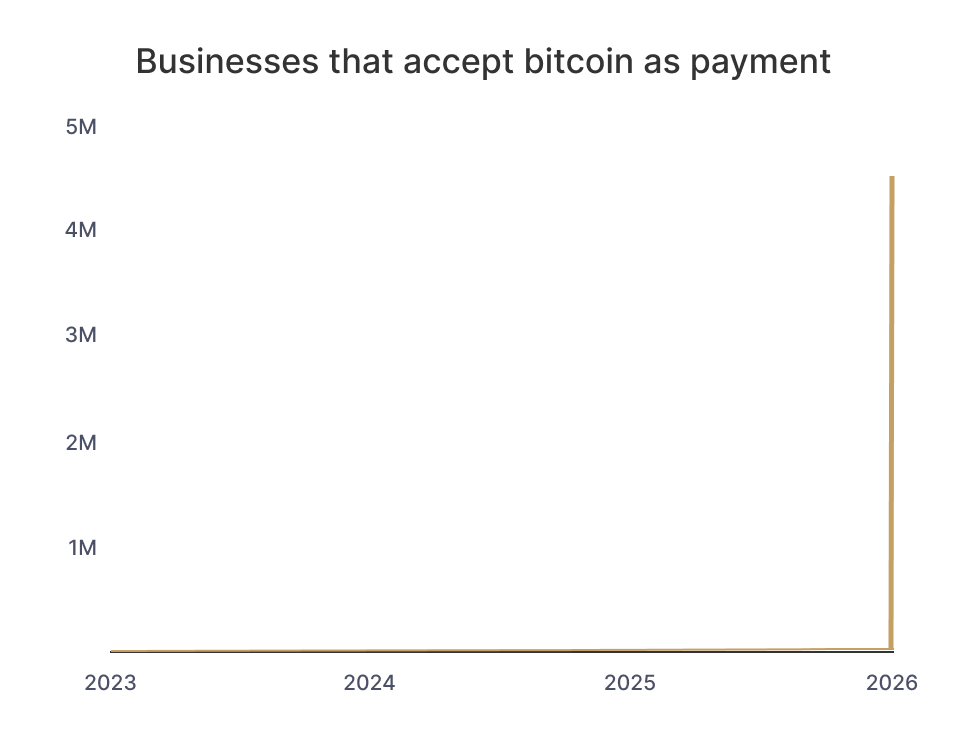
Square just omega-candled the merchant bitcoin adoption chart.
River tweet media
English
42
182
1.3K
55.8K
Seha Islam⚡ retweetledi
Miles 🌞
Miles 🌞@milessuter·
We’re making it easier for millions of businesses to accept bitcoin. Starting today, eligible U.S. @Square sellers will begin having Bitcoin payments automatically enabled. Sellers who accept bitcoin will receive USD as default. This is how bitcoin as everyday money begins.
English
230
442
3K
586.2K
Seha Islam⚡ retweetledi
Lyn Alden
Lyn Alden@LynAldenContact·
Some people ask me when I’ll be chill about energy. The first step is that my (almost always chill, but currently not chill) oil quant has to become chill again. He’s still not chill. He’s the opposite of chill.
Rory Johnston@Rory_Johnston

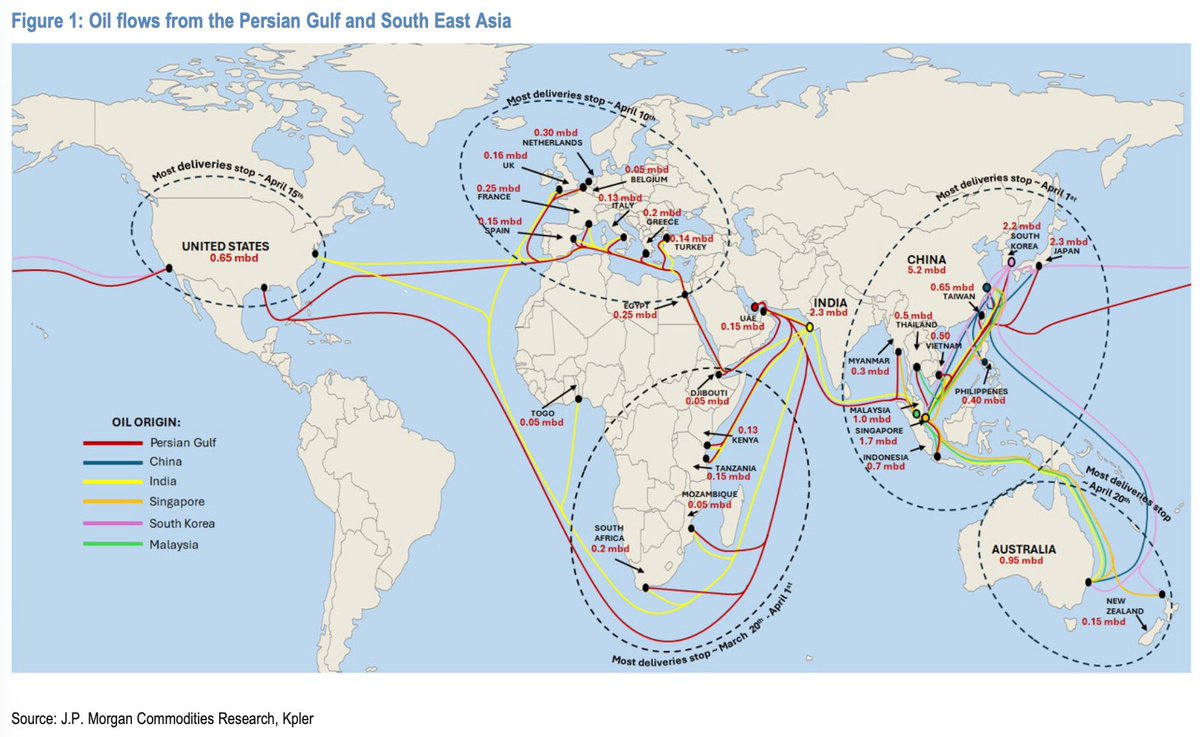
I’ve been describing the supply loss from the closure of the Strait of Hormuz as an “air pocket” moving through the normal flow of oil out of the Gulf Helpful map from JPM highlighting when that air pocket will “land” in different major consuming regions: - East Africa last week - East Asia this week - Europe next week - North America two more weeks

English
97
379
5.2K
782K
Seha Islam⚡ retweetledi
Rory Johnston
Rory Johnston@Rory_Johnston·
I’ve been describing the supply loss from the closure of the Strait of Hormuz as an “air pocket” moving through the normal flow of oil out of the Gulf Helpful map from JPM highlighting when that air pocket will “land” in different major consuming regions: - East Africa last week - East Asia this week - Europe next week - North America two more weeks
Rory Johnston tweet media
English
87
831
4.3K
1.3M
Seha Islam⚡ retweetledi
Cheng Lou
Cheng Lou@_chenglou·
My dear front-end developers (and anyone who’s interested in the future of interfaces): I have crawled through depths of hell to bring you, for the foreseeable years, one of the more important foundational pieces of UI engineering (if not in implementation then certainly at least in concept): Fast, accurate and comprehensive userland text measurement algorithm in pure TypeScript, usable for laying out entire web pages without CSS, bypassing DOM measurements and reflow
English
1.3K
8.3K
65.5K
23.8M