

AY
7K posts

I have no issues with Sunnis, but currently they are the Islamic version of Christian Zionists
I want to see them stopping being jewish puppets and resist like they did in the past
Christians and Sunnis need to stop being cucks for jews
Mohammed Hijab@mohammed_hijab
Today Iran is doing the most damage againstt Israel. But the past must not be rewritten. Some of the heaviest losses Israeli soldiers ever suffered came at the hands of Sunni majority states fighting In 1973 Egypt shattered the myth of Israeli invincibility. Its forces crossed the Suez and forced Israel into one of the bloodiest wars in its history. And King Faisal رحمه الله proved that power is not only military. By turning the oil weapon on the powers backing Israel he showed that Muslim resources could move the world the moment the will was there.
English
So fresh but already walking around with a tasbih, and says Allah and His Messenger ﷺ are everything
May Allah plant it firmly in his heart.
Morocco Intel@MoroccoIntel
🇲🇦🎥| Touché par la culture marocaine, le célèbre acteur Giancarlo Esposito explique comment le Maroc 🇲🇦 a encouragé sa conversion à l’Islam et appelle les Américains 🇺🇸 à visiter le Royaume.
English
@Tsunalyst Might need to visit you for a hike when circumstances settle
English







@Azhaar3818 This became super relevant today during a class, so I shared the quote. Jazakum Allah Khairan for sharing
English
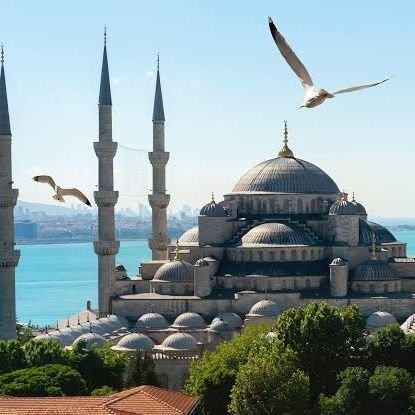

My mind was completely blown seeing this concept for the first time in Istanbul.
Massimo@Rainmaker1973
The Netherlands hides massive trash containers underground so their streets stay spotless
English
@boshsiz @SiriusXSimurgh @hashimiyy_ I've heard and read these explanations. I wonder if we can also simply say the title 'Khayrul Bariyah' is not restricted given the verse in Surah Bayyinah:
إِنَّ ٱلَّذِينَ ءَامَنُوا۟ وَعَمِلُوا۟ ٱلصَّـٰلِحَـٰتِ أُو۟لَـٰٓئِكَ هُمْ خَيْرُ ٱلْبَرِيَّةِ ٧


There is no way you can tawil this buddies,
@hashimiyy_ @boshsiz
Your later scholars, not the Sahaba, arrived at a bogus ijma on the superiority of Muhammad ﷺ over all creation
adam7867863@adam7867863
Català
AY retweetledi

genuinely couldn’t recommend this programme enough. Some of the finest shuyūkh I’ve had the privilege of studying with.
I would highly encourage anyone serious about studying the deen to take a look and apply!
Al Sharaf Institute@SharafInstitute
ADMISSIONS NOW OPEN مَنْ يُرِدِ اللَّهُ بِهِ خَيْرًا يُفَقِّهْهُ فِي الدِّين Al-Nabī ﷺ said: Whosoever Allāh intends goodness for, He grants him understanding of the religion. (Al-Bukhārī)
English
@muslimorthodoxy @KhalilAndani @BraunHB0 You can’t affirm robust spatial reality + real distinct parts + boundaries and then retreat to “it’s only semantic” when the ontological cost shows up.
That’s having it both ways, and if you truly affirm both, it’s contradiction. /4
English
@muslimorthodoxy @KhalilAndani In a prior engagement with @BraunHB0, you admitted *counterfactual* dependence while claiming it’s “merely semantic” b/c the parts and whole are “ontologically symmetrical.” Evasion. /3
English

I cannot blame you @muslimorthodoxy for no longer responding; you dig yourself deeper into incoherence with every response thus far. Now then, as a courtesy to everyone following this exchange, I will respond to your rather disorganized diatribe of a word salad:
1. You asked: "Why is it metaphysically incoherent for that “arbitrary limit” to be brute? How does that entail being “modally contingent”?
Answer: It is logically possible for God's essence to have more or less than 3 dimensions since denying His 3-dimensionality is not a contradiction. It is logically possible for the top-down size or length of your God's essence to be any finite number N. This means that both of these limits on God's essence are contingent - they could be another way. That is modal contingency.
As Dr. Rassmussen @worldviewdesign writes: "We can use this general reasoning to form an argument against positing arbitrary limits, such as in size, shape, powers, or in any other attribute that comes in various degrees" ("The Argument from Contingency", joshualrasmussen.com/articles/the-a…)
These two contingent features [dimension and size] of your God 's essence require something outside of God's essence to set their values because they are arbitrary limits that could have been otherwise with different values. You cannot merely assert that these contingent limits of your deity are uncaused. That makes it a brute contingency. The atheist can easily take any feature of the Cosmos and assert them as uncaused and call it a day.
2. You Must Demonstrate the Necessity of God's Size and Limits: Later in your reply, you assert God's 3D-ness and His finite height as "brute necessities" not contingencies. Okay, then prove it to us!
Notwithstanding that necessities are never brute - they are either necessitated by other necessities or they are necessary in themselves - you now allege that God's finite dimensions and size are modally necessary, not contingent. The burden of proof is upon you to logically demonstrate that God is necessarily 3D and necessarily has a limited height - what is your logical argument for these features of God being necessary?
3. Absolute Divine Simplicity lacks any limits requiring an external specifier:
God in the belief of all other Muslims (Sunnis, Twelvers, Zaydis, Ismailis, Sufis) does not require any external simplifier because God is absolutely simple in Himself - meaning God has no external or internal boundaries - unlike your spatially limited deity who is internally and externally bounded. Since our God has no boundaries or hudud like your deity, there is no requirement to posit an external entity to cause God to be simple or non-complex.
4. Aseity is incompatible with proper parts
Your inane comment about aseity really exposes how much of an amateur you are at this. Aseity means that God is not dependent upon anything distinct from Himself. You are smuggling in the adjective "external", but even this will not help you here.
First, even the modern day shaykh al-Islam of you and your gang of Analytic Taymis, Ryan Mullins (who abhors ADS), says that aseity means that God is not dependent on anything else including non-casual grounding relations. Even if we start from your definition that God is not caused by anything "external" to Himself, Mullins concludes that an a se God must be ungrounded and independent of all else: "Any being that has its existence grounded in another will not be a se. Hence, aseity implies not having a ground for one’s existence" (Mullins 2023; see attached).
William Hasker, who replied to Mullins 2023 article says the same thing about aseity: "A being which is a se should be one which does not at all depend for its existence on anything other than itself" (Hasker 2023, 64)
Now, your conception of God is one in which God is constituted by proper parts that are spatially and ontologically distinct from God Himself and from each other. This plainly means that your God's existence and essence are grounded by these proper parts, each of which has its own existence and essence. Since you already deny ADS, you admit that each proper part is numerically distinct from God and "lesser" than the whole (God).
In your theology, God's attributes are concrete spatial particulars not abstracta or immaterial attributes. For you, God's Feet, Hands, Face, Fingers, Eyes, Shin, etc. all occupy different spatial positions and extensions in relation to one another and they each have a spatial extent that is lesser than God's overall spatial extent. And this further leads to the fact that each proper part of your God has an arbitrarily contingent spatial extension as well. That is yet another brute contingency you need to explain.
Since your God is a "whole" comprised of spatially distinct proper parts, the total top-down size of your God is literally the sum of the top-down sizes of each of His Proper Parts (His Hands/Face/Feet/Fingers). Mathematically, this means the total magnitude of your God is directly dependent upon the aggregation of the magnitudes of each of His Proper Parts and each Part contributes its own specific size to the total size of your God's top-down magnitude. This is no different than the total weight of my iPhone being the total weight if its internal parts. This may not be "casual" dependence but this is certainly a grounding dependence, which is ontological dependence. This is equivalent to saying a 6 meter length wall is dependent upon the aggregation the 6 one meter length bricks that comprise that wall. Nobody would dispute that the wall is dependent upon the aggregation of those bricks.
To put this differently, the existence and aggregation of God's parts are the necessary and sufficient condition for God's Existence; but God is not the necessary and sufficient condition for the existence of each proper part. Your God exists only because His proper parts exist. The existence of your God presupposes and requires the existence and aggregation of God's Proper Parts. Therefore, the parts of your God have ontic and explanatory priority over God himself. This formulation does not apply in the reverse -- the existence of each proper part does not presuppose or require the existence of a whole or aggregate. This proves there is a one-way dependency of God upon His proper parts and thus, your God is not a se.
Again, if you deny this and opt to change the dependence relation to say that God's parts depend upon God, then these are not really parts, they are creations and God Himself remains simple and independent. Alternatively, you can copy the even worse solution of Islamic Apex (Anas) and say that God and His proper parts exist in a two-way ontological dependence relations - which is viciously circular and denies aseity to both. As Hasker says, "A being which is a se should be one which does not at all depend for its existence on anything other than itself; if the being on which it depends is itself dependent on the original being, that fact does not cancel out the dependence of the first on the second" (Hasker 2024, 63-64).
5. Creation necessarily proceeding from God does not negate God's aseity
You have tried to assert that, in my theology, God must be dependent on His creation because God creates necessarily. This claim simply does not logically follow and is quite unserious. I already refuted this idiotic claim in my 2022 publication on modal collapse (a).
Not only that, even your shaykh Ryan Mullins admitted in his 2023 article that creation being necessitated by God does NOT negate God's aseity: "On panentheism, God always and necessarily exists with a created and causally dependent cosmos. Yet I find it doubtful that this somehow entails that God is not a se because God’s existence is not dependent upon nor derived from the created universe" (Mullins 2023, 54)


The Orthodox Muslim@muslimorthodoxy
This is THE LAST reply I send to you, you are not responding to anything you are welcome to join my panel. Mr. “Physical separability is a biological defense to a metaphysical problem, and this isn’t AI but rather my sophisticated rhetoric”, has (kinda?) responded. First off, I DO NOT HOLD to God being a 3D object, however, I do believe that it’s metaphysically coherent to commit to that yet simultaneously attribute it with aseity. Your argument in (1) hasn’t provided a defeater, why? Because as you said here; “This already is a problem because a 3D deity is arbitrarily limited in having 3 dimensions as to any other number. Therefore, your deity is modally contingent in His dimensionality. Furthermore, there must be an external cause or specifier that makes your deity 3 dimension as opposed to another number.”, you made two assumptions, and for the third time, PLEASE justify them! Why is it metaphysically incoherent for that “arbitrary limit” to be brute? How does that entail being “modally contingent”? It’s metaphysically coherent to assume that there exists x such that x is 3D, exists without a cause, and it’s a brute necessity, that “why” it’s the case is therefore brute. What’s the METAPHYSICAL problem here? Those aren’t even related. Also, another point, why “must there be an external specifier”? Why? What motivates that? Why can’t I say that for every object x, if x is simple, x needs an external simplifier? Are you arguing for epistemic inconsistency or metaphysical incoherency? Do you even know the difference, or did “biological defense” reading not suffice? If it’s epistemic inconsistency, then ontological dependency nor modal contingency are logically entailed. Do better. What’s funnier is that in (2), you basically make the same argument in a different way; “it is logically possible for that number to be different - thereby making His extent and boundaries an arbitrarily limit and rendering your God modally contingent. Again, there must be an external specifier for your God's finite spatial extent on the up-down axis.” First, logical possibility doesn’t entail metaphysical possibility. This is basic stuff dude. It’s demonstrably formally consistent that your “exists and not exists” outdated conception of God to not exist. Is that a serious defeater? No. Metaphysical possibility is motivated by commitments far beyond just mere formal consistency. Also again, “external specifier” and “arbitrary limits” are non-sequiturs as you haven’t demonstrated that they logically entail that, when I told you that such “issues” can be resolved by simply saying that such object is a brute necessity, and brute necessity isn’t ad-hoc because that’s what aseity is. Read up man. Third, speaking of aseity, you don’t even know what it means, it’s actually you who’s as clueless as a social Trinitarian. Aseity means there is x such that x obtains in all metaphysically possible worlds AND x lacks any external metaphysical explanation. In your ancient wizard of oz theology terms, aseity means something exists without a cause and always exists. That’s the mainstream definition within contemporary philosophy of religion. I told you, on the issue of composition, you low-tier, within my last tweet, which I told to not run away from and you did exactly that, to do three things, in order for the argument to follow; 1. Flesh out what ontic-priority is, 2. demonstrate why we ought to commit to that hermeneutic, and 3. prove how an object bearing properties necessarily entails ontological priority relations. Don’t run again and again from this. How is causal dependency even entailed? Is God under your view thereby causally dependent because of necessitarianism, really? Do you see how pathetic and self-defeating your argument is? I will reply to (4) of your tweet later under this post.
English
AY retweetledi

@muslimorthodoxy @KhalilAndani Your argument is basically: "Since you admit something can be logically possible but metaphysically impossible, I can just claim that a different size for God is metaphysically impossible, and my position is coherent."
English
@Ibnkhaldun6 It was published by Dar Al Minhaj and prepared in cooperation with Al-Azhar University
They also detail the review of 20 manuscripts in its production


English

@seraphicsidr What publisher ? And what work has been done on this print
English
My new set just arrived actually, alhamdulillah

Azhaar@Azhaar3818
Like this if you have or will read Ihya Ulum al-Din by Hujjat al-Islam Abu Hamid al-Ghazali
English

@boshsiz @muslimorthodoxy My point was simply that by defending an essence 'made of inseparable "parts"' and granting a '3D giant body,' he is conceding a model of multiple, distinct spatial components configured within a geometric limit, both of which are simply due to brute fact. /2
English
@boshsiz @muslimorthodoxy I'm sorry, I made a big mistake. I misread you and responded too quickly.
I didn't catch that you wrote entities, and I repeated 'entities' in my response while meaning components. I did not represent him fairly there. /1
English
@seraphicsidr @muslimorthodoxy I didn't see where he admitted belief that the spatial parts he believes in for God are distinct entities, but if he does that would just seem to be admission of polytheism
English
@boshsiz @muslimorthodoxy I appreciate your feedback and good manners. Please feel free to give more.
English
@boshsiz @muslimorthodoxy I feel there might be missing context. Did you see my replies here?
x.com/seraphicsidr/s…
Additionally I think this interlocutor does believe in multiple, distinct entities since he defended an essence made of inseparable parts and granted a 3D body is not problematic.
AY@seraphicsidr
@muslimorthodoxy Brother, please reconsider the structural logic of what you just wrote. Your argument is that because the universe is composed of parts that could have been otherwise, the whole is contingent and needs a Creator to specify its limits. /1
English
So many blunders here but that he allows for some "brute facts" is devastating. Completely throws theism under the bus.
Unfortunately, it is tribalism and a popularity contest though.
The Orthodox Muslim@muslimorthodoxy
Dr. Khalil, how do you have a PHD yet you still argue composition like a 2020 discordian phil bro? You haven’t justified your conclusions, you said all that is made of inseparable parts depends on its parts to exist, that’s just another way of saying Allah is self-dependant because he depends on nothing external to himself! Thanks for refuting yourself. You didn’t give an argument, you didn’t show an inference rule, you just asserted a conclusion. You said that my God must be 3D, without giving the argument! You just asserted it again! lol. Let’s grant for argument sake that God is 3D, a giant body above heavens (for arguments sake so don’t twist my words) you STILL wouldn’t be able to show a metaphysical problem with that other than than crying “TAJSIM” you and your classical theistic buddies. Now regarding the “Hadd”, you posited that there must be a Mukhasis 😭😭 this does not follow! The Hadd is a relation that arises in respect to God creating! That is that God is completely distinguished from creates and not infinitely extending like you believe. We also allow for brute facts, no issue there. It’s funny how you say our position undermines Asiety when you believe God’s Asiety is dependant upon creation. Answer this question directly, Can God Exist As Self Sufficient Without Creation ? Watch how you blunder
English