Seth Corey, MD MPH 🎗️

11.2K posts

Seth Corey, MD MPH 🎗️

Seth Corey, MD MPH 🎗️

@sethcorey

Dedicated to helping kids w/blood & cancer diseases My views are data/science-driven. RT doesn't = endorse. Science IS open debate & critical analysis.

Cleveland, OH Katılım Mayıs 2011
2.3K Takip Edilen1.1K Takipçiler
Seth Corey, MD MPH 🎗️ retweetledi

Technion Israel
Technion Israel@TechnionLive·
Technion researchers Dr. Gil Shamai, Prof. Ron Kimmel (Computer Science), and Prof. Dvir Aran (Biology) have developed an AI model that predicts who will benefit from chemotherapy—using routine pathology images, in minutes. A step toward faster, more accessible personalized cancer care. #Technion #AIinHealthcare #BreastCancer #PrecisionMedicine technion.ac.il/en/blog/articl… thelancet.com/journals/lanon…
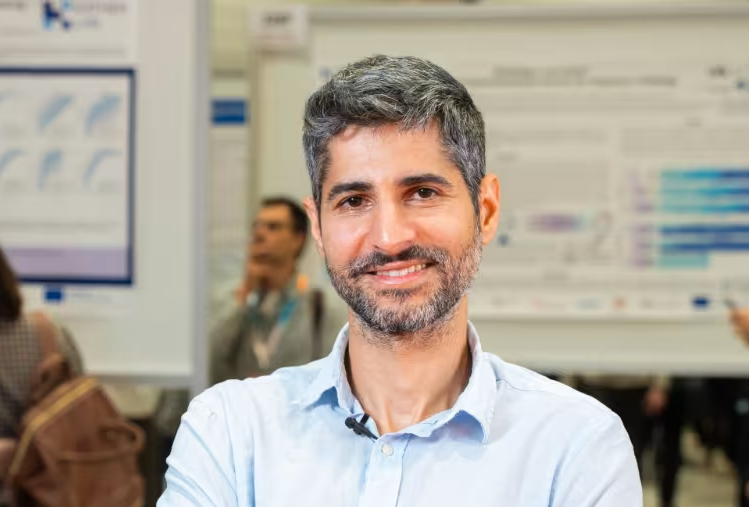
Technion Israel tweet mediaTechnion Israel tweet mediaTechnion Israel tweet media
English
29
226
1.4K
284K
Seth Corey, MD MPH 🎗️ retweetledi
eLife - the journal
🌟 Our Learning Resources collection has dozens of articles containing useful guidance, tools and resources to help you at any stage of your career, both in and out of academia - with no paywalls! elifesciences.org/learning-resou…
English
0
1
1
1K
Seth Corey, MD MPH 🎗️ retweetledi
Anish Koka, MD
Anish Koka, MD@anish_koka·
Do we have a physician shortage problem ? Yes, but it’s a created one related to incentives the system sets up. Take residency spots— if you’re a health system executive of a small or large health system you would be dumb not to take advantage of a federal program that pays you for each trainee you enroll. The solution is not to build more medical schools to fill these residency spots.. it’s to significantly reduce or eliminate the federal subsidy. Make health systems pay for trainees. If you ask folks to put up money, you’ll immediately eliminate many poor quality residencies that exist as foreign medical graduate mills. But what about the shortage of family practice physicians / nephrologists etc? This is created by a system that has completely devalued seeing patients in lieu of doing procedures on patients. Medicare policy which is basically controlled by health systems and health insurance donors has essentially been boosting payments to hospitals and relative to inflation has actually cut payments for the the part of the visit where physicians talk to patients. If you participate in Medicare you are also not allowed to balance bill patients to make up for this. The most successful health systems are ones that can efficiently label patients with a diagnosis that can translate to a billable procedure code. This means there’s a huge demand for talented proceduralists because they generate massive revenue for health systems. That demand translates to high wages for proceduralists which in turn makes procedural specialties and specialties that support procedures very high demand (orthopedics/neurosurgery/dermatology/opthalmology), and the non-procedural specialties (1º care, nephrology, psychiatry, infectious disease) low demand. If you value procedures highly.. you get a lot of procedures. This has a good side : no one can touch American cancer mortality rates or per capita organ transplant rates. But the bad side: 50% of Medicare patients that get left atrial appendage occluders are dead in 5 years. This means we have tied up some of our smartest/most capable physicians in doing procedures on seniors in the waning years of their life. So yes, that means we have a dearth of US trainedphysicians that will spend the time in an office to make sure grandma won’t get some meaningless drug or device. Unless we fundamentally change the system we will continue to have a misallocation of physician capital that artificially creates a demand for non-U.S. citizen foreign medical graduates, and no amount of additional medical schools or loan forgiveness will help.
Anish Koka, MD tweet media
Anish Koka, MD@anish_koka

The U.S. government invests over $21 billion annually in Graduate Medical Education (GME) to support ACGME-accredited training, primarily through Medicare. Medicare provides the majority of funding, averaging $112,000–$129,000 per resident annually, with additional funding from Medicaid and the VA. ~2 out of 3 American applicants to medical school don’t get in. Given that medical schools have actively been discriminating against white and Asian citizens because of explicitly racist affirmative action policies, there are likely to be a fair number of perfectly capable American citizens who want to be doctors that don’t make it through the process. Hospitals sees medical trainees as cash cows - federally funded labor — they dont care where you were born. It’s yet another nice arbitrage for your friendly non-profit that may be advertising in the next Super Bowl while sending uninsured patients to collections. We need accelerated pipelines for American citizens to practice medicine. But as long as there is a constant supply of foreign medical graduates which hospitals are cashing in on, nothing will change.

English

18
28
133
24.2K
Seth Corey, MD MPH 🎗️ retweetledi
David Spiegelhalter
David Spiegelhalter@d_spiegel·
I was so pleased to be part of a great team writing a commentary on the draft FDA guidelines on Bayesian clinical trial designs. Should have been done 30 years ago, but better late than never
JAMA@JAMA_current

💬 Perspective: Bayesian methodology supports efficient, flexible clinical trial designs; FDA guidance encourages prespecification and sensitivity analysis of priors. @f2harrell @d_spiegel ja.ma/47hHTyb

English
4
75
291
45.5K
Seth Corey, MD MPH 🎗️ retweetledi
Anish Moonka
Anish Moonka@AnishA_Moonka·
Researchers at UC Irvine took saliva samples from a choir before and after performing Beethoven. One antibody, the most abundant in your entire body, spiked 240%. That antibody is called secretory immunoglobulin A. Mouthful of a name, but it does a simple job: it coats your throat, gut, and airways and acts as your body’s first barrier against every cold, flu, and respiratory virus you breathe in. Your body makes more of it than all other antibody types combined. The 2000 study found this antibody rose 150% during rehearsals and 240% during the live performance. A separate 2004 study from the University of Frankfurt tested what happens when choir members just listen to the same music instead of singing it. The antibody barely moved. And their mood actually got worse. Marathon runners show the exact opposite. A study of 98 competitive runners found this same antibody dropped 21 to 31% after the race. 17% came down with colds or throat infections within two weeks. Cross-country runners tracked over a full season saw it fall to 40% of their starting level by November. Running was suppressing the same antibody that singing was tripling. It works through the vagus nerve, the longest nerve in your body. It runs from your brain down through your chest to your gut and controls your “rest and digest” mode. When you sing, your vocal cords physically vibrate against it where it wraps around your voice box. You’re also breathing from deep in your belly with long, slow exhales, which tells your nervous system to calm down. Your stress hormones drop. Your immune system responds. A 2016 study from the Royal College of Music and Imperial College London tested 193 cancer patients and carers across five choirs in South Wales. One hour of group singing lowered cortisol (the body’s main stress hormone) and raised five different immune signaling proteins. The people with the worst depression scores improved the most. You don’t need to be good at it. The boost comes from the physical act, the vibration and the breathing, not the melody. Trained soprano or shower singer, your body responds the same way. One caveat: that 240% number came from a live performance, where adrenaline and emotional intensity were at their peak. Singing along to the radio probably produces a smaller spike. And these are temporary boosts, not permanent changes. But the 193 cancer patients in the 2016 study weren’t performing Beethoven on stage. They were just singing together for an hour in community choirs.
All day Astronomy@forallcurious

🚨: Singing raises key immune antibody by 240% in under 1 hour

English
122
1.9K
8K
505.5K
Seth Corey, MD MPH 🎗️ retweetledi
Richard McElreath 🐈‍⬛
Statistical Rethinking 2026 is done: 20 new lectures emphasizing logical & critical statistical workflow, from basics of probability to causal inference to reliable computation to sensitivity. It's all free, made just for you. Lecture list & links: #calendar--topical-outline" target="_blank" rel="nofollow noopener">github.com/rmcelreath/sta…
English
14
291
1.5K
107.6K
Seth Corey, MD MPH 🎗️ retweetledi
MV Chandrakanth
MV Chandrakanth@ChandrakanthMv·
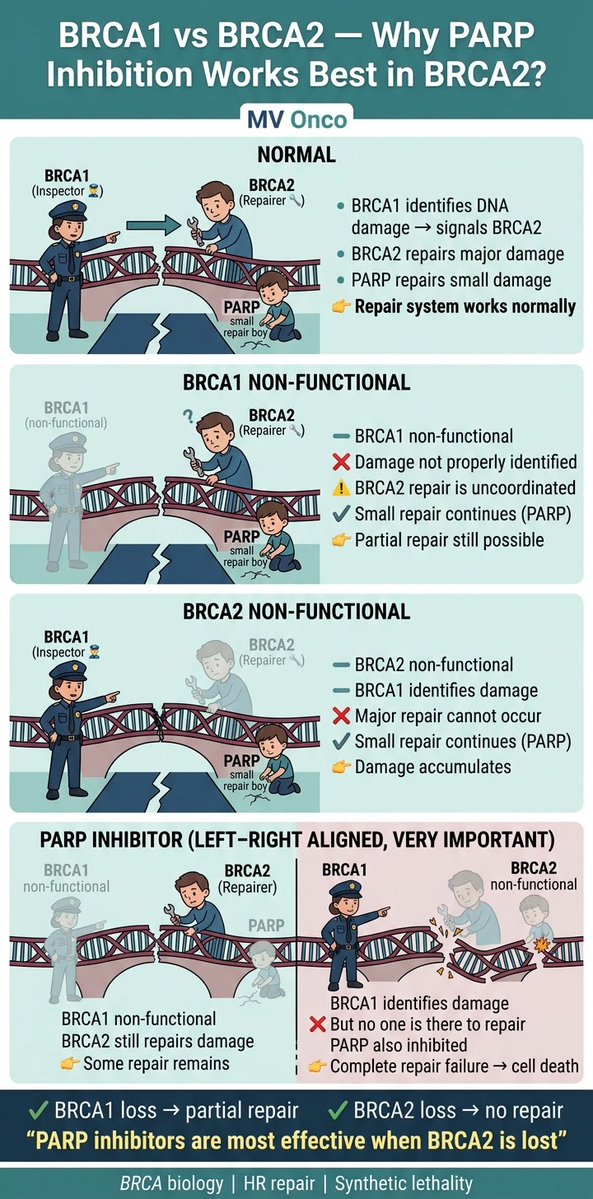
If you remember only one thing from BRCA biology, remember this👇 • BRCA1 → detects DNA damage • BRCA2 → repairs DNA • PARP → fixes small damage Block PARP + lose BRCA2 → no repair left → cell dies 👉 That’s why PARP works best in BRCA2 #MVOnco #Oncology #MedOnc
MV Chandrakanth tweet media
English
2
75
206
7.6K
Seth Corey, MD MPH 🎗️ retweetledi
Jennifer Sey
Jennifer Sey@JenniferSey·
We are about to turn 2 at @xx_xyathletics. We launched the brand with this ad on March 25, 2024. It's called Stand Up. We scrimped to pull it off - mostly shot on an iPhone, and we borrowed footage from friends (thank you @Riley_Gaines_ and @paytonmcnabb_ ). It articulates a clear mission for the brand. We stand up for female athletes. And we ask you to join us. It works not because of big fancy budgets but because it speaks the truth. 3 months after launching @tiktok_us banned us from advertising because of this video. And yesterday, we got a blanket (no specifics offered) suspension of our ad account from Meta. We need your help. Be our media and spread the word. Grassroots, old school style. Tell a friend. Please share the ad. Stand up.
English
20
640
2.5K
42.7K
Seth Corey, MD MPH 🎗️ retweetledi
WashU Medicine
WashU Medicine@washumedicine·
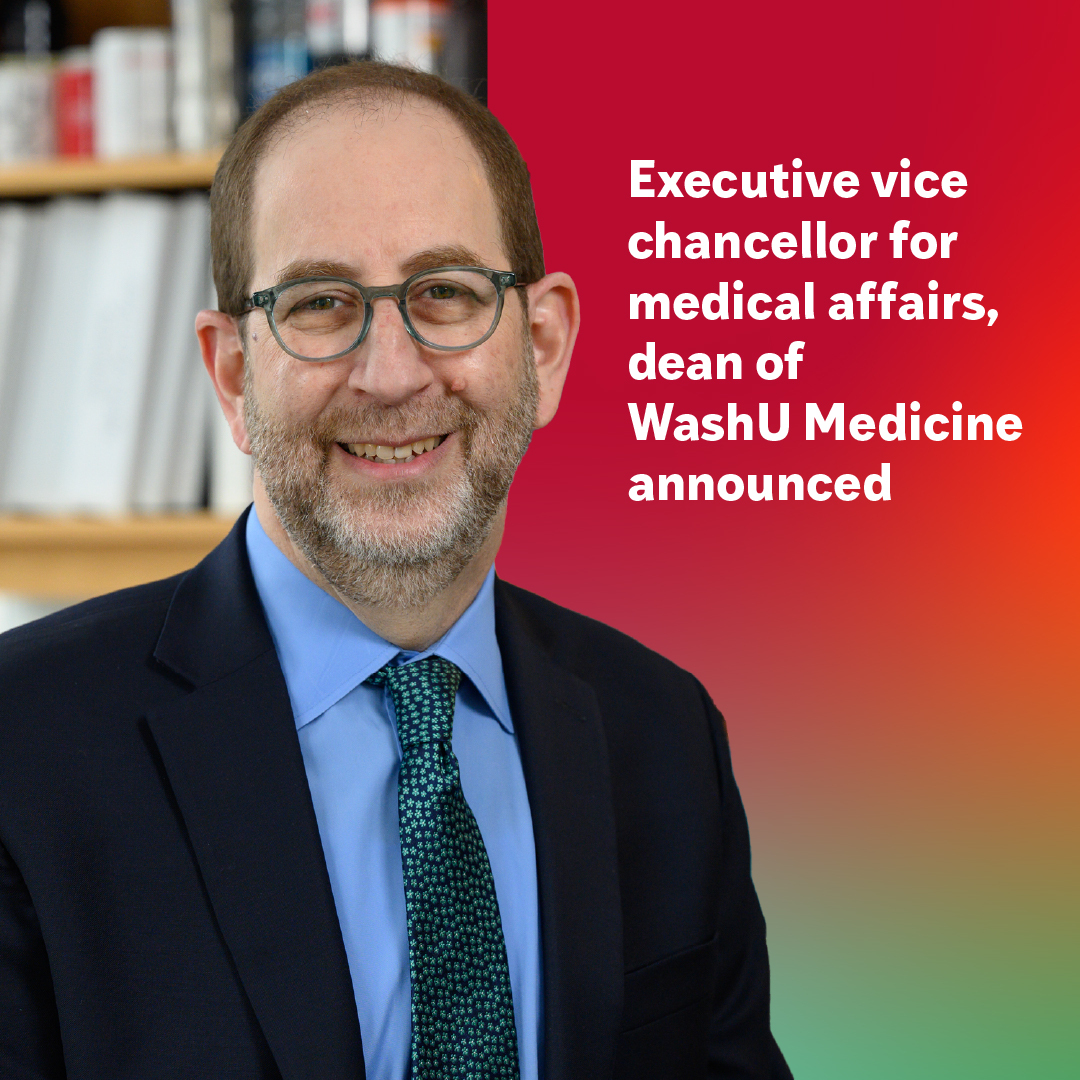
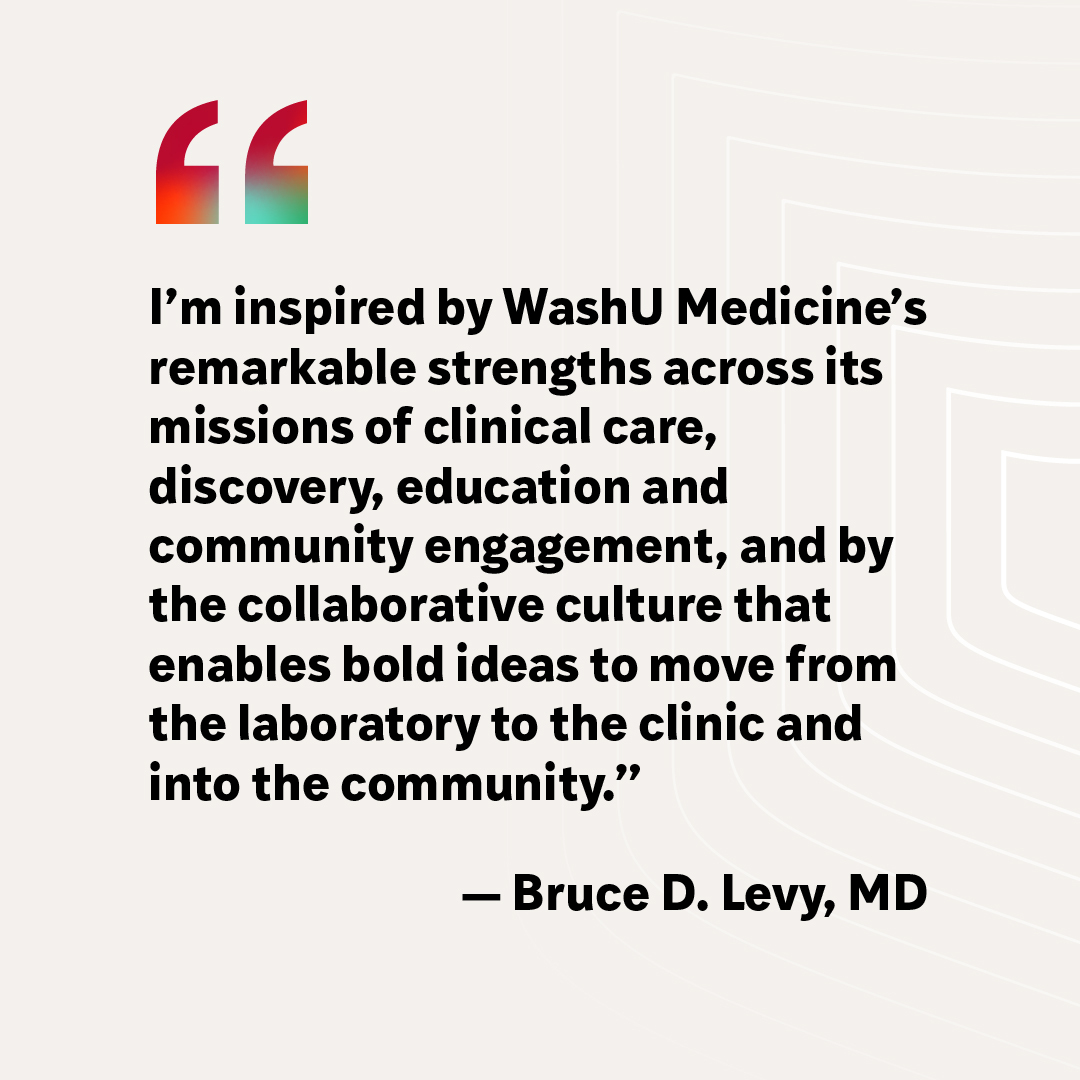
Bruce D. Levy, MD, a highly regarded leader in academic medicine and an accomplished physician-scientist from Harvard Medical School and Mass General Brigham has been named executive vice chancellor for medical affairs and dean of WashU Medicine. He begins his new role July 1, announced Chancellor Andrew D. Martin. Read more > medicine.washu.edu/news/levy-appo…
WashU Medicine tweet mediaWashU Medicine tweet media
English
0
11
44
5.1K
Seth Corey, MD MPH 🎗️ retweetledi
Cancer Cell
Cancer Cell@Cancer_Cell·
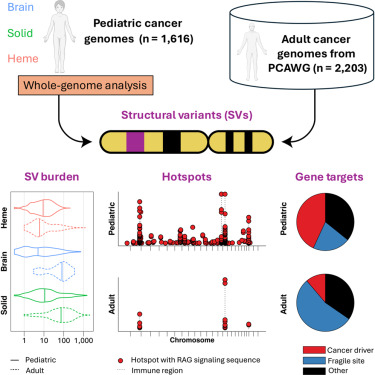
Online Now: The landscape of structural variation in pediatric cancer dlvr.it/TRYG3m
Cancer Cell tweet media
English
0
20
45
4K
Seth Corey, MD MPH 🎗️ retweetledi
Brandon Luu, MD
Brandon Luu, MD@BrandonLuuMD·
Students who took notes by hand scored ~28% higher on conceptual questions than laptop note-takers. Writing forces your brain to process and compress ideas instead of copying them.
Brandon Luu, MD tweet media
English
447
5.2K
24.5K
1.6M