Sara Ortiz

1.6K posts

Sara Ortiz banner
Sara Ortiz

Sara Ortiz

@sharinade

Postdoctoral researcher at @SyddanskUni | Behaviour, cognition and bioacoustics in marine mammals

Odense, Danmark Katılım Eylül 2010
226 Takip Edilen229 Takipçiler
Sara Ortiz
Sara Ortiz@sharinade·
@qatarairways I have a flight with you on Thursday, from Perth to Doha and from Doha to Denmark. Is it not possible to fly another way maybe through Singapur? Thank you!
English
11
0
1
1.4K
Sara Ortiz retweetledi
Comparative Cognition Research Group
Delighted to share our recent work on Automatic Imitation in macaws now available at iScience. Our research shows that macaws involuntarily copy intransitive actions, akin to humans, suggesting the presence of mirror neuron system in parrots. Read more: doi.org/10.1016/j.isci…
MPI for Biological Intelligence@MPIforBI

Parrots automatically mimic gestures that are not serving any goal – a phenomenon previously only known in humans! This is shown in a new study led by Auguste von Bayern, which suggests parrots could also have mirror neurons. Read more: bi.mpg.de/news/2024-12-v… Scientific publication: doi.org/10.1016/j.isci… Video by Adrian Azcárate / Loro Parque @esha_haldar @loroparque @CCRG_MPIBI

English
0
2
4
197
Sara Ortiz
Sara Ortiz@sharinade·
5/6 🚨 Coastal access is critical for porpoises to meet their energy needs,but it puts them in conflict with human activities like fishing—raising risks of bycatch.Protecting these habitats is essential for their survival.🌊🛡️ #Conservation #MarineEcosystems @Biology_SDU @NATsdu
Sara Ortiz tweet media
English
1
0
0
34
Sara Ortiz
Sara Ortiz@sharinade·
1/6 🐬✨ New research sheds light on the secretive lives of harbour porpoises! These opportunistic predators display remarkable flexibility in their foraging behaviours, adapting to diverse prey and social contexts in Danish coastal waters. onlinelibrary.wiley.com/doi/10.1002/ec…
Sara Ortiz tweet media
English
1
1
2
84
Sara Ortiz
Sara Ortiz@sharinade·
3/3 💡 Harbour porpoises have a unique strategy: their calves are independent early on, but maternal care is brief compared to other cetaceans. High fecundity and short lactation periods keep these supermoms on the move. 🐬 A mother’s love, efficient and fleeting!
English
0
0
0
30
Sara Ortiz
Sara Ortiz@sharinade·
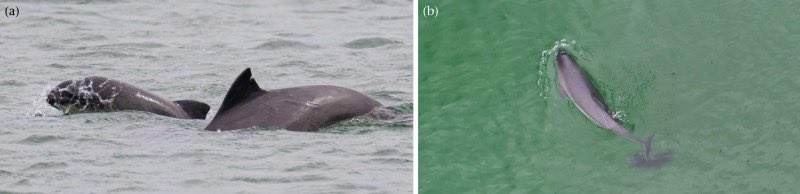
2/3 🌀 **Drone insights reveal**: 1️⃣ Calves work harder than moms to stay close. 2️⃣ Moms often *break away* to forage or travel. 3️⃣ Newborns transition from “echelon” to “infant” position by 2 months. 4️⃣ Despite early independence, calves stick around for 10–11 months.
Sara Ortiz tweet media
English
0
0
1
21
Sara Ortiz
Sara Ortiz@sharinade·
@rexjung 🤣🤣🤣🤣🤣 we gotta test that!!
English
0
0
0
4
Sara Ortiz retweetledi
Tay
Tay@BioTay·
@sharinade 6/6 Parece que, como ocurre en los humanos, la memoria episódica se beneficia de la reactivación de la corteza motora. Al recordar, revivimos el pasado y, al haber activado la corteza motora, esto se facilita. Es muy interesante que esto también se dé de forma prospectiva.
Tay tweet media
Español
0
4
17
1.3K
Sara Ortiz retweetledi
Tay
Tay@BioTay·
@sharinade 5/6 También es interesante que los delfines recordaran mejor los comandos que se les indicaban mediante gestos y que habían realizado inmediatamente antes. Si solo se les mostraba el gesto (pero no realizaban la acción), su memoria no era tan buena.
Español
1
2
7
844
Sara Ortiz retweetledi
Tay
Tay@BioTay·
@sharinade 4/6 Esto es similar a la forma en la que los humanos usamos de forma voluntaria la memoria de trabajo o la memoria a largo plazo para anticiparnos al futuro.
Español
1
1
7
265
Sara Ortiz retweetledi
Tay
Tay@BioTay·
@sharinade 3/6 En cambio, cuando se les daba un comando que significaba "recuerda esto", usaban voluntariamente su memoria a largo plazo, y daba igual que se les presentasen distracciones o retrasos a la hora de pedirles que repitieran el movimiento aprendido muchas horas después.
Tay tweet media
Español
1
1
8
262