
Sabitlenmiş Tweet
sharkzero
233 posts
sharkzero
@sharkzeron
Web3 Growth Strategist & Coder I love tech & culture Always DYOR
Katılım Nisan 2014
906 Takip Edilen502 Takipçiler
@prriber @Lighter_xyz How did you decode tx data from lighter scan?
English
@PixelSaurus @DistrictOneIO you stupid boy, it was 19K score, not gold
English
Based on community feedback, we're making the following changes:
1️⃣ 75% of the remaining gold from the Meme Labs competition on June 24 and 25, totaling 200k, will be set aside for appeals.
English
@fantasy_top_ Six days is too much. But we know that this will cause little pump for low score cards😁
English

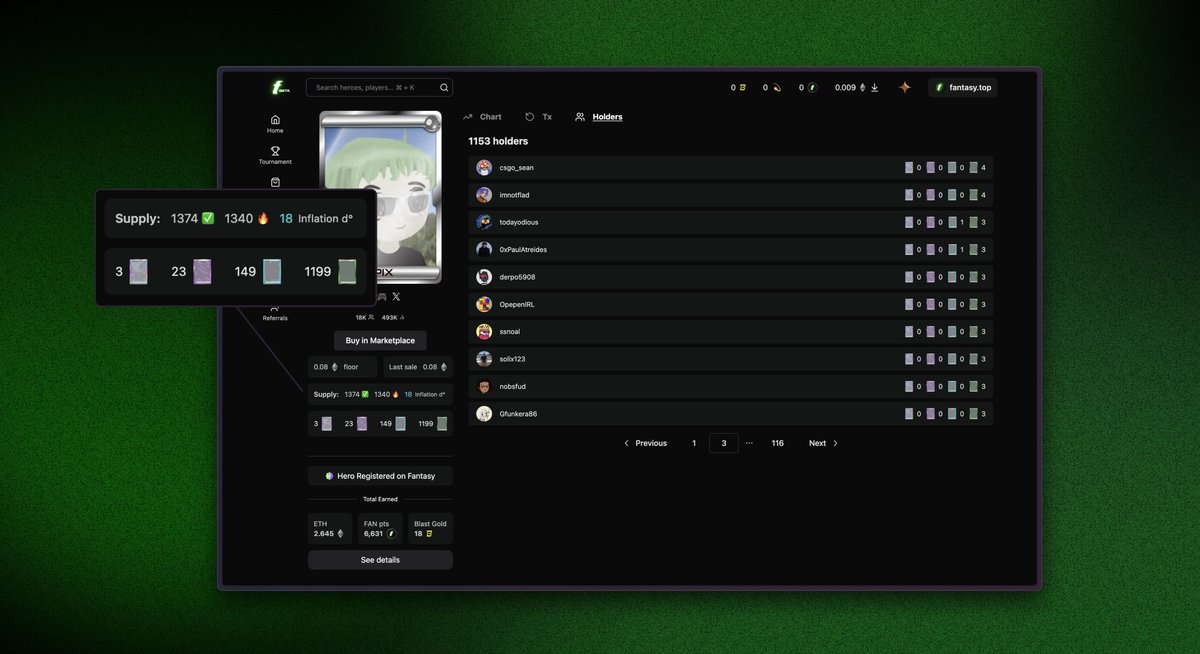
Introducing the Supply Details and Holders' Tab 📊
Explore the Supply Details to gain insights into
✅ Current Supply
🔥 Burnt Cards
❄️ Degree of Inflation
🃏 Rarity Distribution
The Holders' Tab enhances the player experience by providing insights into competitors' strategies and offering Heroes a better way to connect with their community.
English
sharkzero retweetledi

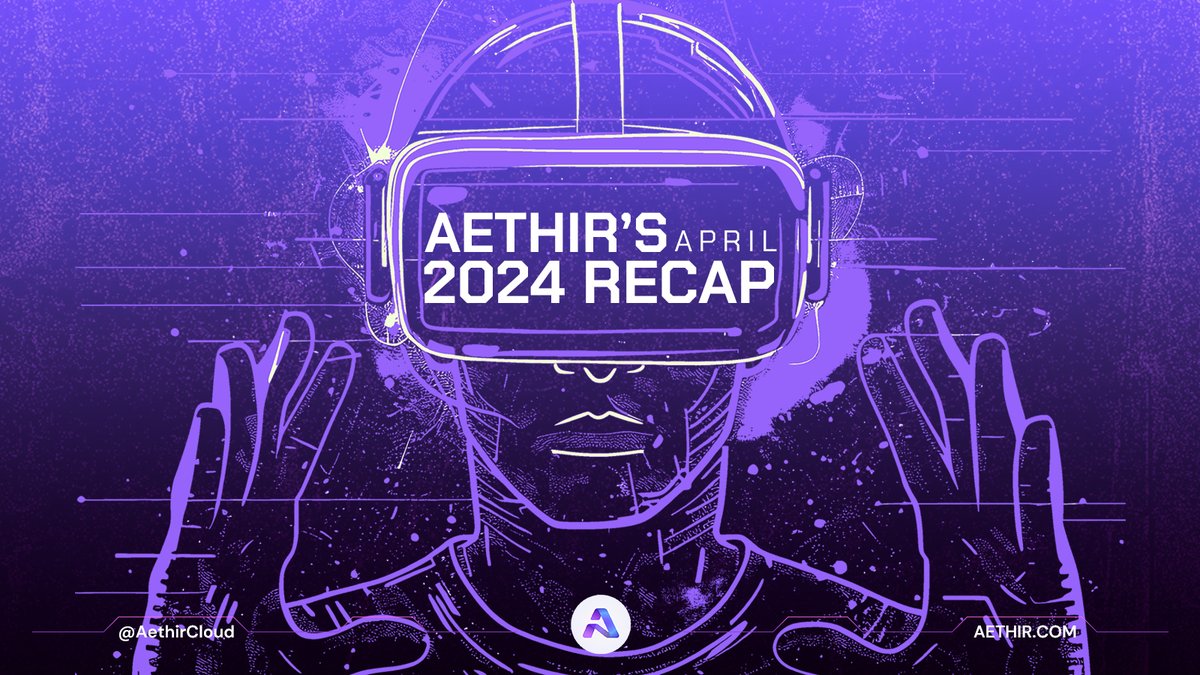
April 2024 was exceptional for Aethir and the community. It was marked by our successful historical checker node sale and a significant presence at the @token2049 Dubai event 🏝️
↓
We took a leap into the future, unveiling the @AethirEdge, a revolutionary edge computing device powered by the advanced Qualcomm® Snapdragon™ 865 chip, designed to redefine how we interact with technology.
↓
On 20th April, we launched the Testnet versions of the checker owner portal and the checker client GUI/CLI to enable checker node license NFT holders to familiarize themselves with the node operating mechanics.
↓
Our excitement continued as we introduced our Aethir Cloud Drop, aiming to decentralize ownership of our upcoming ATH token by distributing a portion of the token supply among the Aethir community and other dedicated Web 3.0 communities.
↓
We wrapped the month on a high note by launching our ecosystem, @AethirEco, fueled by Aethir's partners 🌐
↓
Visit our blog post to learn about the monthly recap of April month 👉 aethir.com/blog-posts/aet…
English
@argentHQ @andeebtceth @Starknet But they need to complete 8 weeks of quests. So they should have money for gas🤣🤣🤣🤣
English
@andeebtceth @Starknet agreed, but think about what Paymasters unlocks for new people entering the ecosystem...
imagine not needing to fund your wallet before playing a game, it makes onboarding 10x easier
English
if you minted all 8 Xplorer NFTs and had Smart Account activated on Argent X before the 23rd of April
check your emails 👀
you'll be able to swap on AVNU gas-free
Zerohour@serzerohour
@argentHQ @Starknet @abdelstark It's good to be chosen for gas free swap week in @avnu_fi . Thanks guys.
English

1 MILLION $GUMMY X AIRDROP 🔥
🔴 Follow @gummyonsolana
🔴 Follow @crypto_banter
🔴 Follow by @Bybit_Official
🔴 Quote/ Retweet this post
🔴 Fill out this form: forms.gle/K32CLWob5PERj3…
1000 people will be randomly selected to earn 1000 $GUMMY each.
👉🏼 For more airdrops, check out partner.bybit.com/b/gummyairdrop

English
@LG0kLpG9uH57150 @analysoor hell no. There is no way u do it accidentally
English
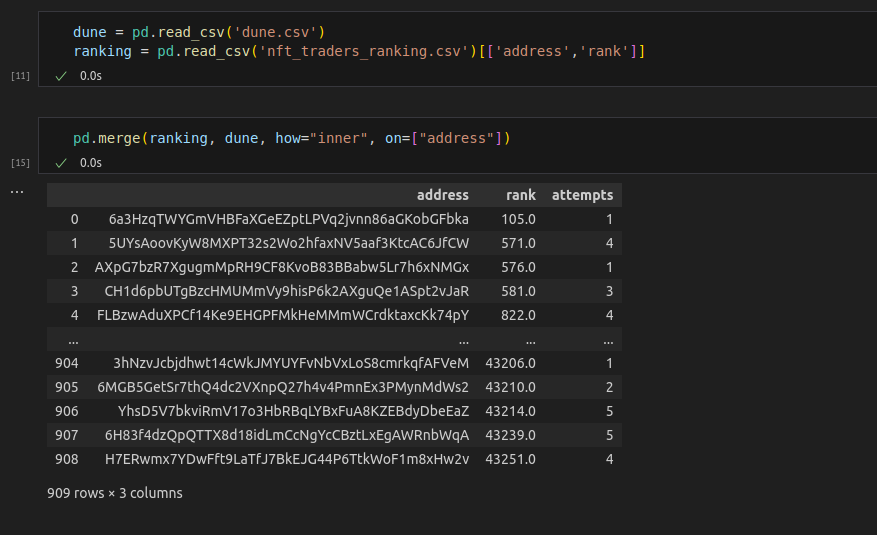
Out of the 43k addresses that were preselected by our machine learning/ai algorithm
909 participated and some more than once
This collection will have close to 1/1 owner to NFT with users less likely to be bots and strong hands
Full validation in 15 minutes
Analysoor@analysoor
gm We are please to introduce the machine learning model that will be used for @theblocktheory_ mint The purpose of this model is to create a list of addresses less likely to be bots but also familiar with Solana NFT trading Theses addresses are then ranked and the higher the rank, the higher the likelihood of having a winning mint, it’s not a luck based raffle system but a merit based raffle system The data We used @flipsidecrypto to extract all the Solana addresses that interacted with secondary marketplaces starting 01/01/2023 till 25/02/2024 Besides volume and number of trades, we added more features to feed the machine learning algorithm : - Nb_days_since_first_trade: Calculates the number of days between the first and last trade recorded, it shows how active the wallet is - Avg_nb_minutes_between_trades: frequency of trades allow to better identify bots, we could have false positives with sweeps - Avg_nb_hours_between_hold_trade: this calculate how long the NFT was held before it was sold, the sql query can still be improve on this part The final dataset after cleaning contains 326 023 addresses that traded Solana NFTs The machine learning model We used K-Means Clustering to identify different cluster of addresses and pinpoint bot activity, after filtering out addresses based on these clusters Kmeans clustering “K-Means Clustering divides data into clusters where each point belongs to the cluster with the nearest mean, updating cluster centers based on member points. This process iterates until the clusters are stable and well-separated.” After testing a range from 3 to 10 clusters, 7 clusters provided the most insightful classification Cluster 0 and 1 groups the most regular traders, but we only selected cluster 1 as it has more active traders with higher volume traded Ranking We initially tried using Gradient boosting but it gave weird results, so we went for a more manual approach with a filter filtering of low activity addresses(70k addresses from the Kmeans cluster) and gave a weight for a few normalized features Depending on how much, how often, how long and if an address buys more thans sells NFTs, their ranking increase How are these addresses related to the mint? The mint will have a limit of 5 attempts per address, it fully public there is no whitelist restriction If 1000 addresses out of these 43k address mint, the higher the rank the higher the chance of minting the NFT If only 500 of those try to mint, and some attempted more than once, it will run a second loop In total there will be 5 loops over these address, and if there is still spots left, it goes to public where it’s luck based We think this is a better approach than a pure raffle based system as it favors ppl that try more attempts and have more funds, and it rewards active and long term holders This is the first iteration of the list, it will be improved and also it will be open to other data scientist Wen mint? This week, doing a few more testing on the onchain program and we will announce a date All the dataset and script are open source and on github, link on second tweet
English
@megumii_tez @AlterNovaXYZ There was less then 100 paid mints in first day. Who will mint 6k?😂😂😂
English

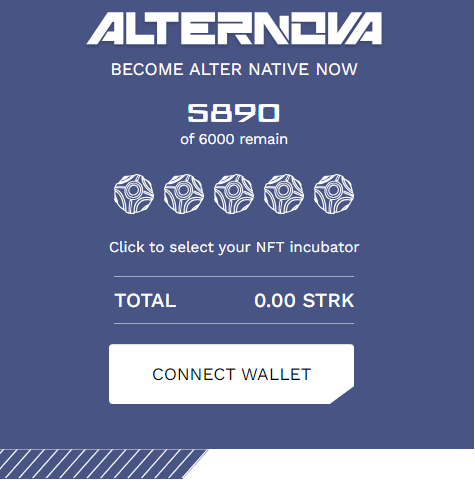

GM Alter Natives ☄️
We've heard you. The Multiversal Council has decided to turn up the heat!
For every 2 NFTs minted, you'll be dropped 1 more 🔥
This also applies to our OG holders. If you've already minted 1 NFT, mint 1 more to get dropped another.
However, this does not apply to holders of the free mint.
Mint here: alternova.xyz/mint
#Starknet #RoadToAlterNova
English
sharkzero retweetledi

If you think of a blockchain as an operating system, then transactions are just bash commands.
English

【500リポスト】
亡き母から毎年手紙 20歳迎えた娘
news.yahoo.co.jp/pickup/6489243
#Yahooニュース
日本語


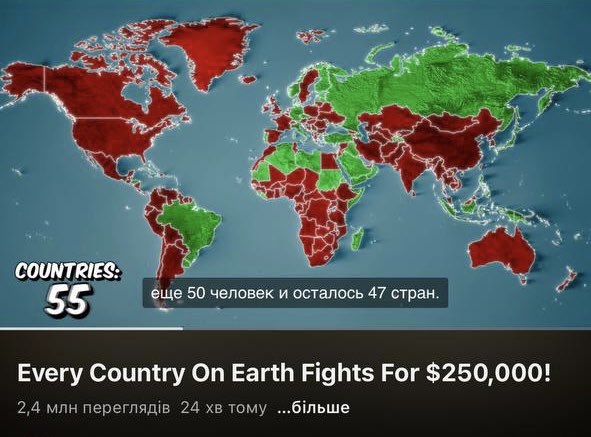
Hey @MrBeast, saw your "Every Country On Earth Fights For $250,000" video.
There’s a fragment on a map showing Crimea being a part of russia. Just in case you or your production crew didn’t know — Crimea is a part of Ukraine, which was illegally and forcefully occupied by russians and their military in 2014.
Moreover, you’ve invited a russian onto your show to represent russia, whereas global sports officials at least make them take part under a neutral flag.
The country that shells Ukrainian cities and kills Ukrainians should not be represented and invited in any show or sports while they are murdering people in another country. If that’s not enough — literally today russia has hit the center of the Ukrainian city Chernihiv with a ballistic missile, killing 7, including a child, and injuring 129 people.
Ukrainians are in full-scale war with russia and have been fighting with the aggressor for their rights, freedom and lives.
Ukrainians remember your help with donations and humanitarian aid. Please, consider removing that map from your video or doing anything about it to show that you do not support terrorism and war.

English
@x_explore_eth @arbitrum Where did you find a full list of airdrop addresses?
English

1/8 We found Arbitrum Sybil detection rules cause loopholes. Through our same-person/Sybil address recognition model, we identified more than 279,328 same-person and 148,595 Sybil airdrop addresses. @arbitrum is welcome to contact us.
Detail in our Mirror:mirror.xyz/x-explore.eth/…
English
I hope our discussion has been helpful for you 🙏. If you find my threads useful, please consider following me at
@sharkzeron
. Also, if you could like, comment, or retweet the first tweet below, I would greatly appreciate it!
twitter.com/sharkzeron/sta…
sharkzero@sharkzeron
Ready to take on the crypto market? Here's your guide. Discover how to make the most of wild opportunities in the world of cryptocurrencies. 🧵👇🏻
English
Tagging the best gigabrains!
@CryptoShiro_
@thesaint_
@rektdiomedes
@hooeem
@defiprincess
@DefiIgnas
@DAdvisoor
@Chinchillah_
@Slappjakke
@Subli_Defi
@DeFiMinty
@crypto_linn
@0xsurferboy
@thelearningpill
@0xFlips
@DAdvisoor
@NNovaDefi
@0xTindorr
English