Shyam Kumar

2.4K posts

Shyam Kumar

Shyam Kumar

@shyam_kumar

Exploring the Expanse. Mostly read-only on Twitter.

Singapore Katılım Aralık 2007
513 Takip Edilen255 Takipçiler
Shyam Kumar retweetledi
Pranay Kotasthane
Pranay Kotasthane@pranaykotas·
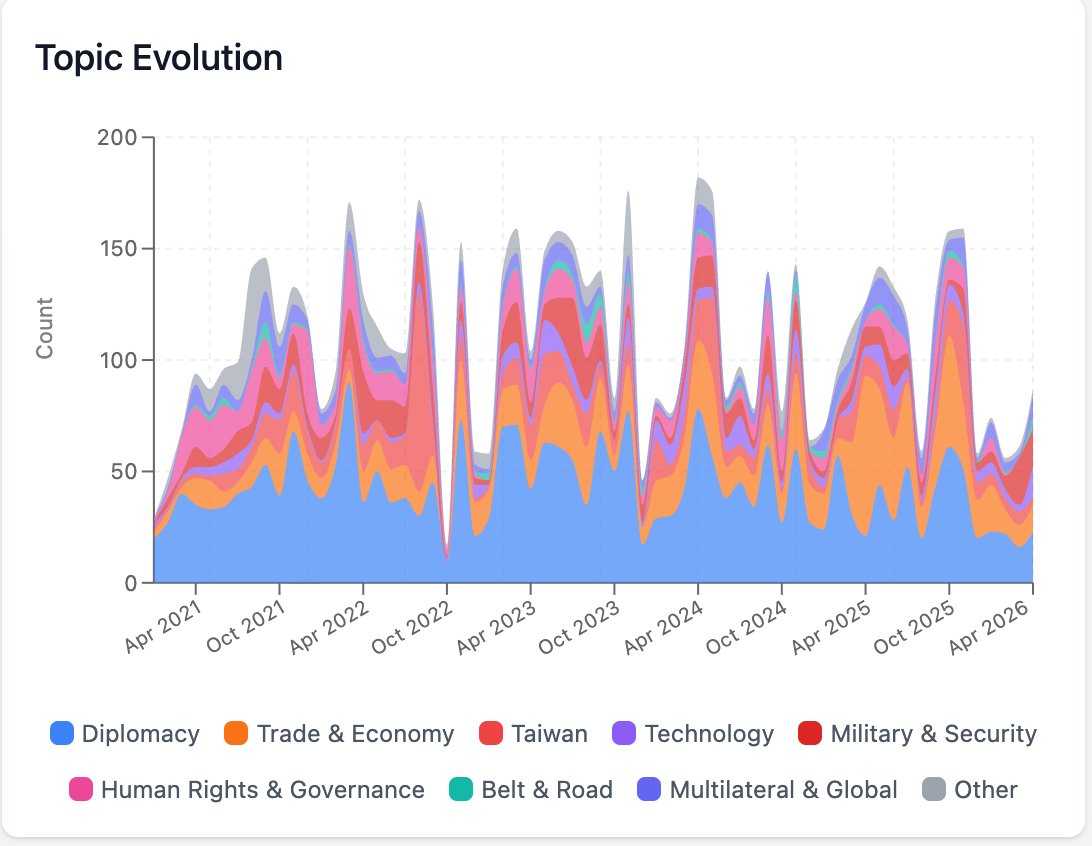
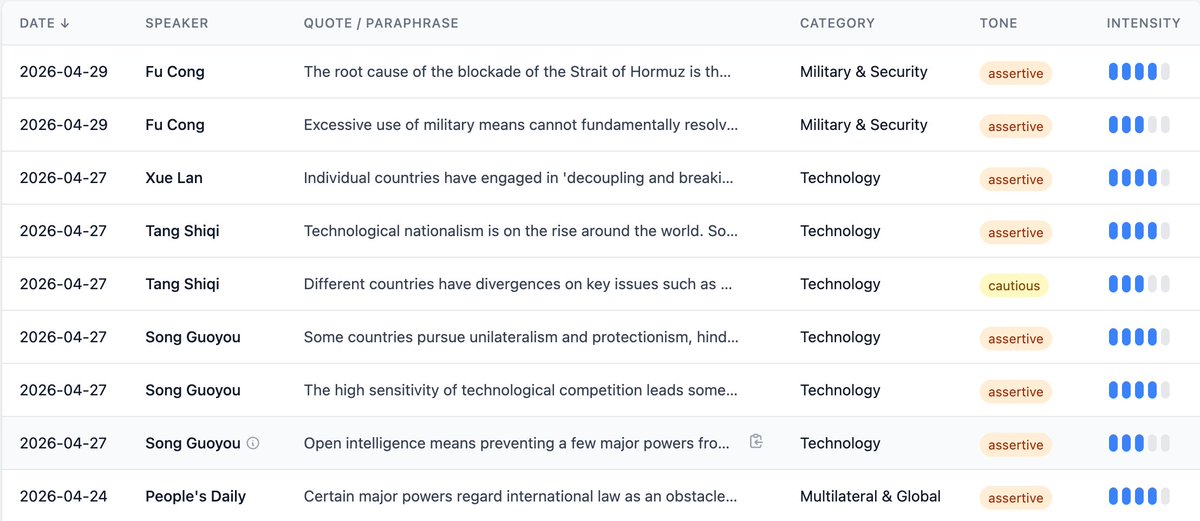
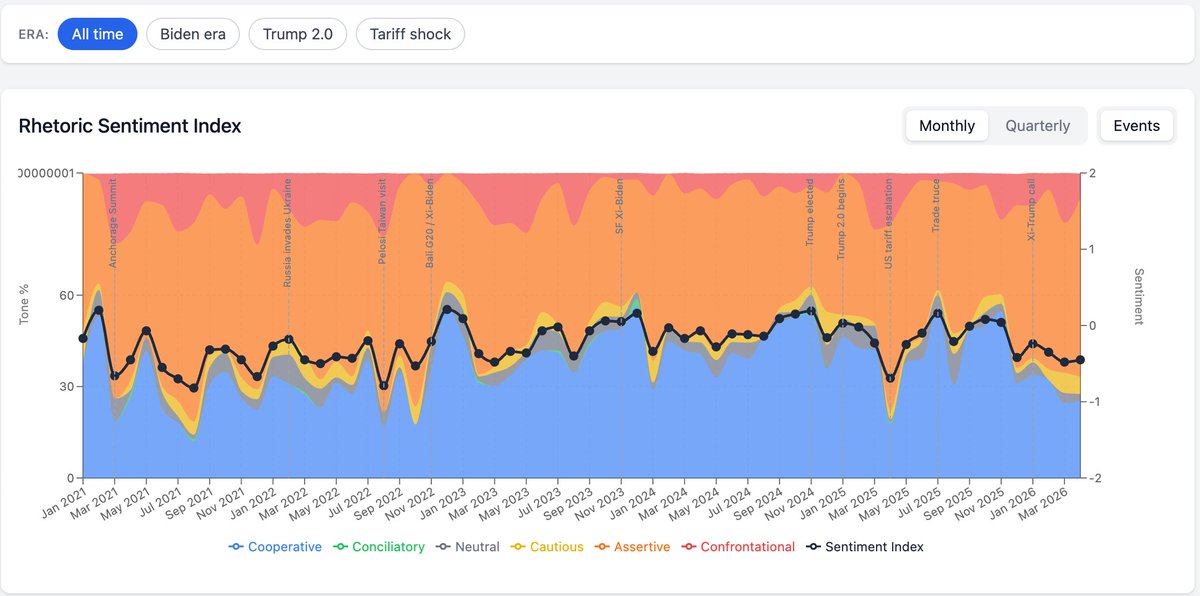
With the Trump–Xi summit expected in Beijing this month, it's useful to look at what 5+ years of data from Chinese official rhetoric on the US shows. @theChinaDude has been tracking People's Daily & Chinese state media daily since 2021 through his newsletter. So... #thread
Pranay Kotasthane tweet mediaPranay Kotasthane tweet mediaPranay Kotasthane tweet mediaPranay Kotasthane tweet media
English
1
6
4
4.8K
isa 🪷
isa 🪷@isaturnsthepage·
What apps do you guys use to track your books ?
English
105
13
267
31.6K
Taylor Pearson
Taylor Pearson@TaylorPearsonMe·
Pretty cool Claude Code workflow I just built and ran for the first time. I use @Readwise to highlight articles and @Snipd to grab clips from podcasts. These often have implications for things I'm working on like a point that would strengthen an article I'm drafting or an idea for something I'm building. Historically, going through each highlight and routing it to the right place is tedious so I would often just build up a huge backlog and then archive it and move on. I just set up a skill in Claude Code runs that looks at my active article drafts and current projects (all in Obsidian) then goes through each article or Podcast I've read and suggests, highlight by highlight and note by note, where each one should land. I approve the routing per file and it integrates each highlight with my annotation verbatim into the right article's "Ideas to Integrate" section or the project's backlog. So when I sit down to write any of these pieces, all the relevant material I've been reading for the past month is already queued up in the right place with an explanation of where it might fit in the article and a pointer to the original source. The same pass that routes research into articles also builds a drafting pool with the most share-worthy pieces, each with a 2-3 sentence framing and a couple of key quotes for my monthly newsletter Ran it on a 27-file backlog last week (a month's worth for me) which normally would have felt overwhelming. It had points relevant to five article drafts, spawned two new article ideas, built the April newsletter pool, and added a couple of project ideas to the backlog. It took about 90 minutes with the AI doing the matching and me doing the judgment calls.
English
11
0
81
6.3K
Jared Henderson
Jared Henderson@jhendersonYT·
Going to see if this is good.
Jared Henderson tweet media
English
8
12
185
9.9K
Shyam Kumar
Shyam Kumar@shyam_kumar·
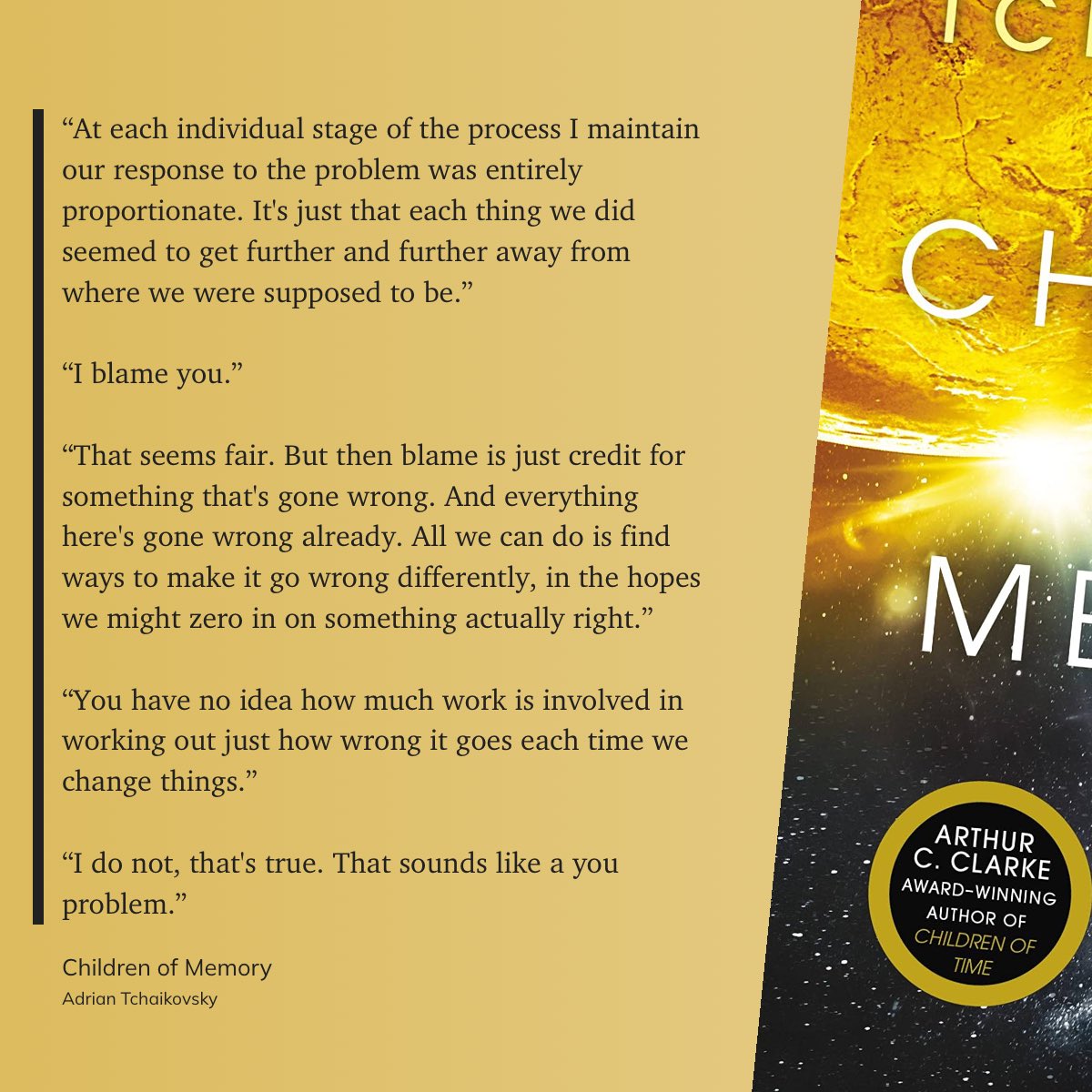
New post up! Inspired by @aptshadow 's Children of Time series. Link in the comments.
Shyam Kumar tweet media
English
1
0
1
18
Shyam Kumar retweetledi
Melissa Chen
Melissa Chen@MsMelChen·
May I offer a different perspective on the whole transatlantic family feud brewing over NATO. Europeans are furious at what they call American unilateralism and "wars of choice," while Americans are done subsidizing allies who won't lift a finger when Washington actually needs them. Given all the sentimentality and historical baggage, there’s been a lot of bad blood and high grade insults thrown both ways. A lot of pride here is at stake. But given that I am not American or European, what I can provide is an Asian perspective. The whole thing looks very different as there are no blood ties or cultural nostalgia to pull me either way. Because of distance, the default Asian lens on America has always been colder, clearer, and far more pragmatic than the European one. Asians have never lived under the illusion that their relationship to the US is one based on shared values. If they ever did, the illusion was shattered during the Cold War. Instead, Asian nations saw the relationship to America as a cold, interest-driven bargain in a dangerous neighborhood full of communists, insurgents, and bigger powers. Fast forward to today, and this lesson still holds. Japan, South Korea, the Philippines, Vietnam, Singapore and Indonesia all partner with America because their interests (not values) align - especially when it comes to countering China. These nations have reasons to be alarmed about Beijing's ambitions in the South China Sea, around Taiwan, and across the Indo-Pacific. They don't need lectures about democracy or liberal international order to see the value in US forward presence, intelligence sharing, tech transfers, and security guarantees. It's a straight-up transactional deal: the US keeps the sea lanes open and the PLA at bay. Meanwhile, Asian nations host your bases, buy your weapons, and join your alliances (Quad, AUKUS, etc.). When interests diverge, they adjust pragmatically, without the drama and meltdown. Probably not many in the West know this, but one of the forces that shaped this attitude was the US pullout of Vietnam and the rest of America’s Cold War shenanigans. Lee Kuan Yew was one of America’s loudest cheerleaders in Southeast Asia. In 1967 he flew to Washington, testified to Congress, and begged Lyndon Johnson (and later Nixon) not to cut and run in Vietnam. He warned that a hasty US exit would trigger the dominoes - Vietnam, Cambodia, Laos, and then pressure on the rest of Southeast Asia. Singapore became a logistical hub, providing a haven for US troops on R&R, oil refineries supplying the American war machine, and Lockheed servicing aircraft. At one point, US military-related spending made up 15% of Singapore’s entire GDP. Singapore didn’t support the war because it loved American democracy but because it kept the communists tied up and bought Southeast Asia time to build up its own economy and military. Then came the pullout - the Paris Accords in 1973 and then Saigon falls in 1975. Despite all the lobbying, despite the blood and resources America had spent, domestic politics in the US (the anti-war movement, Congress, Vietnam syndrome etc.) ended it. LKY watched in disbelief as the superpower that had promised to hold the line simply walked away. The lesson was that American commitments are real only as long as they serve American interests and American voters don’t get tired. It’s a brutal one to internalize. LKY was disappointed and noted American “unreliability” but Singapore didn’t collapse into panic or anti-Americanism. They just recalibrated and kept pursuing pragmatism by building its own deterrent, diversifying partners, and later offered the US naval logistics access (Sembawang port) when the Philippines kicked them out of Subic Bay in the early 1990s. Malaysia drew the same conclusion. The Tunku was pro-Western and anti-communist early on, but Malaysia never joined SEATO and pushed ZOPFAN (Zone of Peace, Freedom and Neutrality) instead. When the British announced their East-of-Suez withdrawal in 1968 and Nixon’s Doctrine (1969) told Asians “you defend yourselves first, we’ll just help,” Kuala Lumpur accelerated its neutralist tilt. The message was clear - don’t count on Washington to bleed indefinitely for distant allies. South Korea is similarly pragmatic but it operates under far higher stakes due to baggage from the Korean War and the ongoing North Korean threat. American intervention literally saved the South from conquest, resulting in a bond that is forged in blood. While South Korea had to learn the same lessons - that the American umbrella isn’t permanent, sharing a border with a nuclear-armed adversary forces tighter coupling with Washington. The reverberations of Nixon’s 1973 opening to Beijing cannot be understated. It shocked the entire region that America, the great anti-communist crusader, suddenly would cozy up to Mao to counter the Soviets. If Washington could flip on core principles when interests demanded it, why should smaller states pretend the relationship was about anything deeper? The core Asian critique of the European approach to dealing with America is that it is entirely bound up in moral values and civilizational kinship. This means that every disagreement feels like a betrayal and breeds resentment on both sides. Because Europe is so hyped up on abstract values, it makes NATO feel like a sacred club that America is disrespecting. Asia's interest-based lens sees alliances as tools - useful until they're not. Maybe Europe thinks the Asian approach is cynical but the irony is that this is actually what keeps Indo-Pacific partners far more reliable counterweights to China than many NATO members ever were against Russia.
Marc Thiessen@marcthiessen

So many longtime NATO supporters saying the same thing right now. I helped bring Poland, Hungary and Czech Republic into NATO. But denying us basing and overflight is inexcusable, as is their failure to help with Strait of Hormuz. No one asking them to bomb Iran, just let us use our bases and help escort ships. If they can’t do that, NATO has no purpose.

English
392
829
4.4K
666.6K
Shyam Kumar
Shyam Kumar@shyam_kumar·
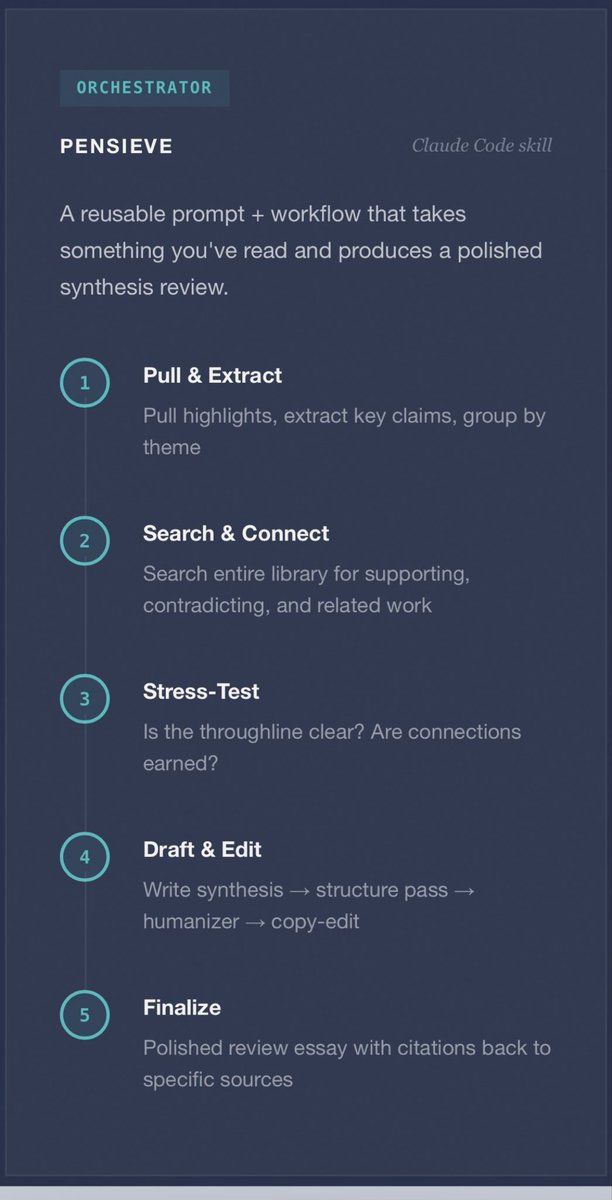
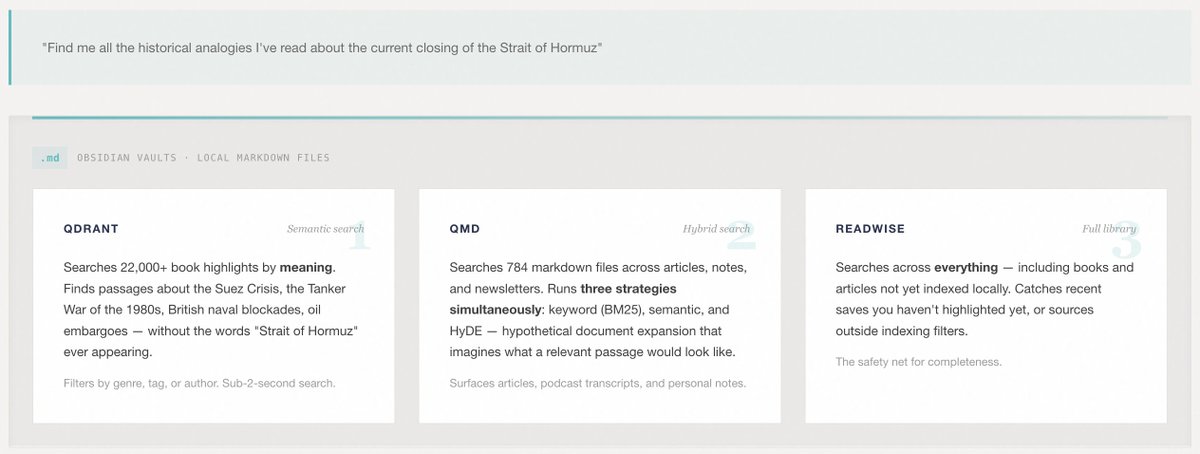
@karpathy Q: If tokens will just get cheaper, isn't redundancy (inefficiency) a good thing at the individual scale? I am using @obsdmd, @readwise, qmd by @tobi, and RAG - for different sources, and results are better than relying on Claude to find the right one. shyamkumar.com/pensieve
Shyam Kumar tweet media
English
0
0
0
30
Andrej Karpathy
Andrej Karpathy@karpathy·
LLM Knowledge Bases Something I'm finding very useful recently: using LLMs to build personal knowledge bases for various topics of research interest. In this way, a large fraction of my recent token throughput is going less into manipulating code, and more into manipulating knowledge (stored as markdown and images). The latest LLMs are quite good at it. So: Data ingest: I index source documents (articles, papers, repos, datasets, images, etc.) into a raw/ directory, then I use an LLM to incrementally "compile" a wiki, which is just a collection of .md files in a directory structure. The wiki includes summaries of all the data in raw/, backlinks, and then it categorizes data into concepts, writes articles for them, and links them all. To convert web articles into .md files I like to use the Obsidian Web Clipper extension, and then I also use a hotkey to download all the related images to local so that my LLM can easily reference them. IDE: I use Obsidian as the IDE "frontend" where I can view the raw data, the the compiled wiki, and the derived visualizations. Important to note that the LLM writes and maintains all of the data of the wiki, I rarely touch it directly. I've played with a few Obsidian plugins to render and view data in other ways (e.g. Marp for slides). Q&A: Where things get interesting is that once your wiki is big enough (e.g. mine on some recent research is ~100 articles and ~400K words), you can ask your LLM agent all kinds of complex questions against the wiki, and it will go off, research the answers, etc. I thought I had to reach for fancy RAG, but the LLM has been pretty good about auto-maintaining index files and brief summaries of all the documents and it reads all the important related data fairly easily at this ~small scale. Output: Instead of getting answers in text/terminal, I like to have it render markdown files for me, or slide shows (Marp format), or matplotlib images, all of which I then view again in Obsidian. You can imagine many other visual output formats depending on the query. Often, I end up "filing" the outputs back into the wiki to enhance it for further queries. So my own explorations and queries always "add up" in the knowledge base. Linting: I've run some LLM "health checks" over the wiki to e.g. find inconsistent data, impute missing data (with web searchers), find interesting connections for new article candidates, etc., to incrementally clean up the wiki and enhance its overall data integrity. The LLMs are quite good at suggesting further questions to ask and look into. Extra tools: I find myself developing additional tools to process the data, e.g. I vibe coded a small and naive search engine over the wiki, which I both use directly (in a web ui), but more often I want to hand it off to an LLM via CLI as a tool for larger queries. Further explorations: As the repo grows, the natural desire is to also think about synthetic data generation + finetuning to have your LLM "know" the data in its weights instead of just context windows. TLDR: raw data from a given number of sources is collected, then compiled by an LLM into a .md wiki, then operated on by various CLIs by the LLM to do Q&A and to incrementally enhance the wiki, and all of it viewable in Obsidian. You rarely ever write or edit the wiki manually, it's the domain of the LLM. I think there is room here for an incredible new product instead of a hacky collection of scripts.
English
2.9K
7.1K
58.9K
21.1M