Simon Terry

24.4K posts

Simon Terry banner
Simon Terry

Simon Terry

@simongterry

portfolio of purpose | healthcare | education | growth & innovation | passion for poetry | no longer active

Melbourne/Australia/Worldwide Katılım Mart 2009
3.1K Takip Edilen4.9K Takipçiler
Simon Terry retweetledi
Icona
Icona@iconawrites·
My life advice to you is to show up for the thing. I can’t count how many times I have wanted to cancel a meeting with friends because I was too tired, and then I ended up going anyway and having the time of my life. Human contact is better than screens. Show up for the thing.
English
41
1.7K
14.5K
288.6K
Simon Terry retweetledi
Alex Prompter
Alex Prompter@alex_prompter·
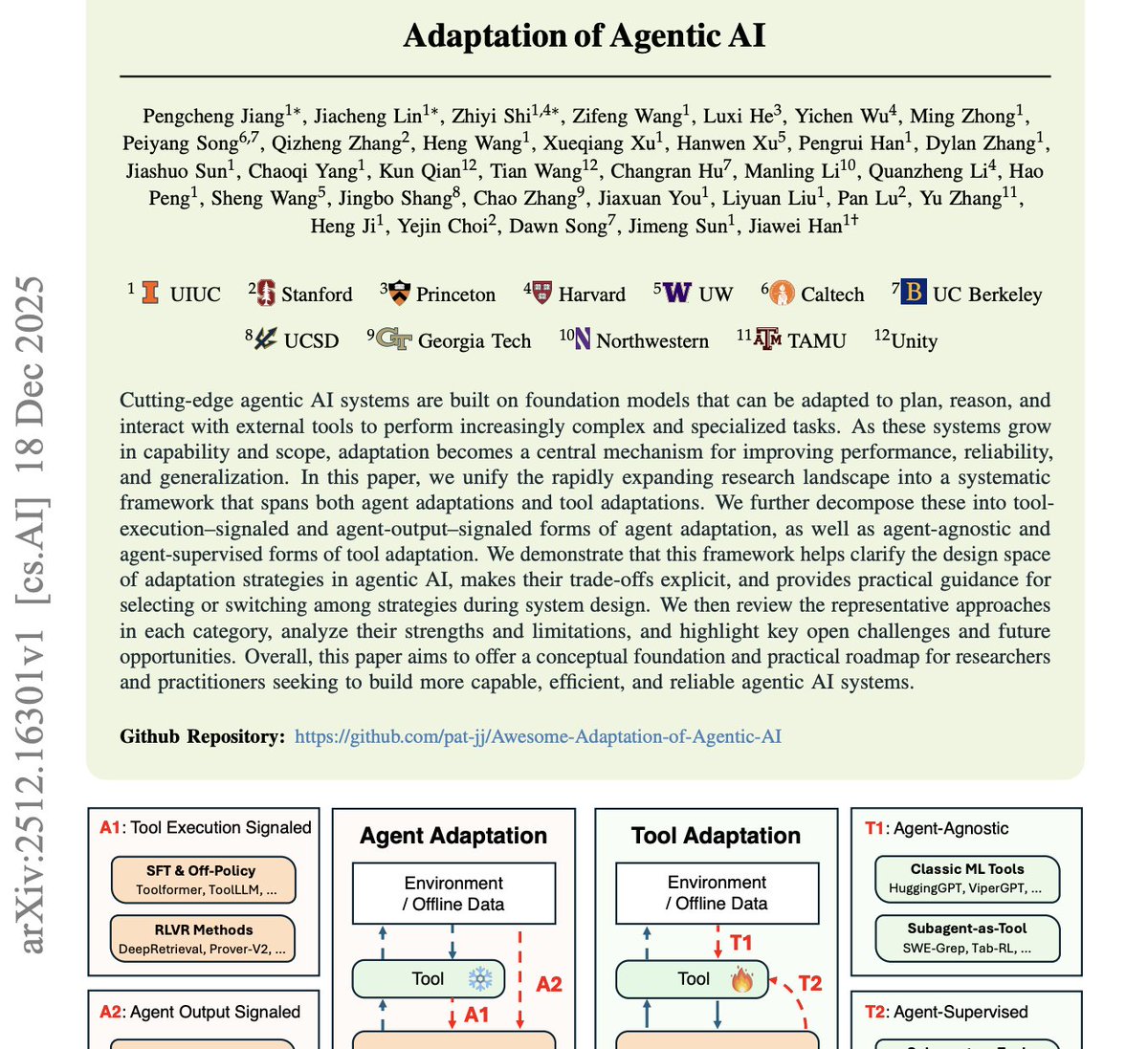
This paper from Stanford and Harvard explains why most “agentic AI” systems feel impressive in demos and then completely fall apart in real use. The core argument is simple and uncomfortable: agents don’t fail because they lack intelligence. They fail because they don’t adapt. The research shows that most agents are built to execute plans, not revise them. They assume the world stays stable. Tools work as expected. Goals remain valid. Once any of that changes, the agent keeps going anyway, confidently making the wrong move over and over. The authors draw a clear line between execution and adaptation. Execution is following a plan. Adaptation is noticing the plan is wrong and changing behavior mid-flight. Most agents today only do the first. A few key insights stood out. Adaptation is not fine-tuning. These agents are not retrained. They adapt by monitoring outcomes, recognizing failure patterns, and updating strategies while the task is still running. Rigid tool use is a hidden failure mode. Agents that treat tools as fixed options get stuck. Agents that can re-rank, abandon, or switch tools based on feedback perform far better. Memory beats raw reasoning. Agents that store short, structured lessons from past successes and failures outperform agents that rely on longer chains of reasoning. Remembering what worked matters more than thinking harder. The takeaway is blunt. Scaling agentic AI is not about larger models or more complex prompts. It’s about systems that can detect when reality diverges from their assumptions and respond intelligently instead of pushing forward blindly. Most “autonomous agents” today don’t adapt. They execute. And execution without adaptation is just automation with better marketing.
Alex Prompter tweet media
English
204
649
3.5K
1M
Simon Terry retweetledi
Shane Parrish
Shane Parrish@shaneparrish·
The Doorman Fallacy 'You have a five-star hotel and it has a doorman, welcoming incoming guests. McKinsey or Accenture will come in and say, “Your doorman currently costs you X thousand dollars a year. We have defined his or her function as opening the door. We’ll replace said doorman with an automatic door-opening mechanism and an infrared human detector and we’ll save you $30–$40,000 a year.” They walk away, and they take the credit for the cost savings. Two years later, the hotel’s a catastrophe ... because the doorman was doing multiple things, many of which were human and kind of tacit. Security would be one; there are no vagrants asleep in the doorway. Hailing taxis, dealing with luggage, recognizing regular guests, providing status to the hotel—there are loads and loads of value creation components to that doorman which aren’t captured in the open-the-door definition." It's easy to see the visible things, but the invisible things make the difference.
English
313
3.3K
21K
1.2M
Simon Terry retweetledi
Rick
Rick@colonelhogans·
Brilliant news for young Australian women!
Rick tweet media
English
106
816
12.7K
167.3K
Simon Terry
Simon Terry@simongterry·
Experienced a similar thing so many times with the blizzard of good intentions in large organisations. Everyone adding new good intentions and none getting done.
Startup Archive@StartupArchive_

Jeff Bezos explains the “releasing the work” framework he used to build Amazon In the early days of Amazon, Jeff Bezos had too many ideas. Then Jeff Wilke, a new Amazon executive at the time, told his boss, “Jeff, you have enough ideas to destroy Amazon.” “This was just a shocking idea for me,” Bezos recalls. “As a founder, I had the great luxury of always being able to hire my tutors. I would hire these experienced, senior executives . . . And I would listen to them and they would teach me.” When Bezos asked Wilke what he meant by this, Wilke responded, “You have to release the work at the right rate so that the organization can accept it.” Bezos reflects on this point: “Every time I released an idea, I was creating a backlog of work in process. And because it was just stacking up, it was adding no value. In fact, it was creating distraction . . . This sounds so obvious, but it was not obvious to me at the time. And this was a profound insight for me. So I started prioritizing the ideas better, keeping lists of them, and keeping ideas to myself until the organization was ready for the ideas.” He continues: “I also started figuring out how to build an organization that can be ready for more ideas. That’s about having the right senior team and leadership and giving those people the executive bandwidth so they could do more ideas per unit of time. And that is what we built. We built a company that’s very good at inventing and doing more than one thing at a time. And as the company gets bigger, you do want to be able to do more than one thing at a time. But that idea of ‘releasing the work’ was very profound for me. It made us operationally more effective while still being inventive.” Video source: @Reuters (2025)

English
0
0
0
90
Simon Terry
Simon Terry@simongterry·
@robfindlay Linkedin: the place to stay relevant and on point at all times.
English
0
0
1
34
Rob Findlay
Rob Findlay@robfindlay·
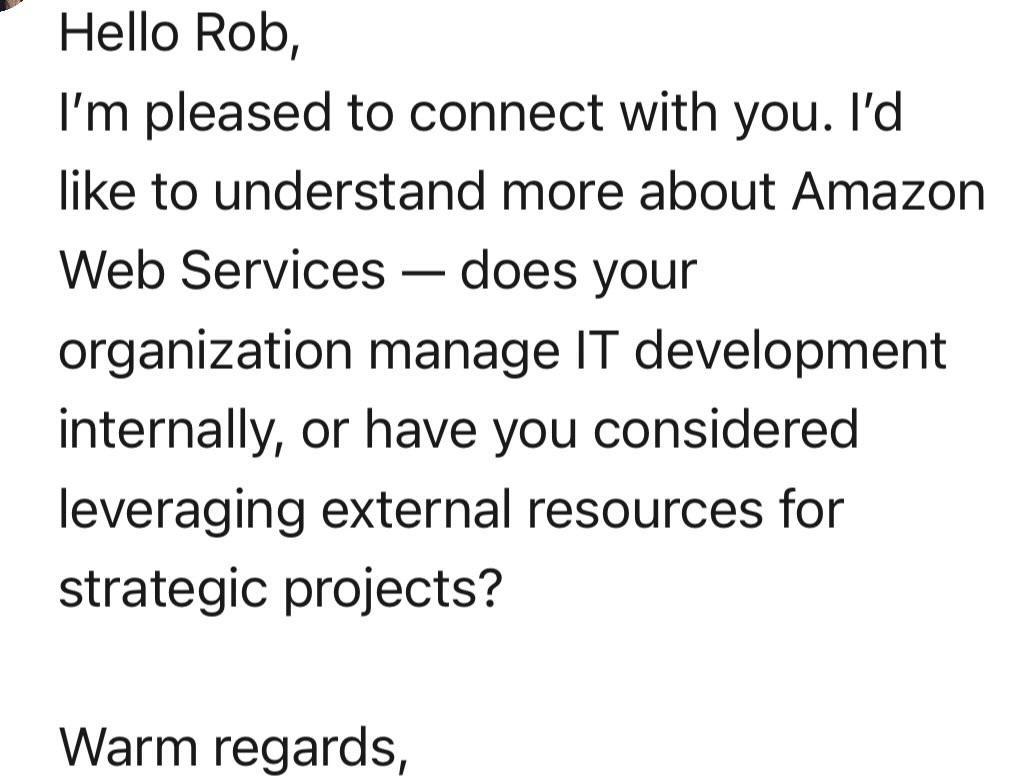
Meanwhile, on LinkedIn
Rob Findlay tweet media
English
3
0
8
675
Simon Terry retweetledi
Reads with Ravi
Reads with Ravi@readswithravi·
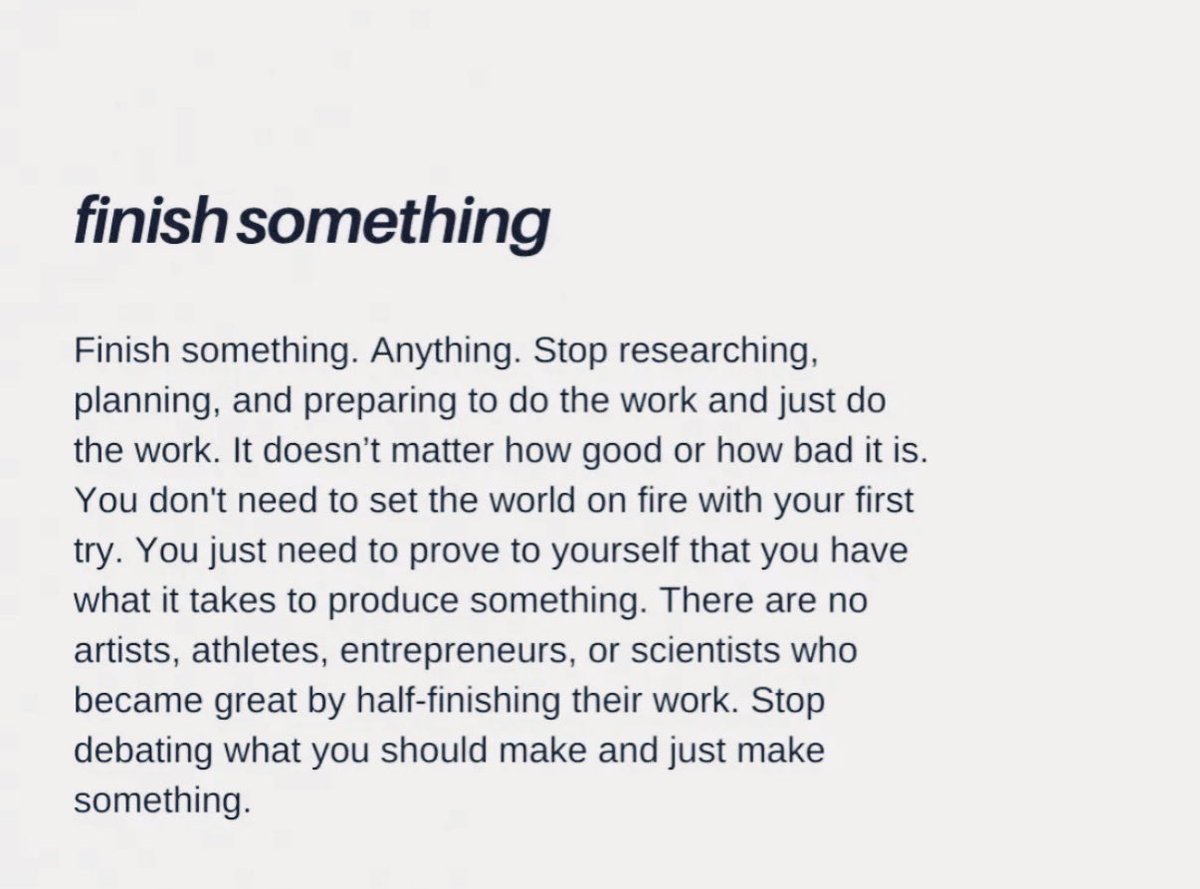
finish something.
Reads with Ravi tweet media
English
48
2.5K
16.7K
870.6K
Simon Terry retweetledi
Peter EG
Peter EG@pevansgreenwood·
To understand life, we must stop treating organisms like machines and minds like code.
English
2
1
1
82
Simon Terry retweetledi
Aaron Levie
Aaron Levie@levie·
Despite what makes the headlines, most companies I talk to are focused on using AI Agents to do more than they did before vs. doing the same and spending less. Usually it’s to reduce busy work, generate more revenue, build products faster, or serve customers better.
English
44
51
396
99.6K
Simon Terry
Simon Terry@simongterry·
A powerful AI use case is to do the things customers should be doing but doing have the time or resources to do for themselves - potentially very powerful in high value lower engagement categories like finance too
Aaron Levie@levie

One way to think about AI Agent opportunities is to figure out which software categories are customers not fully taking advantage of because they don’t have the resources to leverage the tools. The vast majority of software in the world is underutilized relative to what it can do, solely because there aren’t people on the other end to use the service productively. The categories are endless. Security tools that could protect companies but there’s no security resources on the other end, marketing automation systems that lack the right administrators, contract management software that can’t automate work because it’s missing data entry, and so on. In a lot of these spaces, the addressable market size for the use case is actually orders of magnitude larger than the existing market size. And the only limitation previously has been the cost and availability of talent. Basically the ratio of potential value to realized value. This is an area where existing software products can very naturally add AI Agents to their offerings, because they have visibility into what people can’t fully take advantage of with their offering. A great example of this is Meta’s push for AI to help with ad creation and optimization. Think about the millions of small businesses that want to reach new customers and would actually spend way more than they do today on advertising, but ultimately can’t because they don’t have the resources. AI Agents can now basically deliver entire ad campaigns better than the majority of their customer base, growing Meta’s TAM in the process. Or, for instance, at Box we know the majority of enterprise content never gets tagged or has data extracted from it because most companies have not applied resources here. AI Agents finally then give all companies the same capabilities that only a few ever had, now letting you bring automation to contracts, invoices, onboarding, and thousands of other workflows. And there will also be lots of opportunities for new startups to do the same. A lot of software is underutilized because of the cracks between existing technology, which is a natural spot for new startups to emerge in. And there will be plenty of categories where there’s no natural incumbent as well. Huge opportunity all around to automate the parts of software categories that never fully get utilized today.

English
0
0
1
140
Simon Terry retweetledi
Peter EG
Peter EG@pevansgreenwood·
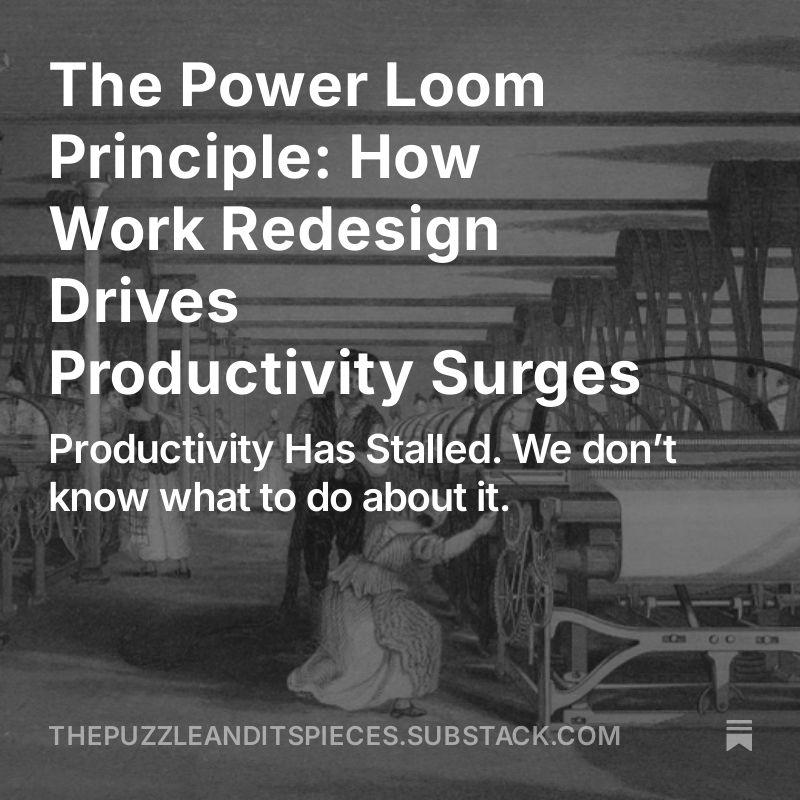
My next substack post, in which I argue that productivity surges are driven not by 'hero' technologies, but by fundamentally redesigning the systems of work around them, a lesson best understood through the historical example of the power loom.
Peter EG tweet media
English
1
1
1
81
Simon Terry
Simon Terry@simongterry·
Thoughtful perspectives from Signal President Meredith Whittaker on agentic AI and the challenges of giving deep access - 'profound' security and privacy issues techcrunch.com/2025/03/07/sig…
English
0
0
0
64
Simon Terry retweetledi
Faber Books
Faber Books@FaberBooks·
‘History says, Don’t hope On this side of the grave. But then, once in a lifetime The longed-for tidal wave Of justice can rise up, And hope and history rhyme.’ Seamus Heaney was born on this day in 1939.
Faber Books tweet media
English
1
85
301
10.5K
Simon Terry
Simon Terry@simongterry·
Thoughts on the more efficient production of crud. simonterry.com/2025/04/13/tho…. With thanks to all the creators doing the work of making things of meaning and value.
English
0
0
1
71
Simon Terry retweetledi
Amanda Goetz
Amanda Goetz@AmandaMGoetz·
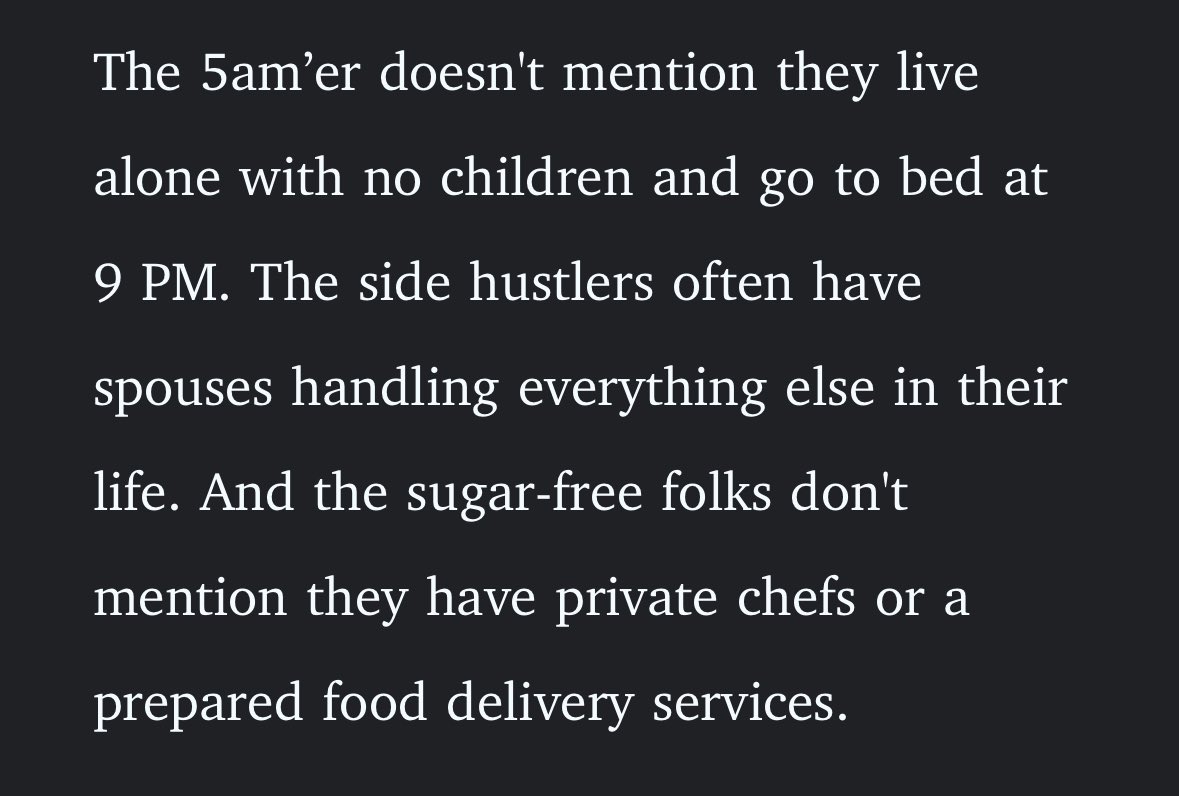
Today’s edition of Saturday Solopreneur was 🔥🔥🔥 @thejustinwelsh reminds us that you can have willpower to succeed but environment matters so much. As someone who built a startup as a single mom for 7 years - I can promise you 5am didn’t happen most days. And now, it can, mainly because my kids are older and sleep until 7 and I have a partner who can help. Social media is the highlight reel. Most people aren’t giving the whole story. Compare cautiously.
Amanda Goetz tweet media
English
3
4
31
3.8K
Simon Terry
Simon Terry@simongterry·
@liseymacd yes and for all their ‘I did a great thing’ posturing they didn’t propose changing the policy that saw the homeless person fired in first instance.
English
0
0
1
20
Lisl Macdonald FRSA
Lisl Macdonald FRSA@liseymacd·
@simongterry Gosh imagining how the homeless person felt being used in that way is indeed nauseating. 😢
English
1
0
1
34
Lisl Macdonald FRSA
Lisl Macdonald FRSA@liseymacd·
LI is FULL of peoples’ “unique insights” that they’ve just discovered and have to share, eg: - working in other countries - shopping - design Except….WE KNOW!!!! Give me the courage of an arrogant LI poster who’s suddenly noticed s.t. and thinks we need to be lectured.
English
3
0
20
449