

Ben Whitfield-Heap 🔄
160 posts
Ben Whitfield-Heap 🔄
@simplybenuk
He/Him
Lincolnshire, England Katılım Aralık 2008
2.3K Takip Edilen832 Takipçiler

@jereeve 💯
When I worked for the NHS, I approached a few suppliers about moving to a more outcome based model but got little take up.
Now on the supplier side I feel a move like this could also drive better procurement and really let the good suppliers show what they can do.
English

Capped time and materials is a problem.
UKgov uses it because it limits risk and cost. BUT it forgets about incentives for the supplier.
If you reward bums on seats, you'll get bums on seats.
Reward outcomes - it's harder but (many) suppliers will step up and deliver better.
English
Ben Whitfield-Heap 🔄 retweetledi

In 2006, I was 1 of 4 designers on Google Search.
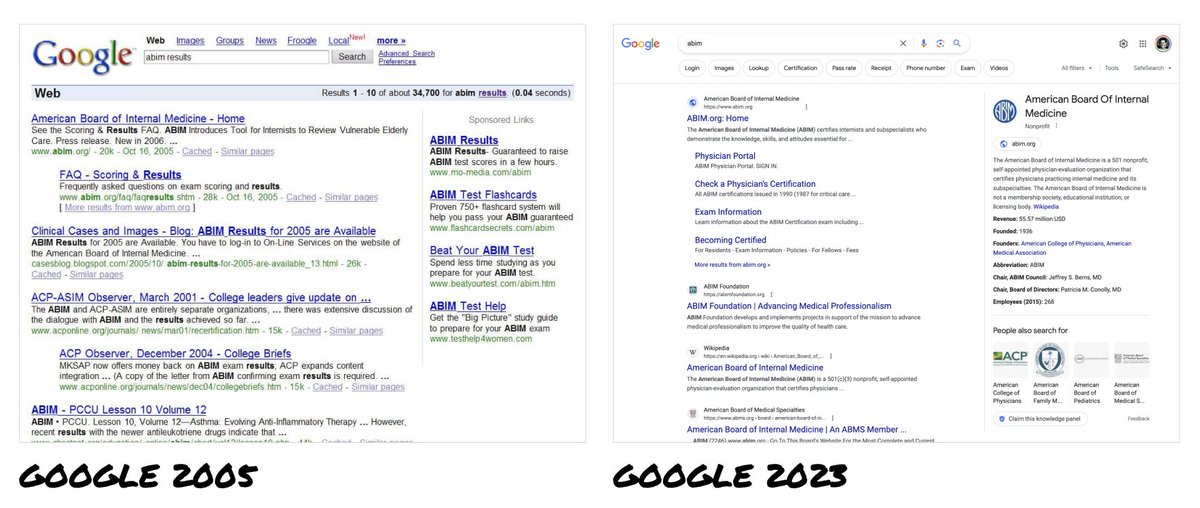
For 20 years, every search engine has copied Google.
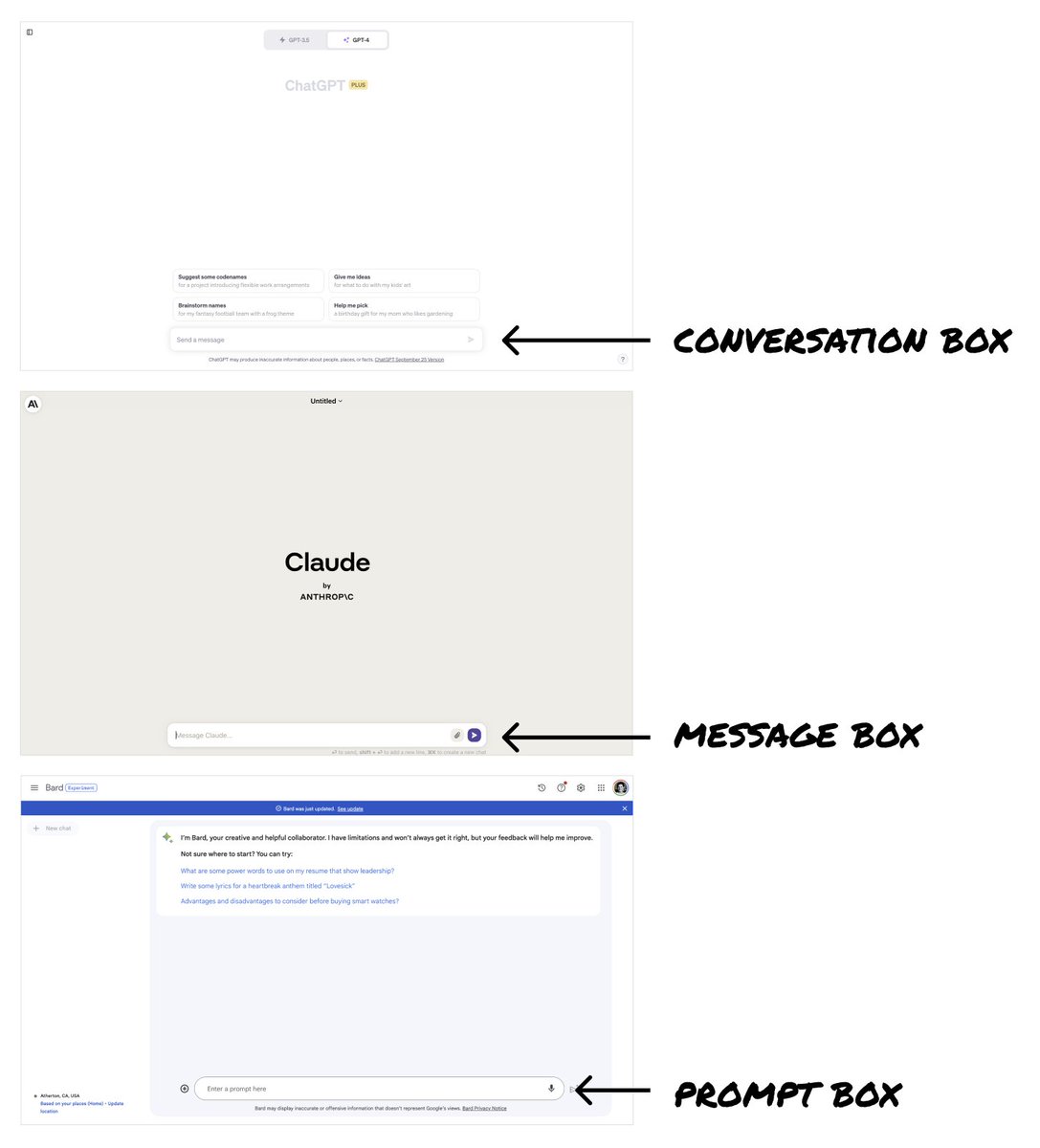
Now ChatGPT, Bard + Claude look like Google's offspring - "better” search engines.
But last week signaled we're on the brink of a design revolution.
ChatGPT unveiled incredible new features.
These could give us the opportunity to completely shift how we interface with AI.
Here's the full story:
–––
When I was a designer on Google Search, all major search engines looked the same – Google, Yahoo, MSN Bing.
Google was the market leader with a heavily optimized UI that supported billions of dollars in ad revenue.
Naturally, it became THE way to show search results.
Its success made it illogical for Google to consider big UI changes.
And any changes they did make were just mirrored by everyone else.
So 20 years later, we’ve only seen incremental changes to search engine UIs.
–––
Today, we have consumer-ready LLMs (Large Language Models) freshly in our hands.
As consumer products, these are in their infancy.
We’re very early in understanding their capabilities and defining how people interact with them.
These are uncharted waters.
And yet ChatGPT, Bard, Claude etc. all chose a text-based input box — just like Google’s search box — as the core interface.
Why?
The input box is simple, versatile, and familiar.
- It’s simple to understand → you type your questions into the box.
- It’s versatile → the box can handle all sorts of questions/queries.
- The paradigm is super familiar → people immediately know how to use it.
Because of this, LLMs have essentially become “a better Google.”
–––
But last week’s ChatGPT announcements thrust open the doors to new possibilities.
ChatGPT is now multi-modal — it can see, hear, and speak.
These are the recent announcements from @OpenAI :
Voice: x.com/openai/status/…
Photos: x.com/openai/status/…
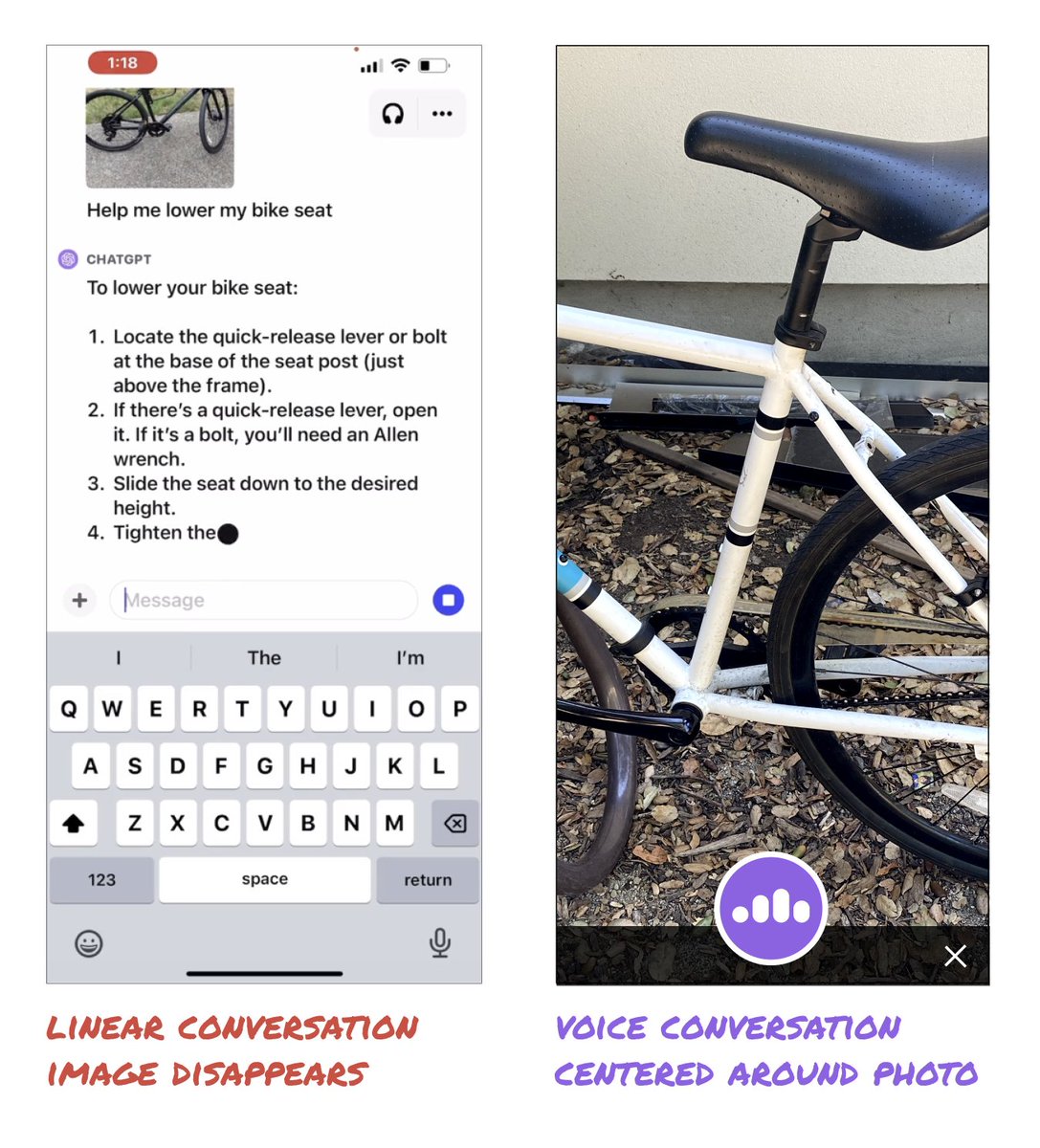
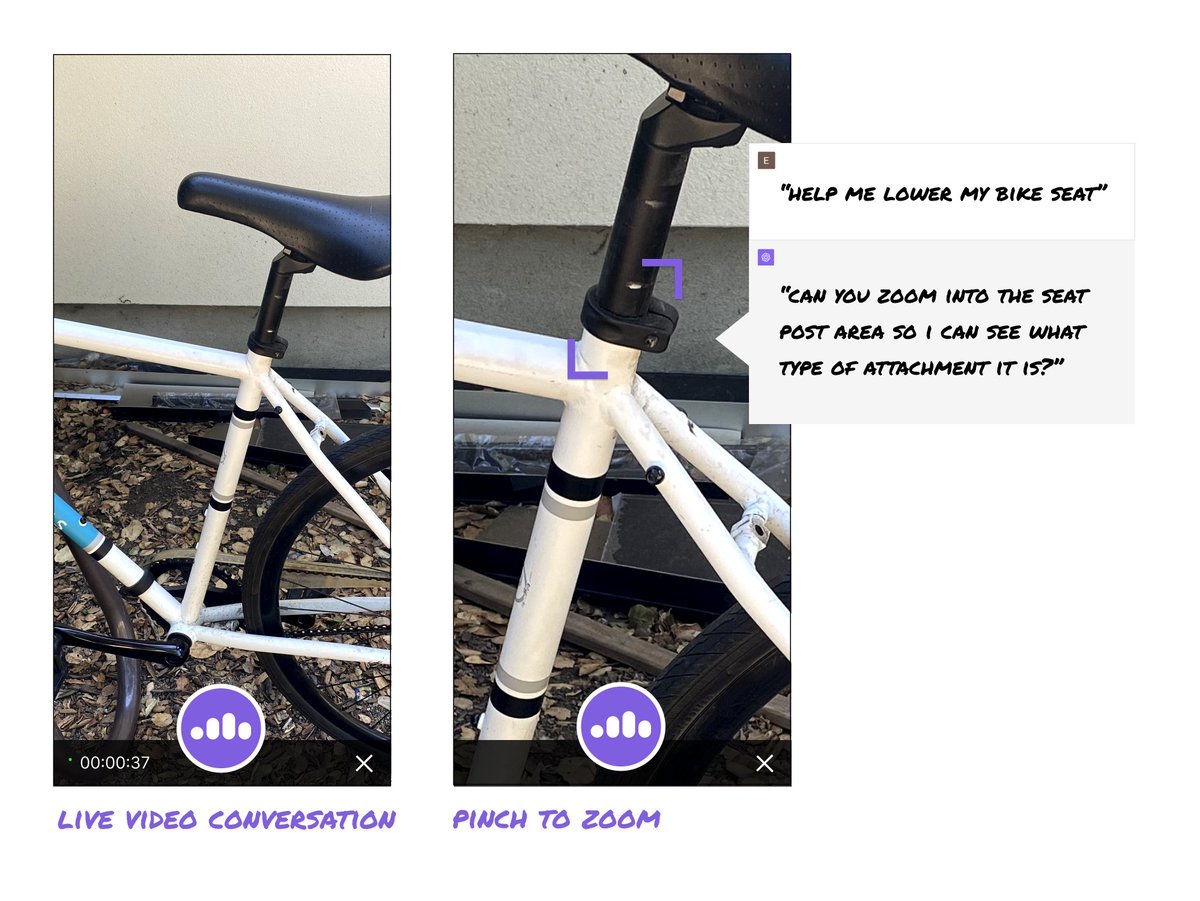
The example of ChatGPT explaining how to lower a bike seat was incredible.
But, it could be so much better!
The video showed you'll have to post multiple new photos to keep adding new information and to progress the conversation.
It was still a linear conversation centered around the text box.
But what if we rethought the interface to center around the image?
What if ChatGPT supported both images AND voice simultaneously?
Could we end up with a more immersive experience?
–––
How else could interacting with LLMs mimic IRL conversations?
Could we (or the AI) pinch to zoom or rotate the image?
Could we interact in real time with video?
What new possibilities open up with context being preserved over time?
–––
There is so much energy and excitement around what AI can do.
But we are limiting the potential by assuming the conversation box is the best interface.
Right now, designers have the chance to create truly novel interactions and bust through the 20+ year old search UI paradigm.
The ideas above are just to illustrate some potential options.
But they are also intended to spark a flame.
Now is the opportunity to be creative and explore divergent UIs.
What are the craziest, coolest, most creative UI ideas we can unleash?
LFG 🚀
English
@chriswarburton_ I hope you're going to be creating "The Crooked House" podcast sometime in the near future.
The news story is giving me Beyond Reasonable Doubt vibes
English
@blangry @ukcharitycamp I've missed the reply you were responding to so lost the context 😞
Could you elaborate @blangry - I'm keen to understand people's thoughts on what I wrote
English
Ben Whitfield-Heap 🔄 retweetledi

Discovery without delivery leads to little or no impact.
Delivery without discovery leads to unknown, potentially negative impact.
You need both.

English
This is a great thread but this tweet right at the end is the key tweet.
Dani Grant@thedanigrant
It’s still important to ship fast to learn. But you won’t learn anything if your product is too buggy. The key is to cut product scope so much that you actually can ship something bug-free. Cut every non-essential feature. Ship fast, with small scope, high quality.
English
Ben Whitfield-Heap 🔄 retweetledi

Today is going to be interesting…joining @InstituteGC for the #FutureofBritain conference. Will Tony Blair discuss the need for AI Openness? His colleague @benedictcooney calls for it in our “AI Openness” Report openuk.uk/stateofopen/ #ai #openuk #opensource #openai #OpenAI
Tony Blair Institute for Global Change@InstituteGC
On Tuesday leading global experts will discuss why it’s time for radical but practical solutions that cut through stale political debates. Watch the #FutureOfBritain conference live from 9am BST.
Hackney, London 🇬🇧 English
Ben Whitfield-Heap 🔄 retweetledi

.@harryharrold explains why #UKCharityCamp was created and what you can expect from the day.
"The format is about maximising the space for folk to have great conversations."
#thirdsector #techforgood
buff.ly/3DeqbMw
English
Ben Whitfield-Heap 🔄 retweetledi

Read the full letter here
clicks.richersoundsvip.com/social/s_enc/F….
English
Ben Whitfield-Heap 🔄 retweetledi

Ben Whitfield-Heap 🔄 retweetledi

"No way to create a backdoor that only the good guys can walk through."
Signal President Meredith Whittaker says the Online Safety Bill will cause "unprecedented paradigm-shifting surveillance" - in a discussion with @cathynewman and former UK Tech minister Damian Collins.
English


Ben Whitfield-Heap 🔄 retweetledi

How we use type annotations to build more robust code.
dxw Senior Developer Nick explains how typing works and how it helps us build software that will stand up to the unexpected.
bit.ly/3ptSwv8
English
@iantownend @dxw @techUK @tomriordan @dmann_ldn @Matthew_evs @john_farenden Will do, hope to be over in Leeds again soon.
English

@simplybenuk @dxw @techUK @tomriordan @dmann_ldn @Matthew_evs @john_farenden It is us! Didn't realise you were at dxw, shame we missed each other. Let us know if you're up and I'll sort something out including Dave!
English
Thanks to everyone who joined us at the @techUK Leeds Summer Social yesterday. Despite the weather, it was a great evening with lots of lively conversation and new connections made.
A special shout-out to @tomriordan, @dmann_ldn @Matthew_evs for opening the event.
#LeedsDigital

English
@john_farenden @dxw @techUK @tomriordan @dmann_ldn @Matthew_evs More gutted I wasn't able to be there now. Would have been great to catch up again
English
English