
simply_puneeth retweetledi
simply_puneeth
666 posts


simply_puneeth retweetledi

If you want to read fiction, just read any tech company’s annual plan this year.
English
simply_puneeth retweetledi

Read every word. This is the best, clearest summary I have read.
HFI Research@HFI_Research
Well done JPM. It is just math.
English
simply_puneeth retweetledi

If I had one weekend to master Claude, I'd start here:
Stop bookmarking 50 guides you'll never read. These are the only ones that matter:
Claude 101 (start here):
anthropic.skilljar.com/claude-101
Claude Code 101:
anthropic.skilljar.com/claude-code-101
Claude Code in Action:
anthropic.skilljar.com/claude-code-in…
Prompt engineering (official):
docs.claude.com/en/docs/build-…
Interactive prompt tutorial (hands-on):
github.com/anthropics/pro…
CLAUDE.md & how to give Claude memory:
code.claude.com/docs/en/claude…
Skills, teach Claude reusable workflows:
code.claude.com/docs/en/skills
MCP, time connect Claude to Slack, GitHub, Drive:
code.claude.com/docs/en/mcp
Routines (automate tasks 24/7):
code.claude.com/docs/en/routin…
Claude Code Ultimate Guide (community):
github.com/FlorianBruniau…
Awesome Claude Code (skills, hooks, plugins):
github.com/hesreallyhim/a…
All 13 Anthropic Academy courses (free certs):
anthropic.skilljar.com
Claude Code full docs:
code.claude.com/docs/en/overvi…
ALL FREE. ALL OFFICIAL
Saturday: Claude 101 → prompt tutorial → CLAUDE.md → skills
Sunday: Claude Code → MCP → routines → build your first automation
by Monday you'll know more about Claude than 95% of people using it daily

English
simply_puneeth retweetledi

Some arrangements of words can replenish your energy & your courage. This is one.
cinesthetic.@TheCinesthetic
“Pressure is a Privilege. And if you’re feeling any pressure or weight of expectation, you are breathing rare air, that very few of us get to live inside”. - Tom Hiddleston
English
simply_puneeth retweetledi

Asked someone from the industry whether foreign investors are still interested in allocating to India. The TLDR:
Interest has pretty much died out. India is seen as geopolitically exposed, especially to an oil shock. There are no real AI plays. Valuations are rich. And the rupee situation doesn't help.
On top of that, investors who were sitting on gains have taken money off the table and are now looking at markets like Japan, Taiwan, Korea, Europe etc instead.
He also pointed out that our LTCG/STCG structure and the increase in STT have made India less attractive compared to other markets that are seeing inflows.
If we need to attract FPIs back, and we do, fixing this feels like pretty low-hanging fruit.
English
simply_puneeth retweetledi

simply_puneeth retweetledi


HDFC WILL BE THE HEADLINE TODAY
HDFC Bank looks worrying. Why did the Chairman resign? Abruptly? Its market capitalization is Rs 6.5 Lakh crore. Huge player.
Something fishy out there. Looks like a rough Thursday ahead.
There is something rotten in our financial system.
English
simply_puneeth retweetledi

Ladies and gents, take note - Sachee Trivedi 🔥
English
simply_puneeth retweetledi

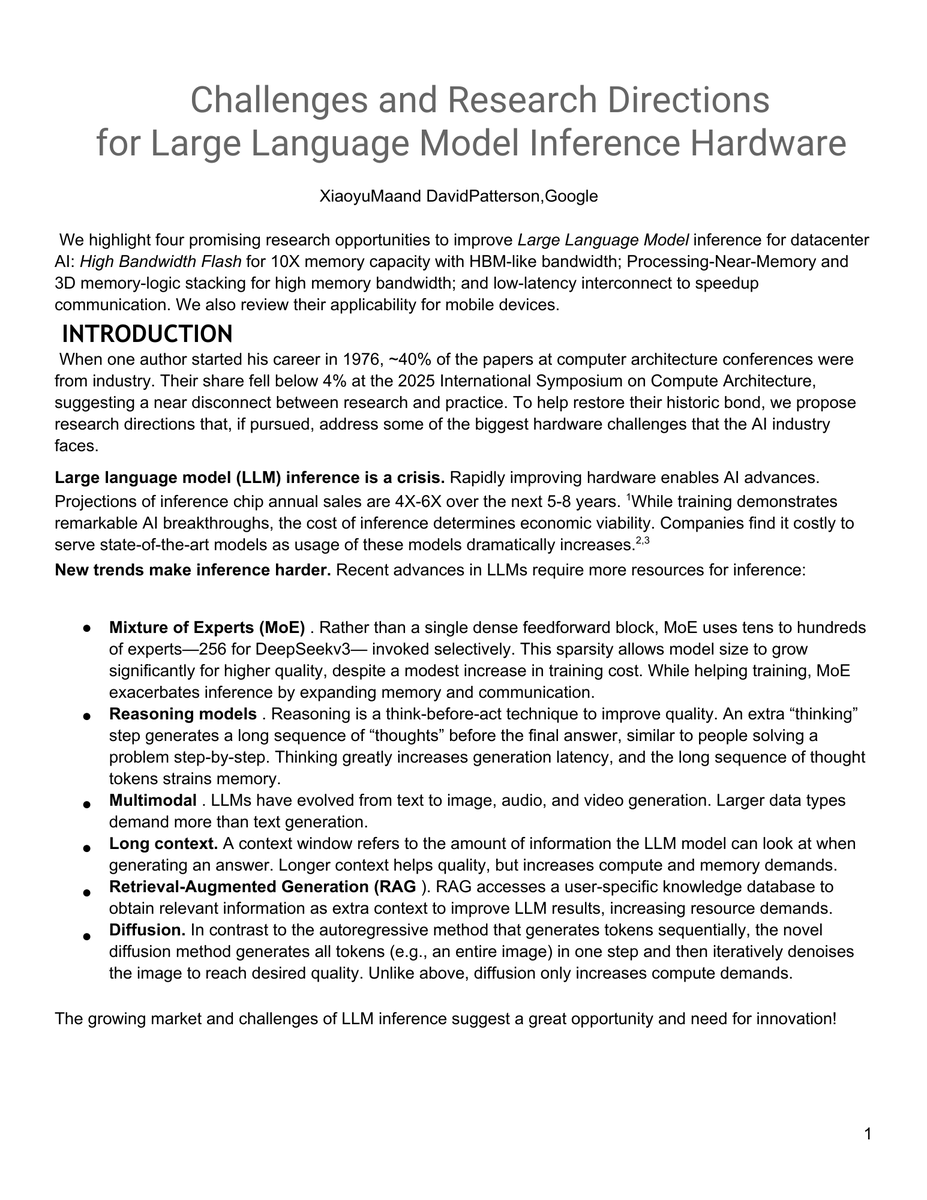
🚨 BREAKING: A Google researcher and a Turing Award winner just published a paper that exposes the real crisis in AI.
It's not training. It's inference. And the hardware we're using was never designed for it.
The paper is by Xiaoyu Ma and David Patterson. Accepted by IEEE Computer, 2026.
No hype. No product launch. Just a cold breakdown of why serving LLMs is fundamentally broken at the hardware level.
The core argument is brutal:
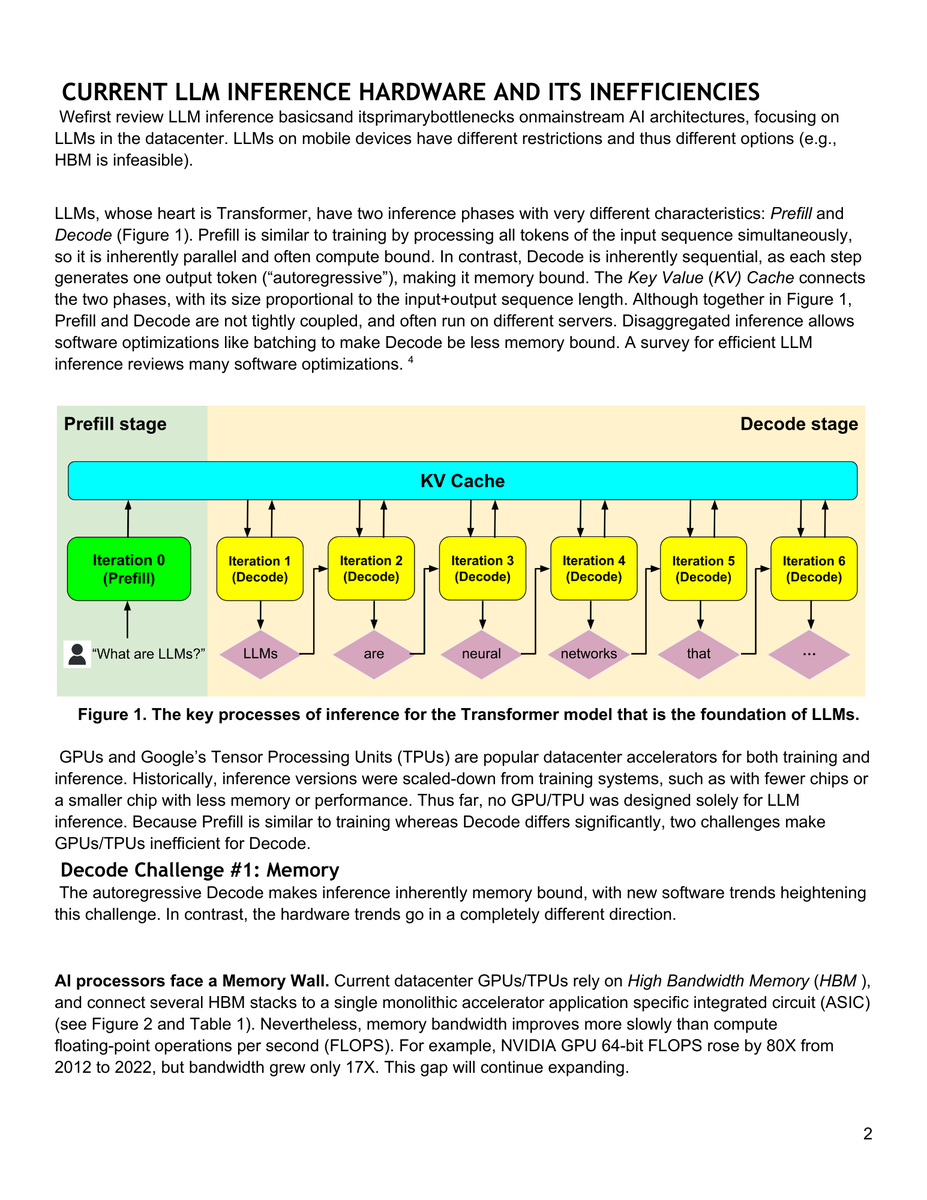
→ GPU FLOPS grew 80X from 2012 to 2022
→ Memory bandwidth grew only 17X in that same period
→ HBM costs per GB are going UP, not down
→ The Decode phase is memory-bound, not compute-bound
→ We're building inference on chips designed for training
Here's the wildest part:
OpenAI lost roughly $5B on $3.7B in revenue. The bottleneck isn't model quality. It's the cost of serving every single token to every single user. Inference is bleeding these companies dry.
And five trends are making it worse simultaneously:
→ MoE models like DeepSeek-V3 with 256 experts exploding memory
→ Reasoning models generating massive thought chains before answering
→ Multimodal inputs (image, audio, video) dwarfing text
→ Long-context windows straining KV caches
→ RAG pipelines injecting more context per request
Their four proposed hardware shifts:
→ High Bandwidth Flash: 512GB stacks at HBM-level bandwidth, 10X more memory per node
→ Processing-Near-Memory: logic dies placed next to memory, not on the same chip
→ 3D Memory-Logic Stacking: vertical connections delivering 2-3X lower power than HBM
→ Low-Latency Interconnect: fewer hops, in-network compute, SRAM packet buffers
Companies that tried SRAM-only chips like Cerebras and Groq already failed and had to add DRAM back.
This paper doesn't sell a product. It maps the entire hardware bottleneck and says: the industry is solving the wrong problem.
Paper dropped January 2026. Link in the first comment 👇
English
simply_puneeth retweetledi

Ken Griffin, founder of Citadel, has a $10 plaque behind his desk that reads: "If we're all going to eat, someone has to sell."
Of all the things this man could surround himself with, he chose a cheap plaque with a blunt truth about business.
"You're always selling. You're selling to candidates. You're selling to vendors, you're selling to counterparties, you're selling to customers."
And if you're always selling, you know what you're going to hear a lot of?
"No."
Griffin doesn't sugarcoat it. He tells two stories that illustrate just how brutal rejection can be.
1994 was a rough year, with Citadel losing ~4% of its capital. Griffin flew to Switzerland for a crucial lunch meeting, sat down, and his guest arrived only to say:
"Oh, I thought you were John Griffin from Fen Church. I got to go."
His lunch date got up and left the table.
Later that afternoon, a Swiss banker spent 45 minutes with him in a beautiful office, smoking a cigar, before closing with:
"Such a pity that such a bright young man picked the wrong career."
Two rejections in one day for the founder of one of the most successful hedge funds in history — and his takeaway was simply this:
"You just have to tolerate. You're going to hear no a lot, but you need to become accustomed to having to market your ideas and market what you represent and what you stand for."
Absorbing rejection and continuing anyway is the actual skill, whether you're hiring, raising capital, or winning customers.
Most people avoid selling because they're afraid of no. The ones who build great things have learned to expect it.
English
simply_puneeth retweetledi

I've increased my allocation to Indian equities, but from a low base. Have more room to switch from hybrid to equity funds if the market falls further. Personal-finance is personal :)
ishmohit@ishmohit1
Completely deployed, No cash left 🙏 Okay to see pain in the near term. Personal finance is personal. Happy to live with some drawdown without worrying too much given horizon is Multi year in nature 🙏
English
simply_puneeth retweetledi
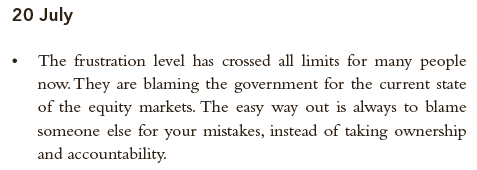
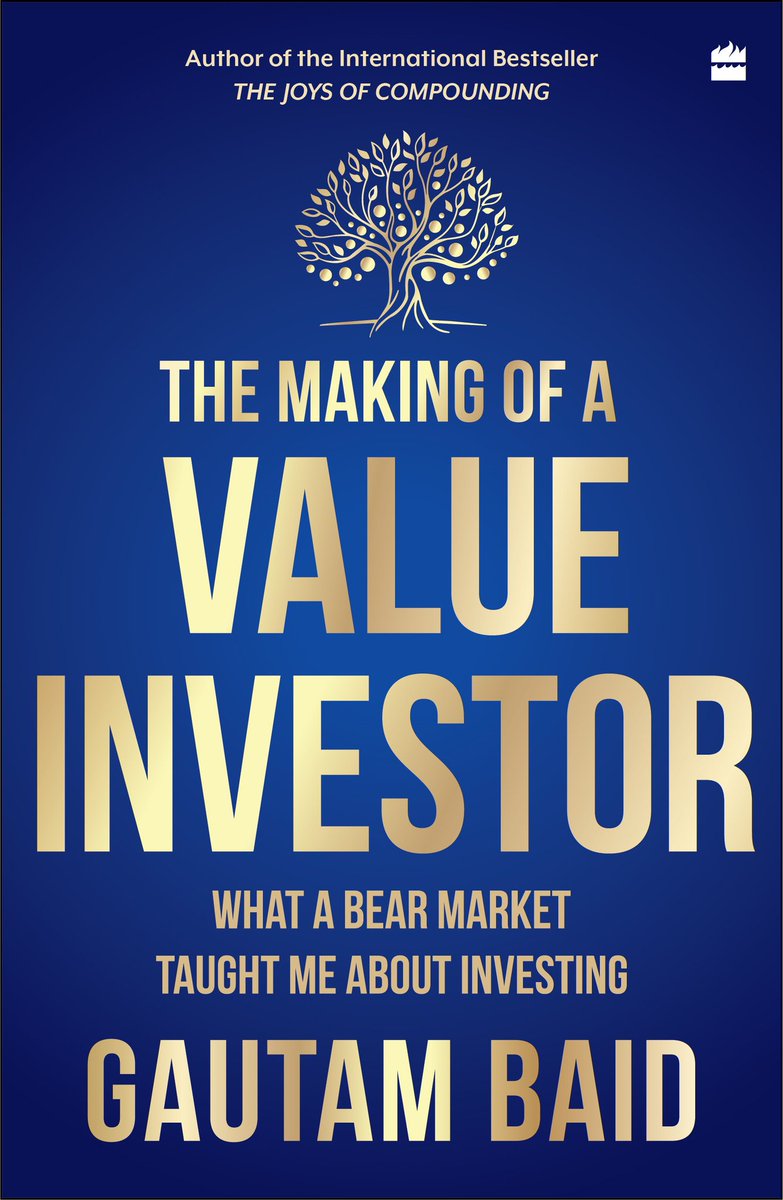
We are now in this stage of the bear market in India. Predictability of human nature is the only constant in investing. This type of behavior is observed near the final capitulation phase of a prolonged bear market.
Source: Journal entry dated 20.07.2019
English
simply_puneeth retweetledi

I do believe that now small caps in India offer exceptional opportunity and value over Large Caps.
That's where the money will get made from here on in India
English
simply_puneeth retweetledi

I come back to this video every time, had shared it when he said it first too.
Sachin Tendulkar is a gift that keeps giving!
No one, there’s just no one like him!
English
simply_puneeth retweetledi
English
simply_puneeth retweetledi

This guy literally explained why some people become successful while others stay average.
The reason is uncomfortable. Game Theory
Watch this:
English
simply_puneeth retweetledi

Stanley Druckenmiller, who has relied heavily on technical analysis during his career, recently said:
“I can unequivocally tell you that technical analysis is about 20% as effective today as it was 30 years ago, because no one was using it. But when everybody’s using it, it doesn’t work anymore because you don’t have a unique thing to act against.”
If even Druckenmiller says this, it reinforces a simple idea:
What really matters is buying great companies and avoiding overpaying for them.
As Peter Lynch used to say, in the long run the price of a stock will follow the company’s economic results — regardless of the “drawings” on a chart.
“If charts could really predict the future, technical analysts would all be billionaires.”
Technical analysis is more of a distraction than anything else.
The real edge isn’t drawing lines.
It’s understanding businesses.
English
