SimWorld
68 posts

SimWorld
@simworld_ai
Open-source initiative for open-ended realistic simulation of autonomous agents in physical and social worlds


🍫 CocoaBench is calling for contributions from the community! Join us and help shape how next-generation agents are evaluated and built🚀✨ #LLM #AI #Agent #CocoaBench More details in the threads 👇


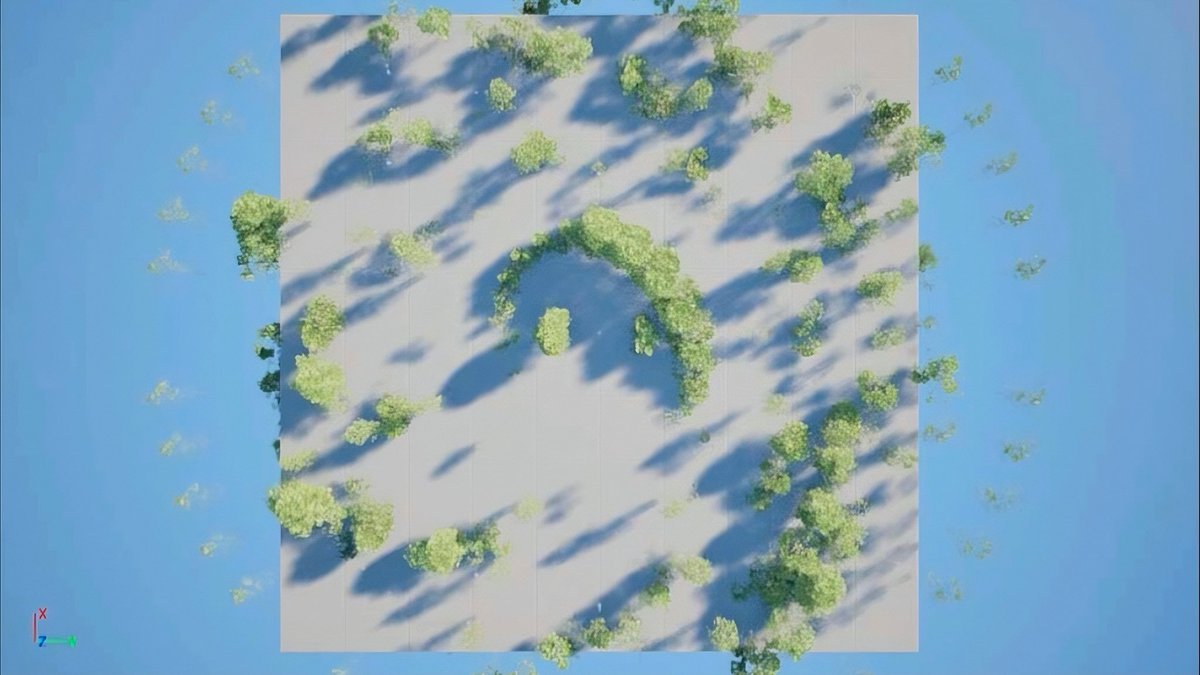
A SimWorld coding agent can now create its own tools and skills on the fly. We challenged it with BaGuaZhen (八卦阵 Eight Trigrams), an ancient Chinese formation that is difficult to build from scratch because of its precise spatial structure and multi-step coordination. Instead of failing with brute force, the agent wrote reusable components for itself: Tools: Bagua Wall Segment, Bagua Trigram Line Skills: Bagua Wall Segment Skill, Bagua Trigram Line Skill Each tool is paired with a skill that teaches the model how to use it. Without skills: it fails. With self-built skills: it organizes the full structure. The exciting shift is this: agents are starting to generate capabilities, not just outputs.

A SimWorld coding agent can now create its own tools and skills on the fly. We challenged it with BaGuaZhen (八卦阵 Eight Trigrams), an ancient Chinese formation that is difficult to build from scratch because of its precise spatial structure and multi-step coordination. Instead of failing with brute force, the agent wrote reusable components for itself: Tools: Bagua Wall Segment, Bagua Trigram Line Skills: Bagua Wall Segment Skill, Bagua Trigram Line Skill Each tool is paired with a skill that teaches the model how to use it. Without skills: it fails. With self-built skills: it organizes the full structure. The exciting shift is this: agents are starting to generate capabilities, not just outputs.

A SimWorld coding agent can now create its own tools and skills on the fly. We challenged it with BaGuaZhen (八卦阵 Eight Trigrams), an ancient Chinese formation that is difficult to build from scratch because of its precise spatial structure and multi-step coordination. Instead of failing with brute force, the agent wrote reusable components for itself: Tools: Bagua Wall Segment, Bagua Trigram Line Skills: Bagua Wall Segment Skill, Bagua Trigram Line Skill Each tool is paired with a skill that teaches the model how to use it. Without skills: it fails. With self-built skills: it organizes the full structure. The exciting shift is this: agents are starting to generate capabilities, not just outputs.


A SimWorld coding agent can now create its own tools and skills on the fly. We challenged it with BaGuaZhen (八卦阵 Eight Trigrams), an ancient Chinese formation that is difficult to build from scratch because of its precise spatial structure and multi-step coordination. Instead of failing with brute force, the agent wrote reusable components for itself: Tools: Bagua Wall Segment, Bagua Trigram Line Skills: Bagua Wall Segment Skill, Bagua Trigram Line Skill Each tool is paired with a skill that teaches the model how to use it. Without skills: it fails. With self-built skills: it organizes the full structure. The exciting shift is this: agents are starting to generate capabilities, not just outputs.


🚨New Release: SimWorld Studio — Vibe Code the Physical World Today we open source SimWorld Studio, a coding-agent platform for building interactive physical worlds. Just chat with Claude Code to create environments, place assets, test physics, and edit everything live. Build worlds as easily as just writing prompt.


🌊🏝️🌉Coding agent performing spatial reasoning to construct complex scenes Powered by SimWorld Studio (link in the thread)

🌊🏝️🌉Coding agent performing spatial reasoning to construct complex scenes Powered by SimWorld Studio (link in the thread)

🚨New Release: SimWorld Studio — Vibe Code the Physical World Today we open source SimWorld Studio, a coding-agent platform for building interactive physical worlds. Just chat with Claude Code to create environments, place assets, test physics, and edit everything live. Build worlds as easily as just writing prompt.


I think it’s pretty clear that simulation is the next frontier for AI. The most impressive feats of AI to date are when we have a clear environment + reward, whether it be beating Le Sedol at Go, winning an IMO gold medal, or writing entire apps from scratch. In these cases, the RL algorithm can try different actions, and observe the well-defined consequences in the safety of a docker container. But what about messy real-world situations involving people? The rewards are unclear, the stakes are high, and you can’t experiment in the real world. But these situations are precisely where the next big opportunity in AI is. To crack this, we need to *simulate* society (“put society into a docker container”). Concretely, this means building a model that can predict what will happen in any given situation (real or hypothetical). If we can do this, we are only limited by our imagination: predict the future, optimize for better outcomes, answer hypothetical (“what if”) questions. Ultimately, this goes beyond making better decisions, but it’s about giving us a better understanding of ourselves and the world. Simulation is the whole enchilada. And this is exactly the research that @simile_ai is working on. Read more here: simile.ai/blog/simulatio…

🚨New Release: SimWorld Studio — Vibe Code the Physical World Today we open source SimWorld Studio, a coding-agent platform for building interactive physical worlds. Just chat with Claude Code to create environments, place assets, test physics, and edit everything live. Build worlds as easily as just writing prompt.