Simon King

3.8K posts

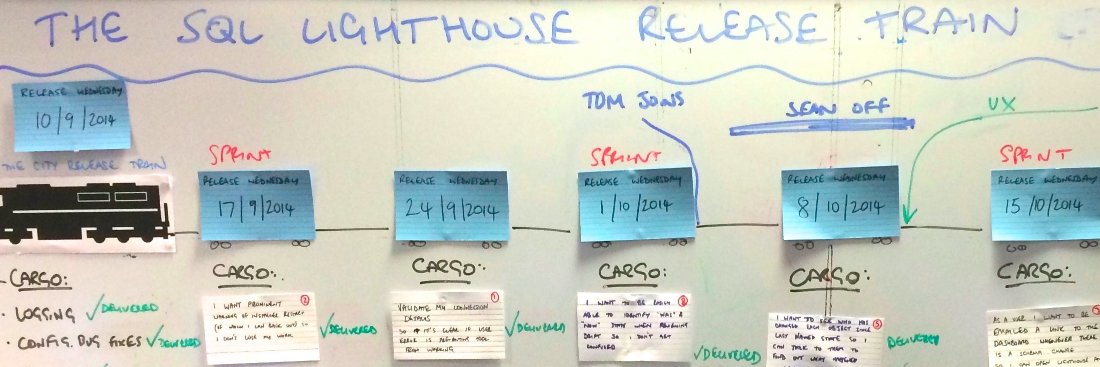
Simon King banner
Simon King

Simon King

@sjking2000

Synopsys SIG - solutions that help you manage security and quality risks comprehensively, across your organization and throughout the application lifecycle

California, US Katılım Eylül 2008
173 Takip Edilen338 Takipçiler
Simon King
Simon King@sjking2000·
@AJA_Cortes Vagal nerve stimulation may have helped me lose 10% of my body weight (happened to do it using keto)
English
0
0
0
10
AJAC
AJAC@AJA_Cortes·
For those people who have lost significant amounts of bodyfat, What was the most surprising lesson you learned in the process?
English
1.2K
250
5.1K
3.2M
Historic Vids
Historic Vids@historyinmemes·
Without Googling what’s one thing invented by the United Kingdom?
Historic Vids tweet media
English
5.6K
105
2.2K
2M
Simon King
Simon King@sjking2000·
@carlvellotti Very good ... separate comparing your roadmap with "enterprise features checklist" specifically - this is a good way to to prepare to defend any roadmap. Why is a feature there. At that priority. Why is the cutline there. What is the overall budget alignment.
English
0
0
0
32
Simon King retweetledi
Carl Vellotti 🥞
Carl Vellotti 🥞@carlvellotti·
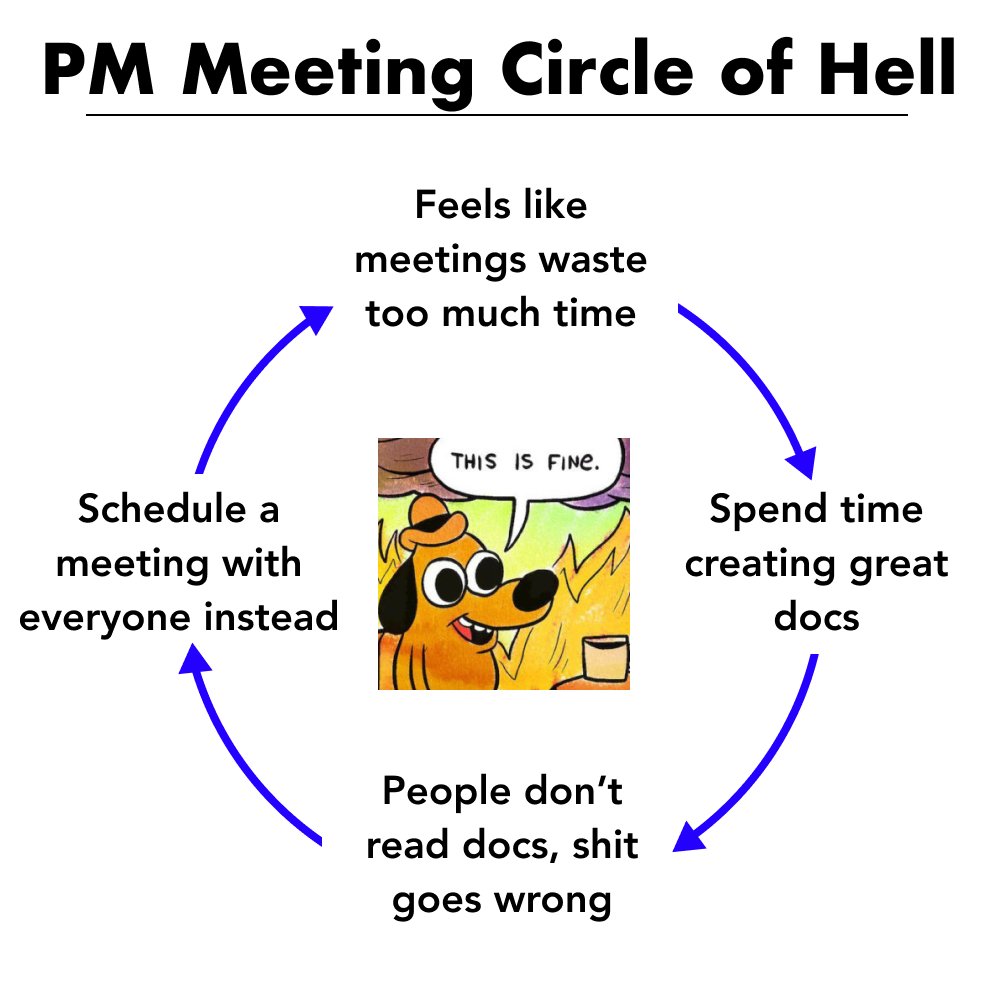
Excellent answer to the question: "How do you defend your roadmap from leaders?"
Carl Vellotti 🥞 tweet media
English
3
11
112
21.4K
Simon King
Simon King@sjking2000·
@hochschild_r reading Strangers avidly. New Hidden Brain podcast talks about radicalization. Context in which it occurs matches stories in Louisiana. Primed by loss then exposed to new ideas that reestablish community podcasts.apple.com/us/podcast/hid…
English
0
0
0
6
Simon King
Simon King@sjking2000·
This tree is 13,000 years old. If our attitude is that it’s OK for it to die in favor of housing we have big problems apple.news/AMk99ERNvSkaVc…
English
0
0
0
26
Simon King retweetledi
Aakash Gupta
Aakash Gupta@aakashgupta·
Product-market fit is not enough anymore. You need position-market fit: There was a time, not too long ago, where in startupland one could build a thing that solved a real problem, put a price tag on it, and see if the market wanted it: • If they did, then we would have said he had found product-market fit • If they didn’t, we would say he didn’t and it was “back to the lab” That time, for better or worse, is long gone. Here’s how @0zne and I break it down: In 2024, a utility provided through software can’t make a dent effectively anymore. People’s heads are overstuffed with competing products, messaging, and narratives. It’s hard for a product alone to get a market edge. The main exceptions are new tech or hyper-niche markets. ChatGPT, for example. But that is a rare instances of breakthrough technology where the “product” itself carries the bulk of the impact. Most companies don't have that luxury and are not in such a position. So, if a product alone isn’t enough, then what is enough? Enter position-market-fit. • If “product-market-fit” means that you’ve found the right kind of product that the market wants… • “Position-market-fit” means that you’ve found the right combination of product/brand/marketing/pricing/go-to-market/sales/etc in a given domain. The Importance of Brain Estate The fundamental reason why “position-market-fit” is so important is that it operates more at a personal and subconscious level. Our brains can only conceptualize a finite set of “characters'' per domain. Similar to the "Dunbar number" rule, which suggests we can maintain stable social relationships with up to 150 people, our brains are wired to understand only a finite number of company-market associations. Gaining a strong positional edge, or nailing “position-market-fit” is the exercise through which a company, with the right combination of product, brand, pricing, marketing and go-market is able to conquer a certain portion of consumer “brain-estate.” The Story of Startup Success If you step back and analyze some of the best startups from the last decade, you'll see they excelled at this. → Are you building in an established market dominated by large incumbents with feature-bloated, slow, and clunky software? In that case, you might want to position your product as a speed-first, high-craft, premium option, similar to a luxury car company. Does Linear ring a bell? → Alternatively, if you're entering a highly commoditized market dominated by a few corporate-looking brands, consider positioning yourself as the quirky, fun company that doesn’t take itself too seriously. Embrace the David vs. Goliath narrative with bold, edgy marketing and design. Does Arc Browser come to mind? Their pricing strategies are almost a second-order effect of their employed market positioning. And that’s the power of position-market fit.
Aakash Gupta tweet media
English
10
49
326
87.5K
Simon King retweetledi
Bandan (Productify)
Bandan (Productify)@bandanjot·
Move beyond Linkedin for your job hunting in Product and Tech. Here are 8 alternatives to consider to get exciting roles, both remote and office-based: [Bookmark/Share]
English
6
39
260
64.3K
Simon King retweetledi
Gordon Ramsay
Gordon Ramsay@GordonRamsay·
An important #FathersDay message from me…WEAR A HELMET ! This week I had a bad accident while riding my bike in CT. I'm doing ok and I’m thankful for all the doctors, nurses and staff at @LMHospital who looked after me but most thankful for my helmet that saved my life. Be Safe
English
4.1K
15.6K
145.8K
26.1M
Carl Vellotti 🥞
Carl Vellotti 🥞@carlvellotti·
@nicolashagner Yes! The key here is that these are different types of users, one where you have PMF and one where you don’t. So optimizing for the power user group makes sense.
English
1
0
1
388
Carl Vellotti 🥞
Carl Vellotti 🥞@carlvellotti·
Product managers, a dilemma: Your north star metric has been steadily increasing, but analysis reveals most of the gains are coming from power users while casual users are churning at a higher rate. Do you optimize for power users or try to better serve the casual audience?
English
30
11
94
20.5K
Simon King
Simon King@sjking2000·
@KiwiDenny I picked user empathy. In my experience - while you can have good communication skills, you really aren't a great communicator until you use the power of the user voice effectively.
English
0
0
2
4
Denny Klisch
Denny Klisch@KiwiDenny·
What is the most important skill for a product leader to have?
English
14
2
13
7.7K
Simon King
Simon King@sjking2000·
@tavioto @carlvellotti Investments that only get lightly used/ monetized are the most expensive Test for 10X ROI on investments Plan budget for maintenance/ enhancement / innovation Don't underinvest in innovation in fast-moving markets
English
0
0
0
32
Simon King
Simon King@sjking2000·
@tavioto @carlvellotti First do they match your ideal customer profile - same size, maturity, industry, geo as ICP? Second understand business intent - is there a more general problem to be addressed? Third review future changes - are they leading a new market shift? If no then explain why
English
1
0
0
88
Carl Vellotti 🥞
Carl Vellotti 🥞@carlvellotti·
Product managers, a dilemma: A key customer segment wants a feature that will be very complex and costly to build. Your data shows only 10% will use it. Do you build it anyway? If not, how do you say no to a vocal minority?
English
33
14
82
38.7K
Simon King
Simon King@sjking2000·
@yanabana Building a solution that bridges two related problems but doesn't have a clear owner is hard to sell
English
0
0
0
4
Yana Welinder
Yana Welinder@yanabana·
Product folks, what’s the most valuable lesson you’ve learned from a product failure? Years ago, I focused on conversion of a feature. We significantly improved it, only to discover that it cannibalized conversion elsewhere in the product. Lesson: be a PM, not a feature manager
Yana Welinder tweet media
English
11
5
44
6K