sk8nd

2.3K posts

sk8nd banner
sk8nd

sk8nd

@sk8nd

Katılım Eylül 2010
167 Takip Edilen160 Takipçiler
Tyler Strejilevich
Tyler Strejilevich@TylerSCrypto·
i’ve got a question for all the crypto investors out there. here it goes… if something isn’t small, what is it?
English
86
3
91
10.6K
sk8nd
sk8nd@sk8nd·
@thecoastguy There are about 500 in the UK, and most have very high security measures. The question is mission critical to whom? Big tech companies - not very. To independent businesses - extraordinarily.
English
1
0
3
278
Neil Oliver
Neil Oliver@thecoastguy·
How vulnerable and mission critical is an individual data centre? How many are there?
English
54
9
150
15K
InvestAnswers
InvestAnswers@Investanswers·
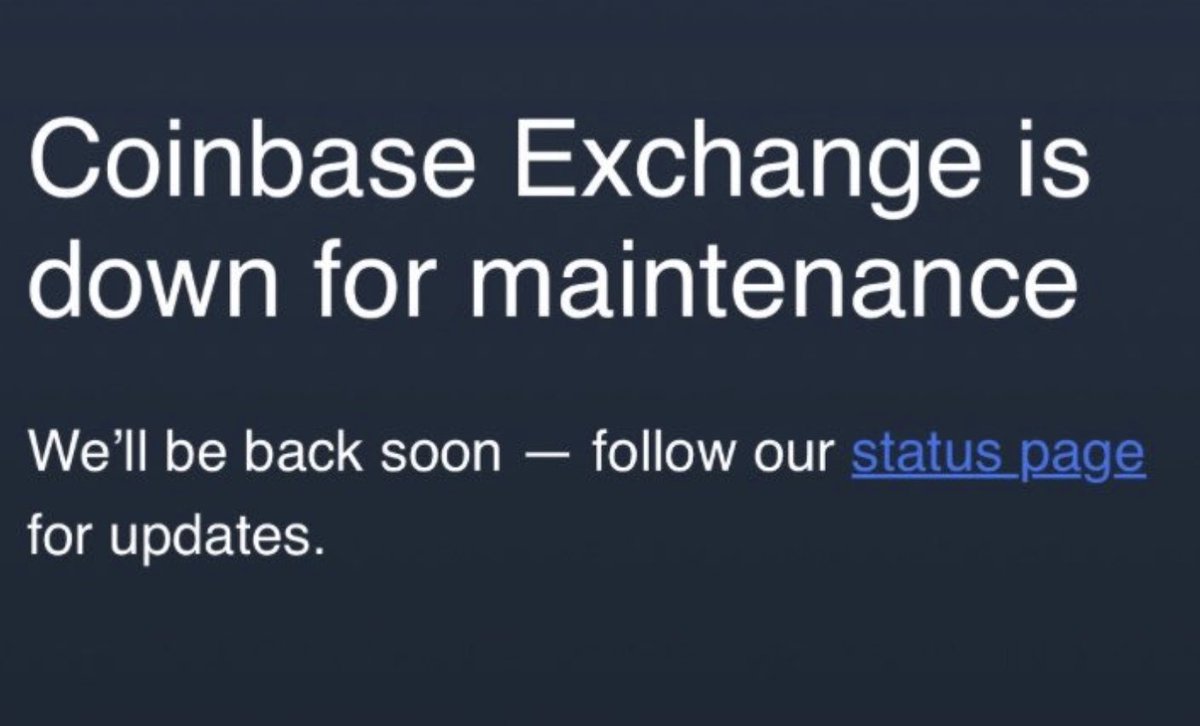
Coinbase fires 14% of staff ... a few hours later website and app goes down nobody can trade Classic “cut staff → things break” moment. Pro Tip use coinbase to convert FIAT trash to USDC then trade on a DEX. Or trade Crypto using Proxy Options :D
InvestAnswers tweet media
English
24
7
191
13.2K
Coin Bureau
Coin Bureau@coinbureau·
🚨JUST NOW: Ships are reportedly being offered safe passage through the Strait of Hormuz if they switch registration and raise flags of “friendly” countries like Pakistan. Pakistan is now looking for the biggest ships in the Gulf willing to temporarily sail under its flag, including massive oil tankers carrying up to 2 million barrels.
Coin Bureau tweet mediaCoin Bureau tweet media
English
50
96
806
54.2K
Bob Moran
Bob Moran@bobscartoons·
I know it's a prickly topic, but just out of interest, how many hedgehogs were involved in ordering the bombing raids on Dresden in 1945?
English
16
10
108
12.7K
sk8nd
sk8nd@sk8nd·
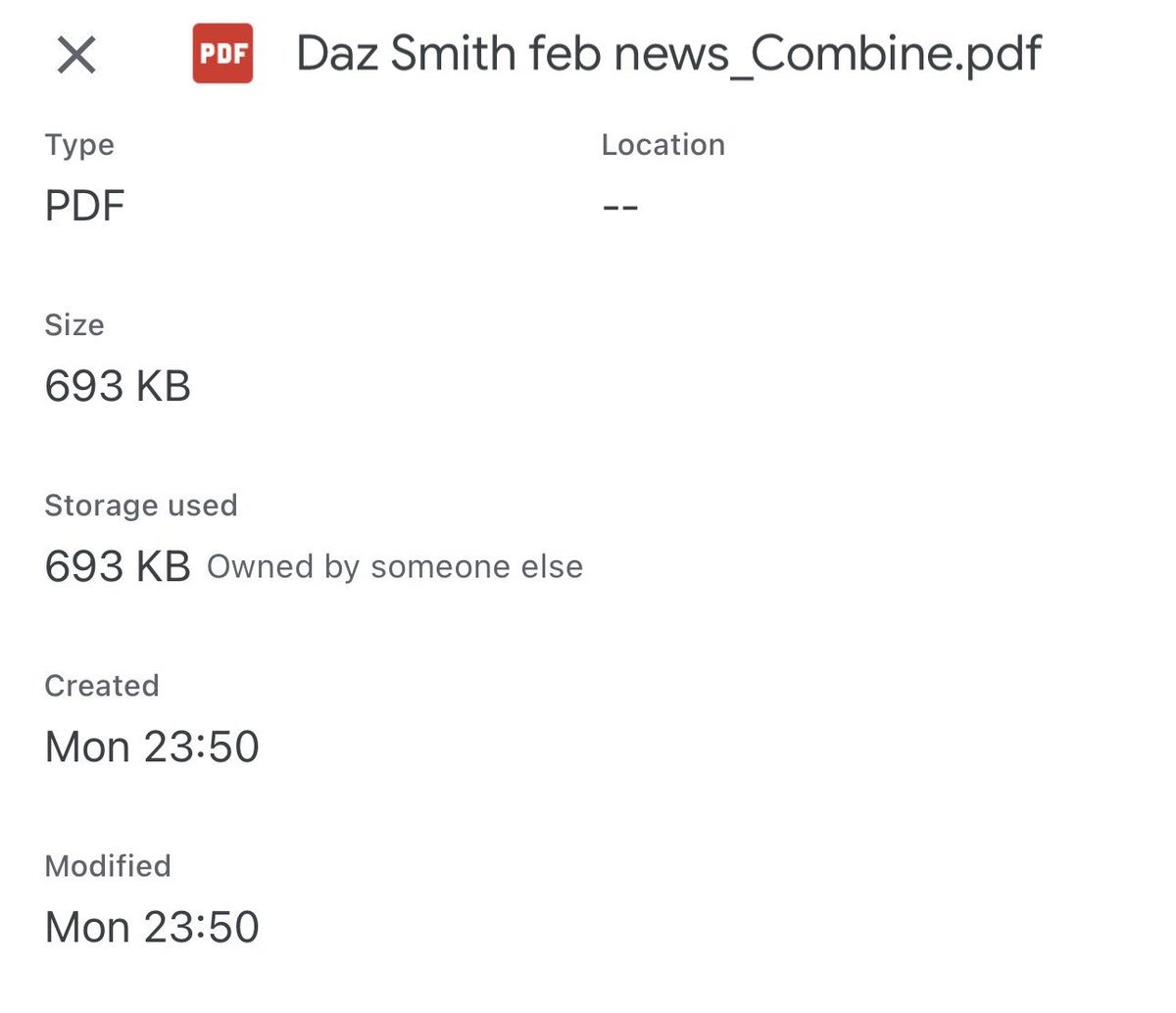
@remoteviewed Shame the Google doc was only created yesterday so there is no evidence you predicted this in January.
sk8nd tweet media
English
4
0
17
3.9K
Daz_rv
Daz_rv@remoteviewed·
On 23rd January 2026. I created this remote viewing session to try to predict the top global news for February 2026 - I got some very bad heavy stuff. the US started their attack on Iran on 28th Feb 2026. A summary of some of my data: There is an explicit ambiguity between a bomb/attack and a powerful natural event, with motion in multiple directions and hints of outcroppings and nature. • The viewer notes an “explosive surprise event” near water, feeling like a big spectacle, with possible USA and Middle East connections mentioned as AOLs. The overall backdrop is described as a coming “storm,” the start of a “potential shit storm,” with language of exodus, biblical scale, and breakdown of law and order. The viewer emphasizes it feels like a kinetic, aggressive action that is not quite “actual” yet and remains fuzzy/potential. • Imagery includes fences burning, fractures in the social fabric, and something massive beginning to take shape but still at the stage of potential rather than fully manifested. • The viewer repeatedly flags this as worrying and feeling almost unstoppable, as if February’s top news could be perceived as the opening phase of a larger cascading crisis rather than a one-off event My full rv is here: drive.google.com/file/d/1UxbEKe… Check out our work at: ffgrv.com
Daz_rv tweet mediaDaz_rv tweet mediaDaz_rv tweet mediaDaz_rv tweet media
English
38
49
304
93K
sk8nd
sk8nd@sk8nd·
@TylerSCrypto Fake news, there’s no big green arrow 🫤
GIF
English
0
0
3
204
Tyler Strejilevich
Tyler Strejilevich@TylerSCrypto·
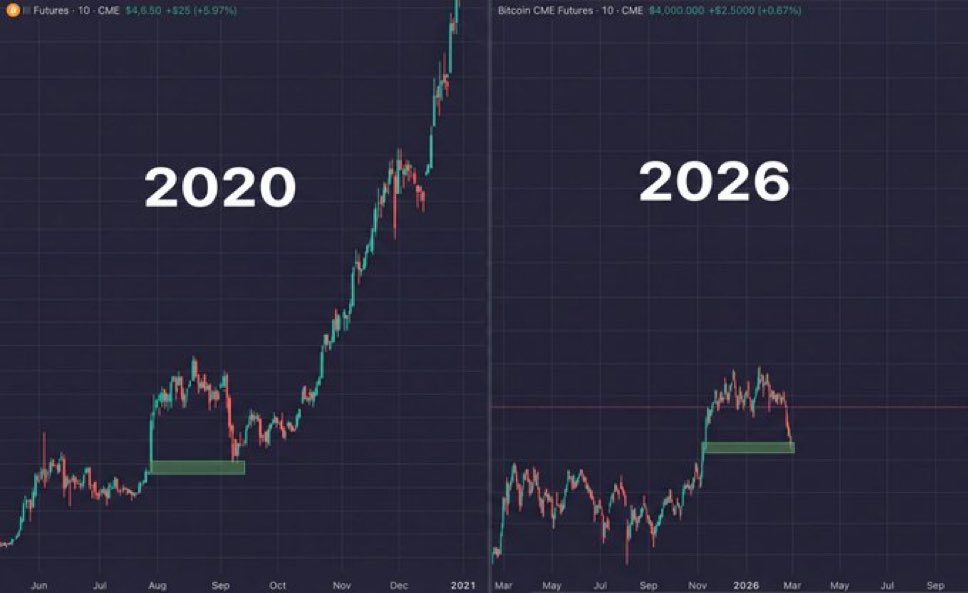
Bitcoin. I’ve seen this before.
Tyler Strejilevich tweet media
English
44
17
237
10.4K
sk8nd
sk8nd@sk8nd·
@KeirGale @gbnstrike It only required 14% of the population to vote them in - perhaps they should aim for that.
English
1
0
0
13
Keir Gale
Keir Gale@KeirGale·
@gbnstrike Assuming your assertion is true, are you saying that you're happy with the idea of 3.5% of the population bringing down the government?
English
2
0
4
255
Richard Donaldson
Richard Donaldson@RDonaldson91·
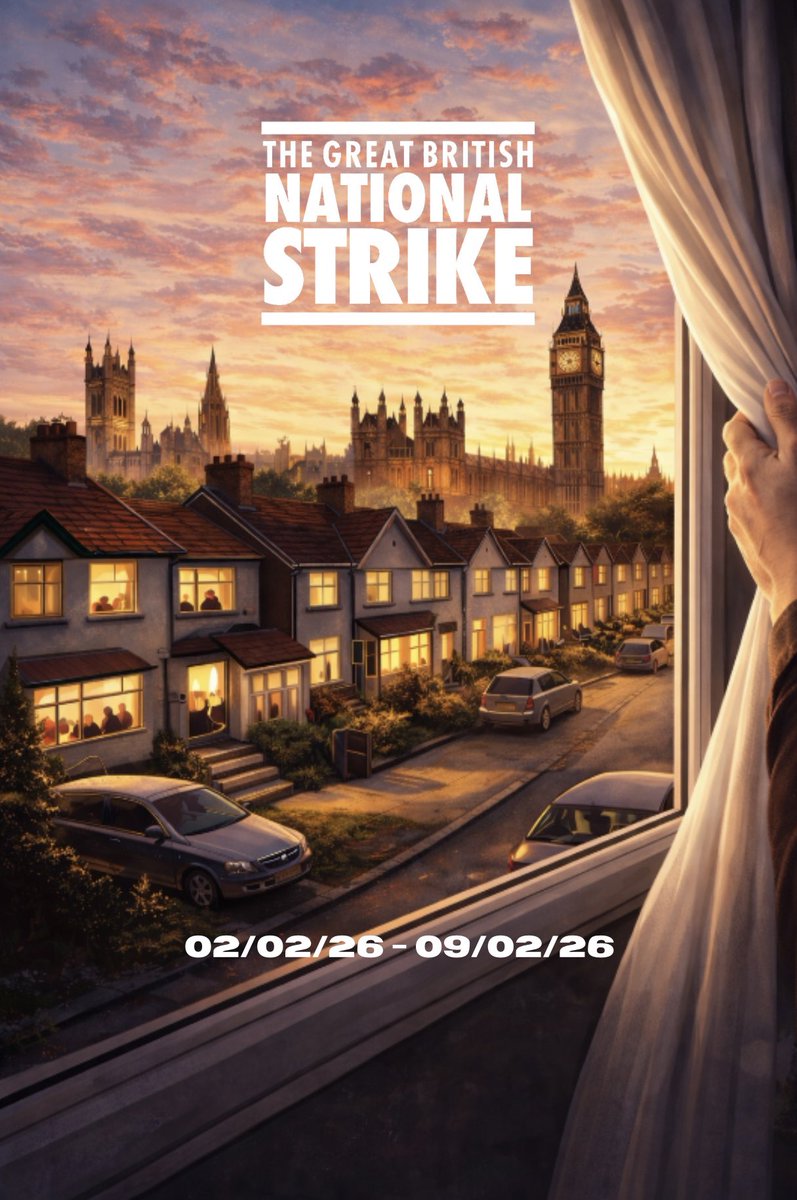
This is how real change actually happens. Not petitions. Not single day rally’s/protests. A national strike. History is brutally clear on this: research by Erica Chenoweth shows that when just 3.5% of the population actively participates in sustained, non-violent resistance, regimes fall. Every time. No exceptions. Now imagine the impact in modern Britain. When workers withdraw en masse, the country doesn’t just “slow down” — it locks up. Supply chains break. Services stall. Confidence evaporates. And global investors don’t hang around waiting to see how it ends. They pull out fast, because unstable countries aren’t safe bets. That pressure alone can force a government to resign before economic collapse sets in. And here’s the part the political class hopes you never realise: A national strike doesn’t just remove Labour and shuffle another party into power. It changes the balance permanently. It sets a precedent — for every future government — that power flows upward from the people, not downward from Westminster. It tells any party, red, blue or otherwise: govern against the public interest, and you will be shut down. That lesson lasts far longer than any single administration. And you don’t have to ruin your life to take part. • Book annual leave if you can • Use self-certified sick leave (up to 7 days — legally protected in the UK) • Step back quietly and lawfully No placards. No shouting. No confrontation. Just absence. Silence. Pressure. Want to go further without burning yourself out? Prepare with a big shop beforehand. During strike week, cut spending to the bone. Pause subscriptions. Boycott non-essentials. Withdraw your labour for even a few days. Small actions, multiplied millions of times, hit logistics, cash flow, and confidence — exactly where power is vulnerable. This isn’t about left vs right. It isn’t about parties. It’s about leverage. 3.5% is enough. Let’s aim for 10% — and see where we land. So ask yourself honestly: If not now… when? If not you… who? Will you take part? #WeAreGreatBritain
Richard Donaldson tweet media
English
139
957
2.1K
29.7K
Coin Bureau
Coin Bureau@coinbureau·
📢FUN FACT: Bitcoin crossed $14K-$15K five years ago... And it only went UP from there! 🚀
English
46
26
280
34.1K
Tyler Strejilevich
Tyler Strejilevich@TylerSCrypto·
i've seen enough. gonna call the bitcoin bottom here (will delete if wrong)
English
40
8
308
11.1K
Tyler Strejilevich
Tyler Strejilevich@TylerSCrypto·
Bitcoin is down 4% today I am crying, shaking and curled up in the fecal position
English
24
4
123
7K
Bob Moran
Bob Moran@bobscartoons·
Remember when all these 'terrorists' were so afraid of catching a cold that they didn't attack anyone for two years while the whole world was looking the other way? Most of you seem to have forgotten that. You think all of this is real. That all of sudden the nasty smelly Muslims have started attacking us on a daily basis, because, you know, there are just SO many of them here now. It's all organic and inevitable. Because they hate us so much. We need to start a war. Elon said so. Please stop being as thick as your true enemy needs you to be.
English
140
400
1.8K
82.5K
Steve Jurvetson
Steve Jurvetson@FutureJurvetson·
Why do 1/4 of us think the moon landings were fake? Worrisome on its own, it is part of a much larger phenomenon in false beliefs and mind viruses. Among young people in the U.S. and UK, the percent that think Apollo was faked has climbed steadily from 4% back when we were actually doing it to 25% today! (source: Ad Astra, 2019) My prior post, showing the first Apollo 8 Earthrise, prompted hundreds of people to ask: “where are the stars?” and some to add the assertion that their absence proves the photo to be fake, one of the common arguments given for why the moon landing was faked. Such an odd chain of thinking. The sheer number of such comments was shocking and disappointing to me. I feel like a Public Service Announcement is in order. The starless black has an easy explanation, of course, for anyone who knows a bit about photography: no camera has the dynamic range to simultaneously capture a bright foreground object like the moon and the relatively dim background stars. You can overlay multiple digital photos, like an HDR merge, but none of that existed with the film cameras of the 60’s. Some people pointed out that you can verify this for yourself by taking a photo looking up to a streetlight at night. Or shoot a full moon in the night sky. If you can see any moon details, you won’t see any stars. The exposure setting can get one or the other but not both in a single shot. Do you think any of the lunar lander deniers will go outside and try this simple experiment? I doubt any will (but maybe some just asked the question out of curiosity, and they will hopefully go get the answer for themselves). Please, do look up! Will any evidence change a denier's mind? I used to hope so. I once got into a long multi-day argument with someone who seemed to be making evidence-based claims that the rover rides were faked. I focused on why? Why go to all that effort? In the end, when backed into various logical corners, he stuck with the odd proposition that we wanted the Russians to know that our batteries were better than anyone’s, and thus, our terrestrial torpedoes had longer range. For some reason, we left it for them to deduce, like this wise conspiracy theorist had done, rather than just demonstrate it on Earth. Getting into the mind of a denier is an exercise in frustration. 400,000 people worked on Apollo. To assert they all lied, and none gave an anonymous tip to the press, requires extraordinary evidence. Why land on the moon 6 times when once would suffice? Why not fake a Mars landing instead? Why would Russia, India and China separately go to the moon and verify that our landers are there? Why would our enemy in the space race agree that we did it? The mental contortions one witnesses if you actually try to have a conversation with a denier is decoupled from logic, reason or common sense. I used to think belief without evidence was reserved for religion. Imagine a world where everything is personal truth. Learning would cease. Back to the dark ages. 20 years ago, I wrote a blogger post on Spooks and Goblins asking: “Do you think that the generation of myths and folkloric false beliefs has declined over time? In addition to the popularization of the scientific method, I wonder if photography lessened the promulgation of tall tales. Before photography, if someone told you a story about ghosts in the haunted house or the beast on the hill, you could choose to believe them or check for yourself. There was no way to say, ‘show me a picture of that Yeti or Loch Ness Monster, and then I’ll believe you.’ And, if so, will we regress as we have developed the ability to modify and fabricate photos and video?” Well, here we are. Fabricating photos like the one for this post are easy. (As an aside, I tried 16 times to get Grok to render stars in the black sky on the moon, but it couldn’t overcome some embedded low-level knowledge about realistic exposures. Faking it is still hard. :) In 2004, I co-taught a class with Larry Lessig at Stanford, and one of our texts by Posner shared the following statistics on American adults: • 33% believe in ghosts and communication with the dead. • 39% believe astrology is scientific (astrology, not astronomy). • 49% don’t know that it takes a year for the earth to revolve around the sun. • 67% don't know what a molecule is. People’s willingness to believe untruths relates to the ability of the average person to reason critically about reality. Posner concludes: “It is possible that science is valued by most Americans as another form of magic.” If “critical thinking” comes naturally from the scientific method, "magical thinking" flourishes in counterpoint. And those would be the dark ages. For most of human history, there was little to no progress. Almost no progress in a human lifetime. That was before the scientific method, a fundamentally better way for a culture to learn. But the moon landing denial is a much more difficult topic than merely noticing rampant ignorance and the failings of our education systems. Five years ago, the lunar rover argument on Facebook sparked some philosophical reflections that really got me thinking, and I'll share that here (it is public there too): @PaulJeffries (a very smart person IMHO): “These views aren’t just ignorance (in the literal sense of not having knowledge), so they can’t be addressed by simply informing people of the truth. The issues run much deeper. It’s a matter of epistemology, and a mindset where the priorities are about personal needs, more than knowledge which is inherently abstracted or depersonalized. The virtues of the scientific enlightenment, materialist mindset that is at issue are seen as unappealing by the people who reject “science”. They aren’t rubes who would believe science if only they heard the right claims; they’ve heard them. They fancy themselves as insightful resistors who seek a deeper truth. If people feel disenfranchised, marginalized, hopeless, and feel that authority is suspect because it’s always been an instrument of oppression, they’re going to look for hidden truths (such as astrology) and ways to upset stagnation (such as political contrarianism). At the very least they’ll be disinterested in things that don’t seem to pertain to their own lives or questions or suffering or striving. Similarly, they know that Trump “lies”; they think it’s epistemological jazz and his statements are code speak for a deeper truth. They are operational statements, not propositional ones. They won’t stop supporting Trump because you show them some “fact”, and they won’t stop trying to resist authoritarian oppression by ideology (as they see it) because you try to erase the sense that the world has meaning and purpose (as they seek it) by declaring scientific materialism and evolution. Ironically (for those who are in the tech community and baffled by the statistics cited in the post), there’s a deep connection between American entrepreneurialism and resistance to received knowledge of science or historical fact or whatnot). We’re a frontier culture of pragmatists. We reject authority in our church history. We reject theory, just as we reject fancy theology. We rejected a distant king. We rejected book learning and notions of European social class pretenses (except as it suited our attempts at justification of chattel slavery). It’s no accident that California in particular is the heart of innovation, where “weird” ideas that are very much not scientific materialism or received Judeo-Christian mainstream theology and metaphysics — weird spirituality —and weird art, weird communal living, weird hippy culture, on the physical frontier edge of a continent, all mix with the practical build it from nothing spirit of people who came looking for gold. No one can replicate Silicon Valley if they can’t capture the same admixture of irrationality, counterculture, anti-authoritarian experimentalism, pragmatism, commerce, autonomy, and sense that the world is to be synthesized at will, spun from whole cloth rather than an existing thing to be fought over and subdivided. I’m not saying that ignorance is an essential currency of innovation. But those among us, and here I am speaking for example of myself, who embrace science and education and knowledge and also embrace skepticism about authority and entrepreneurship, should realize that the qualities we leverage and instantiate have similar roots to those we think are obstacles in a very different population. We are closer than it seems. People who feel left behind, including by all the things we do in the tech frontier, will retreat to conservatism and skepticism and seek enlightenment in acts of revelation that feel authentic to them and are personally available and not reliant on distant authority. If we want to find common ground or even one day common mission, it won’t just be a matter of a slight improvement in public schools or making sure everyone somehow “hears the word” of science. Me: Fascinating. And worrisome, as this sounds like a self-amplifying bifurcation, creating a growing chasm of communication... to the point of mutual incoherence. Pulled from proscriptive moorings, both sides can fall prey to modern prophets and revealed truth (one a contrarian superhero within, the other a belief in a protocol — an externalized process for accumulating progress). Where is Karl Popper when we need him? Paul Jeffries: “Yeah, I think you might be right. As I suggested, their ultimate roots are common. But there’s a self-feeding wedge of mutual incomprehension, contempt, and identity oriented around not being the other. As with politics in America too. I should say I glossed over a complexity. There is a species of fanciful, humanistic, ambitious anti-science among the “costal elites” that is different than what you see among, for example, fundamentalist evangelicals. The former is folks who are denizens of tech (they might even be into crypto today; back in the day they were early BBS types, for instance) but into alternative medicine, vapor trails, vaccine skepticism, 9/11 conspiracies, remembered past lives, quantum mysticism, but also transhumanism and life extension and meditation and environmentalism and veganism and whatnot. They’re an admixture of perspectives and would grant the premise of common ground for debate and aren’t necessarily a part of a bifurcation wedge relative to adherents to received knowledge. Those folks don’t think outside of mainstream received knowledge in the same way and for the same reasons as, say, creationist evangelicals. Although there are overlaps on things such as skepticism of the state and big business that play out as common ground on things like anti-vax. The blue state / red state divide is self-amplifying. The divides inside blue, which can include both mysticism and hyper pseudo-rationality, are perhaps more within a shared dialectic. On another day it would be fun to explore whether one-way mass communications, and then the web, and then social media, amplified or diminished such differences, or just shed light on differences that were always there.”
Steve Jurvetson tweet media
English
339
710
2.8K
4.7M
Jamie Jenkins
Jamie Jenkins@statsjamie·
🚨 NEW: The £15 Billion Asylum Scandal — The More Boats That Arrive, the More the Contractors Earn A 10 year deal that saw crossings rise — turning the small-boat crisis into big business. 💷 £15bn spent & 100s of millions in profit for private firms. statsjamie.co.uk/p/the-15-billi…
English
19
229
443
36.8K