Shrikanth Manda

490 posts

Shrikanth Manda banner
Shrikanth Manda

Shrikanth Manda

@smanda_2023

Company Secretary, Legal, Finance, Content Creator in part time, Teacher, Coach, Family Man, ACCA, CIMA, CS, MBA, LLB, NOT A SEBI REGISTERED FINANCIAL ADVISOR

India Katılım Eylül 2023
322 Takip Edilen213 Takipçiler
Shrikanth Manda
Shrikanth Manda@smanda_2023·
When Warren Buffett Says the Market Is Becoming a Casino, Every Investor Should Listen There are market crashes that destroy wealth, and there are market manias that quietly destroy investor behaviour. Warren Buffett believes we are witnessing the latter. His latest remarks are not about predicting the next market correction. They are about a much bigger concern. The investing culture itself is slowly giving way to a gambling culture. As Buffett rightly said, "It is tough to find values when everybody is preferring gambling." That one sentence perfectly captures today's markets. Investors are increasingly chasing momentum instead of fundamentals, excitement instead of business quality, and overnight returns instead of long term wealth creation. The rise of leveraged trading, short dated options, social media tips, AI driven speculation and fear of missing out has made many participants focus more on price movements than on business value. What struck me even more was another powerful statement from Buffett. "There is more money in cultivating gamblers than there is in cultivating investors." Think about it. When people trade every day, everyone around the market earns. Brokers earn commissions. Exchanges benefit from volumes. Trading platforms generate more revenue. Financial influencers gain more views. News channels get higher engagement. But none of these guarantee that the investor actually builds wealth. That is the biggest difference between trading activity and investing discipline. Buffett also reminds us that great investment opportunities are not available every day. There are periods when attractive businesses are everywhere, and there are periods when patience itself becomes the best investment strategy. Successful investors understand that waiting is not inactivity. Waiting is discipline. Despite AI euphoria, geopolitical uncertainty, rising oil prices and increasing market volatility, Buffett's philosophy has remained unchanged for decades. Buy outstanding businesses. Pay sensible valuations. Ignore short term market noise. Give compounding enough time to work. In a world where everyone wants instant results, Buffett reminds us that wealth is rarely created overnight. It is built through knowledge, patience, emotional discipline and staying invested in quality businesses for years. Perhaps the greatest competitive advantage in investing today is not having better information or faster technology. It is having the patience to do nothing when everyone else feels compelled to do something. The stock market has always transferred wealth from the impatient to the patient. The question every investor should ask is simple. Am I investing, or am I just participating in the world's largest casino? #WarrenBuffett #ValueInvesting #Investing #StockMarket #LongTermInvesting #WealthCreation #BehavioralFinance #Finance #CapitalMarkets #Compounding
Shrikanth Manda tweet media
English
0
0
0
31
Shrikanth Manda
Shrikanth Manda@smanda_2023·
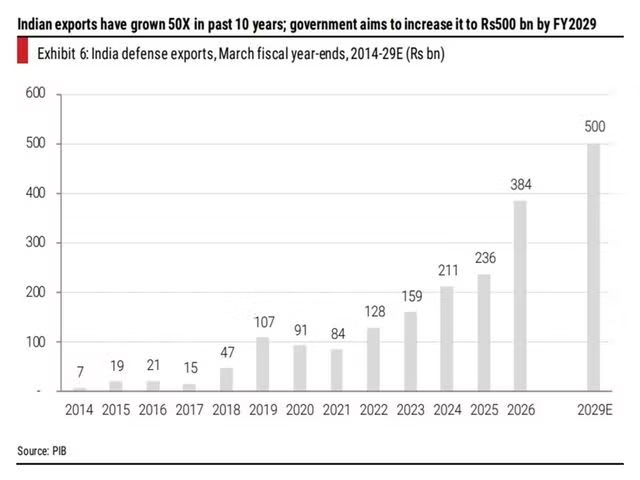
Kotak Institutional Equities has initiated coverage on India's defence sector, saying it is on a multi-year structural upcycle. It said a sharp rise in Acceptance of Necessity (AoN) approvals, increasing push toward indigenisation and higher defence exports will drive long-term growth for the sector. Defence companies valuation The brokerage added that Indian defence companies trade at around a 50 per cent valuation premium over global peers, factoring in faster projected growth. During FY2021-26, Indian defense manufacturers delivered around 25 per cent revenue CAGR with Ebitda margins expanding approx. 500 bps to 25 per cent. However, when adjusted for lower research and development spend, the margin advantage versus global peers narrows from 800 bps to 450 bps, the brokerage said. The brokerage said that the current valuations leave limited room for further upside despite favourable long-term prospects. It recommendeds 'Add' on Hindustan Aeronautics; 'Sell' on Mazagon Dock Shipbuilders and Solar Industries, assigning a fair value of ₹4,810, ₹1,950, and 10,300, respectively. The brokerage has maintained 'Reduce' rating on Bharat Electronics for a target price of ₹400 and 'Sell' rating on Cochin Shipyard for a target of ₹830.
Shrikanth Manda tweet media
English
0
0
0
246
Shrikanth Manda
Shrikanth Manda@smanda_2023·
🇰🇷 South Korea vs 🇹🇼 Taiwan: One AI Story, Two Completely Different Outcomes The recent correction in Asian equity markets has delivered one of the biggest investing lessons of the year. Over the past three weeks, South Korea's Kospi Index has fallen nearly 27%, including a sharp 9% decline in a single trading session. During the same period, Taiwan's TAIEX Index declined by only around 2.3%. What's surprising is that both markets are powered by Artificial Intelligence. In South Korea, Samsung Electronics and SK Hynix dominate the market and are among the world's largest AI memory chip manufacturers. In Taiwan, TSMC alone accounts for nearly 40% of the benchmark index and manufactures advanced AI chips for companies like NVIDIA, Apple, AMD and several global technology leaders. If both markets are driven by AI, why did one collapse while the other remained relatively stable? The answer lies not in the companies—but in investor behaviour. What happened in South Korea? Retail investors became extremely aggressive during the AI rally. Many borrowed heavily using: • Margin financing from brokers • Single-stock leveraged ETFs • Ultra-short-term options • Other leveraged trading products This pushed retail margin debt to a record US$39 billion. When concerns emerged that AI valuations had become overstretched, foreign institutional investors sold nearly US$13 billion worth of South Korean equities in June alone. Normally, domestic investors absorb part of such selling. However, this time many retail investors had already exhausted their borrowing capacity. As stock prices declined, brokers issued margin calls, requiring investors to deposit additional funds. Those unable to meet the margin calls had their positions automatically liquidated. This triggered more selling, which pushed prices lower, resulting in additional margin calls and further forced selling. A classic leverage-driven downward spiral had begun. Why Taiwan remained resilient Taiwan also experienced profit booking, but investor behaviour was very different. Instead of chasing leverage, many Taiwanese investors preferred: • High-dividend ETFs • Passive investment strategies • Long-term investing • Income-generating portfolios Because investors were less leveraged, there were significantly fewer forced liquidations. Selling pressure remained controlled, allowing the market to correct in a much more orderly manner. The biggest lesson The difference between South Korea and Taiwan was not Artificial Intelligence. It was leverage versus discipline. Leverage can make returns look extraordinary during bull markets, but it magnifies losses just as quickly during corrections. Many investors don't lose because the underlying companies are weak. They lose because borrowed money forces them to sell at precisely the wrong time. What should Indian investors learn? India is witnessing rapid growth in: • Retail participation • Futures & Options trading • Margin-funded investing • Weekly options speculation The South Korean experience serves as an important reminder that excessive leverage can destabilise even fundamentally strong markets. Strong businesses can withstand volatility. Overleveraged investors often cannot. As global investment firms such as Jefferies and Goldman Sachs continue to maintain a constructive long-term view on Artificial Intelligence, this correction should be seen less as the end of the AI story and more as a reminder that risk management, disciplined investing and prudent position sizing are just as important as identifying the right investment theme. Markets don't usually collapse because great companies suddenly become weak. They often collapse because investors become excessively leveraged. #Investing #ArtificialIntelligence #StockMarket #RiskManagement #SouthKorea #Taiwan #Semiconductors #CapitalMarkets #LongTermInvesting #WealthCreation
Shrikanth Manda tweet media
English
0
0
3
308
Shrikanth Manda
Shrikanth Manda@smanda_2023·
✈️ The Runway Rush: Why Can’t We Wait for the Flight to Settle? On a recent flight from Coimbatore to Bengaluru, I witnessed a familiar, frustrating scene. The aircraft had barely touched down and was still taxiing to its final parking spot. Yet, the moment the brakes tapped, the entire cabin erupted into the sound of unbuckling seatbelts. Within seconds, everyone jumped up at one shot, crowding the aisle and pulling down heavy overhead luggage. The plane hadn't even settled, and people stood jammed against each other for **15 to 20 minutes** waiting for the doors to finally open. It makes you wonder: **Why do we struggle so much with basic patience in shared spaces?** The Psychology of the "One-Shot" Jump Why can’t we just wait? Why does everyone feel the urge to stand up simultaneously when there is physically nowhere to go? The Illusion of Progress: Standing up gives an artificial sense of control, making people feel like they are moving closer to their destination, even when they are completely stationary. FOMO & The Domino Effect: Often, passengers don't even want to stand, but because the person next to them jumps up, they feel pressured to claim their square inch of aisle space so they don't get "left behind." A Gap in Civic Discipline: Deplaning doesn't have to be a chaotic free-for-all. If we simply waited and disembarked row by row, the entire process would actually be faster, safer, and infinitely more dignified for everyone involved. Moving Toward a Smarter Travel Culture Civic sense isn’t just about following rules; it’s about respecting the people around you. Jamming the aisles for 20 minutes doesn’t make the ground crew work faster or the aerobridge attach quicker. It just creates unnecessary stress and friction. Let’s change the narrative. The next time the plane lands, let's try an experiment in patience: stay seated, let the plane fully settle, and clear out row by row. @DriveSmart_IN @motordave2 #TravelEtiquette #CivicSense #BehavioralPsychology #LinkedInVoices #AirportDiaries
English
17
14
68
37.5K
Shrikanth Manda
Shrikanth Manda@smanda_2023·
India VIX: The Number Every Options Trader Should Understand Many traders spend hours studying candlestick patterns, support and resistance, and option chains. Yet one of the most important numbers influencing option prices is often ignored: India VIX. India VIX, or the Volatility Index, is often called the market's "Fear Gauge." It measures the market's expectation of volatility over the next 30 days based on NIFTY option prices. It does not predict whether the market will move up or down. Instead, it estimates how much the market is expected to move. Why does this matter? Because option premiums are heavily influenced by implied volatility (IV). When expected volatility rises, option premiums generally become more expensive. When volatility falls, premiums tend to decline, even if the underlying index barely moves. Here are a few practical insights every options trader should remember: • High VIX often means uncertainty is elevated. Option premiums tend to be richer, benefiting premium sellers, but price swings can also be much larger. • Low VIX usually reflects calmer market expectations. Option premiums are cheaper, but a sudden spike in volatility can significantly change option valuations. • VIX is direction-neutral. A rising VIX does not automatically mean the market will fall. It simply indicates that traders expect larger price movements. • Volatility can impact your trade more than direction. You may correctly predict the market's direction and still lose money if implied volatility drops sharply after entering a long option position. • Always monitor IV before entering an options trade. Price movement and volatility work together. Ignoring either one means ignoring a major component of option pricing. A good options trader doesn't just ask: "Where will the market go?" They also ask: "How much movement is already priced into the options?" Understanding volatility is not an advanced concept reserved for professionals. It is one of the foundations of options trading. The sooner you learn to read India VIX alongside price action and option chain data, the better equipped you'll be to make informed trading decisions. #OptionsTrading #IndiaVIX #Volatility #ImpliedVolatility #Nifty #OptionChain #Derivatives #RiskManagement #StockMarket #FinancialMarkets #TradingEducation #ShrikanthManda
Shrikanth Manda tweet media
English
0
0
0
109
Shrikanth Manda
Shrikanth Manda@smanda_2023·
“My first wife lost my credit card and I made no attempt to get it back, because the guy was spending less than she did.” 😂 - Warren Buffett
English
0
0
0
53
Shrikanth Manda
Shrikanth Manda@smanda_2023·
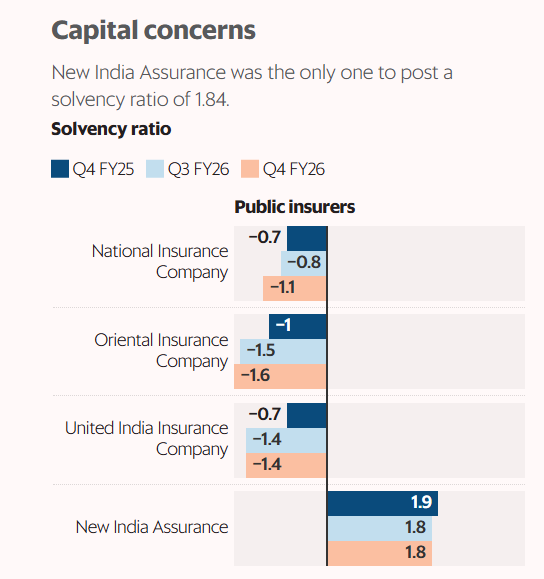
Solvency ratio in the life insurance industry indicates an insurer’s ability to cover its liabilities and other obligations with the assets that it has. In insurance, solvency ratio is measured as the ratio of the amount of Available Solvency Margin to the amount of Required Solvency Margin. The solvency ratio is the capital buffer insurers are required to maintain against their liabilities. The Insurance Regulatory and Development Authority of India (Irdai) mandates a minimum solvency ratio of 1.5, and insurers falling below the threshold are expected to restore capital adequacy. In its June Financial Stability Report, released on Monday, the RBI said the general insurers remained below the regulatory solvency ratio of 1.5 for every quarter between the fourth quarter of FY25 and the fourth quarter of FY26. Public disclosures show that National Insurance Co. Ltd, Oriental Insurance Co. Ltd and United India Insurance Co. Ltd reported negative solvency ratios during the period, indicating their liabilities exceeded the capital available to support them. #Insurance #Solvency #Finance
Shrikanth Manda tweet media
English
1
0
0
42
Shrikanth Manda
Shrikanth Manda@smanda_2023·
Chinese readouts from the summit conspicuously excluded any mention of denuclearization in North Korea. It means North Korea is not expected by China to give up its nuclear weapons. x.com/MEMRIReports/s…
MEMRI@MEMRIReports

#ICYMI: Chinese President Xi Jinping Visits North Korea for First Time in Seven Years, Says Relations Are at a New Historical Starting Point

English
0
0
0
37
Shrikanth Manda
Shrikanth Manda@smanda_2023·
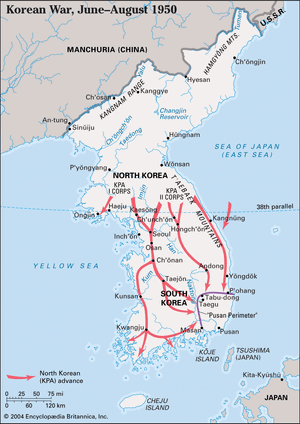
Interestingly you know what? The Korean War (June 25, 1950 – July 27, 1953) was a major armed conflict fought on the Korean Peninsula between - Communist North Korea (supported by China and the Soviet Union) and - South Korea (supported by the United Nations, led by the US). It ended in a stalemate, maintaining the peninsula's division. The war resulted in deaths of at least 2.5 million Koreans (both soldiers and civilians), roughly 600,000 Chinese troops, and more than 36,000 Americans. It effectively concluded on July 27, 1953, when the Korean Armistice Agreement was signed, establishing the heavily fortified Demilitarized Zone (DMZ) that still separates the two countries. Most surprisingly - the Korean War has never officially ended with a peace treaty. There is no official end to this war yet...
Shrikanth Manda tweet media
English
0
0
0
56
Shrikanth Manda
Shrikanth Manda@smanda_2023·
The Anatomy of Premium: Stop Buying Hope. Start Buying Value. One of the biggest mistakes option traders make is assuming that the premium shown on the screen is simply the "price" of an option. In reality, every option premium has two completely different components, and understanding the difference can dramatically improve your trading decisions. Option Premium = Intrinsic Value + Extrinsic (Time) Value Intrinsic Value is the option's real value. It represents how much the option is already "in the money." This portion exists because of the actual movement in the underlying index or stock and generally doesn't disappear unless the market moves against you. Extrinsic Value, on the other hand, is what you pay for time, volatility, uncertainty, and possibility. This is the "hope premium"—and it is also the part that continuously melts due to time decay (Theta) and changing market expectations. Let's understand this with a simple example. Assume Nifty is trading at 24,000: A 23,500 Call (Deep ITM) contains mostly intrinsic value, making it behave much like the index itself. A 24,000 ATM Call consists almost entirely of extrinsic value, making it highly sensitive to time decay and implied volatility. A 24,500 OTM Call may look inexpensive, but you're paying almost entirely for hope. Unless the market makes a fast and meaningful move before expiry, that premium is likely to erode rapidly. This explains why many traders buy a "cheap" option and still lose money even when the market moves in the expected direction. They weren't buying value—they were buying probability. Professional traders understand something many beginners overlook: Cheap doesn't mean undervalued. It often means the market believes the probability of success is very low. This is precisely why institutions are often comfortable selling Out-of-the-Money options. They collect premium that consists largely of extrinsic value, allowing time decay to work in their favor while retail traders wait for a move that may never arrive. Key Lessons • Always separate premium into Intrinsic Value and Extrinsic Value before entering a trade. • Understand how much of your premium is "real value" and how much is "time and uncertainty." • Don't mistake a low premium for a low-risk opportunity. • Deep In-the-Money options behave very differently from At-the-Money and Out-of-the-Money options. • The more extrinsic value you buy, the more you expose yourself to time decay and volatility risk. The best traders don't simply ask, "Which option is cheap?" They ask, "What exactly am I paying for?" That single question can completely transform the way you approach options trading. #OptionsTrading #OptionPremium #IntrinsicValue #ExtrinsicValue #ThetaDecay #ImpliedVolatility #Nifty #BankNifty #StockMarket #TradingEducation #RiskManagement #FinancialMarkets
Shrikanth Manda tweet media
English
0
1
1
80
Shrikanth Manda
Shrikanth Manda@smanda_2023·
Hon'ble Chief Minister, @SuvenduWB I am deeply concerned by reports and videos circulating on social media that appear to show incidents of violence, intimidation, and attacks allegedly targeting supporters or workers associated with the previous administration. If these incidents are accurate, they are deeply unfortunate. Political differences should never become a reason for fear, retaliation, or mob violence. We have even seen eggs and tomatoes being used to target TMC MP @MahuaMoitra, while she was holding a meeting at the residence of a party MLA. Firstly, such incidents itself are condemnable and second, having such incidents against a women is the absolutely disaster this nation can ever witness. I humbly request your government to ensure that law and order is maintained, every citizen is protected without discrimination, and anyone found indulging in violence is dealt with strictly according to the law. At the same time, I appeal to all citizens to reject mob culture, maintain peace, respect democratic values, and resolve differences through constitutional and legal means rather than violence. A strong democracy is built on justice, mutual respect, and peaceful coexistence, not fear or revenge. I sincerely hope your government will take all necessary steps to uphold the rule of law, protect every citizen, and reinforce the values of peace, harmony, and democracy across the state. @narendramodi @RahulGandhi
English
0
1
0
52
Shrikanth Manda
Shrikanth Manda@smanda_2023·
@SuvenduWB Sir, this is absolutely disgusting and shame to see if true. You are supported to ensure there is a law and order in the state where legal machineries and institutions handle the matter and not common man turned into mob machine. I am constantly getting to know that, past TMC used to do same acts so now this is being justified using past. However, no such violence acts can be justified ignoring peace, law and order with proper transparency and devoid of Gundaraaj. Hope you take proper cognizance on these matters before its too late. x.com/awesh29/status…
Awesh Tiwari@awesh29

मार डालो। सबको मार डालो। जो भी विरोधी हो सबकी हत्या कर दो। इस देश में केवल मोदी,शाह शुभेंदु और उनके भक्तगण हों। यह वीडियो भी पश्चिम बंगाल से है। यह मंगलराज है जंगलराज मत कहियेगा जेल में डाल देंगे मुकदमा ठोंक देंगे। वीडियो में सैंथिया इलाके से TMC की पूर्व विधायक निलबती साहा के पति देबाशीष साहा है।जिन पर भीड़ बुरे तरीके से सिर पर मार रही है। घसीट रही है और कोई इन्हें रोकने वाला नहीं है। बंगाल अब नया कांगो है।

English
0
0
0
17
Shrikanth Manda
Shrikanth Manda@smanda_2023·
Everyone shall follow @DriveSmart_IN and @motordave2 for life saving useful tips for road safety. I learnt alot from these two accounts and personally implementing them specially safety distance. Time to time also sharing some of my videos so they can share their expert views on mistakes we are doing that we can avoid and can be useful for larger audience. I personally appreciate these two accounts for taking lot of efforts.
English
1
3
7
2.3K
Shrikanth Manda
Shrikanth Manda@smanda_2023·
@motordave2 @DriveSmart_IN This is a very interesting observation and i noticed this later. Thanks for highlighting it. Such mistakes must be avoided and should be remembered by all while driving.
English
0
0
2
144
Shrikanth Manda
Shrikanth Manda@smanda_2023·
What 60 Seconds of Highway Driving Shows About Defensive Driving Recently, while going through my old videos, I came across this 60-second highway driving clip. It was recorded last year, and I honestly don't remember the exact location where I was driving. I also don't know the exact speed, as this is only an estimate based on the footage. My best guess is that it was somewhere in the range of 90–110 km/h. Rather than focusing on the speed or the location, I found myself thinking about something much more important—how much time and distance a driver leaves to make safe decisions. At approximately 90–110 km/h, a vehicle covers around 25–31 meters every second. That means: - 3 seconds = 75–93 meters - 5 seconds = 125–155 meters - 10 seconds = 250–310 meters Watching the video again, a few important observations stood out. 1. Lane changes appear to be initiated before reaching slower vehicles. Instead of waiting until the last possible moment, the overtaking manoeuvres appear to begin with some planning. Early decisions usually result in smoother steering inputs, better visibility, and more time to react if traffic conditions change. 2. It reinforces why tailgating should always be avoided. Tailgating means driving too closely behind the vehicle in front, leaving little room to react if it brakes suddenly. At highway speeds, even a one-second delay in reaction can mean travelling another 25–30 meters before braking starts. That extra distance can be the difference between a safe stop and a collision. 3. Highway driving is about looking far ahead, not just at the next vehicle. Scanning traffic several vehicles ahead helps identify slowing traffic, lane changes, or hazards much earlier, reducing the need for sudden braking or abrupt lane changes. 4. Smooth, predictable driving improves safety for everyone. Gentle steering, gradual acceleration, and planned overtakes are generally easier for surrounding drivers to anticipate than aggressive or last-second manoeuvres. This video reminded me that safe driving is not about proving confidence or reaching a destination a few minutes earlier. It is about consistently leaving yourself enough time, distance, and options to deal with the unexpected. The questions every driver should keep asking are: • Am I leaving enough following distance? • If the vehicle ahead brakes suddenly, can I stop safely? • Am I changing lanes because I planned ahead, or because I reacted too late? • Do I always have a safe escape option? If this 60-second clip encourages even one driver to maintain a larger safety gap, avoid tailgating, and think one decision ahead, then sharing it is worthwhile. Distance is safety. Time is safety. Good judgment is safety. @DriveSmart_IN @motordave2 @volklub #RoadSafety #DefensiveDriving #HighwayDriving #DriveResponsibly #RoadAwareness #TrafficSafety #SafeDriving #DrivingSkills #LifeLessons #SafetyFirst
English
3
2
56
7.3K
Shrikanth Manda
Shrikanth Manda@smanda_2023·
Stop Buying Options. Start Understanding What You Are Actually Buying. Most retail traders believe options are a cheap way to make big money with limited risk. That belief is precisely why so many consistently lose money. An option is not simply a bet on market direction. It is a financial contract that transfers risk from one participant to another. Every option buyer has an option seller on the opposite side. While the buyer pays a premium hoping for a large move, the seller receives that premium for accepting the obligation if that move happens. The biggest misunderstanding is that buying options is "safer" because the maximum loss is limited to the premium paid. While the loss is limited, the probability of losing that premium is often very high. An option buyer must get three things right simultaneously—the market direction, the timing of the move, and the magnitude of the move. If any one of these is wrong, the trade can still lose money. The option seller, on the other hand, usually profits if the expected explosive move simply doesn't occur before expiry. Think of an insurance company. Every year, millions of people pay insurance premiums, but only a small percentage make claims. The insurance company earns because most policies expire without large payouts. Options work in a remarkably similar way. Option writers collect thousands of premiums, knowing that statistically many options will expire worthless. They are not trying to predict every market move—they are managing probabilities over many trades. Imagine Nifty trading at 24,000 and a weekly 24,300 Call is available at ₹40. Thousands of traders buy that call expecting a breakout. The option writers immediately collect the premium. If Nifty expires at 24,250, the buyers were directionally correct because the market did rise, yet the option still expires worthless. The writers keep the premium, proving that being right about direction alone is not enough. This completely changes how professionals think about trading. Instead of asking, "Will Nifty go up?", they ask: Is the expected move large enough to recover the premium? Can it happen before time decay erodes the option's value? Who is taking the opposite side of this trade, and why are they willing to sell it? These questions separate professional traders from gamblers. The biggest lesson is that limited risk does not automatically mean low risk. A ₹20 option may appear inexpensive, but if it has an 85–90% probability of expiring worthless, it is actually a high-risk trade. Cheap options often carry the highest probability of total capital loss. The most successful options traders stop thinking like buyers chasing quick profits. They begin thinking like risk managers. They understand that every premium represents the market's assessment of probability, time, and uncertainty—not just direction. The moment you stop asking, "Which option should I buy?" and start asking, "Why is someone willing to sell me this option?" your entire perspective on options trading changes. That shift in thinking is often the first step toward becoming a consistently better trader. #OptionsTrading #Nifty #RiskManagement #StockMarket #TradingPsychology
Shrikanth Manda tweet media
English
0
0
0
117