Sabitlenmiş Tweet
Sohrab Salimi
12.5K posts
Sohrab Salimi
@sohrabX
Father of 3, husband, brother, son and friend... Mission: create a healthier society through empiricism and empathy!!!
Cologne Katılım Aralık 2009
503 Takip Edilen837 Takipçiler

Watch the making-of video for Stromae's "Alors on Danse." It is the cleanest explanation of vibe coding I have seen.
He starts with a simple minor chord loop. Adds a drum pattern. Layers a vocal hook. Each element is trivial on its own. The finished track became one of Europe's most iconic pop songs of the last 20 years.
The magic is not in any single layer. It is in knowing what the song wants to become before it exists, and adding the right element at the right time.
That ear is not a gift. It is built. Years of playing scales, dissecting tracks, putting out work that did not land, and going back to the studio to figure out why. Thousands of small decisions, each followed by feedback.
This is the right mental model for #VibeCoding.
The AI knows millions of patterns. It does not know your customer. It does not know your architecture. It does not know what "good" looks like for your problem.
You supply the judgment. It supplies layers on demand.
The piece writes itself only if you can hear it before it exists.
This is also why "AI as mentor" or "AI as colleague" misses the point. Mentor implies it knows more than you. Colleague implies shared stake. Neither holds.
What you have is a tool with massive pattern recognition and zero context. It gives you a confident-looking answer in seconds. Whether it is right depends on context the AI cannot have. That check is yours.
And this is not a developer story.
A CFO running scenario models. A product leader writing PRDs. A strategist mapping a market. The pattern is identical, but the work is not selection. The CFO's job is to find the assumption buried in the model that is wrong for this business and overrule it. The product leader's job is to challenge the priorities the AI ranked from best practice and replace them with what this customer actually needs. Work that took a week of analyst time takes an hour of yours, but only if you still have the judgment to override where it counts.
Which brings me to the part most leaders are missing.
The executives who spent two decades climbing into pure governance roles, atrophying their craft along the way, are the least equipped to use these tools well. They cannot hear the song. They do not know what layer is missing. They cannot tell when the output is mediocre.
I call it #MakerAtrophy. The progressive loss of craft as leaders ascend organizations designed around governing rather than contributing.
The good news is that the ear can be rebuilt.
Not in a workshop. Not by reading about AI. By sitting down every day with a real problem, generating layers with the AI, overriding most of them, and forcing yourself to articulate why. Reps with feedback. The same way Stromae built his ear in the studio.
The #PlayerCoach who kept their hands on the work has a head start. The leader who lost the craft has further to walk. Same path. Cheaper than ever.
You still have to be able to hear the song.
But you can learn it again.
From nothing comes nothing.
English

Growing up, Batistuta was one of my favorite players. I loved the way he moved. The way he scored. Smooth, every time. I never knew his story.
Then I came across this interview and listened closely. An 18-year-old from a poor Argentine family gets sent 500 kilometers from home to play football. He meets his first real coach, Marcelo Bielsa. He becomes Batigol. What I watched as a kid was the output. What I learned was the system.
When Rio Ferdinand asks him what changed in Florence, Batistuta says "my mind."
But listen to what he actually describes. Bielsa taught him how to run. How to eat. How to practice. How to train. Then Batistuta did it. For years. In a city that did not want him. At a club fighting relegation. No applause. No shortcuts. Just work, then more work, then goals.
This is not a story about mindset. It is a story about a two-sided contract.
One side is the leader. Bielsa did not stand in front of a teenager and tell him to believe in himself. He gave him the system. How to run. How to eat. How to train. He invested in a kid he knew would eventually leave Rosario, with no guarantee any of it would come back to him. That is what real development looks like. You build people whether they stay with you or not. You build them because that is the job.
Most managers fail this test. They invest only in people who look like safe bets. They withhold development from anyone they suspect might leave. They confuse loyalty with captivity. Bielsa did not need Batistuta to stay for the investment to be worth it. He gave him the mechanisms. The rest was Batistuta's to carry.
The other side is the employee. Batistuta did not arrive in Florence and get handed anything. The city did not like him. The team was bad. He was alone. So he worked. He earned the goals. He earned the love of the fans. He earned the name Batigol.
This is the part most people skip. They want the recognition without the years. They want the autonomy without the competence. They want the trust before they have earned it.
Now translate this to your company.
If you lead a team, teach the craft. The exact mechanisms of how the work gets done well. How decisions are made. How problems are framed. How customers are understood. You teach this to everyone, not just the ones you bet on. Then you let them apply it without you in the room, and you protect the space while they do. You absorb the politics. You absorb the bureaucracy. You take the heat that would otherwise eat their time and their nerve. Without that protection, they never get the reps.
If you are on the team, stop waiting to be empowered. Stop waiting to be recognized. Find a leader who will teach you something real, then put in the years.
You want your colleagues to respect you, earn it. You want your customers to value you, earn it. You want the room when you walk in, earn it.
Bielsa gave Batistuta the system. Batistuta did the work.
From nothing comes nothing.
Source: youtu.be/dRihMOUXRYc

YouTube
English

Context is the foundation of leadership.
Not vision. Not charisma. Not even strategy. Context.
I talk a lot about the three Cs that turn people into decision makers: Context, Competence, Courage. Context comes first, because it makes the other two possible. Without context, courage becomes recklessness and competence becomes mechanical execution. People cannot make good decisions about things they do not understand. And they cannot understand things nobody bothered to explain to them.
This is why the most important job of a CEO is to share context continuously. Not once a quarter at the offsite. Not once a year at the kickoff. Continuously.
Jensen Huang said it plainly in a recent interview. He does not believe in succession planning. Not because he plans to live forever, but because succession anxiety is a symptom of a deeper failure: the failure to transfer knowledge every single day. If your absence breaks the company, you did not lead. You bottlenecked.
His words: "Nothing I learn ever sits on my desk longer than a fraction of a second. I'm passing that information... before I even finish learning all of it myself, I've already pointed it to somebody else."
Every meeting at Nvidia is what he calls a reasoning meeting. Not a status meeting. Not an approval meeting. A reasoning meeting. He thinks out loud, in front of his team, all the time. The team learns how he reasons, what he weighs, what he ignores. They absorb the context that makes good decisions possible.
This is enablement before empowerment. You cannot delegate decisions to people who lack the context to make them. Autonomy without context is abandonment.
But here is the part most leaders miss.
You can only share context you actually have. And you only have real context if you are in the work. Customers, technology, processes, trade-offs, edge cases. None of this comes through a dashboard. It comes through being there. Sitting in the technical review. Listening to the angry customer. Watching how the trade-off actually gets made. This holds at every level. Director, VP, founder. The work changes, the principle does not.
This is why Jensen is a player coach, not an administrator. He is in the game, not watching it from the press box. Same with Steve Jobs. Same with Elon. They do the work. And when they meet, the meeting is part of playing the game, not a substitute for it.
The administrator CEO who tries to share context ends up sharing slides someone else made about a reality they no longer touch. The player coach has the real thing. Direct. Current. Useful.
Jensen closed his interview with a line that sounds dramatic but is actually just logical: he hopes to die on the job, instantaneously.
A player coach does not retire to the press box. They play until they cannot. Because the playing is the leading.
No context shared, no decision makers built. Be in the work. Pass it on. Every day.
From nothing comes nothing.
English

Harrison Ford recently said something that stuck with me.
"I'm a lucky guy. Lucky to have found my people. Lucky to have work that challenges me. Lucky to still be doing it."
It was gracious. It was humble. It was also incomplete.
Because luck rarely arrives unannounced.
My dad used to tell me: "Luck is when opportunity meets preparedness."
I first heard it in elementary school. We had recently immigrated from Iran to Germany. My parents were studying again, starting over. The four of us were living on roughly 1.000 Deutsche Mark a month, the Bafög my parents received as students.
One summer, my classmates came back from long vacations. We had not been able to travel anywhere. I complained to my dad that everyone else was luckier than me.
That is when he said it.
And something shifted. I realized I own my luck. Working hard is the preparedness. Eventually, doors open.
They opened for me. But long before they opened for me, I watched them open for my parents, year after year. Each door earned. Each one the result of work no one outside the family ever saw.
Outsiders might say: oh, they got lucky.
Insiders saw what each of us did for it.
This is the part of luck that gets edited out of acceptance speeches. The preparation. The years of being ready before the door appeared. The discipline of staying ready when no door was opening at all.
Harrison Ford was a carpenter for years while auditioning. He was told by a studio executive he did not have what it takes. He kept preparing. When the door opened, he was ready to walk through it.
That is luck.
Now to the second part.
My hero Muhammad Ali said: "Service to others is the rent you pay for your room here on earth."
The luckier you get, the bigger your room. The bigger your room, the more rent comes due.
Paying that rent is not only about money. It is about using what you have built to lift others. Your time. Your platform. Your judgment. Your network. Your willingness to open a door for someone who has done the preparation but does not yet have the access.
That last part matters. You are not handing out luck. You are recognizing the prepared and giving them the opportunity. The preparation is theirs. The door is yours to open.
So two things to take from this.
If you are early in your story: own your preparation. No one owes you the door. You owe yourself the readiness.
If you are further along: pay the rent. Open doors for people who did the work.
The luck you think you see in others is almost always preparation you did not witness. And the luck you create for others is almost always a door you decided to open.
From nothing comes nothing.
Source: Harrison Ford’s speech on Netflix
English

Few businesses got hit by COVID the way Airbnb did. Revenue fell 80% in eight weeks.
Brian Chesky cut 25% of the company, rebuilt a leaner, more profitable Airbnb, and took it public the same year. When that CEO talks about his operating model, it is not theory.
One of the things he changed: he stopped doing recurring one-on-ones.
Most leaders hear that and object. How do you stay close? How do you build trust? How do you handle career conversations?
Those miss the point. Chesky is not against private conversations. He is against the default model where every direct report gets a recurring slot, owns the agenda, and brings problems to the CEO in isolation.
That model is broken because it misunderstands the job.
The CEO's job is not to be a therapist. It is to distribute context and amplify learning across the leadership team. Recurring one-on-ones do neither well.
Jensen Huang puts it the same way. He does not do recurring one-on-ones because he wants everyone to be part of the solution and get the wisdom. Decisions made in private produce no buy-in and no shared learning.
Here is the tax. When the same context gets delivered ten times in ten separate conversations, you are paying it. You repeat yourself. You make decisions in private that the rest of the team needs to understand to execute. The team never learns from each other, because every conversation flows through you.
The replacement is simpler than it looks. The leadership team meets together. Even when a topic does not directly involve everyone, they sit in the room. Notes are taken. Decisions and reasoning are recorded.
This looks inefficient. Two hours of ten people instead of two hours of three. But bringing the other seven up to speed later, through fragmented conversations, costs more. Shared context now means no re-explanation later. That is the optimization most calendars get backwards.
Two carve-outs. Ad-hoc tactical calls when the leader needs something specific. And true one-on-ones for anything personal: career conversations, private performance concerns, life events. If those happen every week with every report, you do not have a one-on-one problem. You have a psychological safety problem. Chesky calls this an ominous sign, and he is right.
This is what a #PlayerCoach does. They make the work visible. They think out loud in front of the team. They show the reasoning, not just the conclusion. The team gets smart by watching how decisions get made.
Recurring private one-on-ones hide the work. The team learns to wait for the answer instead of learning to think.
Ten recurring one-on-ones is not a team. It is ten parallel relationships.
Look at your calendar this week. Count the recurring one-on-ones. For each one, ask whether the conversation would be sharper, faster, and more useful with the rest of the leadership team in the room.
From Nothing comes Nothing.
Source: Fortune Magazine
English

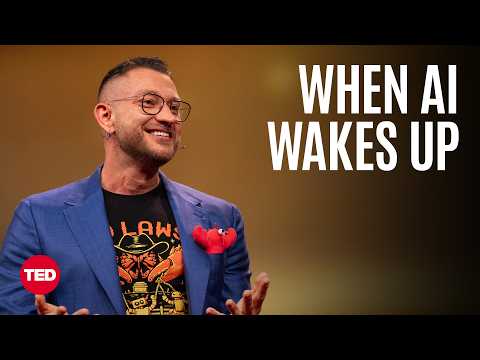
AI didn't democratize building. It gave domain experts a build channel.
From Peter Steinberger's recent keynote:
Gerhard is a 60-year-old beer sommelier in Vienna. He prompted an AI agent once. The agent ran the 90-minute brew. Temperature ramps. Hop additions. Everything.
When the beer was done, Gerhard had a problem. Too much beer, no buyers. So the agent built him a website. Then added payments. He has a real product now.
He has never written a line of code.
Most people will share this as a feel-good story about democratized building.
That is the wrong lesson for executives.
Gerhard didn't win because the bar dropped. He won because he had forty years of palate and process knowledge no system integrator could ever match. The bar dropping let his expertise finally reach a product.
That is the entire game.
For twenty years, the case for outsourcing software was technical. You needed people who could code. The barrier was real. Outsourcing looked rational.
The technical barrier just collapsed. Natural language is the programming language now. Your supply chain manager, your operations director, your customer service lead can now build directly. They already understand how value gets made in your business.
Your consultants do not. You can teach your supply chain manager AI literacy in three months. You cannot teach a consultant your supply chain in three years.
Yes, your operations director still has security reviews, integration constraints, procurement. So does the consulting partner you would hire instead. The difference is who already knows what to build.
The question is no longer whether your people are technical enough.
The question is whether you have equipped them, or whether you are still writing SOWs to Accenture.
Equipping is not a slogan. It is tools every employee can use, dedicated time inside the work week, and real problems with real deadlines. See one. Do one. Teach one.
Volkswagen spent €14 billion trying to rebuild software capability after twenty years of outsourcing it. The ID.3 launched with infotainment so unfinished that early buyers needed service appointments to fix it. Tesla updates cars overnight to add features.
The companies that outsource AI in 2026 will write the same case studies in 2030.
Gerhard got there in a weekend. Your competitors' domain experts are getting there right now. The only people not getting there are the ones whose leadership still believes capability comes from consultants.
Equip your experts. Or keep paying outsiders to learn your business on your dime.
Capability comes from doing the work. There is no contract that delivers it.
From Nothing Comes Nothing.
Source: TED Talk on Youtube youtube.com/watch?v=7rzYDM…

YouTube
English

A fan who could not afford to heat his home still bought a ticket and traveled to watch the match. Then the team he came to see underperformed.
Pep Guardiola went at his team. Not about tactics. Not about effort in the abstract. He talked about that fan. And he told his players the performance had not been worthy of him.
Most executives never make that move. Not because they cannot. They have chosen to forget the customer. Leadership becomes about them, and performance becomes about hitting some arbitrary internal metric.
Once the customer is gone, everything else follows. Standards become your preferences rather than what you owe the customer. Candor becomes your disappointment rather than what the customer deserves. Hunger becomes the pursuit of personal achievement, which is why it dies the moment you win.
That is the quiet crisis inside most successful organizations. The people who built them are no longer hungry, and the ones who joined after have nothing to be hungry for.
Pep does one thing in that speech, and it addresses all of it. He puts the customer back in the room. The standard his team has to meet, the hunger they have to carry, the way they owe each other in the 81st minute: all of it is anchored to the fan in the stand.
That is also why customer-anchored hunger does not exhaust itself. The customer's unmet needs do not disappear. There is always another fan, another user, another problem worth solving. The hunger renews itself because the customer keeps generating it.
Peter Drucker wrote it plainly in 1954: "There is only one valid definition of business purpose: to create a customer."
Amazon made Customer Obsession their number one leadership principle for exactly this reason. Customer obsession dies at the leadership level first, so it has to be engineered back in. If it depends on individual leaders remembering on their own, it will not survive a single tough quarter.
The leaders worth following do what Pep does. When performance slips, they name the customer in the room. The disappointment that matters is not theirs. It is the customer's.
So the question for any senior leader is simple: Have you shown your team that level of candor, with the fan who skipped heating named in the room?
Part of leadership is defending standards without making it about yourself.
From nothing comes nothing.
Source: Netflixsports on Instagram
English

@Mural your page is down and I am running a workshop please fix asap. Thank you!
English

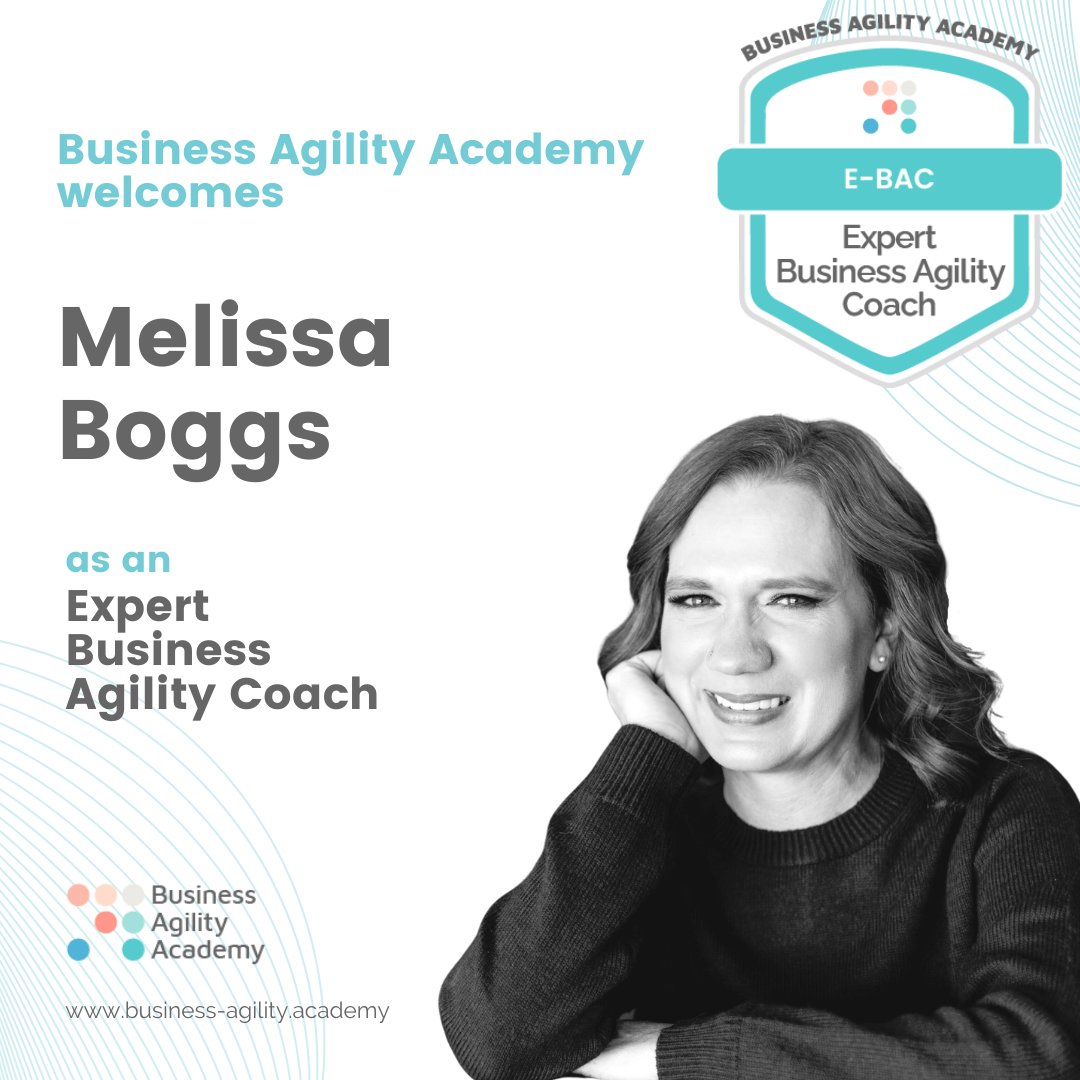
Super excited to have my dear friend @MelissaDBoggs be accredited as the very first E-BAC. Congrats Melissa!
Business Agility Academy@AgilityAcademy
@KarimHarbott and @sohrabx started @AgilityAcademy with the intention to establish more rigour in the Agile Credential space. Today, we are proud to welcome @MelissaDBoggs as our first Expert Business Agility Coach (E-BAC). Interested to learn more: business-agility.academy

English
Sohrab Salimi retweetledi

@KarimHarbott and @sohrabx started @AgilityAcademy with the intention to establish more rigour in the Agile Credential space. Today, we are proud to welcome @MelissaDBoggs as our first Expert Business Agility Coach (E-BAC). Interested to learn more: business-agility.academy

English

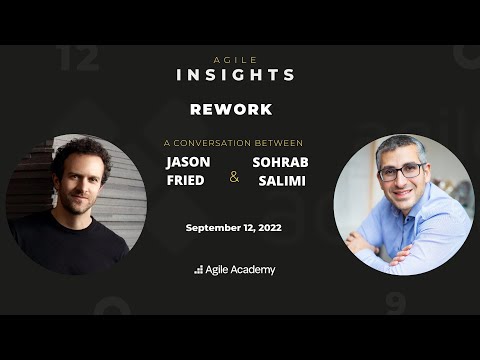
@jasonfried and I had a wonderful conversation on creating products, building companies, and leadership. You can watch the full video here: youtu.be/Pl_98I6PTqA

YouTube
English

There are 5 values in Scrum... all of them are really important. But for me one of them tops the list: #commitment.
Any Scrum team member should be committed to their team, their product, their organization, and their clients.
Which one do you value the most?

English

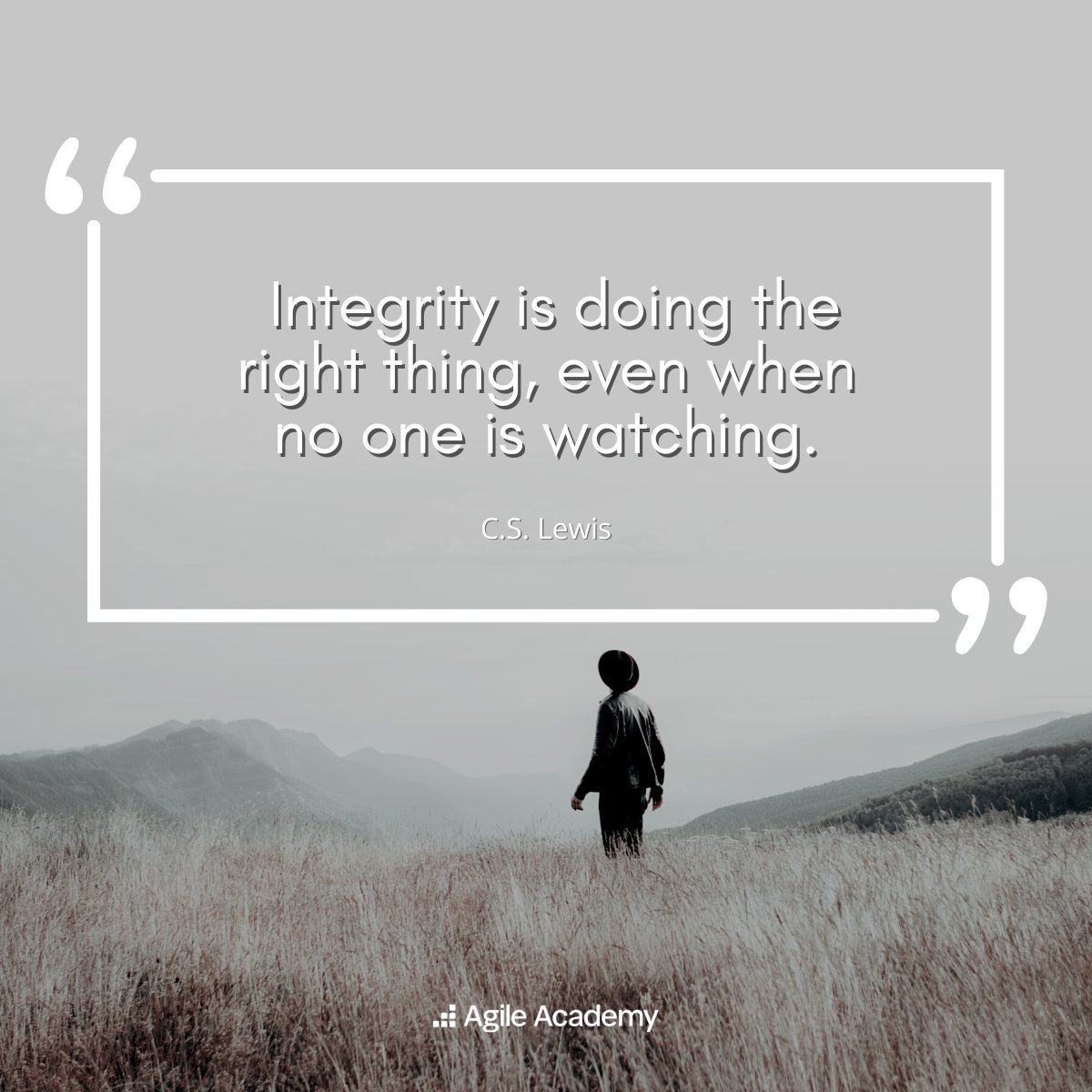
#Integrity is a big word. A lot of people value it in others, very few people would admit that they lack integrity. But do we know what integrity means?
I love this quote from C.S. Lewis as it makes integrity independent from other people's judgement.

English

Once you hire people who know what to do, give them the space to actually do things. This does not mean that you are completely out of the picture. Between micro management and laissez-faire there are many colors ;-)
#leadership #agile #management

English

@tfadell @generalmagicmov I guess the iPhone was not built for Joe Sixpack ;-) BTW: Love the book you wrote... very inspiring! Thank you!
English

3/5 The #iPhone was a painkiller to address a really big market need. There has to be a market need! Remember that! I learned the hard way that creating without a market need or society being ready doesn’t always go so well i.e. watch 🐇 @generalmagicmov
English