Dr Jamie Jasinski

34 posts

Dr Jamie Jasinski banner
Dr Jamie Jasinski

Dr Jamie Jasinski

@spaceJamieJ

Space Plasma Physicist at @NASAJPL. Planetary interactions with space plasmas.

Katılım Temmuz 2020
53 Takip Edilen94 Takipçiler
Jules
Jules@Theflyingnipple·
@spaceJamieJ Hi Jamie, just seen your talk on Uranus. I was curious, if there is a magnetic field could there be evidence of something like an aurora in Uranus atmosphere when the fields interact with solar particles?
English
1
0
0
27
Dr Jamie Jasinski retweetledi
NASA
NASA@NASA·
Scientists are mining the mysteries of Uranus. (Yeah, we said it.) Almost 40 years ago, @NASAVoyager got a close look at Uranus for the first time—but a new analysis is helping explain a few of the planet's unexplained oddities: go.nasa.gov/3UPkZrD
NASA tweet media
English
370
909
5.5K
844.7K
Dr Jamie Jasinski retweetledi
Jonathan O’Callaghan
Jonathan O’Callaghan@Astro_Jonny·
When Voyager 2 flew past Uranus in 1986, the planet's magnetosphere seemed super weird. There was no plasma, and the radiation belts were mega intense. Now we might know why, because of rare solar activity hitting the planet. Story by me @nytimes nytimes.com/2024/11/11/sci…
English
0
2
6
1.7K
Dr Jamie Jasinski retweetledi
Dr William Dunn
Dr William Dunn@astro__will·
My excellent friend @spaceJamieJ discovered that lots of Uranus's mysterious behaviour that we've talked about for decades, based on Voyager 2s flyby, happened during really extreme solar wind conditions. It's out today here: nature.com/articles/s4155… . May be some news coverage.
English
0
3
10
606
Dr Jamie Jasinski retweetledi
Nature Astronomy
Nature Astronomy@NatureAstronomy·
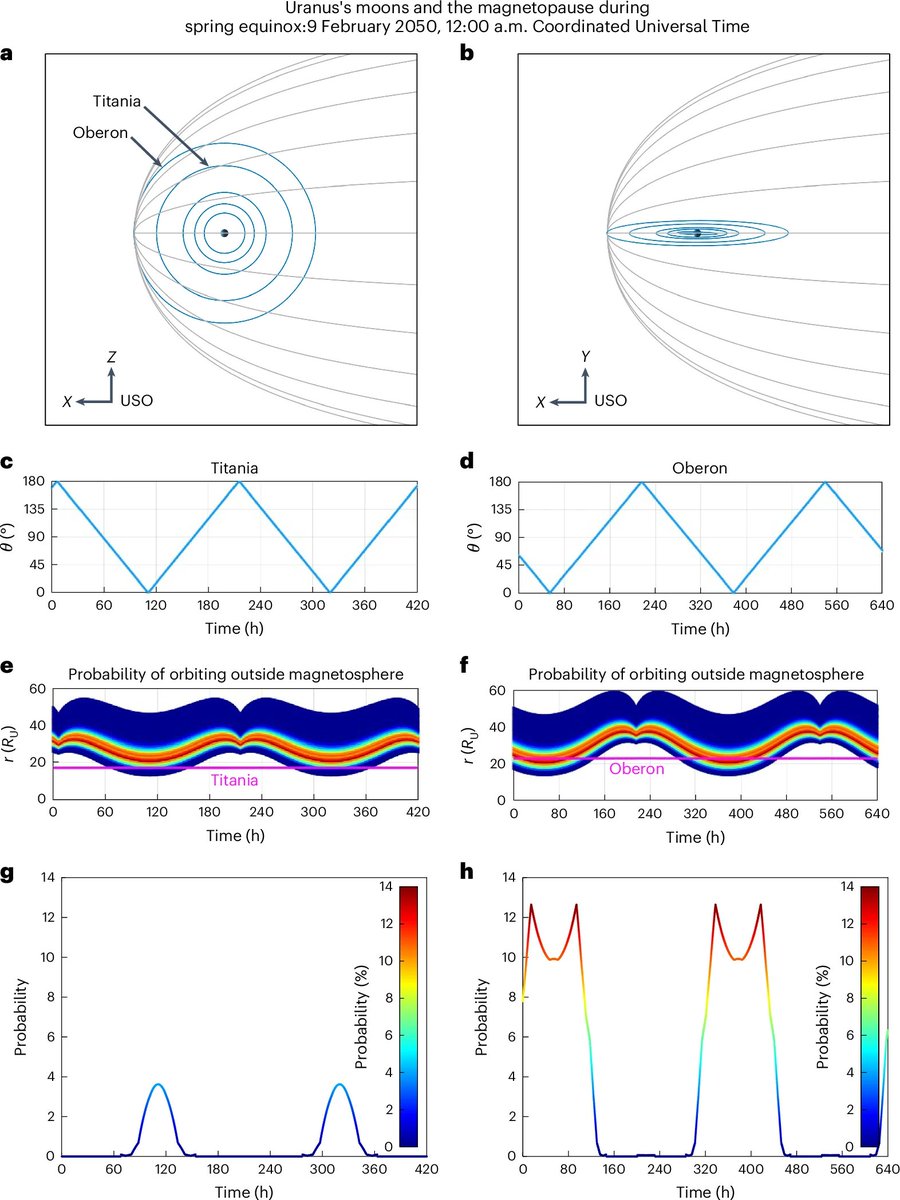
A reanalysis of the 1986 Voyager 2 flyby of Uranus shows that it occurred during an extreme compression of the planet’s magnetosphere by the solar wind. This would have had significant effects on the measurements made during the flyby. @spaceJamieJ et al.: nature.com/articles/s4155…
Nature Astronomy tweet media
English
1
34
105
5.2K
Dr Jamie Jasinski retweetledi
NASA JPL
NASA JPL@NASAJPL·
When @NASAVoyager 2 flew by Uranus in 1986, it provided our first — and, so far, only — close glimpse of this strange outer planet. Scientists are still analyzing the data from that flyby, and one researcher recently found a surprise: go.nasa.gov/3YIaLKD
English
12
45
268
28.7K
Dr Jamie Jasinski
Dr Jamie Jasinski@spaceJamieJ·
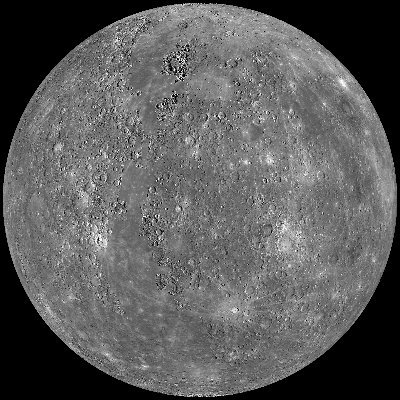
Check out my 3 talks at AGU this year: SM53C-04: Photoionization at Mercury's Exosphere SM43B-01: Reconnection at Saturn P52B-09: Neptune's pole-on magnetosphere Can I now call myself a collector of planets? 😂
English
0
0
3
0
Dr Jamie Jasinski
Dr Jamie Jasinski@spaceJamieJ·
@lx_bdr @theAGU @AGUPlanetary Pay attention to your figures. They edited my figures, which ruined the y-axes tickmarks and labels. I had to ask for them to use the original figures I submitted.
English
0
0
1
0
Alex 🪐 🐍 🏔
Alex 🪐 🐍 🏔@mrmountainsound·
@theAGU @AGUPlanetary Your journals' new proofing system sucks. It's understandable to move to automated proofing, but it needs improvements. Of the 50+ edits I had to make in my article, 90% were things which were correct in the original paper and butchered by your system.
English
3
0
1
0
Dr Jamie Jasinski
Dr Jamie Jasinski@spaceJamieJ·
@lx_bdr @theAGU @AGUPlanetary I agree....it changed a lot of things in my paper. So much time spent correcting things that were already properly formatted which they changed after acceptance. I asked to be able to see a second proof, which was ignored and they just published it....🙄
English
1
0
1
0
Prof. Jonny Nichols
Prof. Jonny Nichols@jonny_nichols·
You wouldn’t bet against this Man City team playing anyone right now
English
1
0
2
0