
Sabitlenmiş Tweet
Spartacus
98.4K posts

Spartacus
@spartacus303
If god did not exist it would be necessary to invent him. Allergic to bullshit. Pleasure not business. Carpe diem. https://t.co/4HAYzHEjo5
Location: Rattling your cage. Katılım Ocak 2011
463 Takip Edilen1.9K Takipçiler
Spartacus retweetledi
Fascinating video showing glutamate lighting up as it’s released in synapses, visualizing the neurotransmitters of the brain, made possible with the fluorescent indicator protein iGluSnFR3.
📽: Allen Institute for Neural Dynamics
English
Spartacus retweetledi

This is what a moment of learning looks like!
Process called synaptogenesis. This is the formation of new connections, known as synapses, between neurons in the brain.
English
Spartacus retweetledi
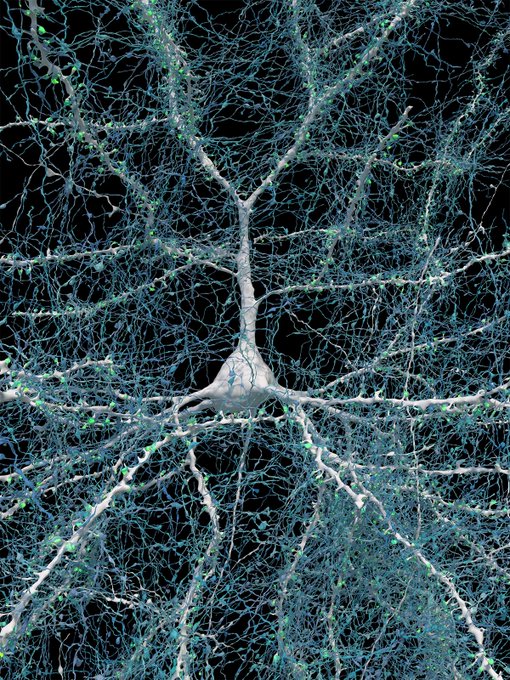
This is the most detailed view of a human brain to date.
A team of researchers used electron microscopy (EM) to image a cubic millimeter-sized piece of human brain tissue at high resolution and this is a single neuron with 5,600 of the nerve fibers that connect to it.
English
Spartacus retweetledi


Spartacus retweetledi

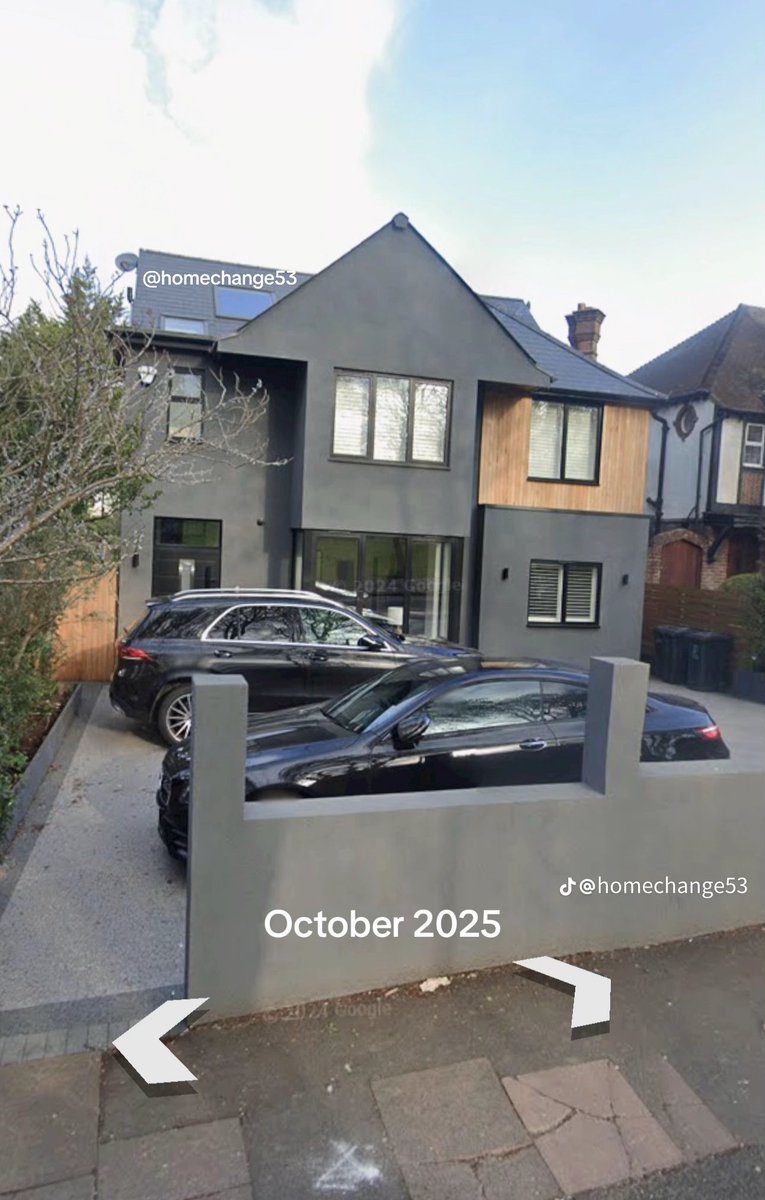
It requires relatively few interventions to make a good street into a great street.
- Ditch tarmac for stone paving (over a short stretch at least)
- Rain gardens/street trees
- Attractive streetlights
It's something we should be doing on every high street and village centre.


English
Spartacus retweetledi

He isn't serial code YPP5. He's James. And he's on his way to his new family.

English
Spartacus retweetledi

Since a lot of you wanted to see my full “Like A Prayer” performance, I just uploaded it to YouTube! The last time I recorded this song was in the late 80’s with #Madonna & Patrick Leonard! Watch it here: youtu.be/F--EftTMhyU?si… #DeadpoolAndWolverine @VancityReynolds @Madonna

YouTube
English
Epic genius.
Jonathan Moffett@jsugarfootm
To celebrate “Like A Prayer” climbing back on the Billboard charts, I’ve decided to finally redo this song which I originally recorded with producer Patrick Leonard and #Madonna in the late 80’s! #DeadpoolAndWolverine @deadpoolmovie @VancityReynolds @RealHughJackman
English
Spartacus retweetledi
“Man in the Mirror” by #MichaelJackson. One of the greatest songs ever written in the history of music.
English
Spartacus retweetledi
Honored to have been a part of this historical #madonna song! I enjoyed working on this record with my dear friend Patrick Leonard!
Culture@notgwendalupe
37 years ago, Madonna released 'Like a Prayer'
English
Spartacus retweetledi

Spartacus retweetledi

50 light-years from here is a dead star made mostly of diamond. Two-thirds the size of Earth. As heavy as the Sun. The biggest diamond ever found on our planet was 3,100 carats. This one is 10 billion trillion trillion carats.
Diamonds are absurdly common in space. Wood is the cosmic miracle.
Carbon is the 4th most common element in the universe, after hydrogen, helium, and oxygen. Squeeze it hard enough and it turns into diamond. Inside Neptune and Uranus, the pressure is so extreme that methane in their atmospheres comes apart, and the carbon falls as diamond rain. Some of these diamonds could grow up to a meter wide. Lab experiments confirmed it in 2017, and a 2024 follow-up showed it can happen on smaller, Neptune-like planets too. Those are among the most common types of planet astronomers find outside our solar system.
Take PSR J1719-1438 b. A planet 4,000 light-years from here, twice as dense as lead. As heavy as Jupiter, but less than half its size. Probably mostly crystalline carbon. A diamond planet, orbiting a tiny dead star that spins 10,000 times a minute.
And nanodiamonds are everywhere, even in meteorites that land on Earth. They make up about 3% of the carbon in those rocks.
Wood is harder. It needs lignin, a natural compound that turns soft plant tissue into hard wood. Lignin first appeared on Earth about 385 million years ago. Earth is 4.5 billion years old. Trees have only existed for 8.5% of our planet's history.
For tens of millions of years after lignin appeared, plant matter built up in Earth's swamps faster than it could fully break down. Most of the coal humans have ever burned was once those plants.
Wood needs everything: water, photosynthesis, an oxygen atmosphere, complex life, plants with veins, and finally the chemistry to build lignin. Diamonds need just two things: carbon and pressure.
So far, every place we have looked in the universe has carbon and pressure. Only one place we know of has trees.
Ulises@UlisesDavid__
🚨 : La Tierra es el único planeta conocido que tiene árboles, lo que hace que la madera sea mucho más rara que los diamantes en todo el universo.
English
Spartacus retweetledi

Terence Tao has an IQ above 200.
Youngest gold medalist in Math Olympiad history. Fields Medal winner. The greatest living mathematician by nearly any measure.
And he just said something most people aren’t ready for.
Tao: “This whole era of AI is teaching us that our idea of what intelligence is, is not really accurate.”
We spent centuries building civilization on one assumption.
That intelligence was sacred. Irreducible. Uniquely ours.
The one thing that made the entire human story make sense.
Then AI started solving things we swore only we could.
Chess. Language. Vision. Math.
And every time, we reached for the same defense.
That’s not real intelligence. It’s just tricks. Just pattern matching. Just an algorithm.
Tao: “You look at how it’s done and it doesn’t feel like intelligence.”
So we moved the line.
Again. And again. And again.
Because intelligence was supposed to feel like something. Something deep. Something we could point to and say… this is what separates us from everything else.
But AI kept solving the problems.
And that feeling never arrived.
Tao: “We were looking for some elusive, intelligent way of thinking and we don’t see it in the tools that actually solve our goals.”
Here’s what makes it worse.
Large language models work by predicting the next word. One word at a time. No grand architecture. No deep understanding. Just probability.
And it works.
Tao: “Maybe that’s actually a lot of what humans do as well.”
The greatest living mathematician just told you human thought might run on the same machinery.
Not some transcendent spark.
Pattern recognition. Prediction. One thought, one decision, one word at a time.
We built religion around intelligence. Philosophy around it. An entire species identity around it.
And a machine running probability just held up a mirror.
We didn’t lose intelligence to AI.
We just finally saw what it always was.
What haunts us isn’t that machines learned to think.
It’s that thinking was never what we needed it to be.
English
Spartacus retweetledi

Proof Life was Created.
DNA Replication requires 9 complex nano-machines working together. Without them, DNA can't replicate. If DNA can't replicate, Life can't evolve.
English
Spartacus retweetledi


Spartacus retweetledi

A pen with a built in digital watch, from the 1980s.
Technology pushed to its limit 😆

English
Spartacus retweetledi

Built around a sample from Twin Peaks, “Go” introduced Moby as one of the early breakout names in UK rave culture. Released in 1991, it became his first major hit, reaching the UK Top 10 and helping push electronic music further into the mainstream at the start of the decade.
English
Spartacus retweetledi

Spartacus retweetledi

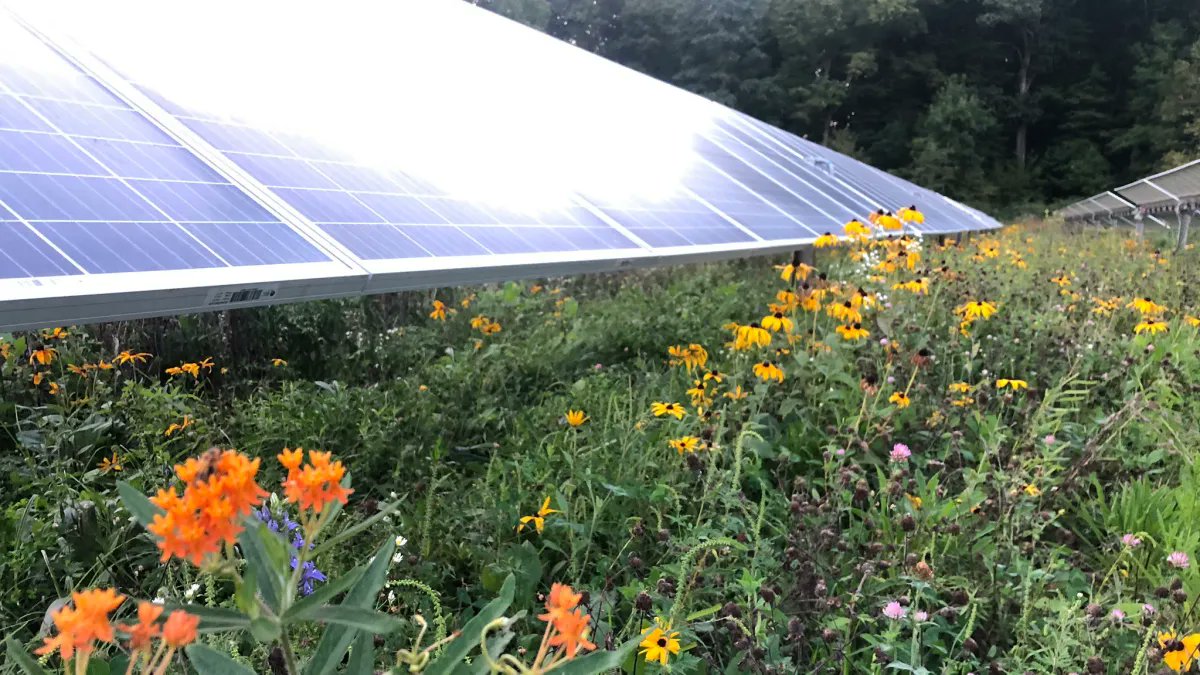
A solar farm in Minnesota planted native wildflowers between its panel rows. Five years later, total insect populations tripled. Native bees increased 20-fold.
Not only did insect populations boom, soybean fields next to the solar arrays got twice as many bee visits as fields farther away.
Two of the things we usually think of as competing turned out to reinforce each other.
One study, published in Environmental Research Letters in late 2024, tracked two utility-scale solar sites built on retired farmland in southern Minnesota, where the developer seeded native prairie species between rows of panels in 2018.
By 2022, the sites looked less like industrial energy infrastructure and more like remnant prairie.
Goldenrod soldier beetles colonized the goldenrod stands. Bumblebees nested in the soil. Monarch butterflies passed through during migration. The wildflower diversity grew sevenfold; insect diversity grew eightfold.
This matters because, like it or not, utility-scale solar is going to take up real space. The US is on track to cover roughly six million acres in panels by 2050.
The default approach is turfgrass, gravel, or herbicide-maintained bare ground, which is ecologically dead.
The Argonne study shows the alternative isn't more expensive or harder to maintain. It's just a different seed mix.


English
Spartacus retweetledi

BREAKING: The first 300 Ridglan beagles touched grass for the first time today.
They stepped outside and looked up at the sun.
Many are playful. Some are scared. All are learning the world can be safe.
Today, they are free.
English