Spree Commerce

5.9K posts

Spree Commerce banner
Spree Commerce

Spree Commerce

@spreecommerce

An Open Source eCommerce Platform for Multi-store, Multi-Tenant, Multi-Vendor, Multi-Currency, Multi-Language. B2B & B2C. API-first.

Katılım Nisan 2009
1.5K Takip Edilen2.7K Takipçiler
Sabitlenmiş Tweet
Spree Commerce
Spree Commerce@spreecommerce·
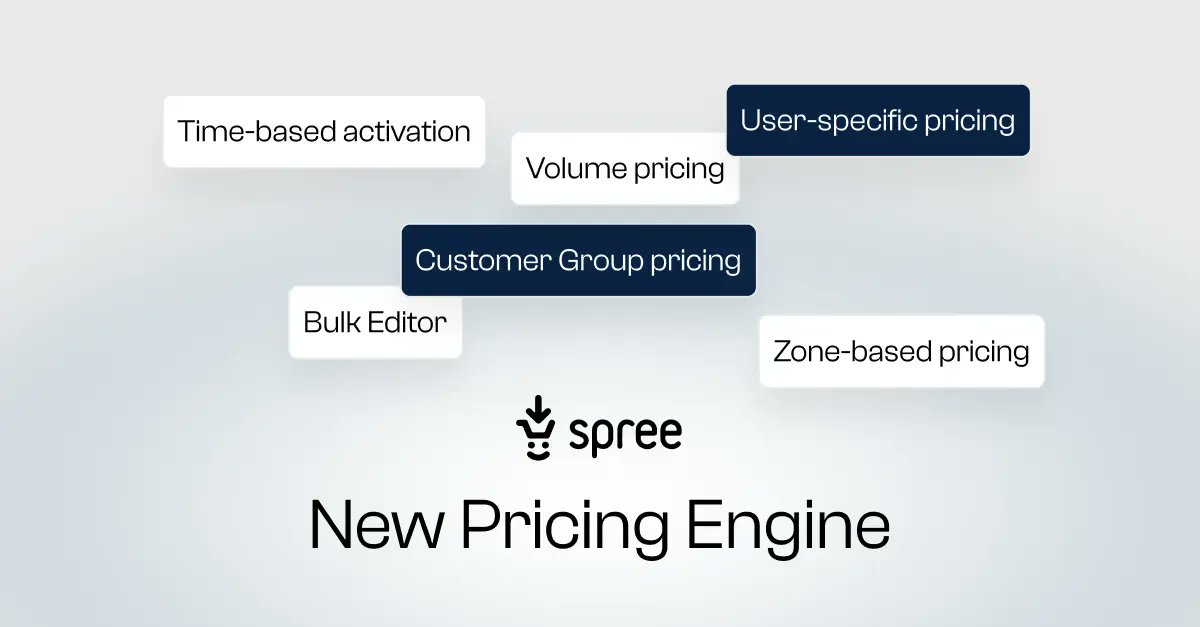
Announcing Spree Commerce 5.3 with Price Lists, Customer Groups and Events & Subscribers Engine spreecommerce.org/announcing-spr… Spree 5.3 Highlights: + New Pricing Engine (Price Lists) – B2B, Wholesale & Regional Pricing Made Easy + Customer Groups – Segmentation for Personalized Commerce + Events & Subscribers Engine – Infinite Extensibility Without Modifying Core + Order Adjustments & Order Promotions – Flexible Order Management + Admin Order & Customer Notes – Better Team Collaboration + Webhooks 2.0 with Admin UI – Enterprise-Grade Integrations + Tailwind CSS Admin Dashboard – Modern, Fast & Customizable + Admin Tables Component – Powerful Data Management for Developers What’s Next – Spree 5.4 Preview > New REST API — Built around simplicity, ease of use, and performance (around 10x faster than API v2!) > TypeScript SDK — Leverage the new API with great developer experience and type safety. > Next.js storefront starter kit — Powered by the new API and TypeScript SDK. > Multi-channel support — Build and manage a truly omnichannel experience. Stay tuned — Spree continues to push forward. Thank you for all your support for Spree Commerce open-source!
Spree Commerce tweet mediaSpree Commerce tweet mediaSpree Commerce tweet mediaSpree Commerce tweet media
English
1
2
4
534
Claude
Claude@claudeai·
Introducing Code Review, a new feature for Claude Code. When a PR opens, Claude dispatches a team of agents to hunt for bugs.
English
2.1K
5.2K
62.9K
22.7M
Spree Commerce
Spree Commerce@spreecommerce·
UPDATE about a month later: - ChatGPT’s Instant Checkout went live with 12 (twelve) Shopify merchants - As of March 2026, Instant Checkout is no more - Forrester's analyst said she was "shocked at the promises versus reality." - Take away: Commerce isn't a feature you bolt onto a chat window or a social feed. It's infrastructure.
English
0
0
0
15
Aakash Gupta
Aakash Gupta@aakashgupta·
Google just fired the opening shot in a $3 trillion protocol war. OpenAI and Stripe launched their Agentic Commerce Protocol (ACP) in September. Shopify, Etsy, Salesforce already signed on. ChatGPT’s Instant Checkout went live with over a million Shopify merchants. Three months later, Google shows up at NRF with UCP. Same retailers. Same pitch. The overlap is wild. Shopify is listed as a launch partner for BOTH protocols. So is Etsy. So is Stripe. So is Visa. So is Mastercard. This tells you everthing about how these retailers are thinking about the next decade. They’re not picking sides. They’re hedging. McKinsey projects agentic commerce could hit $3 trillion to $5 trillion globally by 2030. Morgan Stanley says $385 billion in the U.S. alone. Bain estimates 15-25% of all e-commerce will be agent-driven. The retailers see those numbers. And they see two platforms fighting to become the rails those dollars flow through. So they’re signing every term sheet that crosses their desk. Here’s where it gets interesting. Google has distribution. 2 billion Chrome users. Android. Google Pay. AI Mode in Search. The pipes to push UCP everywhere. But OpenAI has momentum. 700 million weekly ChatGPT users. Instant Checkout already live. Three month head start building merchant integrations. The protocols themselves are almost identical. Both open source. Both let merchants stay as merchant of record. Both compatible with MCP and A2A. The differentiation isn’t technical. It’s distribution. And that’s the game Google knows how to play. They’ve done this before. Android won mobile by going open when Apple went closed. Chrome won browsers by being faster and freer. Gmail won email by giving away storage. Google’s playbook is subsidize the standard, own the ecosystem. Watch for UCP to get aggressive default placement in Chrome, Android, and Google Shopping. The merchants hedging today will consolidate around a winner within 18 months. Whoever gets to 60% adoption first becomes the de facto standard. My bet is Google. They have too many distribution levers. But the real winners are the payment processors who got both sides to endorse them… Stripe, Visa, Mastercard. They’re collecting tolls no matter which protocol wins.
Meer | AI Tools & News@Meer_AIIT

Yesterday Google released The Universal Commerce Protocol (UCP). An Open-source standard that lets AI agents handle full shopping flows discovery to checkout via standardized JSON manifests and APIs. Built with Shopify, Target, Walmart, Etsy. Endorsed by 20+ partners including Stripe, Visa, Mastercard, Adyen. Compatible with A2A and MCP. Coming soon to Google AI Mode and Gemini app:

English
20
45
413
74.2K
Leonard Rodman
Leonard Rodman@RodmanAi·
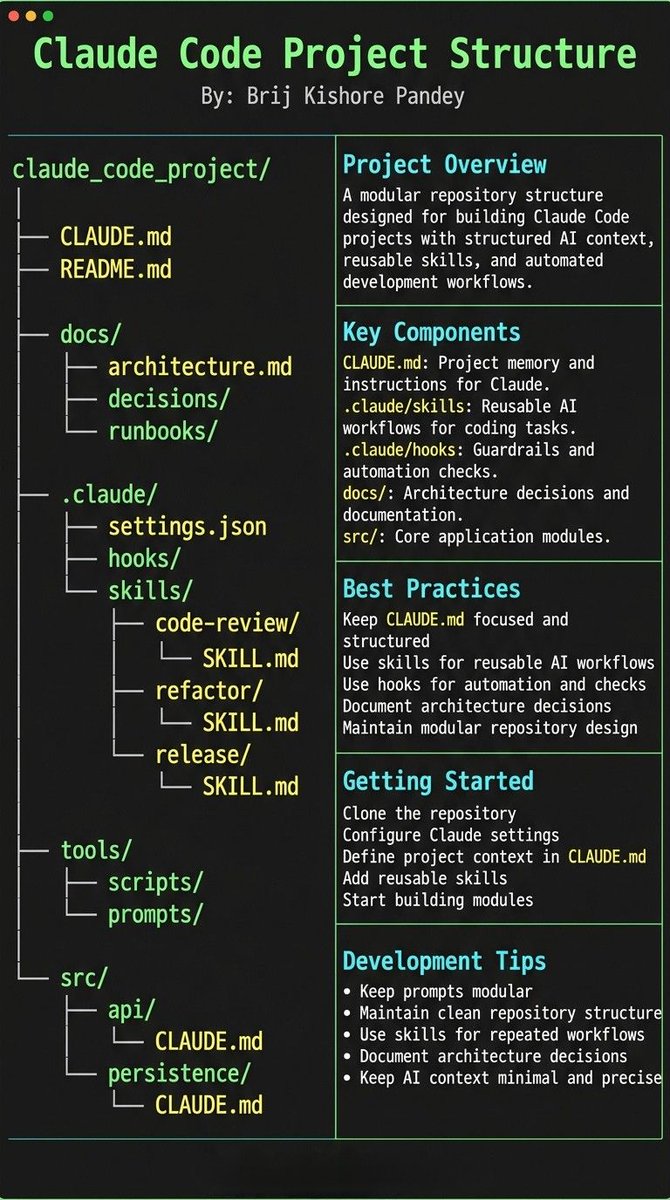
Most people treat CLAUDE.md like a prompt file. That’s the mistake. If you want Claude Code to feel like a senior engineer living inside your repo, your project needs structure. Claude needs 4 things at all times: • the why → what the system does • the map → where things live • the rules → what’s allowed / not allowed • the workflows → how work gets done I call this: The Anatomy of a Claude Code Project 👇 ━━━━━━━━━━━━━━━ 1️⃣ CLAUDE.md = Repo Memory (keep it short) This is the north star file. Not a knowledge dump. Just: • Purpose (WHY) • Repo map (WHAT) • Rules + commands (HOW) If it gets too long, the model starts missing important context. ━━━━━━━━━━━━━━━ 2️⃣ .claude/skills/ = Reusable Expert Modes Stop rewriting instructions. Turn common workflows into skills: • code review checklist • refactor playbook • release procedure • debugging flow Result: Consistency across sessions and teammates. ━━━━━━━━━━━━━━━ 3️⃣ .claude/hooks/ = Guardrails Models forget. Hooks don’t. Use them for things that must be deterministic: • run formatter after edits • run tests on core changes • block unsafe directories (auth, billing, migrations) ━━━━━━━━━━━━━━━ 4️⃣ docs/ = Progressive Context Don’t bloat prompts. Claude just needs to know where truth lives: • architecture overview • ADRs (engineering decisions) • operational runbooks ━━━━━━━━━━━━━━━ 5️⃣ Local CLAUDE.md for risky modules Put small files near sharp edges: src/auth/CLAUDE.md src/persistence/CLAUDE.md infra/CLAUDE.md Now Claude sees the gotchas exactly when it works there. ━━━━━━━━━━━━━━━ Prompting is temporary. Structure is permanent. When your repo is organized this way, Claude stops behaving like a chatbot… …and starts acting like a project-native engineer.
Leonard Rodman tweet media
English
60
166
1.1K
107.7K
David
David@dayonefoundry·
I want to open a coworking gym where you can get a set in while waiting for your claude code to finish
English
159
90
2.8K
140.1K
Spree Commerce
Spree Commerce@spreecommerce·
#eCommerce Meta tried it. Google tried it 3 times. Twitter, Pinterest, Snapchat, TikTok. Now OpenAI tried it too. All failed. Why? Every big tech company in the last decade has attempted to own the the shopping experience and checkout. Every single one failed. Here's why. Meta — 5 years, billions invested, forced merchants onto native checkout, then abandoned it entirely in 2025. Google — Shopping Express, Buy on Google, Shopping app. Three attempts, three kills. Twitter, Pinterest, Snapchat — remember buy buttons? Pinterest had 10,000 merchants. Major retailers saw fewer than 10 purchases per day. TikTok Shop — spending billions and still fighting fulfillment disasters and seller backlash. Then OpenAI. No sales tax system. No fraud detection. 4% merchant fee stacked on top of existing processing costs. Out of millions of Shopify stores, about 12 integrated with ChatGPT's Instant Checkout before the feature was killed. Forrester's analyst said she was "shocked at the promises versus reality." The market's reaction was instant. The day the news broke, Expedia surged 12%. Booking Holdings gained 8%. Wall Street was saying: AI commerce disintermediation was overblown. The pattern is always the same. Whoever processes the payment becomes the merchant of record. That's the prize that drives repeat business and data ownership. But it also means owning refunds, fraud, tax compliance, customer service. Commerce is a full-time business. Big tech wanted the data and the business. But not the complexity. Commerce isn't a feature you bolt onto a chat window or a social feed. It's infrastructure. And infrastructure demands a dedicated commerce engine — like Spree. A deep dive into every failure — with the latest OpenAI fallout — in this blog post: spreecommerce.org/commerce-is-in… #opensource #marketplace #agenticcommerce
English
1
2
2
40
Spree Commerce
Spree Commerce@spreecommerce·
OpenAI Just Blinked: Nobody Seems to Want to Shop or Sell Inside ChatGPT. Here's why... Just 6 months after announcing OpenAI's vision of customers buying anything directly inside a chatbot, the company is quietly retreating — routing purchases through integrated retailers instead. Customers wouldn't buy - they were just browsing. Only ~12 (twelve) merchants out of millions on Shopify went live. OpenAI hadn't even built sales tax collection as of February 2026. We've built commerce & marketplace infrastructure at Spree for 15 years, and none of this surprises us. Here's the part the coverage is missing: Not every product can support an AI middleman. Chatbot or marketplace, the category math is the same. It's all mapped it out in the carousel: 1) AI takes all: insurance, SaaS, travel, cars. High margins, complex comparisons. Brokers and classifieds — your days are numbered. 2) AI discovers: gifts, fashion, beauty, home decor. Great discovery engine. But the transaction still lives on the commerce platform. 3) AI too late: groceries, staples, replenishment. Amazon and Walmart already own this. There's no discovery moment for AI to insert itself into. 4) AI too expensive: electronics, appliances, commodity hardware. A 4% AI tax on a $15 HDMI cable? The math doesn't work. The real question was never "Is AI shopping the future?" It was always "Which products can afford it?" OpenAI tried to own the full checkout — inventory, tax, fraud, payments, shipping, returns — and hit a wall on the basics. Commerce is infrastructure, not a chat feature. The next wave won't be chatbots replacing storefronts. It'll be AI-powered marketplaces built on flexible, open infrastructure — where the merchant controls the integration, the data, and the economics. If you're running the margin math on your own categories, we'd love to hear what you're seeing. Save this for your next platform strategy discussion. #ecommerce #opensource #agenticcommerce #marketplace #ai
English
0
2
2
73
Spree Commerce
Spree Commerce@spreecommerce·
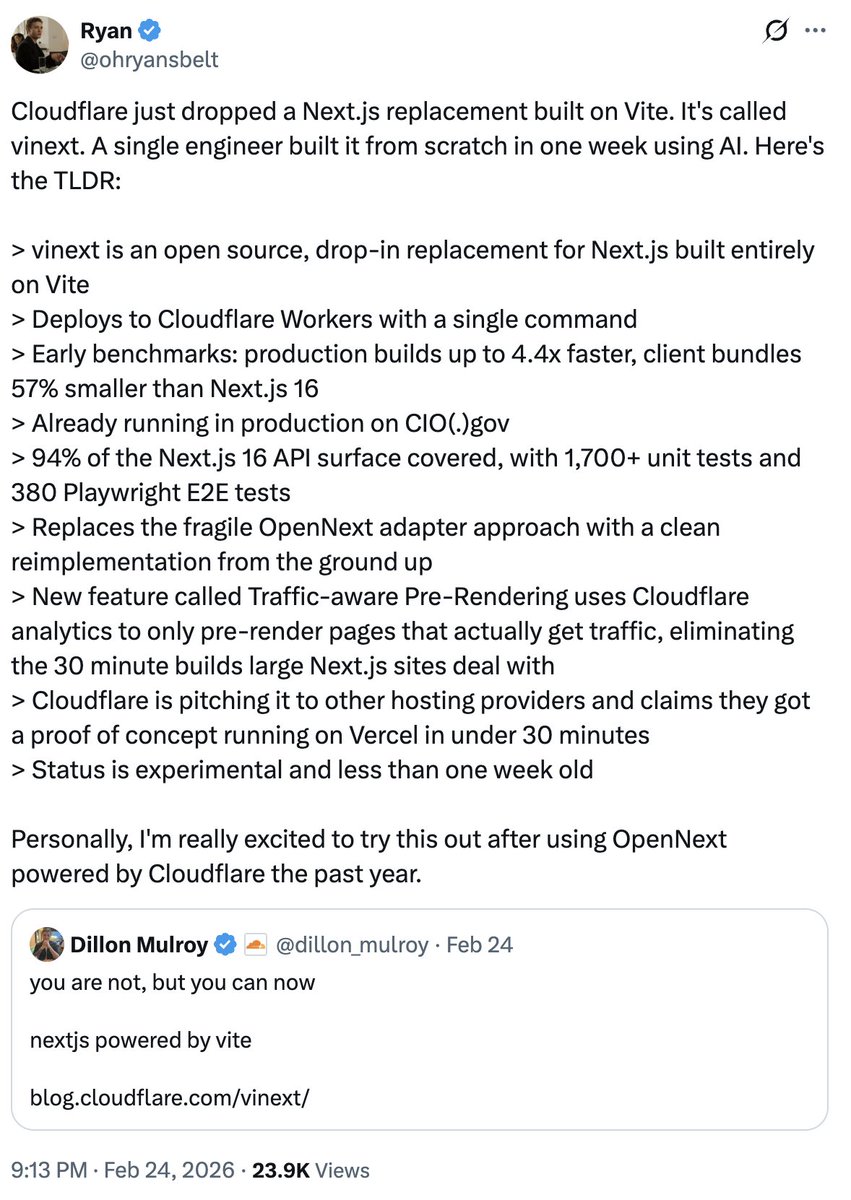
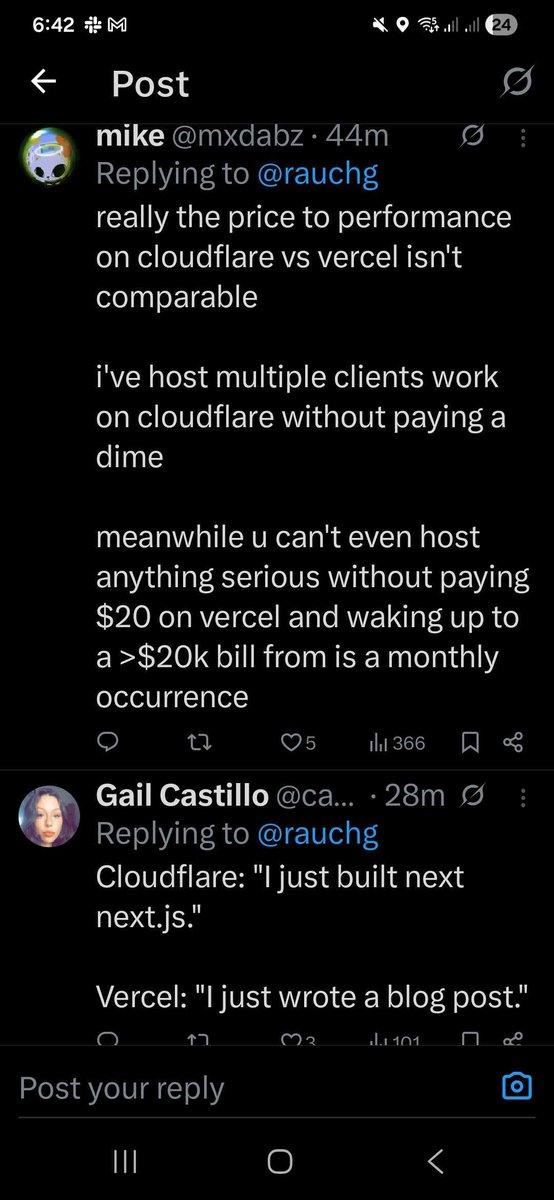
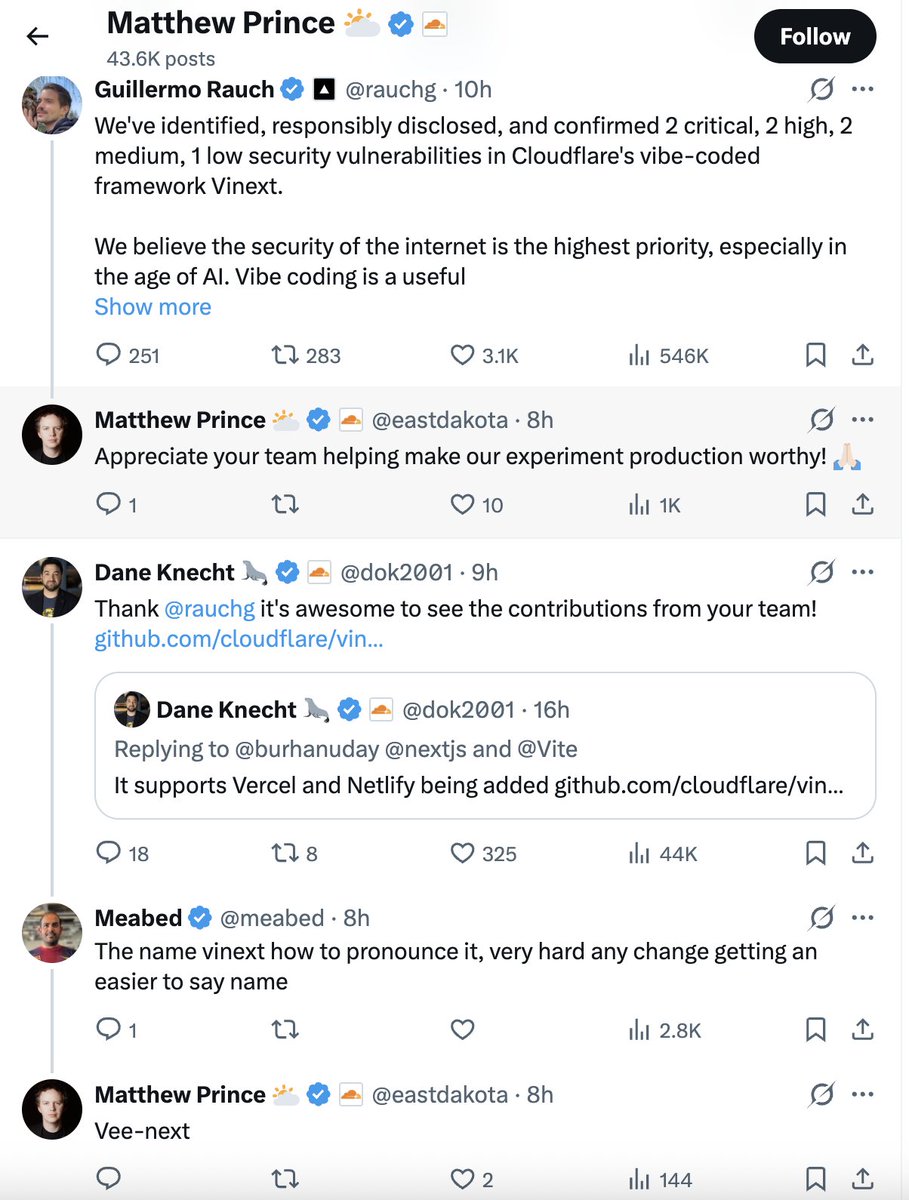
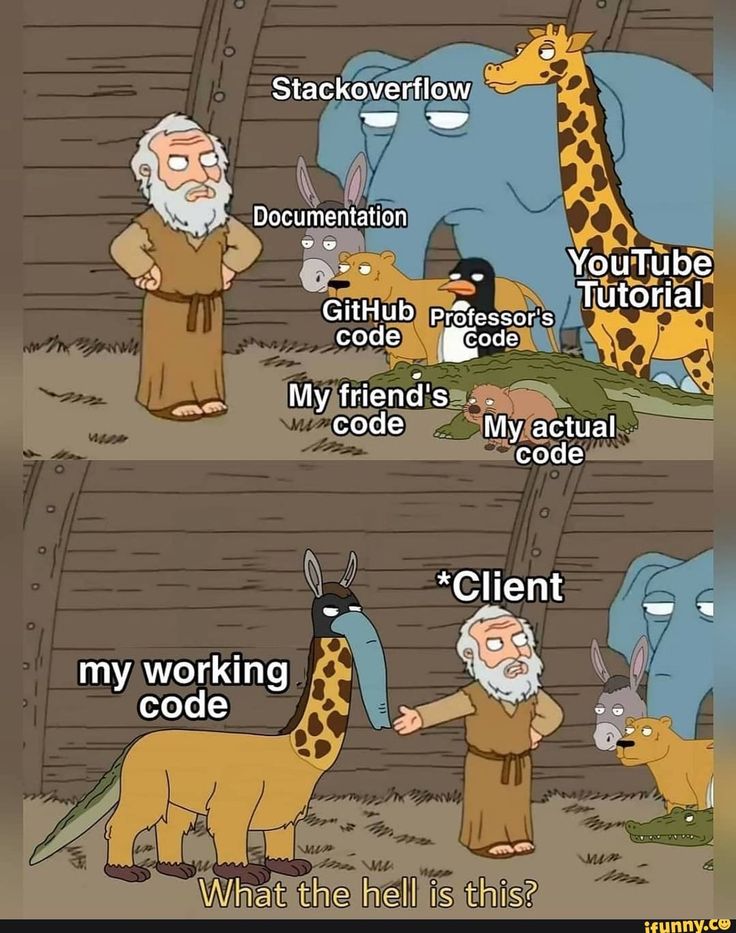
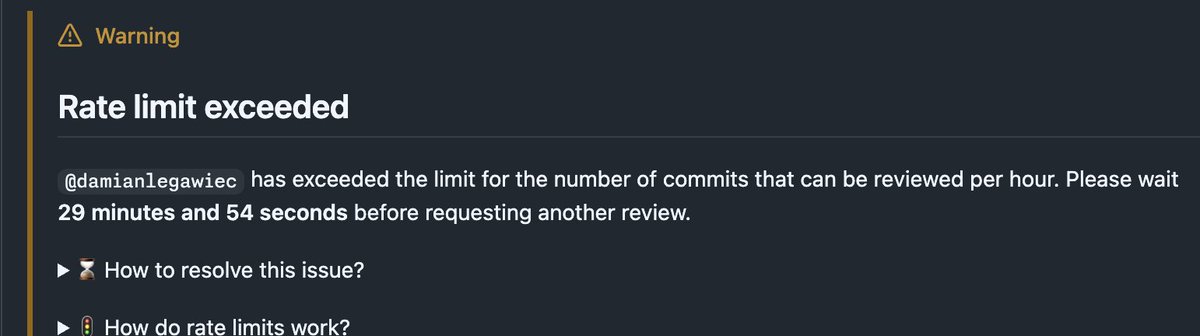
In case you've missed the drama: Next.j vs vinext. Vercel vs Cloudflare. Winners: Claude and all the frontend dev teams paying $$$ for Vercel hosting. Here's what happened: Cloudflare just dropped vinext, an open-source replacement for Next.js - the leading frontend dev framework used by the likes of Nike, TikTok, Hulu, Notion, Target. One engineer. One week. Built with AI. Already running in production on CIO.gov. The benchmarks are hard to ignore - 4.4x faster production builds, 57% smaller client bundles, and 94% of the Next.js 16 API surface covered out of the gate. Vercel's founder Guillermo Rauch fired back immediately - first with a "Migrate to Vercel from Cloudflare" marketing page, then by disclosing seven security vulnerabilities in vinext, including two critical ones. It's a full-blown infrastructure war now. Here's the context that makes this matter: Next.js became the industry standard for frontend development. But Next.js and Vercel are deeply intertwined. The framework is open-source, but the deployment experience is optimized for Vercel's platform. That created a soft vendor lock-in that's been quietly frustrating frontend teams for years. And Vercel isn't cheap. Developers openly talk about waking up to surprise $20K+ monthly bills. Meanwhile, Cloudflare offers comparable hosting for free or near-free. As one commenter put it: the price-to-performance gap isn't even comparable. What vinext signals is bigger than one framework. It means the era of frontend hosting monopolies may be ending. Competition is coming - and it's coming fast, built by single engineers using AI tools like Claude. Will vinext dethrone Next.js? Too early to say. It's experimental and less than a week old. But the pressure it puts on Vercel to compete on price, openness, and developer freedom? That's already real. Every frontend team benefits when there's genuine competition in the hosting layer. Lower prices. More deployment options. Less lock-in. The framework wars are back, and this time the developers might actually win. One thing you can be sure of - Spree will support any TypeScript frontend through its high-performance API and SDKs. Whether you're building with Next.js today using our pre-built starter kit, or exploring vinext, Nuxt, SvelteKit, or whatever comes next - Spree's headless architecture means your commerce backend just works. Pick your framework. Pick your hosting provider. Your storefront connects to the same battle-tested engine underneath. That's what an API-first, open-source eCommerce platform should give you: freedom to choose your stack without re-platforming your business. If you're building a storefront on any modern frontend framework - or rethinking your commerce stack in light of all this - let's connect. #ecommerce #opensource #nextjs #vercel #cloudflare #vinext #frontend #headlesscommerce #webdev
Spree Commerce tweet mediaSpree Commerce tweet mediaSpree Commerce tweet mediaSpree Commerce tweet media
English
0
2
4
788
Spree Commerce
Spree Commerce@spreecommerce·
The dirty secret of SaaS eCommerce: the moment your business model evolves, you're either migrating or duct-taping. Most B2B companies think adding a D2C channel means building a second store. It doesn't — unless your platform forces it. A manufacturer wants to sell direct to consumers alongside their wholesale accounts. A distributor wants to open a branded storefront without disrupting the B2B portal their buyers depend on. On most platforms, that's two separate instances, two product catalogs, two checkout flows, and twice the infrastructure cost. On Spree, it's one platform. Multiple stores. All your products, customers, orders under one roof. Your B2B buyers still log in and see their negotiated prices. Your D2C customers get the consumer-grade experience they expect. Same product catalog. (Different price lists, shipping costs and so on.) Same order engine. Same team managing it all. B2B wholesale? Native. D2C storefront? Native. Multi-store across both? Native. Not plugins. Not duct-taped add-ons. First-party modules that compose together on a single open-source foundation. The businesses winning right now aren't the ones choosing between B2B and D2C — they're the ones running both without doubling their infrastructure. If you're exploring how to add D2C to your B2B operation (or the other way around), let's connect — we'd love to hear what you're building. We recorded a short video walkthrough and wrote a couple of deep dives on this: 1) Why B2B companies are adding D2C on the same platform: spreecommerce.org/why-b2b-compan… 2) Multi-store eCommerce — how B2B businesses are expanding into B2C without doubling their infrastructure: spreecommerce.org/multi-store-ec… #ecommerce #opensource #B2B #D2C #multistore #composablecommerce #headlesscommerce #digitaltransformation
English
1
2
4
100
Spree Commerce
Spree Commerce@spreecommerce·
"We've outgrown our eCommerce platform." We hear this from enterprise teams every time we speak. And it's never about traffic or SKU count. It's about business complexity. They need B2B with customer-specific pricing, approval workflows, and gated storefronts. They need a marketplace with automated vendor onboarding. They need multi-tenant white-label stores for their distribution network. They need multi-region with localized tax, currency, and shipping rules. And every SaaS platform tells them the same thing: "There's a plugin for that." So they evaluate Shopify Plus. BigCommerce Enterprise. And they realize every complex requirement means another third-party app. Someone else's code. Someone else's roadmap. Someone else's breaking change on a Friday afternoon. That's not enterprise-grade. That's a house of cards with a monthly invoice. We built Spree Commerce Enterprise Edition for exactly these projects. B2B wholesale with buyer organizations and price lists? Native. Multi-vendor marketplace with automated vendor sync? Native. Multi-tenant SaaS with hundreds of independent stores? Native. Multi-store, multi-region, multi-currency? Native. First-party modules. Same team. Same codebase. Same enterprise support. And here's what changes everything: you can combine them. Marketplace + multi-tenant white-label stores for your top vendors. B2B wholesale + DTC on the same platform. Franchise network + international expansion with localized pricing and payment methods. One product catalog. One order engine. One admin dashboard. No re-platforming when the business evolves. Deploy on your infrastructure. Own your data. Security aligned with SOC 2 Type 2 and ISO/IEC 27001. And a dedicated go-live process with the Spree engineers who built the platform. If you're scoping a new enterprise commerce project, we recorded a video walkthrough and wrote a deep dive on exactly how this works: spreecommerce.org/spree-commerce… Let's connect — We'd love to hear what you're building. #enterprise #ecommerce #opensource #B2B #marketplace #API #composablecommerce #headless
English
0
2
4
150
Spree Commerce
Spree Commerce@spreecommerce·
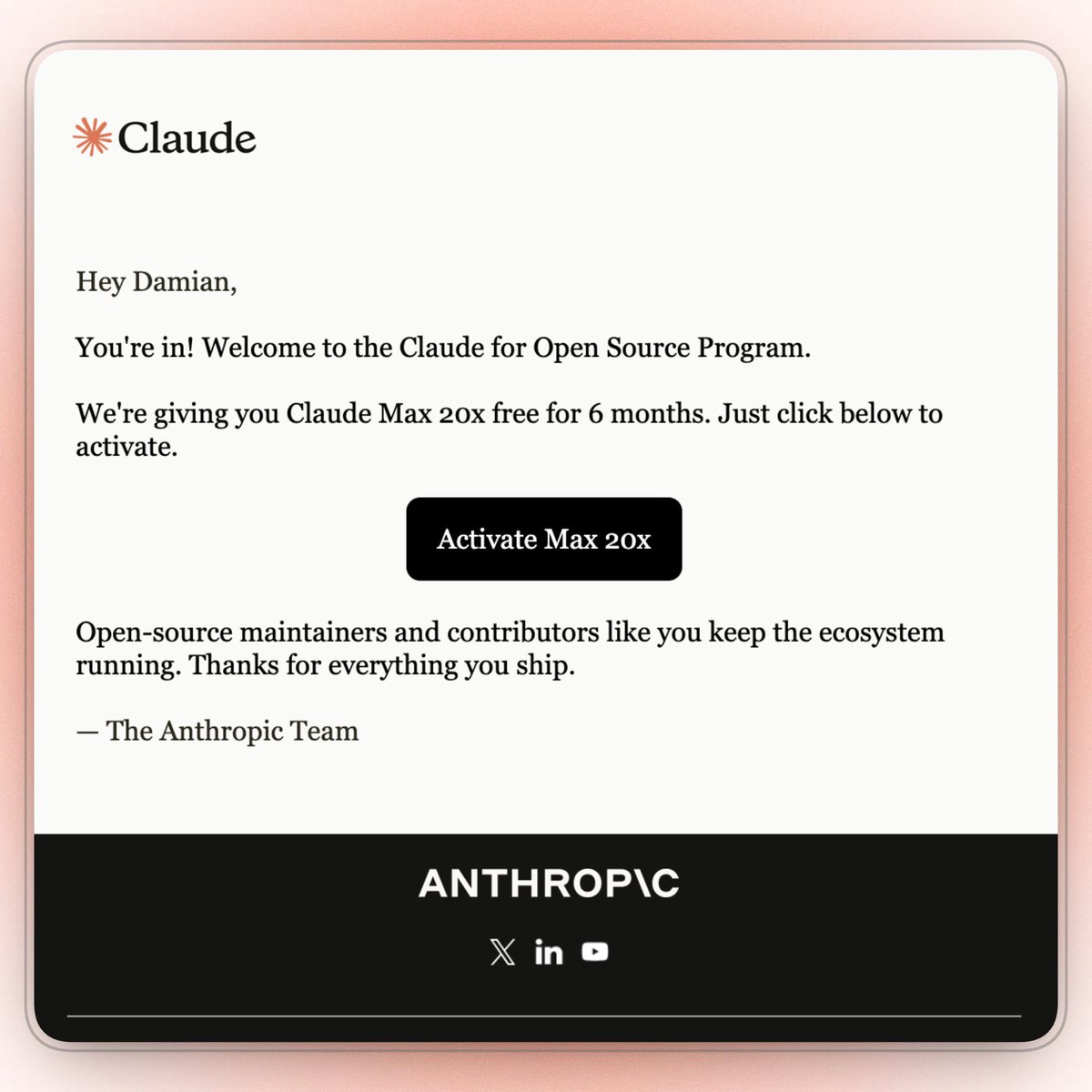
Kleenex. Post-it Note. Band-Aid. Google. Velcro. And now... Claude. Some products become so dominant they replace the entire category name. We don't search the internet — we Google it. We don't use adhesive bandages — we reach for a Band-Aid. These are called proprietary eponyms — when a single brand becomes shorthand for every product like it. Claude became synonymous with AI-aided coding in just over a year. And we've gone all in on making Spree Commerce the most AI-friendly open-source ecommerce platform out there. Here's what we've shipped: 🔹 A comprehensive CLAUDE.md in the Spree repo that AI coding agents read automatically — teaching them Spree's architecture, conventions, and best practices so the code they generate is clean, idiomatic, and upgrade-safe. 🔹 A Documentation MCP Server that gives AI tools like Claude Code direct access to the entire Spree documentation. One URL, 30 seconds to set up. Why does this matter? Because AI-assisted development isn't just about speed — it's about building on a solid foundation without accumulating tech debt. When your AI agent understands Spree's event system, dependency injection, and serialization patterns, it writes code the way a senior Spree developer would. That means faster delivery, smoother upgrades, and fewer code review cycles. The result: dramatically shorter time-to-value for every Spree project. Deep dive blog post: spreecommerce.org/ship-faster-wi… If that's what you're looking for your eCommerce business, let me know and let's jump on a call to discuss. #SpreeCommerce #AI #Claude #OpenSource #Ecommerce #DeveloperTools #MCP #AIAssistedDevelopment
Spree Commerce tweet media
English
0
1
1
117
Spree Commerce
Spree Commerce@spreecommerce·
Your in-house developer knows more about your business than any SaaS vendor ever will. Every bottleneck, every workaround, every edge case. That used to not matter much. Building custom eCommerce in-house addressing those issues was slow and expensive. Not anymore. AI coding assistants just flipped the equation. Claude Code, Cursor, Copilot — they turn domain knowledge into production code at a speed that was impossible two years ago. The person who knows why your B2B checkout needs a PO field triggering an ERP approval workflow? They can now build it themselves. In hours, not sprints. But AI-assisted development is only as good as the foundation underneath it. That's why we built Spree Commerce to be API-first, open-source, and AI-ready from the ground up. OpenAPI-documented Storefront and Platform APIs. An AGENTS.md file for coding agents. A dedicated MCP server so AI tools query real documentation — not hallucinated endpoints. Your developer tells Claude "add a webhook that syncs orders to our WMS" — and it generates working code grounded in Spree's actual architecture. Here's what makes Spree different from every SaaS platform out there: B2B wholesale? Native. Multi-vendor marketplace? Native. Multi-tenant SaaS? Native. Multi-store, multi-region, digital products? All native. Not plugins. Not duct-taped add-ons. First-party modules you can combine as your business evolves. DTC today. Add B2B next quarter. Open a marketplace next year. Expand internationally the year after. One platform. No re-platforming. And for teams that are stronger on backend than frontend — tools like Vercel's v0 generate production-ready Next.js storefronts from a conversation. Connect them to Spree's API. Deploy to Vercel. Iterate with AI. No SaaS will ever be as tailored to your business as what your own team can build on open-source infrastructure. The tools are ready. The platform is ready. If you're building something that doesn't fit neatly into a SaaS eCommerce template, let's connect — I'd love to hear what you're working on. AI-Aided In-House Development of Shopping Experiences Using Spree Open-Source eCommerce API and Next.js: spreecommerce.org/ai-aided-in-ho… #ecommerce #opensource #AI #agenticdev #B2B #marketplace #nextjs #composablecommerce
English
0
2
2
59
Spree Commerce
Spree Commerce@spreecommerce·
The biggest lie in eCommerce is that "there's an app for that." Here's what actually happens. You launch a DTC store. It works. Then you add subscriptions — now you need a plugin. You add wholesale — now you need a B2B plugin. You open a marketplace — another plugin. You expand internationally — more plugins, more configuration, more things that break at 2am. What started as a lean stack becomes a duct-taped patchwork of third-party apps you don't own, can't audit, and can't control. That's not flexibility. That's technical debt marketed as an ecosystem. We built Spree Commerce to work differently. B2B wholesale? Native. Multi-vendor marketplace? Native. Multi-tenant SaaS? Native. Multi-region, multi-store, digital products? All native. Not plugins. Not community add-ons maintained by a stranger. First-party modules built by the same team, tested against the same codebase, covered by the same enterprise support. Here's the real unlock: You can combine them. DTC + B2B wholesale on the same platform. Marketplace + multi-tenant white-label stores for your top vendors. Franchise network + international expansion with localized pricing, tax rules, and payment methods. One platform. One product catalog. One order engine. No re-platforming. That's what future-proofing your eCommerce stack actually looks like. If that sounds like where your business is headed, let's connect — I'd love to explore what you're building. Here's a deep dive on this: spreecommerce.org/future-proof-y… #enterprise #ecommerce #opensource #B2B #marketplace #API #composablecommerce #headless
Spree Commerce tweet media
English
0
2
2
88
Spree Commerce
Spree Commerce@spreecommerce·
January 2026 was a breakthrough month for software. And most people missed it. Incumbents toppling. "Buy vs Build" equation flipped. SaaS tax is no more. It's time to build! Claude Code now authors 4% of all public GitHub commits — up 42,896x in just 13 months. It'll hit 20%+ by year-end - SemiAnalysis projects. Software incumbents are feeling the heat. The sector lost $950 billion in market value since late January. ServiceNow down 28%. Salesforce down 26%. Intuit down 34%. The worst valuation compression since the dot-com bust. Why? AI isn't a feature anymore. It's a structural threat to SaaS services. But here's the part nobody's talking about. Ambitious CTOs are quietly delivering more product than ever before. Agent swarms working round the clock. Release velocity never seen in the history of software. Claude Code is 10x-ing deep tech know-how and hard-earned experience. It's a force multiplier that, in the hands of an experienced engineering leader, changes everything. And that levels the playing field for product teams with the vision to seize this moment. This is exactly what we've been doing at Spree. Spree 5 has shipped three major releases back to back — new Pricing Engine, deeper customization, enterprise-grade features — and the upcoming ones are even more pivotal. Spree is a purpose-built commerce platform for complex business models with native support for each — and all of them combined: B2B commerce. Multi-store. Multi-region. Multi-vendor marketplace. Multi-tenant. No bolt-ons. No layer cake. No patchwork of plugins duct-taped together. One platform that lets you combine these to match your exact business model. That's the unlock. Business model evolution like no other platform enables. If you're a CTO or founder rethinking your commerce stack — check out Spree and let's jump on a call. We'd love to show you why Spree might be the right fit for where your business is heading. #ecommerce #opensource #AI #b2bcommerce #marketplace #multiregion #spreecommerce
Spree Commerce tweet media
English
0
2
2
125
Spree Commerce
Spree Commerce@spreecommerce·
This is AI-xciting 😃 Spree Commerce 5.2 introduces a set of eCommerce developer tools, including AI integrations for @cursor_ai and @claudeai to streamline agentic coding workflows. This helps eCommerce development teams: 🎯 Get more accurate AI-generated code 🔁 Reduce inconsistencies and rewrites 🛠️ Keep codebases easier to maintain over time When combined with generators and automated tests, AI becomes a productivity aid rather than a source of technical debt. Learn more about how Spree boosts AI-supported #eCommerce development here: spreecommerce.org/developer-tool…
English
2
2
2
102
Spree Commerce
Spree Commerce@spreecommerce·
🧩 Metafields for eCommerce - for advanced filtering, search, comparisons, AI-driven recommendations, SEO and AI chat or shopping discoverability. With Spree Commerce 5.2 open-source release, metafields allow you to extend any model (eg. Products, Variants, Categories, Customers, Orders, Stores, Vendors) with custom attributes - without asking developers for help. These attributes can then drive: - Filter menus (e.g., “Show oak tables only”) - PDP detail sections - Product comparison or search tools - AI-driven recommendations (“Similar styles in walnut”) Read more about examples for 🪑 Furniture & Home Decor,👗 Fashion & Apparel, 🧪 B2B Industrial, Electronics, Supplies, 🏬 Marketplaces: spreecommerce.org/metafields-any…
English
2
2
5
77
Spree Commerce
Spree Commerce@spreecommerce·
Announcing Spree 5.2 — Faster Development, Deeper Customization & Enterprise-Ready Workflows spreecommerce.org/announcing-spr… ✨Spree 5.2 highlights: 💻Plenty of major developer-focused improvements: AI Coding Tool Integrations, Spree Generators, New Spree Installer CLI, Tailwind 4 in Storefront, Admin SDK Enhancements ℹ️Metafields allow you to extend Spree models (products, variants, customers, orders, stores, etc.) with custom structured data ⏩CSV importer for easier bulk catalog management 🌍Store Policies - a flexible new system for creating and managing store policies with multiple language translations for multi-region eCommerce 🎁Product Details Page (PDP) 2.0 - now uses the Page Builder for full drag-and-drop customization 📧Newsletter Subscribers - Spree now tracks newsletter signups natively and syncs them with Klaviyo Spree 5.2 continues the momentum of the biggest Spree release ever — Spree 5 — focusing heavily on developer experience, customization capabilities, and enterprise-level workflows. Curious what’s coming in Spree 5.3? It’s really exciting 🚀 Read the full announcement here: spreecommerce.org/announcing-spr… Thank you for supporting Spree Commerce open-source! ❤️
English
0
1
3
87