Springbok Finance
84 posts

Springbok Finance
@springbok_fin
Thematic research and stock deep dives. Finding outliers in a sea of noise. Join us at Substack for free! 👇


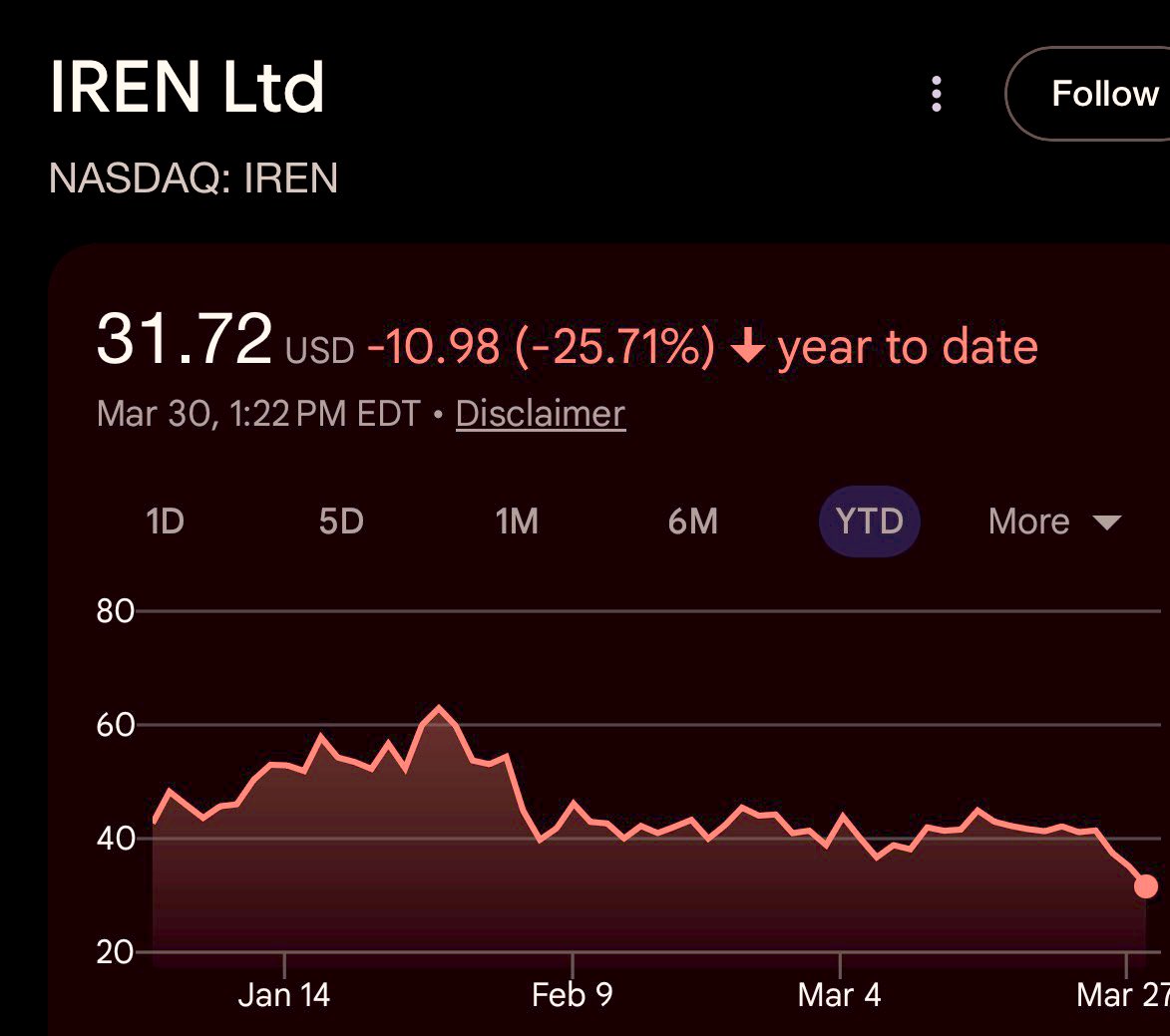
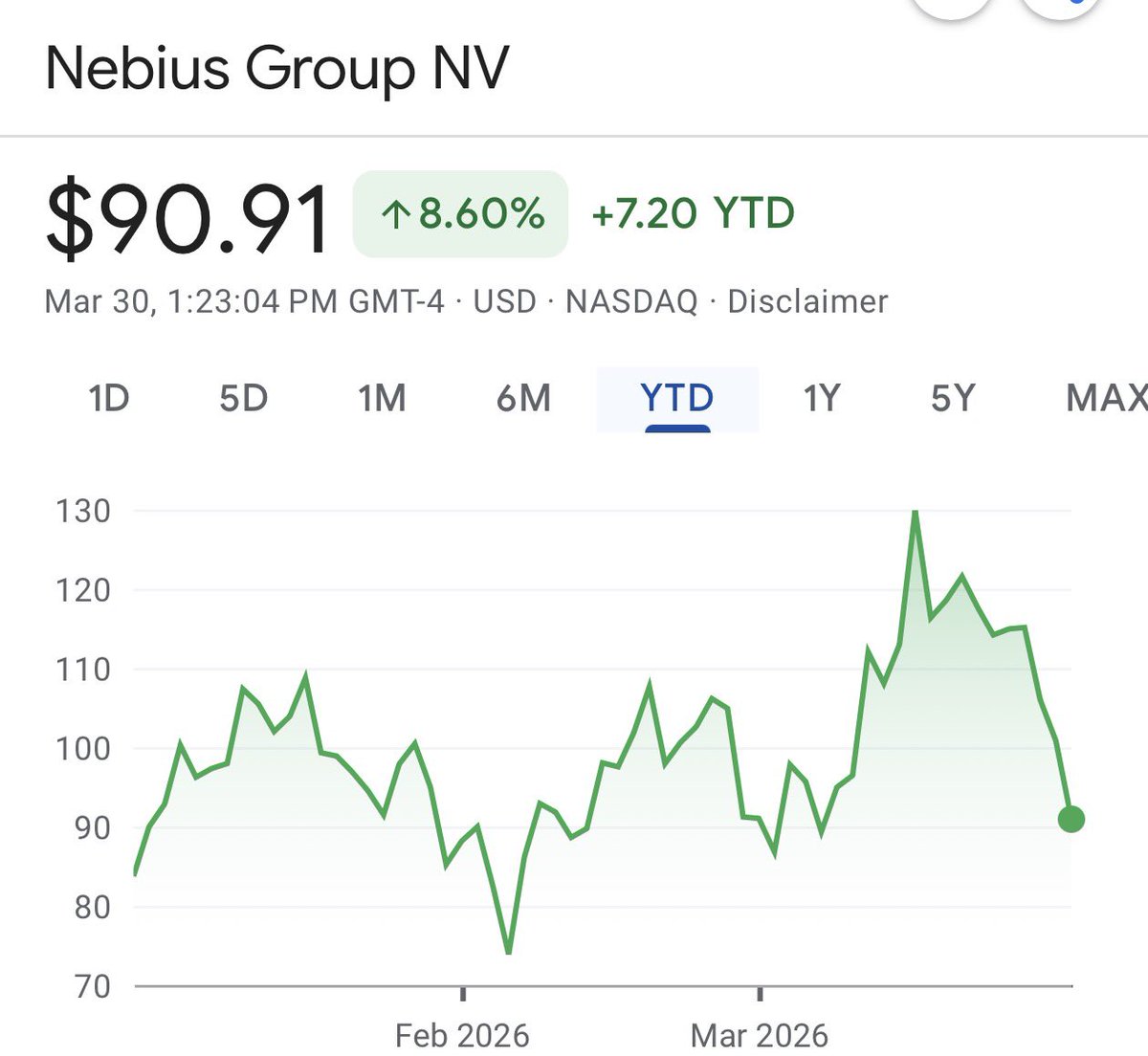
$IREN filed to dilute $6,000,000,000 at a $11.7B MC. That is not noise. This is Iren's way to monetize their 4.5GW capacity by selling all those new shares onto the open market. If you want some history on how this turns out: Look at $BKKT that crashed 99% with Mike and $IREN board of directors history with excessive ATMs. Or his recent company $ASST. It’s accretive to the company and executives: Because it wipes out all retail shareholders and they can always issue SBC. So they don’t actually care what stock price it needs to be at to sell. After they’re finished, they have $6B in new cash to use for scaling without paying interest. But the reason why convertible notes with interest, and $NVDA funding balance sheets is much better for retail capital: Is because it doesn’t wipe out retail equity to achieve this. Because at this point $IREN looks like the $AMC of datacenters with a dwindling moat, and looming $6B in shares sold into the open market. Reason I post about $IREN is because - people dismiss a $6B ATM as “Noise” - it’s one of the most popular retail “buy the dip” companies that they’re buying into a $6B dilution machine - people still don’t understand the risk at all. - the amount they have now is not enough to finance GPUs/GW capacity monetization. - they likely will have to use the ATM, it’s not “optionality” Again: I have zero positions in the company. I’m just warning retail investors that this ATM structurally wipes out your equity appreciation by how structural mechanics of $6B+ ATMs work. Because $IREN likely needs to sell new shares at any price to monetize their GW, otherwise there would be zero need to file it. Executives actually don't need to care because they can make up for stock price dropping by issuing SBC like $SNAP. If you have to wonder if your equity gets wiped out from an excessive ATM: There are better longs out there than $IREN.


I just bought ~.5%-1% of $SIVE as a company. I said their future CW laser chokepoint is grossly mispriced. And I put my money where my mouth is. Especially when they're the confirmed light source for Jabil, $MRVL Celestial, O-Net, and other hyperscalers.


DRAM prices have begun rolling over. $MU earnings in 7 days will be the largest in its history, but guidance could disappoint. This may be the start of the AI bubble imploding like the dot-com bubble in 2000.


👀 $INTC $AMD


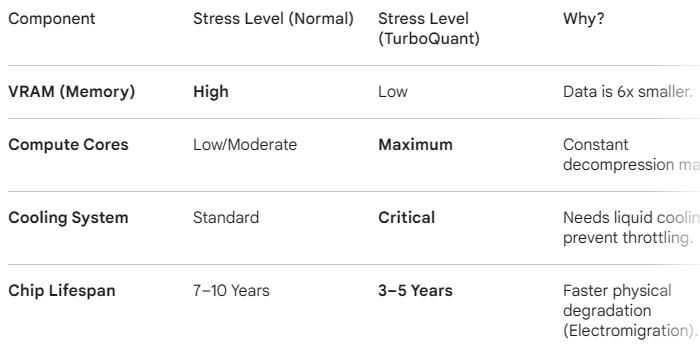
$MU $SNDK Let me expose the REAL downsides of Google TurboQuant Compression for you: Google's TurboQuant has big downsides. It uses more GPU power and energy. The bill shows up in four places: power, latency, logic, and quotas. GPU Power. The compression doesn't eliminate compute, it shifts it. Your GPU has to do extra work to pack and unpack vectors on every single read. Net result: higher energy consumption per inference, not lower. Latency. Saving VRAM sounds great until you see the Time to First Token spike. Unlike raw 16-bit memory where the GPU just reads data, TurboQuant requires mathematical transformations before the model can generate a single word. Gemini 3.1 Pro users are already reporting 60-90 second thinking loops on simple queries. It's not stuck. It's decompressing. Streaming. Text no longer flows word by word. Decompression happens in chunks. The UI freezes for 10 seconds, then dumps 200 words at once. Conversational feel is gone. Logic. TurboQuant is lossless for retrieval, not for reasoning. In complex coding or math, 3-bit quantization loses the subtle data spikes that represent edge-case logic. Great at summarizing a 100-page PDF. Hallucinate a library name in a Python script because that token's precision was compressed away. Quotas. Deep Thinking mode consumes more internal compute cycles, not less. Users are hitting quota limits after three messages. Some are getting 24-hour lockouts. No free lunch.