Sid Roberts, MD

1.5K posts

Sid Roberts, MD banner
Sid Roberts, MD

Sid Roberts, MD

@srob61

Radiation oncologist, hospice physician, thoughtful Christian, musician, and monthly columnist for The Lufkin Daily News on topics of health and faith
Lufkin, Texas Katılım Kasım 2010
109 Takip Edilen254 Takipçiler
Sid Roberts, MD retweetledi
Traces of Texas
Traces of Texas@TracesofTexas·
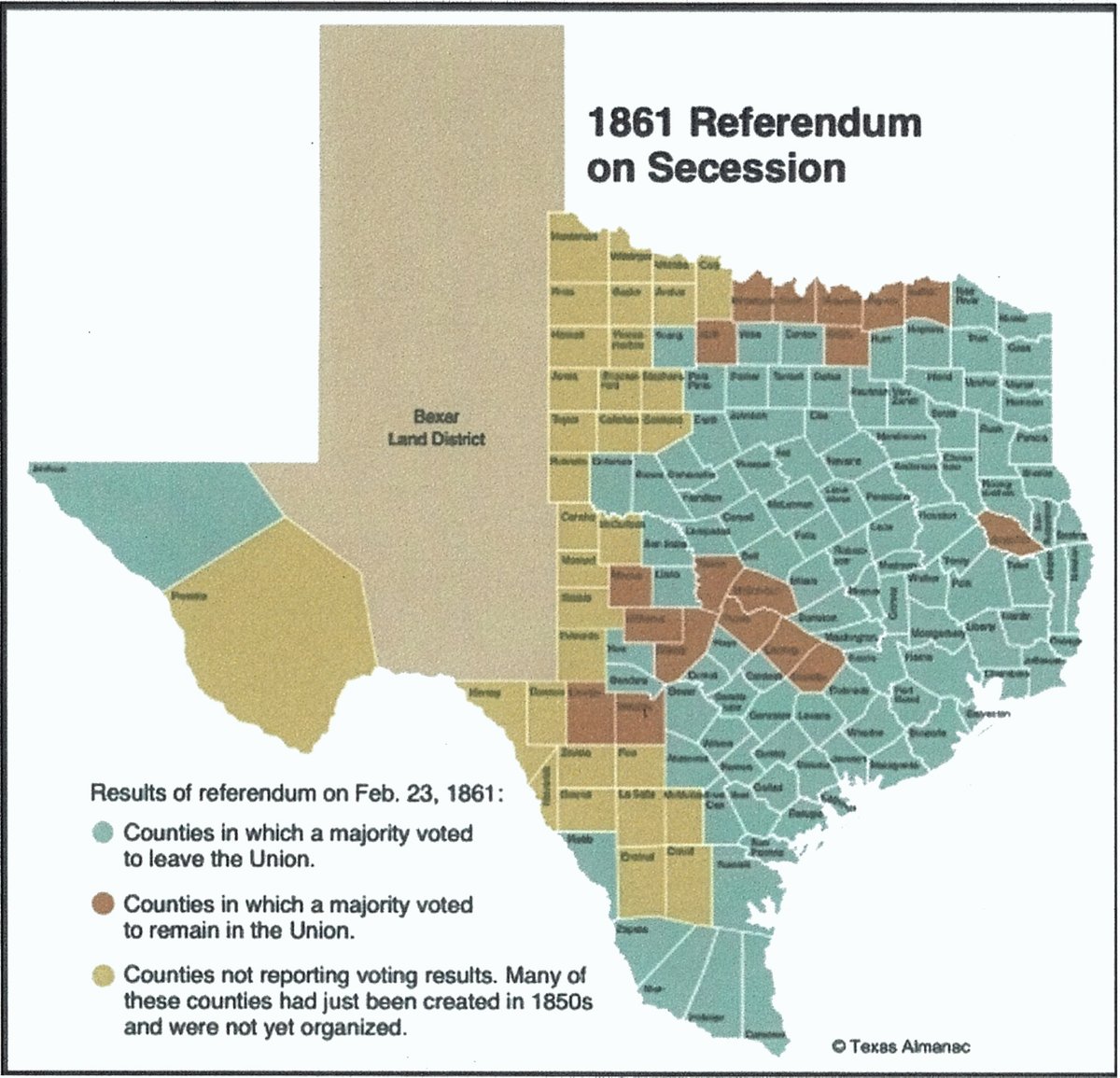
This is a map representing how Texas counties voted on the question of secession back in 1861. I've been studying it for several days and cogitating and have these observations: The map is almost a perfect overlay of Texas’s cultural fault lines in 1861. What jumps out first is how strongly the plantation belt of East Texas voted to leave the Union. From the Red River down through the Brazos and into the coastal counties, secession support is nearly continuous. These counties held the highest concentrations of enslaved people, in some cases 30–50 percent or more of the population. Their wealth, political leadership, and social structure were deeply tied to slavery, so their vote reflected both economic self-interest and political alignment with the broader Deep South. In striking contrast, the strongest pockets of Unionist sentiment appear in the Hill Country, especially Gillespie, Kendall, Comal, and surrounding counties. These areas had large populations of German immigrants, many of whom came to Texas after the failed European revolutions of 1848. They tended to oppose slavery on political or moral grounds and had little economic stake in it. But there's also this: they had only recently settled the frontier and often depended on the U.S. Army for protection from Comanche raids. Secession meant the likely withdrawal of federal troops, which many saw as a direct threat to their survival. There's also a belt of divided or Union-leaning counties stretching across parts of North Texas, particularly along the Red River and westward. Much of this region was still frontier in character, with fewer enslaved people and a population made up largely of small farmers rather than plantation owners. These communities had weaker ties to the slave economy and often stronger attachment to the federal government, which provided military protection and infrastructure. I think the above observations almost self-evident once you understand the demographics and the commerce patters. What is more curious to me is South Texas. Despite having relatively few enslaved people compared to East Texas, many counties there still voted for secession. This reflected the influence of large ranching elites and established political leadership, particularly in older Tejano and Anglo settlements. My impression is that loyalty to local power structures and political identity often outweighed purely economic considerations. Finally, the yellow counties in the west and northwest show me just how incomplete Texas settlement still was. Many of these counties had only been created in the 1850s and had too few residents or too little organization to hold a meaningful vote. Texas in 1861 was still a frontier state, with its political geography shaped as much by settlement patterns as ideology. Viewed altogether, it's clear that Texas did not move toward secession as a unified block. Instead, votes followed the invisible boundaries of slavery, ethnicity, settlement age, patterns of commerce, frontier dependence etc.... The strongest support for the Union came from newer, less slave-dependent, and often immigrant communities. The strongest support for secession came from older, wealthier, slaveholding regions tied culturally and economically to the Deep South. Thanks to the Texas Almanac for providing this great map!
Traces of Texas tweet media
English
70
168
1.2K
119K
Sid Roberts, MD retweetledi
Alec MacGillis
Alec MacGillis@AlecMacGillis·
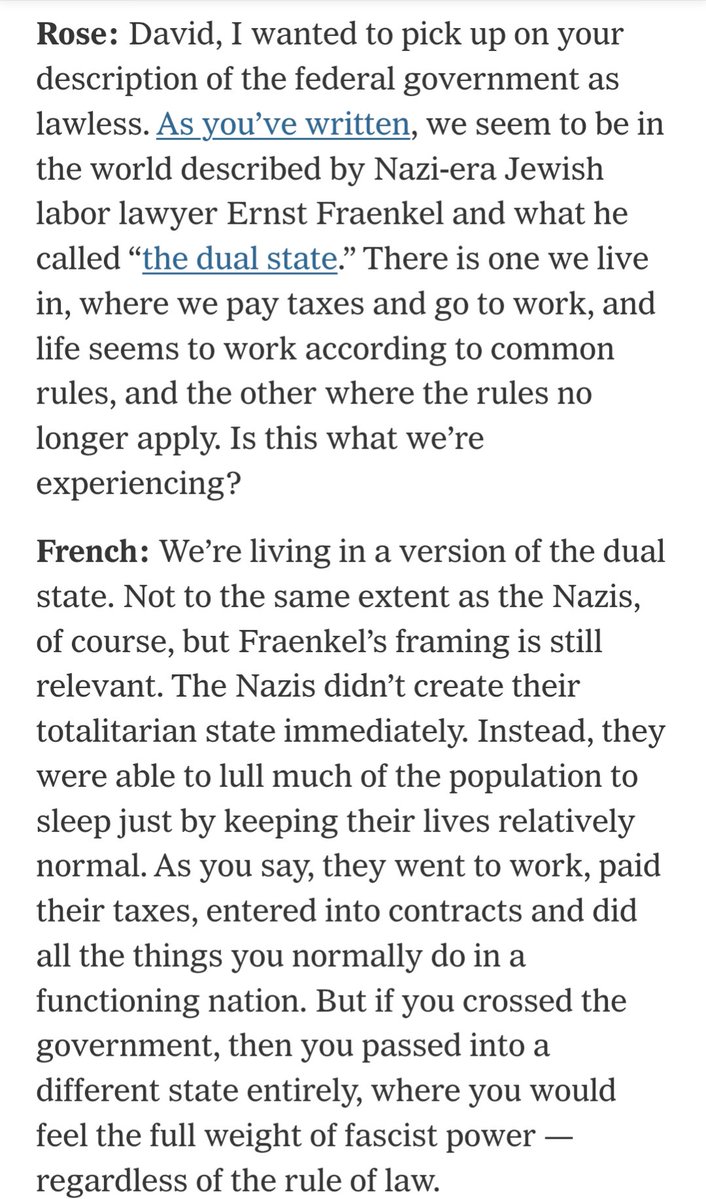
This is quite an exchange with @DavidAFrench about whether we are witnessing the emergence of a "dual state."
Alec MacGillis tweet mediaAlec MacGillis tweet media
English
244
3.6K
11K
1.1M
Matt Spraker
Matt Spraker@SprakerMDPhD·
A clarification: The brass ring is about how I was taught that the Academic Oncologist is the one true path. It is *a* path that is right for some and wrong for others. Real Oncologists take many paths towards helping patients, and many who teach us may never even see them.
English
3
3
31
8.5K
Sid Roberts, MD
Sid Roberts, MD@srob61·
@DavidAFrench How ironic that these are the same Christian Nationalists clamoring to return to the morals of an earlier age.
English
1
0
6
372
Yuan James Rao
Yuan James Rao@yuanjamesrao·
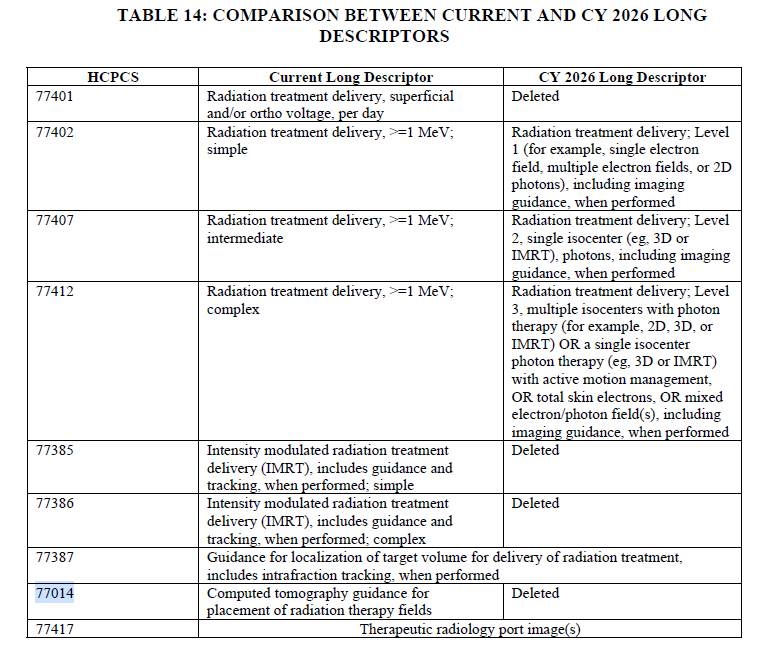
Medicare Physician Fee Schedule Proposed Rule 2026 released. Too much to digest quickly but it's out there for those who are interested in billing and policy. Table 14 describes major modification to delivery CPT codes, previously predicted by ASTRO. #radonc Link below
Yuan James Rao tweet media
English
6
5
28
13K
Sid Roberts, MD
Sid Roberts, MD@srob61·
@MatthewBoedy It was a well-deserved swipe at Christian Nationalism, which is political and only pseudo-religious. About time it gets called out.
English
0
2
6
54
Sid Roberts, MD
Sid Roberts, MD@srob61·
@racheljwelcher We used to call these non-salvation issues. But with Pharisees - the increasingly dominant fundamentalists of various stripes - salvation isn’t the end game: It’s all about power and control.
English
0
0
1
160
Rachel Joy Welcher
Rachel Joy Welcher@racheljwelcher·
Why is it that so many Christians can have fellowship while disagreeing about the following: -Baptism -Spiritual gifts -Eschatology But not: -Women in ministry (complementarianism/egalitarianism) Would love to hear your thoughts!
English
99
7
291
30.1K
Sid Roberts, MD
Sid Roberts, MD@srob61·
It is early, and little information out still, but to be just diagnosed with Gleason 9 metastatic prostate cancer - as a President! - is perplexing. 🤔
English
1
0
3
113
Sid Roberts, MD
Sid Roberts, MD@srob61·
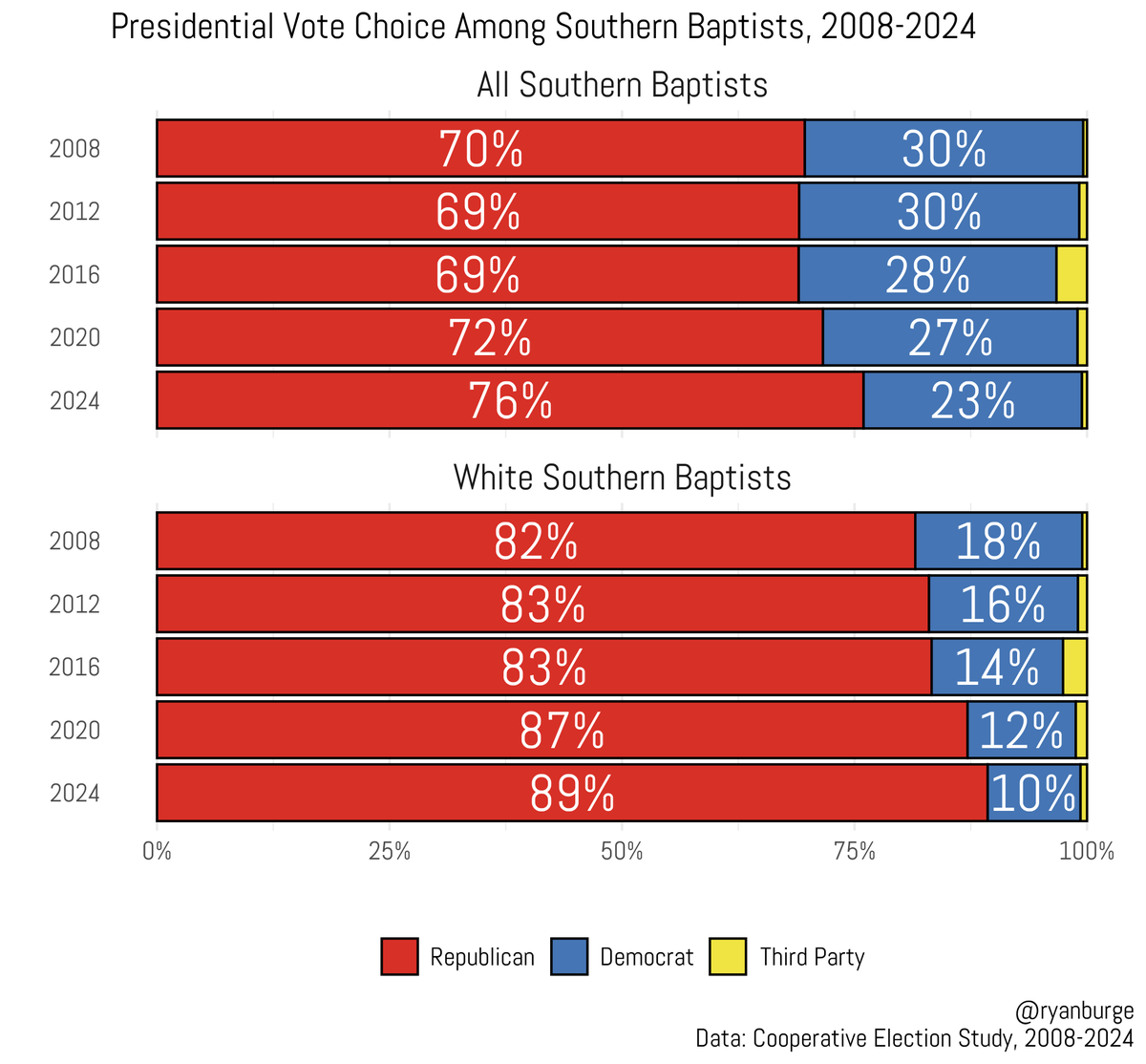
@ryanburge The liberal drift was to leave the SBC (either voluntarily or forced out).
English
0
0
1
39
Ryan Burge 📊
Ryan Burge 📊@ryanburge·
*whistles to self* Look at all that liberal drift inside the Southern Baptist Convention.....
Ryan Burge 📊 tweet media
English
86
34
399
98.9K
Shraddha Dalwadi, MD, MBA
Shraddha Dalwadi, MD, MBA@loveandmedicine·
I am honored to enter the role of Medical Director at UTHSCSA Department of Radiation Oncology. I feel passionately aligned with our mission to serve South Texas cancer patients and invested in the excellence of our teams. Wish me luck 🌺
English
1
0
11
738