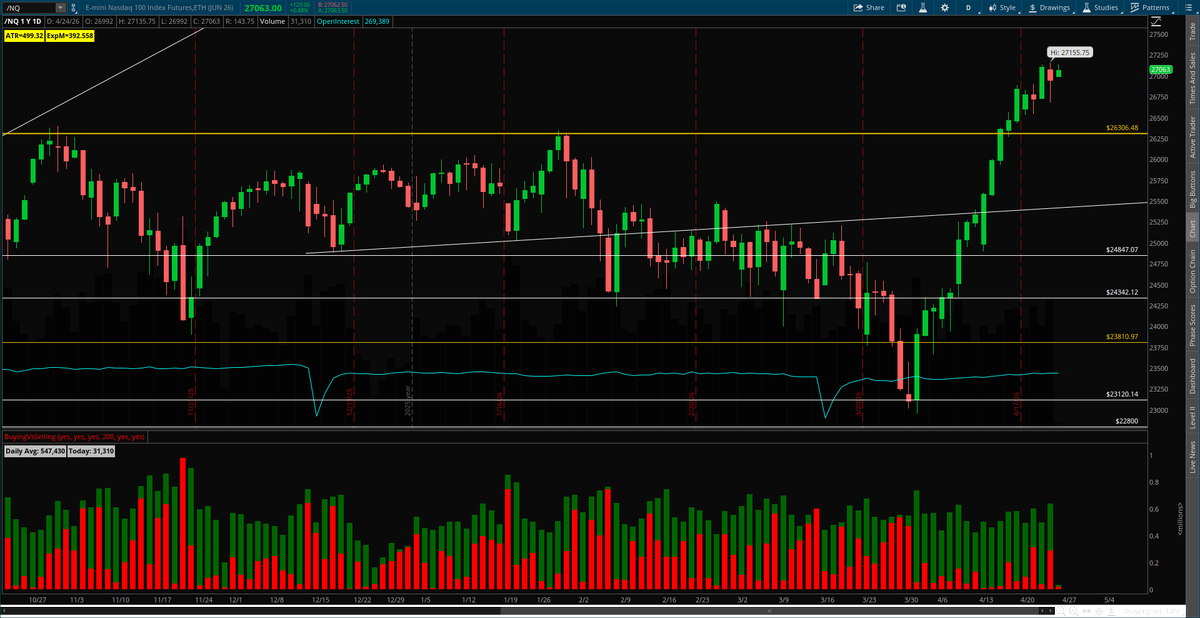
Nice reactions so far. Id like this to sustain highs for next leg
Sadi@ssmcapital
Trying small $ES long here. Like structure and weak $VIXY
English
Sadi
641 posts

Trying small $ES long here. Like structure and weak $VIXY


IS YOUR TRADING EDGE-CONSTRAINED OR OPPORTUNITY-CONSTRAINED? @Hormozi always emphasizes focusing on the #1 constraint in your business. Most businesses are either demand-constrained or supply-constrained, and whichever constraint you have determines your entire strategy. If you don’t have demand, you focus on marketing and sales. If you don’t have supply, you focus on supply chain and operations. Ok, Lance… how does this apply to trading? Trading works the exact same way, but I’ve never see anyone frame it like this: you are either edge-constrained or opportunity-constrained, and your results are determined by which constraint you attack. The problem is most traders misdiagnose themselves, so they spend years solving the wrong problem. If you don’t have a proven edge, you are edge-constrained. That means your job is not to trade more, not to scan more markets, and definitely not to take more setups hoping something sticks. Your job is to backtest, collect data, refine execution rules, and build a playbook that has real statistical backing, because without edge the more you trade the more you lose, and every hour spent hunting new opportunities is just accelerating drawdown. Edge-constrained traders should be obsessed with proof and data. Until you can say with high certainty that your setup produces positive expectancy over hundreds of trades, nothing else matters, because you cannot scale something that has negative expected value. Now flip it. If you have a proven edge and a defined playbook, you’re no longer edge-constrained. You’re opportunity-constrained, and now the game changes completely because the problem is no longer whether your setup works, but how often you can find and how to maximize each opportunity. Opportunity-constrained traders should not be endlessly tweaking entries or second-guessing their system. Their effort should go toward finding more of their best setups, building scanners and filters to surface them faster, expanding into other product markets where the same pattern exists, or using instruments like options to express the same idea more efficiently. Once edge is proven, growth comes from better execution, better sizing, and wider expression of that edge, not from reinventing the strategy. Most traders are trying to scale before they validate, or optimize before they prove. Identify your constraint first, because solving the wrong problem is why you feel busy but stay stuck. In trading, just like in business, the bottleneck determines the strategy, and if you attack the real constraint with full focus, progress becomes inevitable. The same is true for your trading business. And that’s why you need use your noggin to reflect and find the right advice that applies to your situation. Not blindly follow what you read.


First time it has broken and closed outside since 5/1 😓 $MSFT $AAPL $TSLA $ES $NQ $SPY




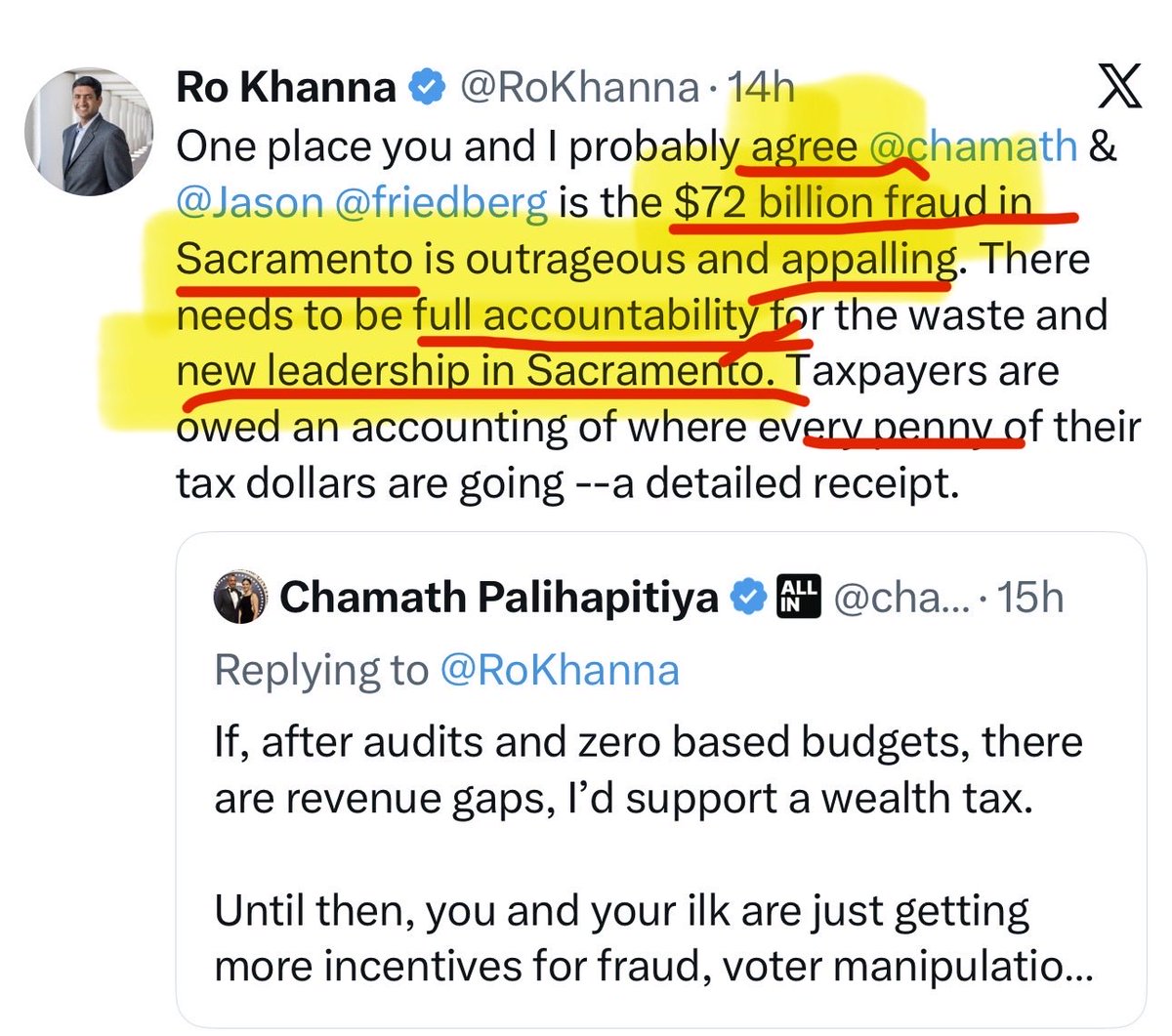
One place you and I probably agree @chamath & @Jason @friedberg is the $72 billion fraud in Sacramento is outrageous and appalling. There needs to be full accountability for the waste and new leadership in Sacramento. Taxpayers are owed an accounting of where every penny of their tax dollars are going --a detailed receipt.
I left a successful career in real estate to trade. It was the worst career decision I made by a long shot. Once i decided I was going to trade I studied finance at MIT then I dropped out when I luckily stumbled on an exploit I found in ES like 6-12 months in. I made a ton of money from that and that was how I originally got a job on a desk. When that exploit eroded I was screwed. I ended having to pick up odd jobs to keep up my lifestyle because I had little to no income. It took me around 3 years after my exploit disappeared to learn how to trade. It was the most miserable 3 years of my life. I was going broke fast. I spent every waking second studying and learning. It cost me time with my friends, family, relationships and so on. I will never get any of that time back. I was extremely lucky I finally figured it out. I started with a chunk of money, I was already in the investment world, had years of experience in finance, been pretty decent at math since I can remember and went to some solid colleges. Yeah I’m average but I did have some significant advantages when I started trading. If you want to lose your ass go for it. If you want to waste valuable time away from people you love go for it. But no matter how you twist it, it will always be a bad bet and anyone that tells you different is lying.