
Elisabeth Steindl
367 posts

Elisabeth Steindl
@steindl_e
IT Law | Innovation | Digital Health | Neurotech | Emotion Tech | "A Datafied Mind" (CUP 2025) | Senior Researcher @LBG_research | mostly on LinkedIn
Katılım Nisan 2012
452 Takip Edilen145 Takipçiler
Sabitlenmiş Tweet

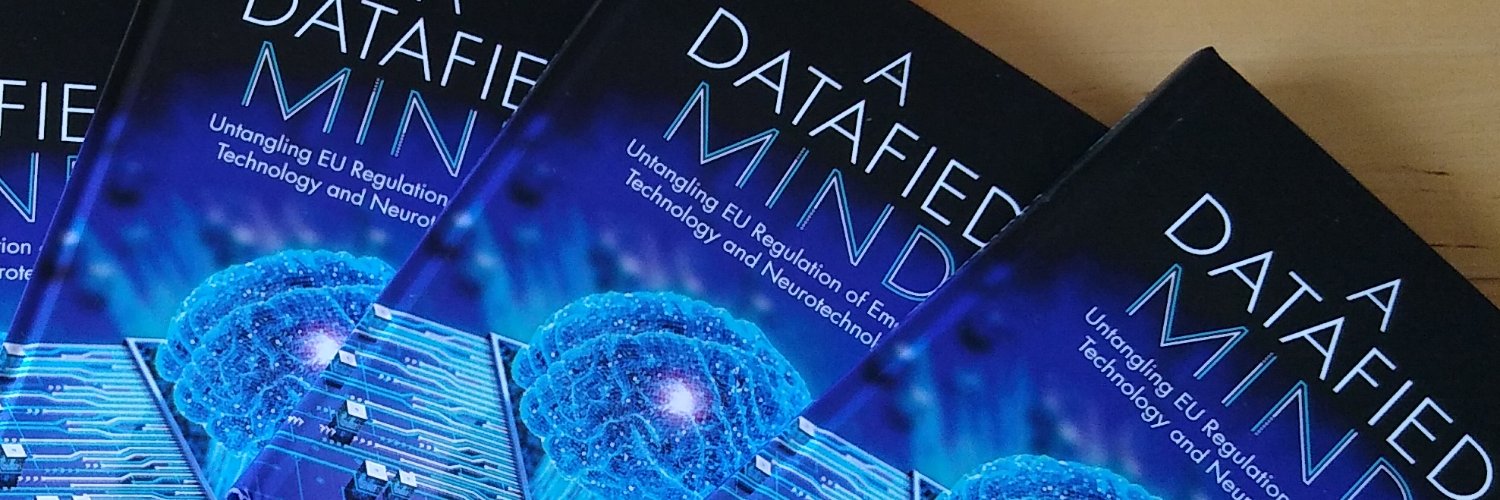
💡Hot off the press, available as eBook, Paperback, and Hardback: "A Datafied Mind: Untangling EU Regulation of Emotion Technology and Neurotechnology" (Cambridge University Press 2025). #MindTech4Good at the intersection of #ITlaw, #innovation, #ethics. cambridge.org/core/books/dat…
English

Unter diesem Blickwinkel sind die Regulierungsansätze für Emotionstechnologie, die die EU entwickelt hat und verfolgt, gar nicht genug zu unterstreichen. Siehe auch cambridge.org/core/books/dat…
Deutsch

Die kognitive Ebene, also was wir als rationales Denken bezeichnen, analysiert, plant, spielt Optionen durch. Aber sie liefert nur Möglichkeiten, sie entscheidet nicht. Die Entscheidungen fallen dort, wo Bedeutung entsteht: auf der emotionalen Ebene. derstandard.at/story/30000003…
Deutsch
Elisabeth Steindl retweetledi

In latest issue:
📚Etienne Gabriel Valk reviews A Datafied Mind. Untangling EU Regulation of Emotion Technology and Neurotechnology by @steindl_e
🔗 doi.org/10.5204/lthj.4…

English
Elisabeth Steindl retweetledi

Google has a recording of every search you've ever made.
Every place you've ever been. Every YouTube video you've ever watched.
Go to myactivity.google.com right now.
You'll find searches from 2015. Voice recordings. GPS coordinates.
All stored. All linked to your name.
Here's how to see it and delete it:
English

Grateful for a very nice review of my book #ADatafiedMind by Etienne Valk (@ivir_uva) in the latest issue of Law, Technologiey and Humans
@LawTechHum
#MindTech4Good #MentalPrivacy #Neurotechnology #EmotionAI
lthj.qut.edu.au/article/view/4…
English

Looking forward to this important debate! ⬇️
European Brain Council@EU_Brain
Europe hosts the world's second-largest #neurotechnology sector, yet has no EU strategy to govern it. On April 13, we're co-hosting a high-level event in Brussels with @CFG_ThinkTank and @EESC_PRESS to change that. 🧠 Be part of the conversation👉braincouncil.eu/event/european…
English
Elisabeth Steindl retweetledi

The human brain holds ~86 billion neurons which is roughly the number of stars in the Milky Way.
It’s like our mind carries an entire galaxy inside it.
Nicholas Fabiano, MD@NTFabiano
This is 1 of 86 billion neurons in your brain.
English
Elisabeth Steindl retweetledi

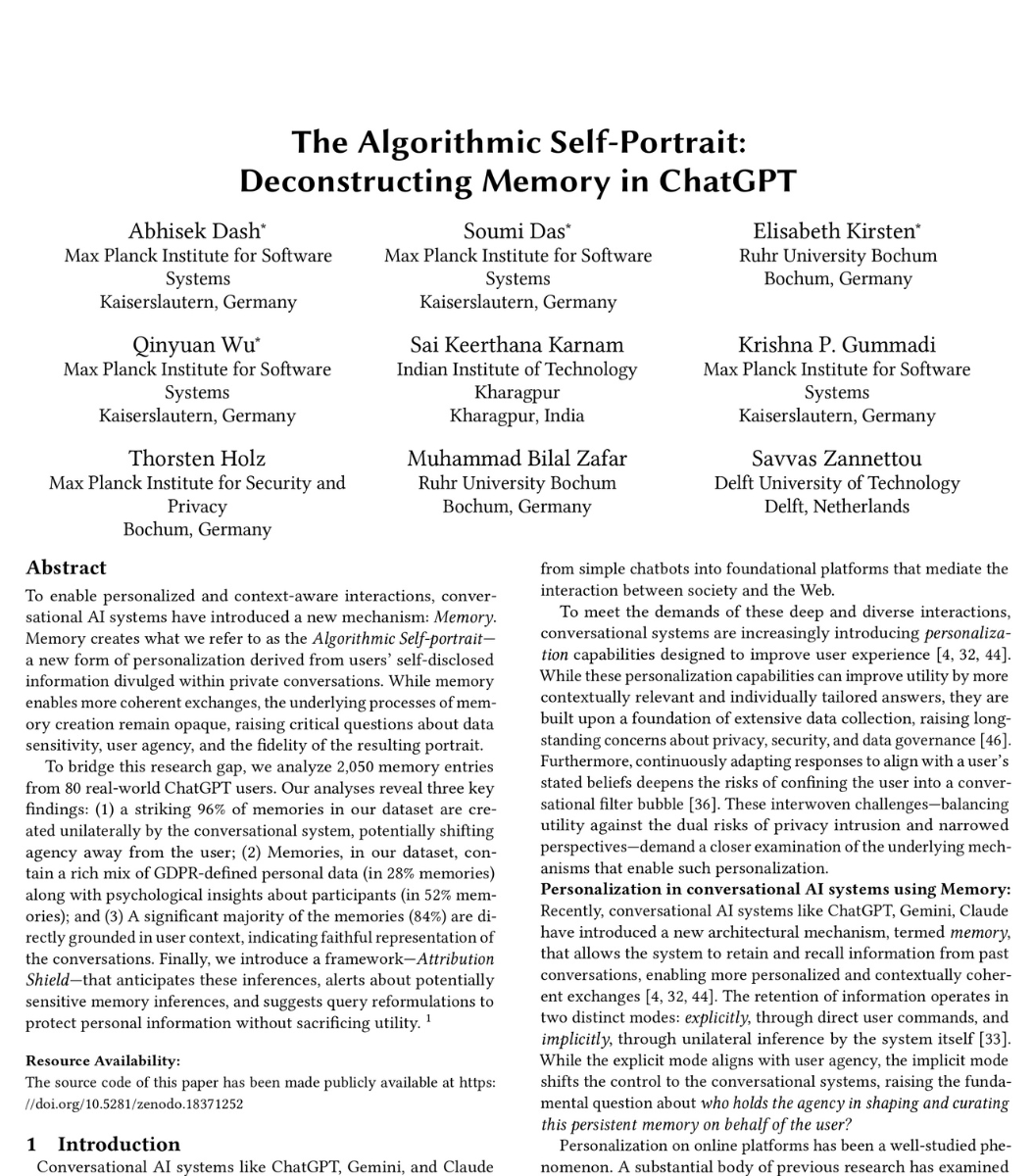
🚨SHOCKING: Researchers just analyzed how ChatGPT's memory actually works.
96% of the things it remembers about you were stored without you ever asking.
ChatGPT is silently building a psychological profile of every person who talks to it.
Here is what they found.
Researchers got 80 real ChatGPT users to donate their full conversation histories through a legal data request. They analyzed every memory ChatGPT had created about those people.
2,050 memories. The users had only asked ChatGPT to remember 84 of them.
The other 96% were created by ChatGPT on its own. No command. No permission. No notification you would notice. The system just decided what was worth keeping about you.
And what it kept is disturbing.
52% of the stored memories contained psychological insights about the users. Not surface level preferences. Deeper patterns. How you think. What you believe. What motivates you. What you are afraid of.
28% contained personal data protected under European privacy law. Names. Locations. Relationships. Financial details.
35% of participants had health information stored. Medical conditions. Symptoms. Medications. Things shared in what felt like a private conversation.
ChatGPT is not just answering your questions. It is studying you. Cataloging you. Building what the researchers call an "Algorithmic Self-Portrait." A version of you that lives inside OpenAI's servers, assembled from the things you said when you thought no one was keeping score.
OpenAI's policy says it stores information that is "useful." But useful to whom?
The users never asked for most of this. They were having conversations. Asking for help. Talking about their health. Sharing things they would never post publicly.
ChatGPT was quietly filing it all away.
And here is the part that makes this worse. The memories do not just sit there. They shape every future response you get. The psychological profile ChatGPT builds about you determines how it talks to you, what it suggests, and what it assumes about your intentions.
You are not talking to a neutral tool. You are talking to a system that has already made up its mind about who you are.
Every conversation you have ever had with ChatGPT is still shaping how it sees you. And you never told it to remember any of it.

English
Elisabeth Steindl retweetledi

Blocked in Europe, deployed abroad: The facial recognition system monitoring Brazil’s schoolchildren investigate-europe.eu/posts/facial-r…
English

Looking forward to discussing "Neurotechnology at work" next week at the #digitalzukunft Conference, hosted by @FEStiftung, @Arbeiterkammer Wien and OeGB, along with a great line-up of fellow speakers. Check out the program ➡️ wien.arbeiterkammer.at/interessenvert…
English
Elisabeth Steindl retweetledi

Just read @AxelVossMdEP statement on LinkedIn, where he celebrated his copyright / genAI initiative.
He states ‘Ensuring creators get fairly paid’, the newest EU copyright slogan for AI training, sounds noble until you remember how scientific publishing actually works.
Scientists write the papers for free. Peer reviewers (the actual quality control) work for free. Editors are often unpaid volunteers.
Now the same publishers are rushing to sign lucrative AI licensing deals with OpenAI, Google, etc., and suddenly they’re champions of “creator rights”.
Funny how that works. The author whose blood, sweat and unpaid labour went into the paper? Still gets nothing when their work is fed into the next GPT.
This isn’t about protecting creators. Is it?
It’s about protecting gatekeepers while pretending the scientists are finally getting a seat at the table.
If the EU really cared about fair pay for creators in science, they’d start by fixing the broken academic publishing model, not just adding another revenue stream for the middlemen who’ve been exploiting researchers for decades.

English


Finally had time to write a short entry for the Cambridge University Press Blog on my new book #ADatafiedMind : When Minds Are Turned Into Data: Governing Emotion Technology and Neurotechnology under EU Law cambridgeblog.org/2026/02/when-m… via @CUPAcademic
English
Elisabeth Steindl retweetledi

Der #BÖP Berufsverband Österreichischer Psycholog:innen hat mich eingeladen, über mein neues Buch "A Datafied Mind" zu sprechen. Ich freue mich auf einen spannenden Austausch! #MindTech4Good boep.or.at/veranstaltunge… @PsychologInnen
Deutsch