Watching the coverage on @BBCNews - as a former Railway Chaplain I’m sending my thoughts and prayers to the passengers involved, their loved ones and former colleagues @BTP & @LNER following last night’s attack.
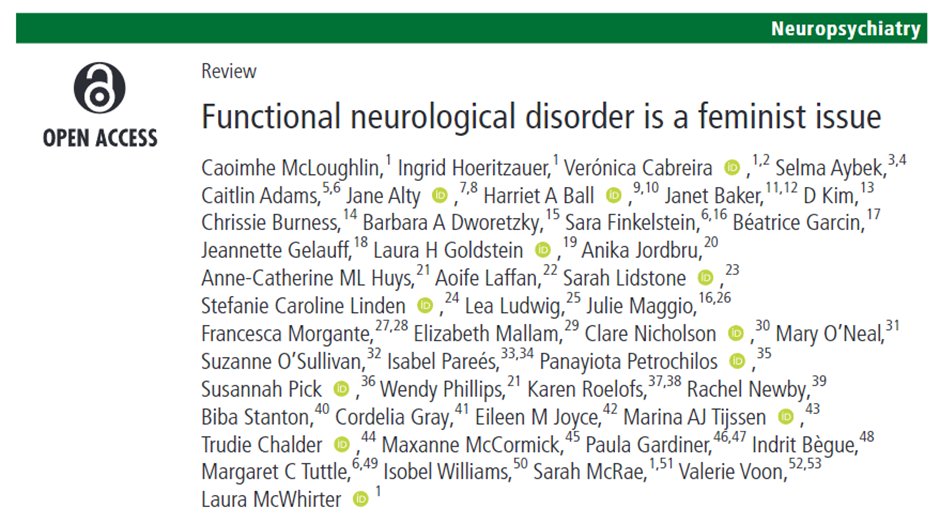
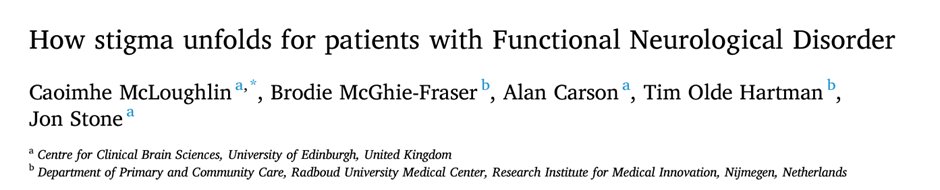
This is one paper in a PhD from @dr_caoimhe_mc on stigma and FND. Another paper exploring how stigma unfolds over time in FND has also been published recently. doi.org/10.1016/j.jpsy…. 28/
Conclusion. Stigma drives lack of care for patients. Institutional changes, training, research and patients and health professionals working together are likely to help make FND legitimate & visible. 27/
The growing number of patient-led FND charities worldwide, health professional organisations such as @FNDsociety, increasing research, changes in curriculae and FND service pathways are all positive steps. 26/
There is evidence that stigma can be challenged and overcome. Studies show that having a shared understanding of FND, giving time, a clear care plan, & empowering the patient with a tailored, legitimate explanation that they could share with others were some key points. 26/
“Society knows nothing about this, which is the huge problem, and automatically people are assumed to be malingering” - Healthcare professional, South Africa, (Fouch´e et al., 2019). 24/