Stanislav Frolov

369 posts

Stanislav Frolov

Stanislav Frolov

@stfrolov

Researcher @DFKI Generative Image Modeling | Intern @MetaAI '22 & @AdobeResearch '21

Kaiserslautern, Germany Katılım Kasım 2012
830 Takip Edilen209 Takipçiler
Stanislav Frolov
Stanislav Frolov@stfrolov·
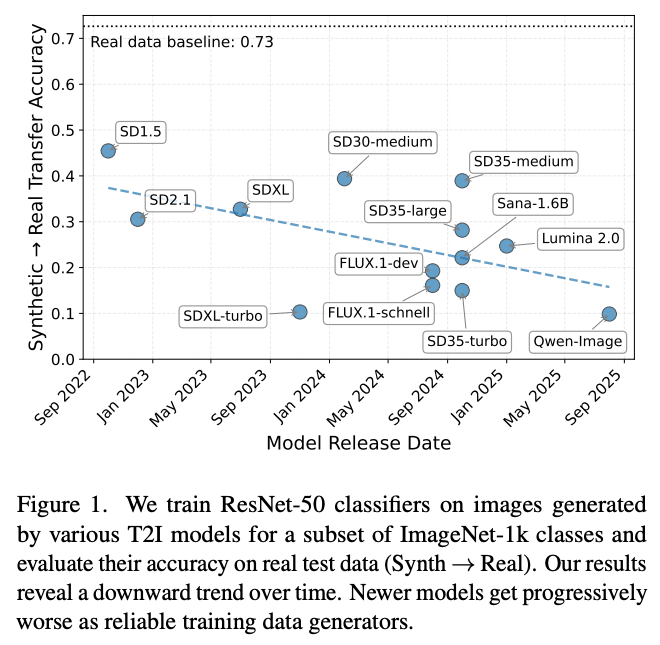
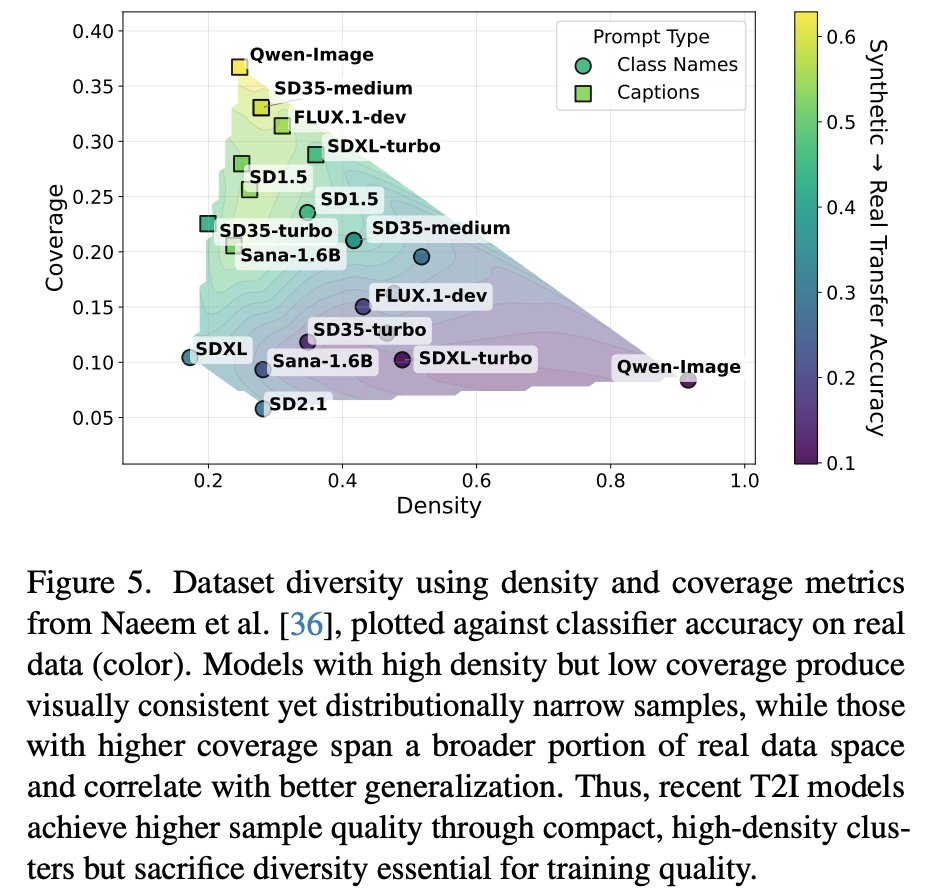
Current image generation models produce stunning images, but do they perform well as synthetic training data generators? In our new CVPR paper, we observe a surprising performance regression and investigate why. Link to paper: arxiv.org/abs/2602.19946 Congrats to all co-authors!
Stanislav Frolov tweet mediaStanislav Frolov tweet media
English
0
1
3
228
Stanislav Frolov retweetledi
Accepted papers at TMLR
Accepted papers at TMLR@TmlrPub·
Unifying VXAI: A Systematic Review and Framework for the Evaluation of Explainable AI David Dembinsky, Adriano Lucieri, Stanislav Frolov, Hiba Najjar, Ko Watanabe, Andreas Dengel. Action editor: Krikamol Muandet. openreview.net/forum?id=wAvFL… #explanation
English
0
3
5
572
Stanislav Frolov retweetledi
Federico Baldassarre
Federico Baldassarre@BaldassarreFe·
Say hello to DINOv3 🦖🦖🦖 A major release that raises the bar of self-supervised vision foundation models. With stunning high-resolution dense features, it’s a game-changer for vision tasks! We scaled model size and training data, but here's what makes it special 👇
Federico Baldassarre tweet mediaFederico Baldassarre tweet mediaFederico Baldassarre tweet mediaFederico Baldassarre tweet media
English
40
261
1.9K
223.9K
Stanislav Frolov
Stanislav Frolov@stfrolov·
@vikhyatk Yes and it can have huge impact when you evaluate quality of generative models on images, for example with FID.
English
0
0
0
24
vik
vik@vikhyatk·
if you train a model exclusively on JPEG images, will performance drop on other image file formats?
English
34
2
163
39.7K
Stanislav Frolov retweetledi
Michael Black
Michael Black@Michael_J_Black·
I received feedback that my post about reviews not being "random" caused stress for some students. I'm sorry for that. It was meant to be empowering. Personally, I find the idea that I don't have some control over the destiny of my papers to be disheartening. If the process is random and I have no influence, why would I bother? Taking personal responsibility for poor reviews is, for me, a way to take control. It gives me a chance to act. Even better, it gives me hugely valuable feedback that my work missed the mark. Mea culpa. Saying the reviewers are bad or reviews are random may give temporary solace -- "it's someone else's fault" -- but it doesn't lead to long-term success and, ultimately, satisfaction. If you found my post disheartening, then see my guide for how to write a good CVPR paper. It's an action plan for writing a paper that reviewers will understand. It's not easy to do everything I describe and it takes practice. But a PhD is about practice. We practice the whole process of doing science and a big part of this is practicing writing about our science. I will also share my tips for writing rebuttals once I find time to clean them up. perceiving-systems.blog/post/writing-a…
English
5
11
179
36.1K
Stanislav Frolov
Stanislav Frolov@stfrolov·
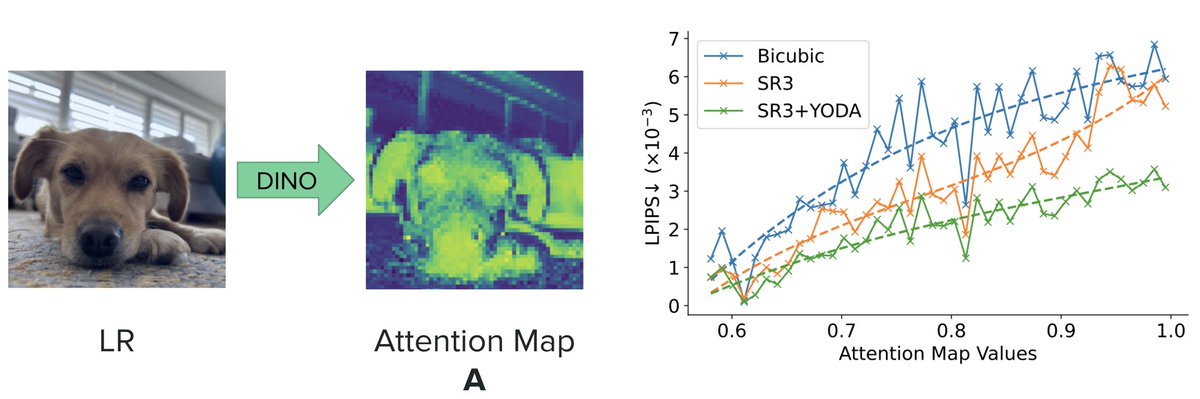
We find that important image pixels, as measured by the attention values of DINO, are more challenging to learn (higher reconstruction error).
Stanislav Frolov tweet media
English
1
0
1
74
Stanislav Frolov
Stanislav Frolov@stfrolov·
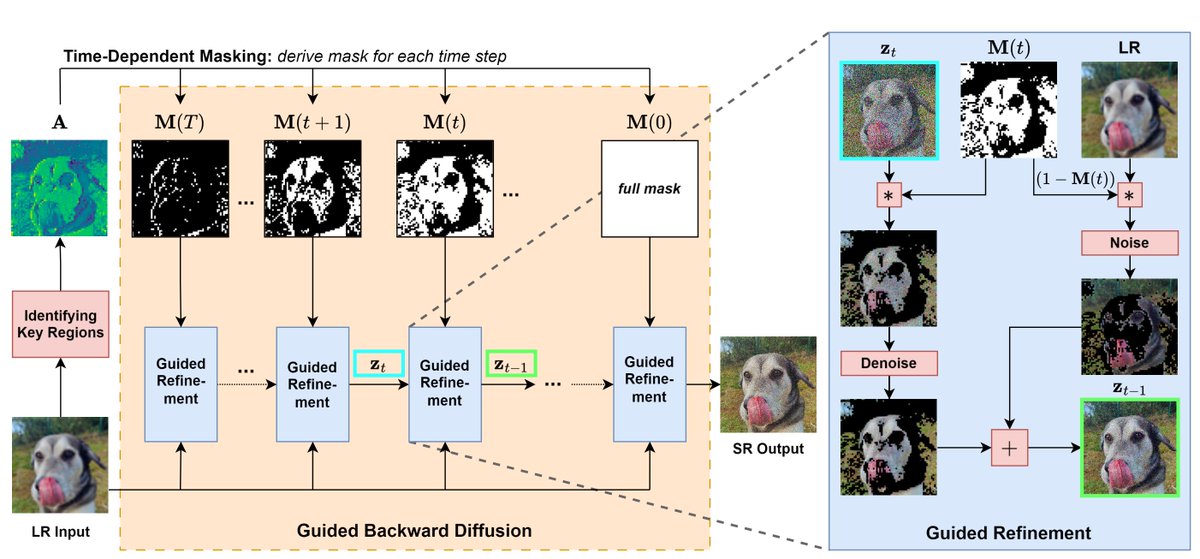
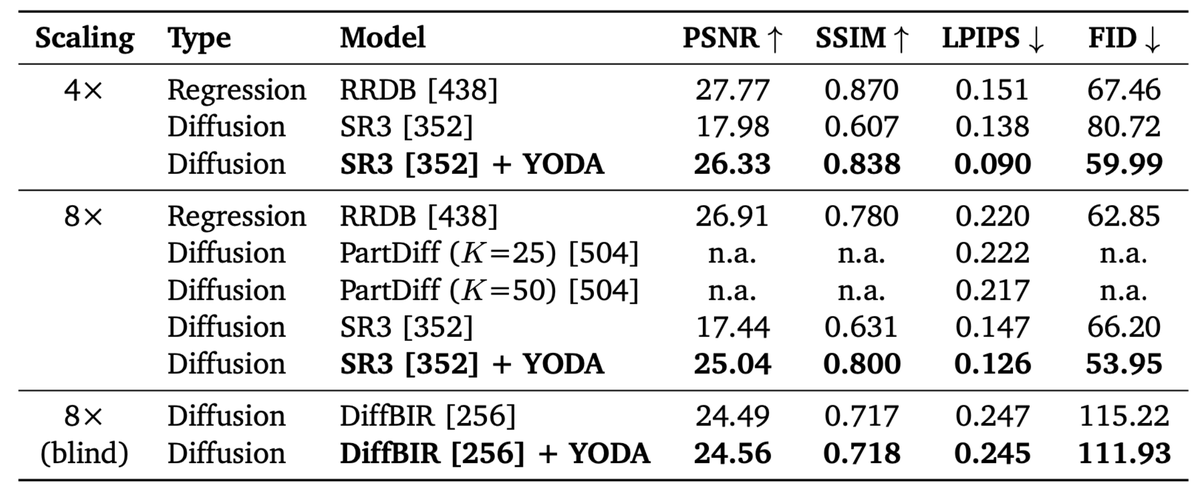
Dynamic attention-guided diffusion accepted to #WACV2025 🎉 We challenge the common SR diffusion approach: must the entire image be updated at each step? Some regions, like faces, may need more focus than plain backgrounds. 🧵
English
1
0
0
272
Stanislav Frolov
Stanislav Frolov@stfrolov·
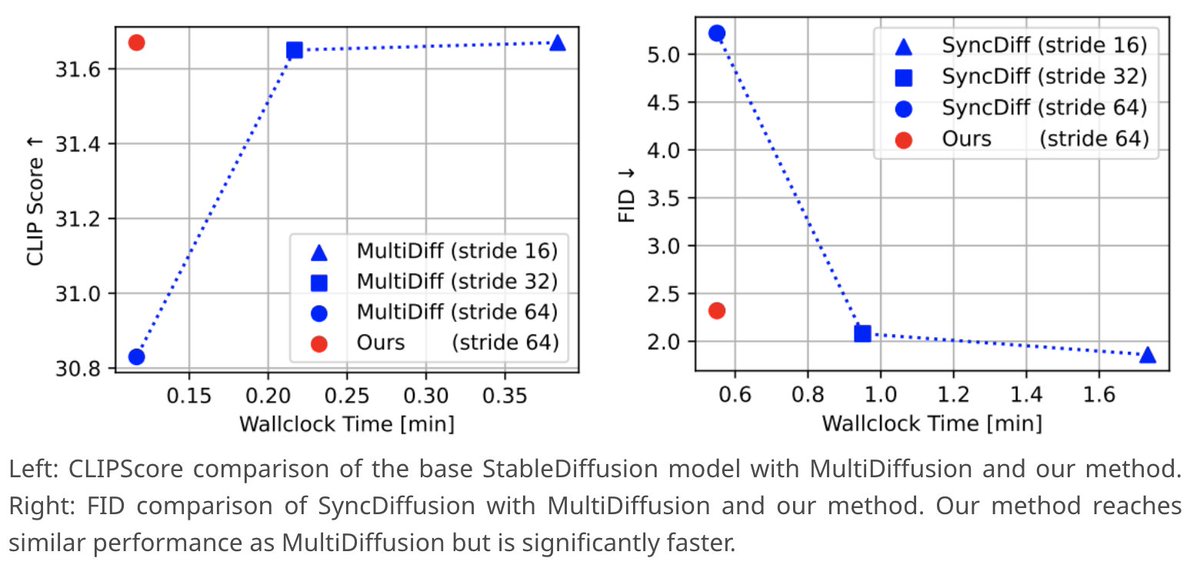
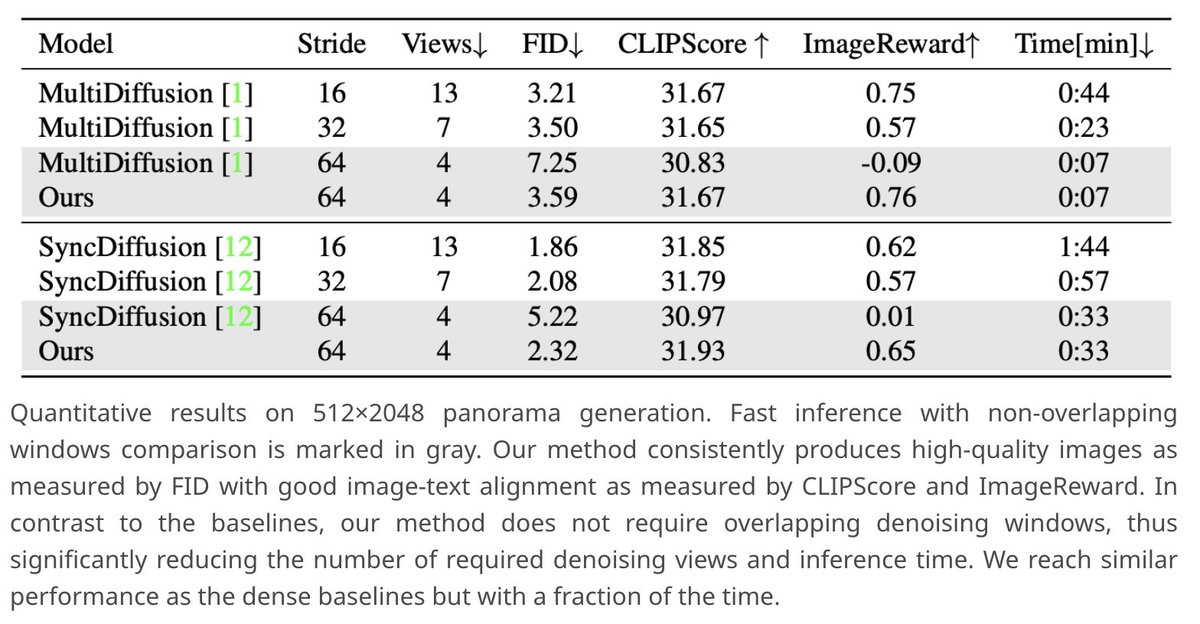
We can produce seamless panoramas much faster by leveraging the iterative nature of diffusion models and shifting non-overlapping denoising windows over time.
Stanislav Frolov tweet mediaStanislav Frolov tweet mediaStanislav Frolov tweet media
English
1
0
1
56
Stanislav Frolov retweetledi
Stanislav Fort
Stanislav Fort@stanislavfort·
✨🎨🏰Super excited to share our new paper Ensemble everything everywhere: Multi-scale aggregation for adversarial robustness Inspired by biology we 1) get adversarial robustness + interpretability for free, 2) turn classifiers into generators & 3) design attacks on vLLMs 1/12
Stanislav Fort tweet media
GIF
Stanislav Fort tweet media
English
24
196
1K
248.2K
Stanislav Frolov
Stanislav Frolov@stfrolov·
I can’t find a recent paper (and tweet) that had emojis all over an image. I think it was a method about interpreting (possibly segmenting) images with/from diffusion models. Can somebody help?
English
0
0
0
120
Stanislav Frolov
Stanislav Frolov@stfrolov·
Wow that’s cool! LoRA but for training.
Yuandong Tian@tydsh

Thanks @_akhaliq for promoting our work! With GaLore, now it is possible to pre-train a 7B model in NVidia RTX 4090s with 24G memory! 🤔How? Instead of assuming low-rank weight structure like LoRA, we show that the weight gradient is naturally low-rank and thus can be projected into a (changing) low-dimensional space. Therefore, we save memory on gradient, Adams' momentum and variance at the same time! As a result, unlike LoRA, GaLore does not change the training dynamics and can be used to pre-train a 7B model from scratch, without any memory-consuming warm-up. This yields 1B/7B models with comparable perplexity as vanilla training up to 13B/20B tokens, using only 1/4 of the rank. With 1/2 of the rank, our 1B model is even better🤯. GaLore can also be used to do fine-tuning as well, yielding comparable results with LoRA. Thanks to awesome collaborators @jiawzhao, @KyriectionZhang, @BeidiChen, Zhangyang Wang and @AnimaAnandkumar!

English
0
0
0
131
Stanislav Frolov retweetledi
Yuandong Tian
Yuandong Tian@tydsh·
Thanks @_akhaliq for promoting our work! With GaLore, now it is possible to pre-train a 7B model in NVidia RTX 4090s with 24G memory! 🤔How? Instead of assuming low-rank weight structure like LoRA, we show that the weight gradient is naturally low-rank and thus can be projected into a (changing) low-dimensional space. Therefore, we save memory on gradient, Adams' momentum and variance at the same time! As a result, unlike LoRA, GaLore does not change the training dynamics and can be used to pre-train a 7B model from scratch, without any memory-consuming warm-up. This yields 1B/7B models with comparable perplexity as vanilla training up to 13B/20B tokens, using only 1/4 of the rank. With 1/2 of the rank, our 1B model is even better🤯. GaLore can also be used to do fine-tuning as well, yielding comparable results with LoRA. Thanks to awesome collaborators @jiawzhao, @KyriectionZhang, @BeidiChen, Zhangyang Wang and @AnimaAnandkumar!
AK@_akhaliq

GaLore Memory-Efficient LLM Training by Gradient Low-Rank Projection Training Large Language Models (LLMs) presents significant memory challenges, predominantly due to the growing size of weights and optimizer states. Common memory-reduction approaches, such as low-rank

English
21
78
425
130.6K