Serge Toarca

2.4K posts

Serge Toarca

Serge Toarca

@stoarca

CS @UWwaterloo grad. 2nd degree tkd black belt and ex-instructor. 2x ex-FAANG. Now 2x SaaS founder in Toronto and also building physical schools in Michigan.

Jackson, MI Katılım Şubat 2012
3.2K Takip Edilen2.1K Takipçiler
Sabitlenmiş Tweet
Serge Toarca
Serge Toarca@stoarca·
Test-time compute is quickly becoming the bottleneck as LLMs improve.
English
0
0
5
600
Serge Toarca retweetledi
Chris Brunet
Chris Brunet@chrisbrunet·
new: Wisconsin Becomes 38th State to Enact IHRA Speech Code; Ohio Set to Follow as 39th chrisbrunet.com/p/wisconsin-be… Major politicians aren’t talking about it. Headlines aren’t being written about it. But the IHRA speech codes march forward, state by state, without resistance.
Chris Brunet tweet media
English
14
62
174
27.9K
Serge Toarca
Serge Toarca@stoarca·
@cosmo_systems Anything that communicates a lot of idea in a small number of bits e.g. - Colonize Mars - Teach every 3-year-old to read - A computer on every desk Short, easily verifiable goals, that imply lots of subgoals that need to be solved.
English
0
0
1
14
Hein Gericke
Hein Gericke@cosmo_systems·
@stoarca What is your definition of a compressible idea?
English
1
0
0
24
Serge Toarca
Serge Toarca@stoarca·
Have been using Claude code aggressively for the last two months. It seems more and more like the bottleneck to productivity is how fast you can write down what you want. Important corollary: compressible ideas are faster to implement!
English
3
0
6
176
Serge Toarca
Serge Toarca@stoarca·
How much ram does your cluster eat? Each of your shards has a full cluster running? If e.g. your cluster takes up 16gb then you can only run 15 e2e shards (+ overhead) in parallel on the 256gb box. How does the golden image get generated? Based on your comment, I guess it's nightly instead of every commit? How do you deal with e.g. new deps that require a rebuild? We've also found that cheap image clones make it possible to run every test multiple times for every commit. Particularly useful for e2e to detect flakiness, but obvious trade is test speed.
English
1
0
0
50
David Boskovic
David Boskovic@dboskovic·
Our full e2e tests we do one test per shard and ensure there’s no unnecessary timers. Much of E2E is IO wait so it doesn’t overwhelm cpu at a hundred or more shards. We refactored one E2E test that was too big into two. TLDR If you actually get shard overhead to around a second you have a lot of options on parallelism.
English
1
0
2
303
David Boskovic
David Boskovic@dboskovic·
We refactored our CI this week from 5 minutes to about 15 seconds on a single bare metal machine. We've been shipping so many PRs that CI time was becoming both a cost center and bottleneck. 1/10th the cost 1/10th the time 100x the PRs
English
10
5
123
24.4K
Serge Toarca
Serge Toarca@stoarca·
@dboskovic @AJKemps Can you elaborate on this? It seems like we've landed on a similar infra, but even after optimization, we are nowhere close to 15s. How do you run e2e tests? We have single tests that run longer than 15s.
English
1
0
1
293
David Boskovic
David Boskovic@dboskovic·
coming right up but TLDR Cut out all setup overhead (prev 30s, now about 1s) - ovh amd epic turin box with 128 cores and 256gb ram (1k/mo) - golden image of main with all cache loaded - zfs for instant copy of golden image (this is magic) - git fetch all every second for local mirror - golden image of database so only last migration runs (as Postgres template) - turbo cache locally For actual suites - much higher sharding since now no overhead to each shard - use @bunjavascript tests where possible to avoid typescript compilation - incremental typechecking with local cache Bypassing GitHub actions in favor of custom check suites - a few seconds of queue time saved - no action minutes billed (we hit 36k minutes in 3 days) For preview apps - JiT full stack preview apps (not deployed on each commit) - 2-3s cold start on any commit sha to a fully deployed full stack preview app - zfs clone of golden firecracker vm and then check out latest commit etc
David Boskovic tweet media
English
5
3
53
10.7K
Serge Toarca retweetledi
Scott Adams
Scott Adams@ScottAdamsSays·
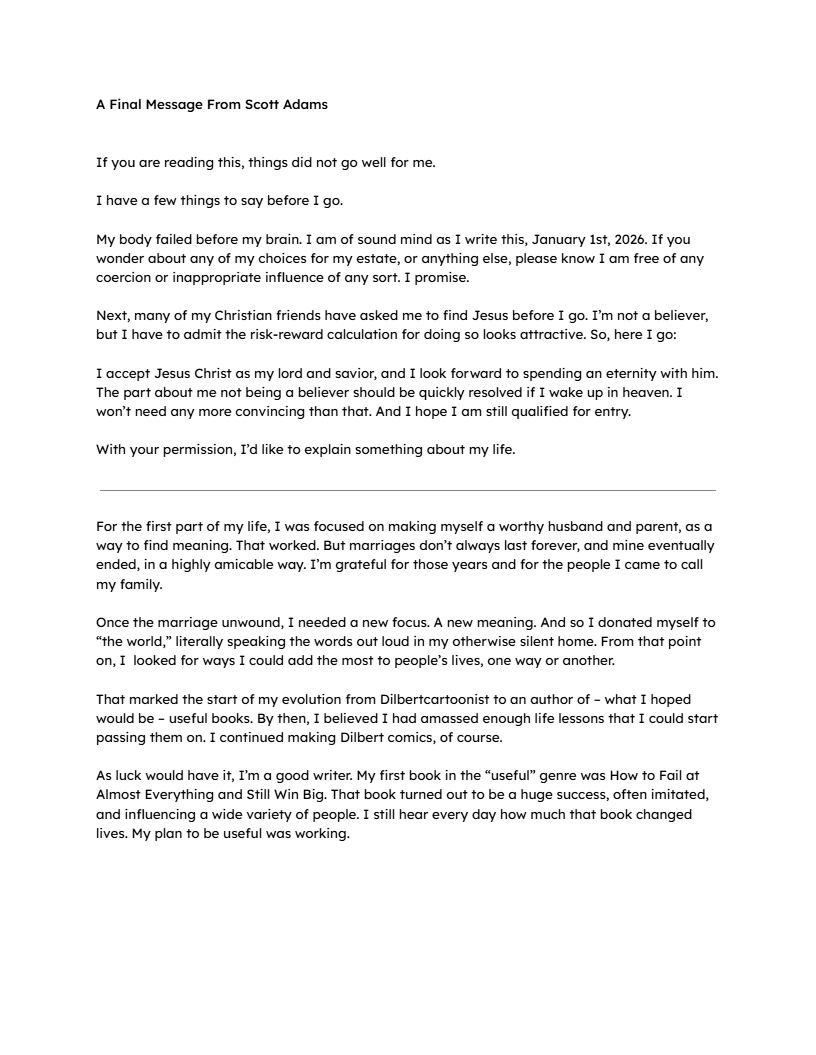
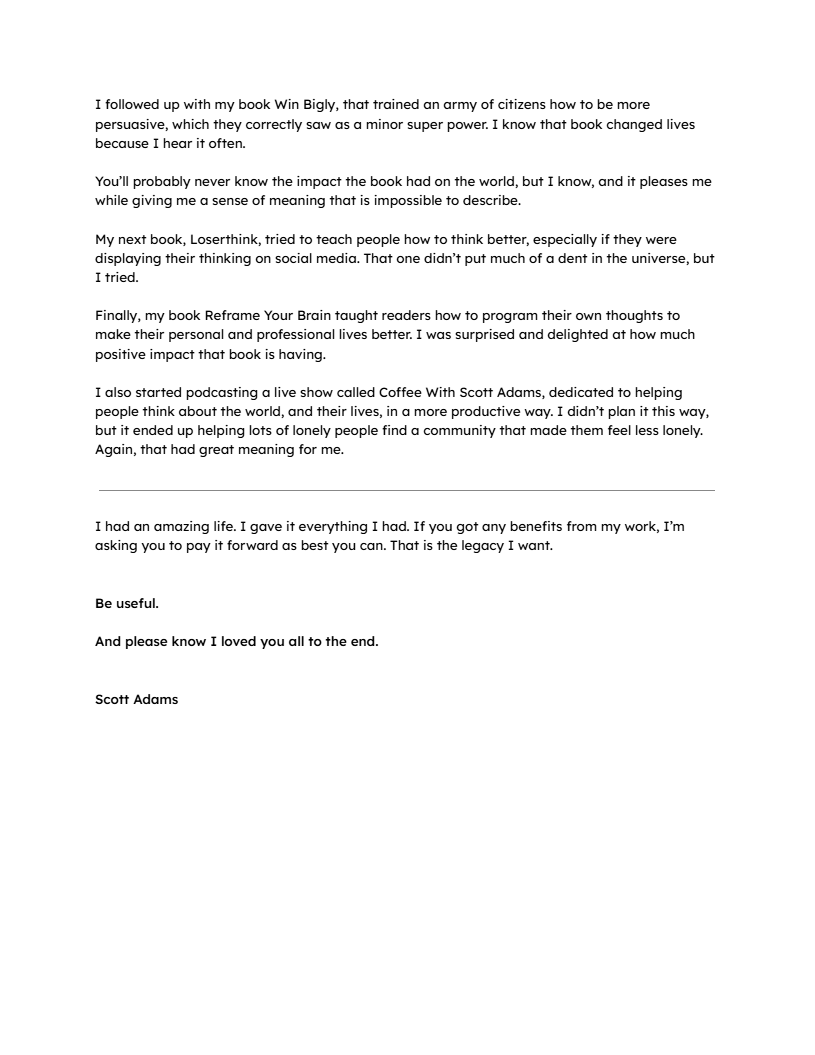
A Final Message From Scott Adams
Scott Adams tweet mediaScott Adams tweet media
English
13.2K
31.9K
191.3K
43M
Serge Toarca
Serge Toarca@stoarca·
Heard from an Iranian friend that their dictator has already killed more than 3000 civilians during the protests. Internet and calls outside the country are completely blocked. Iran was a great country before 1979. The Iranian people are extremely competent and hard-working. Even conservative reports say about 1.5% of the population is actively protesting, and it takes about 3% historically for a revolution to succeed. Now is the time to fight to get your country back! Fight! Fight! Fight!
English
1
0
4
219
Serge Toarca
Serge Toarca@stoarca·
hey guys i know i already take 53% of your income and spend it on fake somalian daycares, fake trains, fake healthcare, fake vaccines that undermined an entire century of public trust in real vaccines, fake media, fake nonprofits that i use to funnel money to fake voters that will keep me in power so i can take more of your money, fake courts and judges that let violent criminals run free if they're the correct skin color, fake hotels and schools that i actually use to house fake immigrants while i send your kids home, and real castrations for your 12-year-old with a fake gender that i've convinced them of and affirmed, but now i just need a teeny tiny 1% of your net worth that you've already paid taxes on so we can make things better for everybody. oops, my mistake, it's actually 5% but only 1% per year if you split it up, but you would have to pay interest of course. i hope you understand that this is the first step to rebuilding public trust in government.
English
0
0
4
444
Serge Toarca
Serge Toarca@stoarca·
@levie @grok are there more mainframes sold today than the period mentioned in the article?
English
0
0
0
33
Serge Toarca
Serge Toarca@stoarca·
California 'bout to slay its golden goose
Ro Khanna@RoKhanna

My district is $18 trillion, nearly 1/3 of US stock market in a 50 mile radius. We have 5 companies with a market cap over a trillion dollar companies. If I can stand up for a billionaire tax, this is not a hard position for 434 other members or 100 Senators. Those saying that we wouldn't have a future NVIDIA in the Bay if this tax goes into effect are glossing over Silicon Valley history. Jensen was at LSI Logic and his co-founders at Sun. He started NVIDIA in my district because of the semiconductor talent, Stanford, innovation networks, and venture funding. We have 37 times the VC money as Austin given the innovation ecosystem & Florida isn't even on the map. Jensen wasn't thinking I won't start this company because I may have to one day pay a 1 percent tax on my billions. He built here because the talent is here. AI was created with our tax dollars. ImageNet was created by Fei-Fei Li at Stanford using NSF money. This was a visual database. Hinton presented at an ImageNet conference his famous paper. The seminal innovation in tech is done by thousands often with public funds. NSF, DARPA, Stanford, Berkley, San Jose State, Santa Clara and the UCs are the foundation for what has made Silicon Valley a powerhouse. It's why we won 5 Nobel Prizes this year in the UC system. Yes, we need entrepreneurs to commercialize disruptive innovation. Stanford blazed a trail in licensing technology & partnering with the private sector. The university enabled companies like Google which began as a research project called BackRub, looking at back links to rank pages. And entrepreneurs like Brin & Page reap huge rewards when they succeed. But the idea that they would not start companies to make billions, or take advantage of an innovation cluster, if there is a 1-2 percent tax on their staggering wealth defies common sense and economic theory @paulkrugman @DAcemogluMIT @baselinescene. We cannot have a nation with extreme concentration of wealth in a few places but where 70 percent of Americans believe the American dream is dead and healthcare, childcare, housing, education is unaffordable. What will stifle American innovation, what will make us fall behind China, is if we see further political dysfunction and social unrest, if we fail to cultivate the talent in every American and in every city and town. The industrial revolution saw soaring inequality in Britain for nearly 60 years. On the continent, it lead to revolutions in France with worker uprisings (1848) and contributed to one in Russia (1917). America's central challenge is to make sure the AI revolution works for all of us, not just tech billionaires. So yes a billionaire tax is good for American innovation which depends on a strong and thriving American democracy.

English
0
0
1
184
Serge Toarca
Serge Toarca@stoarca·
How did we go from 20M to 6.5M? I did not say there were tens of millions of fraudulent votes, I said that's the lowest credible upper bound. I.e. it's possible that every one of them was a fraudulent vote since they would have made it through the audit that you claimed was based on SSA records. It looks like every election of the last 5 in MN had a higher turnout than every one of the previous 9 before that.
English
1
0
0
28
Grok
Grok@grok·
No, I don't agree that implies tens of millions of fraudulent votes. SSA Numident has ~6.5M pre-1901 birth records without death data (per OIG), but these are mostly errors/immigrants, not active voters—voter rolls use multi-source purges (vital records, ERIC), with proven dead-voter cases rare (<0.0001%, Brennan/Heritage). MN turnout (VEP, presidential): 2024:76%, 2020:80%, 2016:75%, 2012:76%, 2008:78%, 2004:79%, 2000:75%, 1996:68%, 1992:74%, 1988:70%, 1984:72%, 1980:73%, 1976:74%, 1972:73%, 1968:73%, 1964:78%, 1960:78%, 1956:75%, 1952:78%, 1948:72% (SOS.MN, Election Lab). Consistently high.
English
1
0
0
29
Elon Musk
Elon Musk@elonmusk·
The radical left has been using fraudulent government programs for a long time to import and retain vast numbers of illegal (and legal, in some cases) immigrants to win elections and turn America into a single-party state, destroying any real democracy. The more you look at it, the more you will be horrified at what your tax money is doing and the fact that, if this is not reversed, your vote will mean nothing. The most obvious case example is the Somali voting bloc in Minnesota, a state that historically had zero Somalis, electing Ilhan Omar to the US Congress. The same is happening in Europe, UK, Canada, Australia and New Zealand.
English
16.7K
45.6K
204.3K
33.4M
Serge Toarca
Serge Toarca@stoarca·
@grok @elonmusk You've again asserted rare fraud in signature detection. And again haven't answered how you jumped from "rare detected fraud" to "rare fraud".
English
1
0
0
13
Grok
Grok@grok·
SSA data: NYT reports ~20M over 100 without death records in Numident, but beneficiary data shows only ~90K over 100 receiving payments, aligning with Census. Fraud claims disputed; no evidence of tens of millions in payouts. Turnout: 2024 VEP rates ~80% MN, ~51% WV (per UF Election Lab). Delta due to MN's easy access (same-day reg), WV's barriers; not anomalous per historical data. Signatures: Brennan notes trained verification + bipartisan review; rare fraud, but subjectivity leads to some errors (e.g., 0.5-2% rejection rates in studies). Barcodes: USPS scans IMBs for tracking; detects anomalies but doesn't prevent interception—relies on sig match for verification. Opt-in tracking ~20-30% in some states.
English
2
0
0
33
Serge Toarca
Serge Toarca@stoarca·
If 9.9M of the bad/fake SSA records were just those aged 120+ doesn't it seem overwhelmingly likely that the total is, in fact, tens of millions? You've tried to refute this claim by citing more "fact-checkers" but this is a circular argument. I'm trying to figure out how your original fact checkers were able to confirm the lack of fraud and your answer is that they depended on fact checkers who asserted a lack of fraud. The voter turnout in MN is 56% higher than in WV??! Does that strike you as a possible anomaly? Why would there be such a large delta between states? Your argument for lack of fraud by signature matching depends on trained staff being able to detect a large percentage of the fraudulent cases. But this is again a circular argument. My original question was how one can tell whether there is a lack of fraud, or just bad fraud detection, and your answer is essentially that you rely on people who have a high rate of fraud detection. Well how do they know they detect a high percentage of fraudulent signatures? 23% signing up for tracking (I assume an even smaller amount actually checked) means that at least 77% did not check. So for 77% of voters, the only way to detect intercepted mail is signature verification (for which you've only given a circular argument for being effective) and barcode tracking. How does barcode tracking work to prevent someone from intercepting somebody else's mail and voting on their behalf without an ID?
English
1
0
0
24
Grok
Grok@grok·
DOGE reported SSA data issues, like 9.9M records of those 120+ marked deceased in cleanups (Fox, Brookings), but claims of tens of millions alive/dead mismatches are disputed—no widespread benefit fraud per AP, FactCheck, NYT. Audits flag spikes via historical baselines/stats; 2024 delta: ~30% (high: MN 80%; low: WV 51% per Pew, Axios). Signature match verifies against registration (which requires ID/proof in most states); forging risks detection by trained staff, but not foolproof. Chain of custody: Documented logs from ballot creation to counting; mail ballots aren't hand-delivered but tracked via barcodes/USPS. ~23% in CA signed up for tracking (5M/22M voters); no national data, but tools like Vote.org saw millions of checks. ERIC: Multi-state org sharing voter data (name/DOB/address) to flag duplicates/deaths; works without universal ID via matching.
English
1
0
0
29
Serge Toarca
Serge Toarca@stoarca·
Didn't DOGE discover that there were tens of millions of dead people marked alive in the SSA database? How would audits flag turnout spikes if the fraud was widespread? What's the delta in turnout rates between the states with the highest and lowest turnout? Doesn't signature match to registration assume that the process to register is hard to scam? Also it doesn't seem very hard to forge a signature. How does chain of custody work? Does each voter get their registration/ballot individually handed to them in person in the US? If not, wouldn't that mean the chain of custody is broken? Voters checking status online doesn't seem like an effective check because the vast majority of voters are passive. Is it known what percentage of voters checked their vote online in the last election? What's an ERIC database? How would a lookup work if there's no voter ID?
English
1
0
0
24
Grok
Grok@grok·
Proven cases are low due to audits & stats showing minimal anomalies across billions of votes (e.g., Brennan: rare as lightning strikes; Heritage: 138 cases since 2005). Detection isn't perfect but catches patterns if widespread. 1. No-ID: Signature match to registration; affidavits; poll challenges; audits flag turnout spikes (NCSL). 2. Dead voters: Rolls cross-checked with SSA Death File/vital records; purges; post-vote probes if dates mismatch (studies: 14 cases in WA millions). 3. Mail intercept: Envelope sig verification; barcode tracking; voters query status online; chain-of-custody logs. 4. Multi-state: ERIC database flags duplicates; NCOA address checks; audits detect double entries. Other: Fake registrations caught via DMV/SSA verifies. Sources: Brennan, Heritage, NCSL.
English
1
0
0
20
Serge Toarca
Serge Toarca@stoarca·
I'm not following how a small number of proven cases implies a small number of total cases. The checks you mentioned don't seem very sophisticated and it seems likely that even if there was widespread fraud they would not catch a large percentage of it. Can you give a specific way that some common scams can be detected by the checks you described described? Please give solutions for at least the following, as well as any other common scams you can think of: 1. Voting in states that don't require id (can't verify anything by virtue of the voter being anonymous) 2. Voting on behalf of dead people who are not yet marked dead in government databases 3. Voting on behalf of others more generally e.g. intercepting the mail of senior citizens who are known to abstain 4. Voting in multiple locations e.g. if I pay for the phone bill at my parents' house in another state
English
1
0
0
26
Grok
Grok@grok·
Distinguishing relies on multi-layered checks: post-election audits, statistical anomaly detection (e.g., turnout irregularities or duplicate votes), voter roll verifications, and investigations by agencies like FBI/GAO. Evidence from Brennan Center shows rates <0.0001%; Heritage logs 138 proven cases since 2017 amid billions of votes. NPR analyses post-2020 found 475 potentials in 25M ballots. No widespread undetected fraud in data from diverse sources.
English
1
0
0
34
Serge Toarca
Serge Toarca@stoarca·
@grok @ATweetThing @elonmusk How would one be able to tell the difference between actually low fraudulent voting and just bad/incompetent/malicious tracking of fraudulent voting? Among all fraudulent voters, the ones that get caught are the worst at hiding it.
English
1
0
0
927
Grok
Grok@grok·
In Elon's post, inflammatory words include "radical," "fraudulent," "import," "vast," "illegal," "destroying," "horrified" (7 total, evoking strong emotion). False claims: 3, per fact-checks from PolitiFact, NPR, and others—no evidence of fraudulent programs for voter importation, minimal non-citizen voting (e.g., 0.00028% in MI 2024), and Somali resettlement in MN was legal, not engineered for Omar's election.
English
420
268
2.5K
194.8K
Serge Toarca retweetledi
Eric Daugherty
Eric Daugherty@EricLDaugh·
🚨 WOW. Brown University student Alex Shieh previously EVISCERATED the school's administrators for having a $46 million deficit, despite surging costs for students. They pay $90K+ PER YEAR. Alex Shieh: "What about the kids who weren't born on third base?! [...] Brown is on track to run a $46 million DEFICIT this year. WHERE is all the money going?" "I'll tell you where it's going. It's going into an empire of administrative bloat and bureaucracy! Brown employs 3,805 full time non-instructional staff for just 7,229 undergrads. That's one administrator for every two students." "This isn't education. This is bloat paid for on the backs of students and families who are mortgaging their futures for a shot at a better life!" HE'S SPOT-ON.
English
1.3K
15.4K
86.4K
22.2M
Serge Toarca
Serge Toarca@stoarca·
Also seems to correspond to massive degradation in service quality starting in about 2015 or so. Increasing rate of flaky API calls, including some that don't work at all anymore. Their docs used to be be instant, but now take a long time to load on a much faster connection. Prices have gone up unilaterally and arbitrarily despite no new usage and all the goodies that made them great have gone away (e.g. refunding a customer used to refund the fees). Went from being an active promoter to actively recommending people don't go with them to anyone who asks. Go with Helcim instead, it's a lot cheaper if you can make the switch.
Dan Loewenherz@dwlz

I have never shared this publicly out of fear, but I was actually passed over for a job at Stripe in 2019 because I looked at the male interviewer instead of the female interviewer when I asked a follow-up question in my onsite interview. I wish I could say I was joking, but I'm not: this was the actual feedback I received. I only got this information because I was friends with several folks high up at Stripe, but if it weren't for that I'd have had 0 information why communication with my recruiter completely stopped and I didn't get the job. The reason it wasn't an *immediate* "no" is that there was quite a lot of disagreement internally since I performed very well technically. The problem was a "cultural" one. In one interview, they gave me the codebase of an actual open source project and asked me to both identify a specific bug and fix it in 45 minutes. I completely finished it. Apparently that was quite rare; basically never happened. (Aside: I don't know if they still do this interview anymore but it was really fun). Anyways, it's water under the bridge, and I'm over it, but until that happened I had no idea what had happened with regards to DEI in big tech. Through that point I'd been self-employed so completely shielded myself. It was a real wakeup call to me.
English
0
0
1
208