
๐–˜๐–™๐–š๐–—๐–’๐–๐–š๐–“๐–Œ๐–Š

11K posts

๐–˜๐–™๐–š๐–—๐–’๐–๐–š๐–“๐–Œ๐–Š banner
๐–˜๐–™๐–š๐–—๐–’๐–๐–š๐–“๐–Œ๐–Š

๐–˜๐–™๐–š๐–—๐–’๐–๐–š๐–“๐–Œ๐–Š

@sturmjunge

๐•ด๐–‹ ๐–ž๐–”๐–š'๐–—๐–Š ๐–†๐–‡๐–‘๐–Š ๐–™๐–” ๐–—๐–Š๐–†๐–‰ ๐–™๐–๐–Ž๐–˜, ๐–™๐–๐–Š๐–—๐–Š ๐–’๐–š๐–˜๐–™ ๐–‡๐–Š ๐–˜๐–”๐–’๐–Š๐–™๐–๐–Ž๐–“๐–Œ ๐–œ๐–—๐–”๐–“๐–Œ.

Province of South Australia Katฤฑlฤฑm ลžubat 2021
1.7K Takip Edilen835 Takipรงiler
SabitlenmiลŸ Tweet
Kat A ๐ŸŒธ
Kat A ๐ŸŒธ@SaiKate108ยท
The just released Karl Stefanovic interview with Chef Pete Evans is amazing on so many levels. A full circle moment for Evans as Stefanovic apologises and acknowledges the MSM efforts to crucify him. Evans - an unvaccinated man who uses zero Big Pharma meds and believes 80% of illness can be healed with food - finally gets to expose that Big Pharma was behind the campaign to destroy him. Even more incredible. Stefanovic is now so red pilled he recognises what a powerhouse Secretary Kennedy is and pushed Evans for an interview with him. The awakening is real ๐Ÿ”ฅ @karlstefanovic @peteevanschefx
English
172
469
2.5K
83.1K
๐–˜๐–™๐–š๐–—๐–’๐–๐–š๐–“๐–Œ๐–Š retweetledi
Muse
Muse@xmuse_ยท
Turn the sound ON ๐Ÿ”Š Abraham Cupeiro resurrecting the ancestors inside the 870 year-old Cathedral of Mondoรฑedo. The carnyx roaring through sacred stoneโ€ฆ Celtic fire ๐Ÿ”ฅ Pure goosebumps!
English
78
1.2K
4.9K
139K
๐–˜๐–™๐–š๐–—๐–’๐–๐–š๐–“๐–Œ๐–Š retweetledi
David Weck
David Weck@TheDavidWeckยท
Bilateral action is an important component of Non-Dominant Side Training. โ€œInterhemispheric Facilitationโ€ enables the non-dominant side to โ€œborrowโ€ the intelligence of the dominant side in real time โ€” for faster skill acquisition. Iโ€™m using my latest discovery โ€” The Fascial Fist โ€” to create more โ€œfloatโ€ & โ€œjoltโ€ with my upper body / arms than ever before. The technique is called โ€œWringingโ€. You can think of your arms as โ€œwingsโ€ & โ€œspringsโ€. Sprinting Iโ€™m doing both sides and distance Iโ€™m doing single side. Faster has never been easier for me. And running is more fun than ever before. One of my favorite things to do is explore movement efficiency. The fringe benefits are incredibly awesome. Movement is so much fun. โ€œAthletic inadequacyโ€ (I canโ€™t get paid to play any sport) is my curseโ€ฆ and my greatest blessing. It motivates me to be in a constant state of exploration & testing. Locomotion, Swinging & Trowing are the fundamental survival functions when technology is sticks & stones. Fight/Flight Response Ability is my North Star. These functions are so intimately related โ€” and it was Throwing that precipitated my discovery of The Fascial Fist. The float & jolt from the ProPulse Power Vest also played a pivotal role in this discovery. It just happens wearing the Power Vest. Note: The Hands can be used as โ€œtoolsโ€ to do the basics better. You can educate your body to move better โ€” and then free your hands to catch a football retaining the proximal knowledge you helped enhance strategically with your Hands. And now Iโ€™m using a derivative hand hold with RopeFlow based in this discovery that is giving me next level athletic carryover โ€” which is why I created RopeFlow in 2004 to begin with. Athletic carryover is all-ways on my mind as I explore movement training. I share because I care. My mission is to help make Every Step Stronger for everyone.
English
1
3
21
1.2K
๐–˜๐–™๐–š๐–—๐–’๐–๐–š๐–“๐–Œ๐–Š retweetledi
Marcell Fรณti ๐Ÿชจ
Chemistry lesson for every kind of archaeologist: real, pseudo, and armchair archaeologists. Part One Lye made from wood ash โ€” basically water slowly filtered through and dripped off from wood ash โ€” primarily contains potash (Kโ‚‚COโ‚ƒ). Every ancient civilization could produce this. We even have evidence: soap making. Quicklime (CaO) is produced by heating limestone (CaCOโ‚ƒ) in fire. Under heat, the COโ‚‚ simply gets released and escapes into the atmosphere and burnt or quick lime is formed. Add some water and youโ€™ll end up with slakec lime (Ca(OH)2) Ancient civilizations could produce this too, and we also have evidence they used it: lime-burning pits, leather tanning, and so on. If you mix these two, ion exchange gives you limestone (CaCOโ‚ƒ) molecules suspended in a potassium hydroxide (KOH) solution. K2CO3 + Ca(OH)2 = CaCO3 + 2KOH Yes, you should bookmark this, good idea! If you let it settle, you get a crude limestone paste. Not slaked lime, but actual limestone particles โ€” the same kind that settles on the ocean floor together with dead shells. (Yes, limestone particles continuously settle on the seafloor, formed not from dead animals themselves, but from calcium ions and carbon dioxide from the air. This is what acts as the binding material that cements the shells together. The shells themselves, of course, are not sticky.) If you compress this goo, you get real limestone, with its strength depending on the amount of pressure applied. If you donโ€™t apply pressure and simply let it dry, it will crumble back into powder. If you apply several tons of pressure, the result is a very hard stone. And our ancestors knew this too. Itโ€™s no coincidence they didnโ€™t try molding it into bricks โ€” strong bonding requires pressure. A 1โ€“2 meter thick layer of this sludge already creates enough self-weight to harden the lower section. And once you place the next stone block on top, thereโ€™s no question that the necessary pressure will be there. Of course, one more thing is needed: a hole in the mold so that the water squeezed out of the paste can escape. And there you have it โ€” nub is ready. The nubs are naturally located on the lower parts of the stones. If they arenโ€™t there, then the stone was rotated into this positionโ€” like this limestone lintel here. Naxos Portara, Greece ๐Ÿ‡ฌ๐Ÿ‡ท
Marcell Fรณti ๐Ÿชจ tweet media
English
38
84
807
31.1K
๐–˜๐–™๐–š๐–—๐–’๐–๐–š๐–“๐–Œ๐–Š retweetledi
Massimo
Massimo@Rainmaker1973ยท
Samuel Henderson, the autistic student with Tourette syndrome who has a knack for perfectly imitating the sounds of over 50 types of birds.
English
483
2.2K
19.8K
659.8K
๐–˜๐–™๐–š๐–—๐–’๐–๐–š๐–“๐–Œ๐–Š retweetledi
๐ŸงฌMaxpein๐Ÿงฌ
๐ŸงฌMaxpein๐Ÿงฌ@maximumpain333ยท
WHEN THE PATH BECOMES DARKNESS As a human being turns inward, observing their own thoughts, emotions, and everything happening within, they enter the unknown for the very first time โ€” and fear begins to appear. Many people, including renowned scientists and believers, have gone through this. But it was never easy. The road is unknown, there is no inner support left, and you feel as if the ground beneath your feet is disappearing. An intense fear of madness begins to emerge. And this is the point where you encounter the Shadow. Everything you once knew starts to fade, and fear takes over... you search for support... but there is none. And for the first time, you confront the illusion that you are not alone... by rejecting it. Because in that place... there is no one except you, to help you... to comfort you. Panic does its work. In front of you is darkness... and behind you... you cannot return because you no longer know how. I know... I was there... and I watched authorities fade away while the texts they left behind lost meaning because you are blocked by primal fear. And while I was there... a saving hand appeared... the hand of a man who would pull me out and show me the light at the end of the tunnel... but only with a finger... because he is the finger pointing at the Moon... yet he cannot walk instead of me... in my darkness. That part I must do alone. That saving hand was the hand of Carl Gustav Jung. He too passed through hell... his own hell... and he HAD TO WRITE because his psyche was overloaded, because he wanted to leave traces behind so he could return from the depths of the soul into which he had descended... and he was a doctor, a psychiatrist... fully aware that his prognosis was not good. Still... he kept going... just as I did... because... where else could we turn? He came to me like lightning and illuminated my path. I also began to write because, much like confession, it is the easiest way to release the pressure. Do you really think the old Jung intended to create a scientific work? I guarantee that anyone who has truly been there knows that such a thing never crossed his mind. He wanted a way out... salvation. And so, when I read modern texts about enlightenment, stripped of painful scenes and wrapped in beautiful philosophy... I smile with bitterness. They idealize enlightenment and create a false image of it... while the truth is very different. Remember this: many lose themselves on that path... these are nights of trembling fear while cold sweat pours down your forehead... it is hard. I know... I was there... and no one ever noticed my inner struggle... not even members of my closest family. But this is what you should know... there is no romance in it. The road is brutal... but the outcome and the destination... are beautiful. Illusions begin to melt away... life becomes simpler. For the first time, you see differently, without the filter of ego... and you look back at life... a life that, through my own hand, wrote three books with which I keep bothering you here. ~ Momir Marceta โœจ๐Ÿ™Œ๐Ÿพ๐Ÿ’ซ
๐ŸงฌMaxpein๐Ÿงฌ tweet media
English
2
14
62
3.5K
๐–˜๐–™๐–š๐–—๐–’๐–๐–š๐–“๐–Œ๐–Š retweetledi
Propaganda & co
Propaganda & co@propandcoยท
Proud to have interviewed @DominicWaghorn the first international journalist to visit Minab after the US massacre of 168 school children, parents and staff. We discussed his bravery and integrity.
English
23
159
834
23.1K
Elon Musk
Elon Musk@elonmuskยท
Where are the aliens? This is one of the most fundamental questions.
English
16.9K
13.1K
98.7K
40.8M
๐–˜๐–™๐–š๐–—๐–’๐–๐–š๐–“๐–Œ๐–Š retweetledi
H-Tech
H-Tech@HTechIncยท
Perfect pitch was thought to be impossible to learn as an adult. But recent research proved otherwise. Z12 is our approach to master it as fast as possible, give it a try if you are interested.
English
90
96
626
1.6M
๐–˜๐–™๐–š๐–—๐–’๐–๐–š๐–“๐–Œ๐–Š retweetledi
Ihtesham Ali
Ihtesham Ali@ihtesham2005ยท
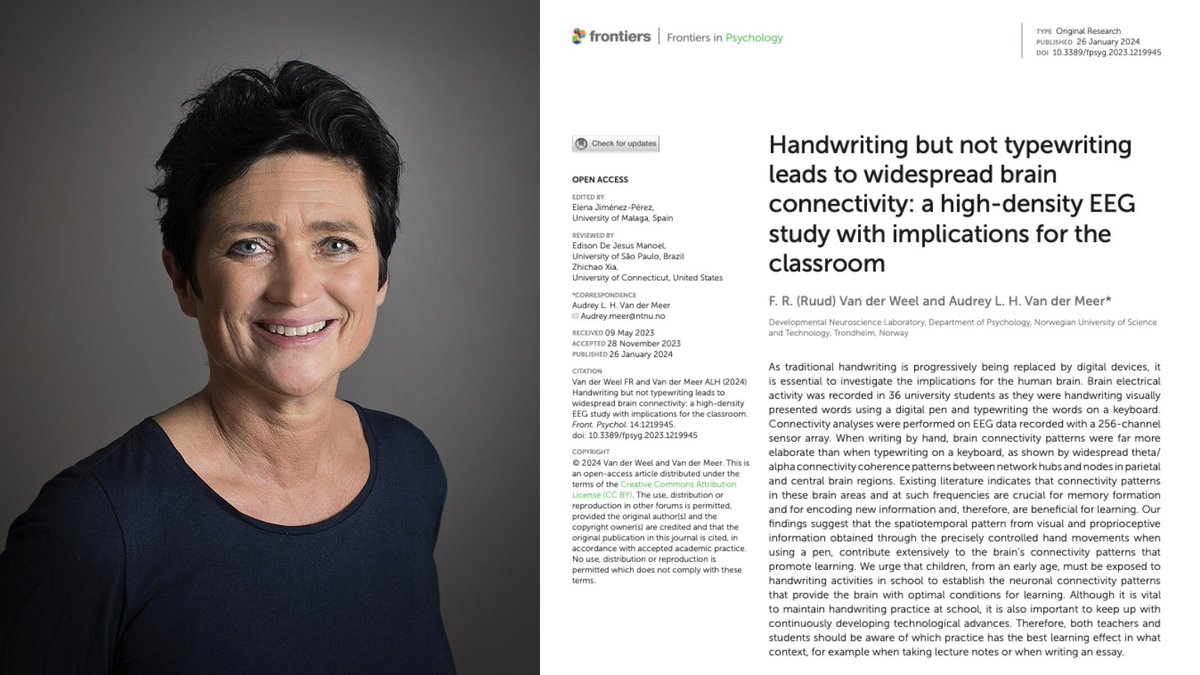
A Norwegian neuroscientist spent 20 years proving that the act of writing by hand changes the human brain in ways typing physically cannot, and almost nobody outside her field has read the paper. Her name is Audrey van der Meer. She runs a brain research lab in Trondheim, and the paper that closed the argument was published in 2024 in a journal called Frontiers in Psychology. The finding is brutal enough that it should have changed every classroom on Earth. The experiment was simple. She recruited 36 university students and put each one in a cap with 256 sensors pressed against their scalp to record brain activity. Words flashed on a screen one at a time. Sometimes the students wrote the word by hand on a touchscreen using a digital pen, and sometimes they typed the same word on a keyboard. Every neural response was recorded for the full five seconds the word stayed on screen. Then her team looked at the part of the data most researchers had ignored for years, which is how different parts of the brain were communicating with each other during the task. When the students wrote by hand, the brain lit up everywhere at once. The regions responsible for memory, sensory integration, and the encoding of new information were all firing together in a coordinated pattern that spread across the entire cortex. The whole network was awake and connected. When the same students typed the same word, that pattern collapsed almost completely. Most of the brain went quiet, and the connections between regions that had been alive seconds earlier were nowhere to be found on the EEG. Same word, same brain, same person, and two completely different neurological events. The reason turned out to be something nobody had really paid attention to before her work. Writing by hand is not one motion but a sequence of thousands of tiny micro-movements coordinated with your eyes in real time, where each letter is a different shape that requires the brain to solve a slightly different spatial problem. Your fingers, wrist, vision, and the parts of your brain that track position in space are all working together to produce one letter, then the next, then the next. Typing throws all of that away. Every key on a keyboard requires the exact same finger motion regardless of which letter you are pressing, which means the brain has almost nothing to integrate and almost no problem to solve. Van der Meer said it plainly in her interviews. Pressing the same key with the same finger over and over does not stimulate the brain in any meaningful way, and she pointed out something that should scare every parent who handed their kid an iPad. Children who learn to read and write on tablets often cannot tell letters like b and d apart, because they have never physically felt with their bodies what it takes to actually produce those letters on a page. A decade before her, two researchers at Princeton ran the same fight using a completely different method and ended up at the same answer. Pam Mueller and Daniel Oppenheimer tested 327 students across three experiments, where half took notes on laptops with the internet disabled and half took notes by hand, before testing everyone on what they actually understood from the lectures they had watched. The handwriting group won by a wide margin on every question that required real understanding rather than surface recall. The reason was hiding in the transcripts of what the two groups had actually written down. The laptop students typed almost word for word, capturing more total content but processing almost none of it as they went, while the handwriting students physically could not write fast enough to transcribe a lecture in real time, which forced them to listen carefully, decide what actually mattered, and put it in their own words on the page. That single act of choosing what to keep was the learning itself, and the keyboard had quietly skipped the choosing and skipped the learning along with it. Two studies. Two countries. Same answer. Handwriting makes the brain work. Typing lets it coast. Every note you have ever typed instead of written went into your brain through a thinner pipe. Every meeting, every book highlight, every idea you captured on your phone instead of on paper was processed at half depth. You did not forget those things because your memory is bad. You forgot them because typing never woke the part of the brain that would have made them stick. The fix is the thing your grandmother already knew. Pick up a pen. Write the thing down. The slower road is the faster one.
Ihtesham Ali tweet media
English
2.5K
44.6K
120.7K
10.1M
๐–˜๐–™๐–š๐–—๐–’๐–๐–š๐–“๐–Œ๐–Š retweetledi
RMC86
RMC86@RMC19861987ยท
This is incredible. Captain Brian Isted, a retired CAF Signals Intelligence Specialist, details how a small CANSOF (Canadian Special Operations Forces) plane was flying a pattern above the Freedom Convoy, scraping data from every device. ATIP requests to get to truth are going down the rabbit hole. "Highly illegal, highly unethical." Clip attached. Full interview & credit to @TheRlyBigShow. youtube.com/watch?v=nQ3Oe2โ€ฆ
YouTube video
YouTube
English
78
1.1K
2.6K
56.6K
Slanger
Slanger@_Slanger_ยท
@sturmjunge my biscuit ambitions when i yield to them far surpass a mere saucer.... proof once again the infinite variety of human tastes ๐Ÿ˜€๐Ÿ˜€๐Ÿ˜€
English
1
0
0
10
Slanger
Slanger@_Slanger_ยท
mugs are MORE refined than a cup-and-saucer because they presume you're not slopping and dribbling your tea a cup and saucer, with a napkin, on a coaster, looks very elegant but secretly??? they're saying things about how much drooling and sloshing you anticipate
English
1
0
0
14
๐–˜๐–™๐–š๐–—๐–’๐–๐–š๐–“๐–Œ๐–Š retweetledi
Barbara Oneill
Barbara Oneill@BarbaraOneillAUยท
The Health Bounce: Why rebounding is the best exercise for every cell in your body!
English
69
877
6K
199.1K
๐–˜๐–™๐–š๐–—๐–’๐–๐–š๐–“๐–Œ๐–Š retweetledi
Wise Mentor | Leadership
Wise Mentor | Leadership@thewisementorยท
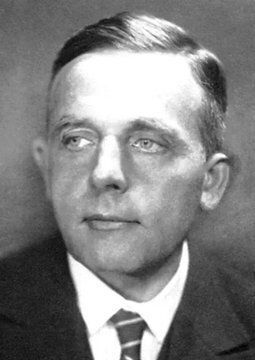
This is Dr. Otto Warburg. He won the Nobel Prize for discovering how cancer cells feed. He then discovered a way to prevent cancer, diabetes, and obesity, but when he revealed it, the medical system destroyed him. Here are his 7 hidden findings that you must never discover: ๐Ÿงต
Wise Mentor | Leadership tweet mediaWise Mentor | Leadership tweet media
English
3
147
392
55.7K
๐–˜๐–™๐–š๐–—๐–’๐–๐–š๐–“๐–Œ๐–Š retweetledi
Brandon Luu, MD
Brandon Luu, MD@BrandonLuuMDยท
Four days in the wilderness without screens improved creative problem-solving by 50%. The modern brain is not underloaded. It is interrupted.
Brandon Luu, MD tweet media
English
21
268
1.6K
71.7K
Foundring ๐Ÿ‡บ๐Ÿ‡ธ
Foundring ๐Ÿ‡บ๐Ÿ‡ธ@foundring1ยท
This deceptively wholesome song actually has incredible historical significance! It was played in the same session as the very first time a Christmas song was ever recorded! Almost nothing is known about the life of banjoist Will Lyle. He was born William B. Lomas and this is his ONLY surviving work. Only *one* source has the sheet music preserved, Baylor U: โ€ฆections-baylor.quartexcollections.com/Documents/Detaโ€ฆ No recordings survive so you are hearing this for the first time in over 130 years. Incredibly Will Lyle was the FIRST person to ever record the banjo. In 1889 he visited Thomas Edison's studio and performed several songs. During the October 1889 session, he played Jingle Bells. This was the FIRST Christmas record EVER made! Sadly, the recordings do not survive, but we have Edison's log to prove it. Read this! phonographia.com/LEARN/JingleB.โ€ฆ Here's another source: records.christmas/articles/how-cโ€ฆ Even more remarkable, THIS VERY SONG was played in the same session! Here is the log: archive.org/stream/FirstBoโ€ฆ Oct. 30th 1889 Will Lyle Banjo 1. Jingle bells 2. Rattle on a banjo 3. Stop that knocking 4. Cat song 5. Gospel train raft 6. Cat song 7. Nigger, nigger, nigger never die 8. Gospel train 9. Barn yard song This song is literally a B-Side on the first Christmas record ever made! So this means that the song was in fact written in 1889 or before, which is much earlier than the published version of 1894. It's likely this was an even older minstrel song that was repurposed by Lyle, a common practice of the day. But there is no evidence of early version so Lyle gets the credit! Finding songs like this has changed my perspective of the music and the people of the era. Although this was a minstrel song performed by white musicians, it's actually a family-friendly story about the joys of parenthood. It's hard to say ALL of this era and music was bad and evil when songs like this existed. I think it's really important that you experience this music as it was intended, in a LIVE performance. We cannot let this important historical artifacts languish on forgotten digital libraries. That's not fair to our cultural legacy and the people who came before us. Will Lyle has been essentially wiped from the history books, despite being a central figure in the development of recorded music. Amazing that he cut the first Christmas record! This song's theme is reminiscent of another work from the same time called "I'm the Father of a Little Black Coon" which I recorded: youtube.com/watch?v=6zdDx6โ€ฆ The composer of this one was black, which shows how these songs were written and enjoyed by BOTH races and weren't all evil and racist. Many were beautiful. They should all be preserved, as they are part of our history, the good the bad and the ugly. Final note: I discovered this song literally 3 days ago and learned it in 2 days! I was researching a completely different song with a similar title and randomly stumbled on this. I believe this song has a rather dubious record (66 to be precise lol). Since biographical information is scant, I'd like to take a moment to discuss the brilliant rhythmic complexities of the songs from this era which this piece exemplifies in a remarkable way. There are actually *4* different types of rhythmic ideas with how to express a single beat (a quarter) in this song! This was common for the time but completely unheard of in popular music today. For example, by the jazz era, almost everything is "swung" and by rock and roll it's all pretty much "straight" rhythms. There is usually very little variation within a single song. Popular music in the 19th century was the opposite. Like European classical music, there is a strong distinction between straight and "dotted" rhythms. It's very common for these songs to switch back and forth between straight 8th notes and these dotted rhythms (which have a "swing" feel). This creates a rhythmic complexity that is very refreshing and stimulating compared to the conformity of the jazz and pop music eras. In this particular song, there are 4 main rhythmic styles per quarter note (single beat). It starts out with the triplet figure (3 notes per beat) and then it immediately uses dotted 8ths with 16th notes. These are two very distinctive feels. The triplets are meant to flow and lilt and the dotted 8ths are more jagged (they split the quarter into 4 subdivisions instead of 3). This is immediately reflected in the beginning of the vocal line as the jagged "dotted" rhythms are what starts the melody. But within the first measure something special happens. The dotted rhythms on the first two words ("other" and "Sunday") follow a certain pattern, namely "long" then "short". BUT with the 3rd word (morning) the rhythm is different! Instead it's SHORT first THEN long! This fun little switch up was a common practice in 19th century popular American music but it went out of fashion by around 1900 when everything became much more unified across the same work. But this type of stylistic rhythm is essential to the feel of these old songs. This figure is repeated throughout the verse but note that the 3rd time is different! You can see this in the first measure of the 2nd system on the 2nd page where it says "was a happy dad" in the first verse. In the other instances, where "dad" is sung the rhythm is the different "short long" but this one keeps the "long short" dotted form like the rest of the line. Again this may seem like a subtle change but it's actually very deliberate and I try to be as faithful to these details in my recordings. See if you can hear the difference between the long short and short long dotted rhythms in my performance! After the triplets and the 2 tops of dotted rhythms, the 4th and final rhythmic variation is the simple "straight" 8ths which appear in the chorus. The idea of switching between "dotted" and "straight" rhythms so frequently is unique to this music style and honestly something I find endlessly appealing and stimulating. For example, in the 3rd measure of the chorus "evry body says", the "evry" part is "swung" and the "body" part is straight! So even within the same word (everybody) there is a sharp rhythmic distinction. The straight 8ths continue in the next measure (looks just like his dad). Then it starts to swing again! This is not some random decision or mistake on the part of the composer, this is a very deliberate stylistic choice and one that defines this entire genre and sets it apart from practically every other modern popular music style. I think that's part of the reason why this music sounds so "foreign" to our ears today. We're used to hearing ONE rhythmic style per song (usually) but these old songs hit us with MANY. I know this might sound like gibberish if you haven't had formal music training, but I just wanted to point out that even though these songs may seem simple and quaint, there is actually a great deal of detail and consideration put into these melodies and rhythms that would be completely missed by modern audiences. In my renditions of these old songs, I try to stay true to the original notation as much as possible, especially in the first verse and chorus of every video. In subsequent verses I sometimes change it up, but I just wanted to stress just how much effort I put in to reproduce these as faithfully as possible. I hope this was interesting to read for someone out there. Thank you for reading and listening! Much love, Kylan
YouTube video
YouTube
English
6
12
98
4.3K
Foundring ๐Ÿ‡บ๐Ÿ‡ธ
Foundring ๐Ÿ‡บ๐Ÿ‡ธ@foundring1ยท
Nigger, Nigger, Nigger, Neber Die By Will Lyle (1889/1894) ๐ŸŽน ๐ŸŽถ
English
62
124
1.4K
118.2K