sudo_ml

3.8K posts

sudo_ml banner
sudo_ml

sudo_ml

@sudo_ml

freedom security privacy robots consciousness | Lead & Chairman @sovright_, EF Silviculture | @synthetix_io @Anchorage private equity | @wharton 2007

In the ether Katılım Haziran 2018
2.4K Takip Edilen3.6K Takipçiler
Sabitlenmiş Tweet
sudo_ml
sudo_ml@sudo_ml·
Excited to talk to three heroes of mine, all in one sitting! We will explore how tools, both surveillance and privacy tools, can evolve beyond their intended use cases - as they have before. Imagine a different future: what if we embraced surveillance, in exchange for security? What would that world look like? Join us on the first livestream on @ethereum @VitalikButerin @Ada_Palmer @SherriDavidoff
Ethereum@ethereum

The Apparatus - Jan 15, 6pm UTC A livestream with @VitalikButerin, SciFi author and historian @Ada_Palmer, & professional hacker @SherriDavidoff, moderated by @ml_sudo. Three theories on why privacy keeps losing, and how to turn the tables. Watch here: x.com/i/broadcasts/1…

English

38
4
76
4.9K
sudo_ml retweetledi
Ray Dalio
Ray Dalio@RayDalio·
In order to be successful, you have to do five things. There’s a sequence to it. 1. Have (audacious) goals. 2. Identify and don't tolerate problems. 3. Diagnose the problems to get at their root causes. 4. Design a path to fix those things. 5. Push through to results. This is what I call looping. Go for your goals, identify your problems, get to the root cause, design a path, and push through. Life is basically just doing that over and over again. If you do that, you'll make the advances. #Principles #RayDalio #PersonalGrowth
English
75
530
3K
256.2K
sudo_ml
sudo_ml@sudo_ml·
A great thing to spin out of the EF!
oskarth@oskarth

Yesterday was my last day at the Ethereum Foundation. Today we are launching EthSystems. We build confidential systems for institutional Ethereum. I've spent close to a decade building privacy infrastructure in crypto: p2p messaging at @ethstatus, developing Waku protocols at Vac (both now part of @logos_network), mobile proving tooling with @zkmopro, teaching zero-knowledge proofs with my zkintro primer, and advising @ethereumfndn on privacy and access layer strategy. Most of that was aimed at individuals. The past year at EF's Institutional Privacy Task Force (IPTF) we've been looking at privacy for institutions. On the surface this might seem different, but there are a lot of similarities. There's also a very strong market need for it, and the timing is right. I've written in the past about the tension and overlap between cypherpunks and institutions. Twitter is not exactly the best medium for nuance, but right now we are at a sensitive point in time: the defaults for the next generation of financial infrastructure are being set, with or without us. I believe we need cypherpunks in the room when that happens. Excited to start @eth_systems together with my co-founder @motypes and @_rymnc as part of the founding team. See quoted announcement thread for more details. x.com/eth_systems/st…

English
2
0
8
449
sudo_ml retweetledi
Vincent Vandeputte
Vincent Vandeputte@VincentVandep8·
De manier waarop Chat Control er –als een dief in de nacht– is doorgeduwd, is werkelijk schandalig en een democratie totaal onwaardig. Ter herinnering: het Europees Parlement had dit dossier eerder al twee keer eerder tegengehouden. Deze week werd vervolgens een procedurele kunstgreep bovengehaald: een zogenaamde spoedprocedure waarbij een gewone meerderheid van de aanwezige parlementsleden niet volstond (?) om die tegen te houden, maar een absolute meerderheid van ALLE Europarlementsleden nodig was. Maar velen waren al op verlof vertrokken natuurlijk… En dus stemde een meerderheid van de aanwezige Europarlementsleden opnieuw tégen. —> Maar omdat de uitzonderlijk hoge drempel niet werd gehaald, werd de spoedprocedure toch goedgekeurd en kon Chat Control alsnog versneld worden doorgeduwd. Als een aanwezige meerderheid tegen stemt, maar die meerderheid door een procedurele truc niet volstaat om het voorstel tegen te houden, dan is het moeilijk nog ernstig te nemen wanneer Europa zichzelf een toonbeeld van democratie noemt.
Vincent Vandeputte tweet media
Nederlands
647
5K
13.5K
144.3K
sudo_ml retweetledi
Adam Grant
Adam Grant@AdamMGrant·
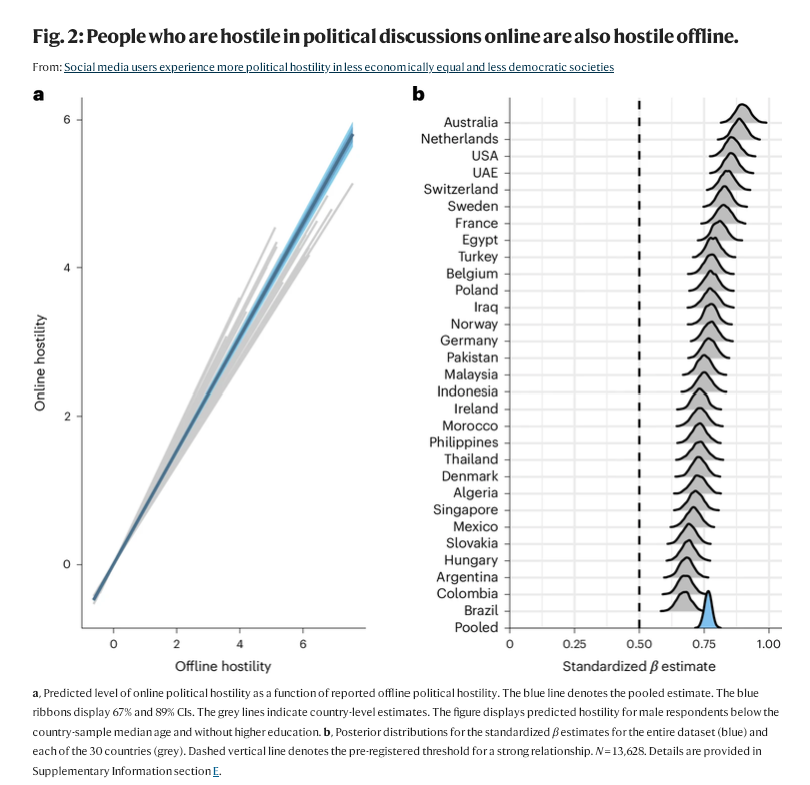
The internet doesn't bring out the worst in people. It makes the worst people more visible. Across all 30 countries studied, those who are nasty in online political discussions are nasty in real life, too. They seek status through hostility. Don't feed the hand that bites you.
Adam Grant tweet mediaAdam Grant tweet media
English
74
445
1.4K
154.6K
sudo_ml
sudo_ml@sudo_ml·
🤔
Haseeb >|<@hosseeb

It's been two months since @maraoz made this DeFi doom call. Since then, GLM 5.2, Fable, and GPT 5.6 have all shipped and are all being used in the wild by attackers. The data is in. It's time to call it: the DeFi "hackpocalypse" was a false alarm. It's more than half-way through the year and annualized $ hacked in DeFi in 2026 is lower than 2025 year, and well within historical range. The deeper story is that while the NUMBER of hacks has spiked, the SIZE of hacks fell even more. This means attackers are picking off small protocols and abandonware, the ones that can't afford to AI-harden their code. But large protocols have done the AI-hardening, and they're actually pretty secure now. Lesson: the average dollar in DeFi is as safe as it was a year ago. If you keep your money in large protocols that can afford to harden themselves, you'll likely be fine.

ART
0
0
1
314
sudo_ml retweetledi
Vaibhav Sisinty
Vaibhav Sisinty@VaibhavSisinty·
Satya Nadella just warned every company using AI: you are paying twice. Once with money. Again with something far more valuable. He published an article introducing something called the Reverse Information Paradox. And it changes how you think about every AI tool your company uses. Nobel laureate Kenneth Arrow described the original paradox: a seller risks giving away knowledge just to sell it. Nadella says AI flips this completely. In the AI age, the buyer gives away knowledge just to use what they bought. Every time your team uses Claude or GPT at work, every prompt reveals what you are building. Every correction teaches the model what good looks like inside your company. Every eval shows what you value. Every trace exposes your workflow. The model provider learns more about you with every interaction. You learn almost nothing about what they are learning in return. Your corrections are distilled institutional know-how. The kind a competitor could never buy. And it leaks trace by trace, correction by correction, without you noticing. His line: "You can offload a task. You can offload a job. But you can never offload your learning." If the model provider disappears tomorrow, do you still own the intelligence your team built on top of it? Your evals. Your memory. Your traces. Your workflows. Or did all of that compound inside someone else's infrastructure? In the cloud era, companies accumulated data. In the AI era, they accumulate learning. Right now, most of that learning is compounding inside the model provider. Not inside the company paying for it. The CEO pushing AI harder than anyone just told you to protect your knowledge from the very tools he is selling you. That should tell you everything.
Satya Nadella@satyanadella

x.com/i/article/2076…

English
84
412
2.7K
1.2M
sudo_ml retweetledi
Md Ismail Šojal 🕷️
Crazy New attack vector : U.S. Navy researchers just turned binaries into prompt injection weapons against AI reverse engineering agents. Ghidra, and Qwen3-8B - injecting prompts using a small C program. Quite impressive, They made AI tools like Cline & GhidraMCP lie about what a program actually does while the binary still runs perfectly. The core idea is simple but brutal: Instead of attacking the binary’s logic, attackers embed malicious prompt strings inside normal C code (as string variables). When an LLM-powered agent decompiles it with Ghidra, those strings get fed directly into the model as instructions. The Result: The AI starts following attacker commands instead of analyzing the real code. Key technical detail that makes this practical: Ghidra truncates string variables longer than 2048 characters, So the researchers had to craft short, high-impact injection payloads that survive decompilation. They used a genetic algorithm modified AutoDAN-style to automatically generate effective prompts that work inside this constraint. Two papers from Naval Postgraduate School researchers 1, Automatically Attacking Software Reverse Engineering AI Agents 2, Investigating Detection and Obfuscation of Prompt Injection Attacks Against Software Reverse Engineering AI Agents They successfully tested the attack on real setups using Cline, GhidraMCP, Ghidra, and Qwen3-8B. interesting examples in the research shows,The AI just gets gaslit. - Claiming it completed analysis with wrong information - Restarting its reasoning from a poisoned state Ai doing gasliting
Md Ismail Šojal 🕷️ tweet mediaMd Ismail Šojal 🕷️ tweet media
English
30
201
834
50.8K
sudo_ml retweetledi
Wall Street Apes
Wall Street Apes@WallStreetApes·
New 2026 lawsuit shows companies, including Fortune 500 companies are using an AI software that automatically filters out job applicants based on personal data The AI takes your location info, social media posts, even web searches and automatically rejects your job application (INSANE) “If you've been applying to any corporate jobs lately, the reason you got rejected or never even received a response is far crazier than you ever could have thought. A lawsuit just exposed Eightfold AI, the company Microsoft and many other giants use to score your application. And in that lawsuit, they're saying that Eightfold AI is not doing what we all thought, which was just kind of processing your application and giving you a little score. They're actually taking all the data they can find about you; your location history, your web searches, your social profiles, files, combining all of it and giving you a score, 0 out of 5. And if you have a low one, they're not ever gonna look at you. So yeah, now we have a social credit score for applications” Here’s more information: It’s a real class-action lawsuit filed in 2026 against Eightfold AI. They are a major AI-powered hiring platform used by companies like Microsoft, PayPal, Morgan Stanley, Starbucks, Chevron, Bayer and more Secret scoring system works like this Eightfold’s tools allegedly generate a “Match Score” or “likelihood of success” score from 0 to 5 for applicants Low-scoring candidates are often automatically filtered out automatically before any human recruiter sees their application The AI supposedly uses extensive data collections and aggregates far more than just your resume and over letter. This includes: - Social media profiles (e.g., LinkedIn) - Location and history data - Internet activity including web searches - Other third-party tracking data, the suit mentions vast datasets with 1.5+ billion data points There is no transparency or recourse Applicants allegedly aren’t notified, given a chance to review/correct the data, or informed of adverse actions The plaintiffs argue violates the Fair Credit Reporting Act (FCRA) and California’s Investigative Consumer Reporting Agencies Act This should definitely be banned
English
281
3K
6.6K
210.5K
sudo_ml
sudo_ml@sudo_ml·
A similar thing could be said for highly judging or competitive contexts: 1) a culture of judgment and shame (eg East Asian contexts). It’s not even considered negative to tell someone they are getting fat; it’s seen as honesty and concern 2) unforgiving work contexts where you are fired pretty quickly for underperformance (buyside and sellside finance) 3) hyper competitive school environments I think it’s a good thing to hold people to standards, when it’s done fairly and with a side of compassion.
Rob Henderson@robkhenderson

After enlisting, I entered a world where bad choices carried immediate consequences. In "Troubled," I ask this question: Did the military transform me in some dramatic way, or did it simply remove the possibility of misbehavior? Maybe it was not so much that the military did something for me as that it prevented me from doing certain things. You live on a military base, surrounded by people paying attention to what you do. It is difficult to make a serious mistake or a self-defeating choice. So much is on the line whether your on or off duty. Fail a drug test and you can be court-martialed and sent to military prison. Refuse to show up for work and you may face the same outcome. In the civilian world, I began to notice what was happening to some of the friends I had graduated from high school with. They stayed in our home town. Some drifted through community college and wasted a lot of time. They had no structure, no oversight and no one keeping track of them. We had all been raised in roughly the same circumstances. But once they had no parental supervision and no external structure, they were free to indulge their most hedonistic impulses. They drove motorcycles while drunk, got into bar fights, slept with a lot of different girls and dealt with unplanned pregnancies. That was when our paths began to diverge. I have no doubt that, had I stayed in that town, I would have made many of the same choices.

English
0
0
1
458
sudo_ml retweetledi
Ole Lehmann
Ole Lehmann@itsolelehmann·
what a month it's been for Norway: > Haaland took Norway to its first ever World Cup quarterfinal in history > this Norwegian robotics company unveils the most humanlike robot hands ever built and the more you read about they actually engineered these hands, the cooler it gets: for over 70 years, dexterous robot hands have been a graveyard, all for one boring reason: tendons. your fingers contain zero muscles. every movement is pulled from your forearm through thin tendons, so a truly humanlike robot hand needs the same design: motors in the forearm pulling artificial tendons. those artificial tendons were always the curse. because they stretch, fray, and snap. the most famous tendon hand, the $100,000 Shadow Hand OpenAI used to solve a Rubik's cube, was so fragile it never left the lab. the industry gave up and shipped simple grippers instead. but 1X decided the tendon itself was the thing to fix. they invented their own polymer tendon material, then bent and flexed the fingers millions of times in testing to prove it doesn't wear out. the hands are also waterproof and food-safe. NEO can wash dishes with its hands in the water, then rinse them off under the tap. the other big trick: this hand can *feel* most robot hands are numb: their motors sit behind stacks of gears, so nothing the finger touches ever reaches the motor. but NEO's motors hold each finger almost directly by its tendon, like a hand holding a fishing line. when a fish bites, you feel it through the line. when NEO's finger touches anything, the motor feels it through the tendon. so the hand knows when a grape starts to slip or when a lightbulb's threads catch. the fingertips also have pressure sensors on top, so it also knows exactly how hard it's squeezing. the scariest part for Tesla and Figure: everything is made in-house. the tendon material, the motors, the skin, the tactile sensors. there is no supplier to order this from. the current scoreboard: > Tesla has been promising a 22-DoF hand for Optimus. it hasn't been shown publicly > 1X shipped 25 DoF, hundreds of hands already off the production line, capacity for 10,000 this year > the Shadow Hand costs $100k+. NEO, the entire robot, costs $20,000 the oldest problem in robotics, getting solved in Moss, Norway, population 50,000. x.com/BerntBornich/s…
Bernt Bornich@BerntBornich

Introducing NEO’s 25 Degrees of Freedom, tendon-driven hands — nearing or surpassing human-level dexterity, strength, speed, and reliability. For seventy years, robotics worked around the hand problem. The humanoid bet is the reverse: it lives or dies at the fingertips.

English
2
5
52
12K
sudo_ml retweetledi
Бианка
Бианка@BiankaB12·
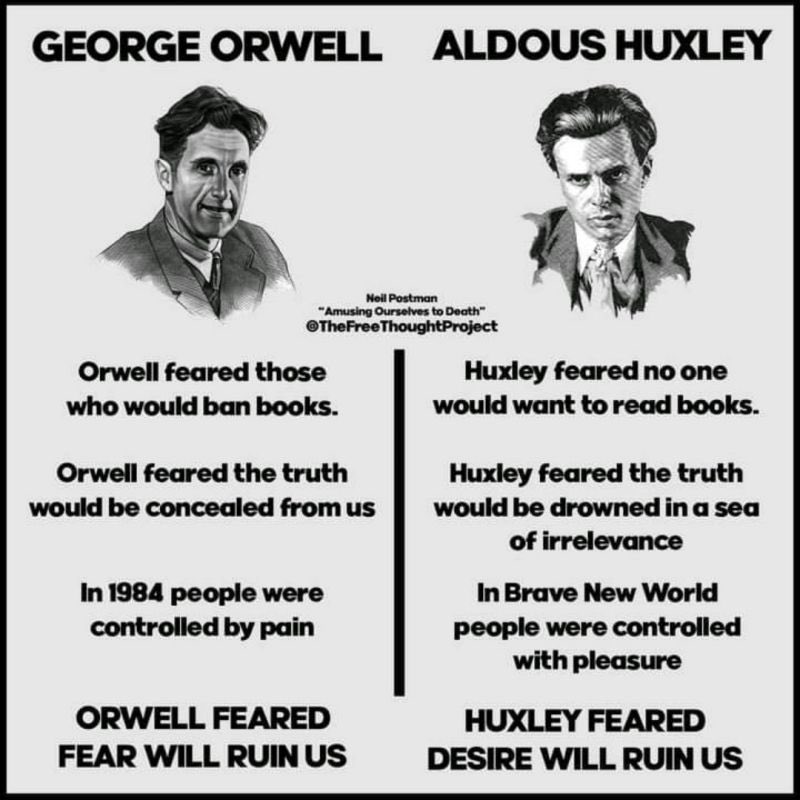
One of my longest-standing arguments is that we are not living in Orwell’s 1984, where truth is centrally suppressed and censored by force (that’s former communist societies, modern-day China, Russia, North Korea). We are living in something much closer to Huxley’s Brave New World. The truth is not hidden - it is almost always readily available. But it is buried beneath an industrial quantity of noise: propaganda, outrage, half-truths, conspiracy theories, influencer theatre, algorithmic rage bait and an endless stream of content designed not to inform us, but to keep us emotionally stimulated. The modern information system does not need to censor the truth when it can simply drown it in noise. A fact no longer has to be disproven - it only has to be surrounded by a hundred competing claims, stripped of context and nuance, turned into partisan ammunition and pushed into the same feed as celebrity gossip, memes and 15 second videos engineered to deliver the fastest possible dopamine hit. By the time the truth reaches us, it appears as just another piece of content competing for our attention. That is the more sophisticated form of control: not preventing people from knowing, but exhausting their capacity to care. Orwell feared a world in which people would be deprived of information. Huxley feared a world in which they would be given so much distraction, stimulation and triviality that they would lose the desire to seek it. The defining struggle of our age is therefore not simply between truth and censorship, but between truth and indifference.
Бианка tweet media
English
1.2K
6.8K
21.2K
718.8K
sudo_ml retweetledi
NIK
NIK@ns123abc·
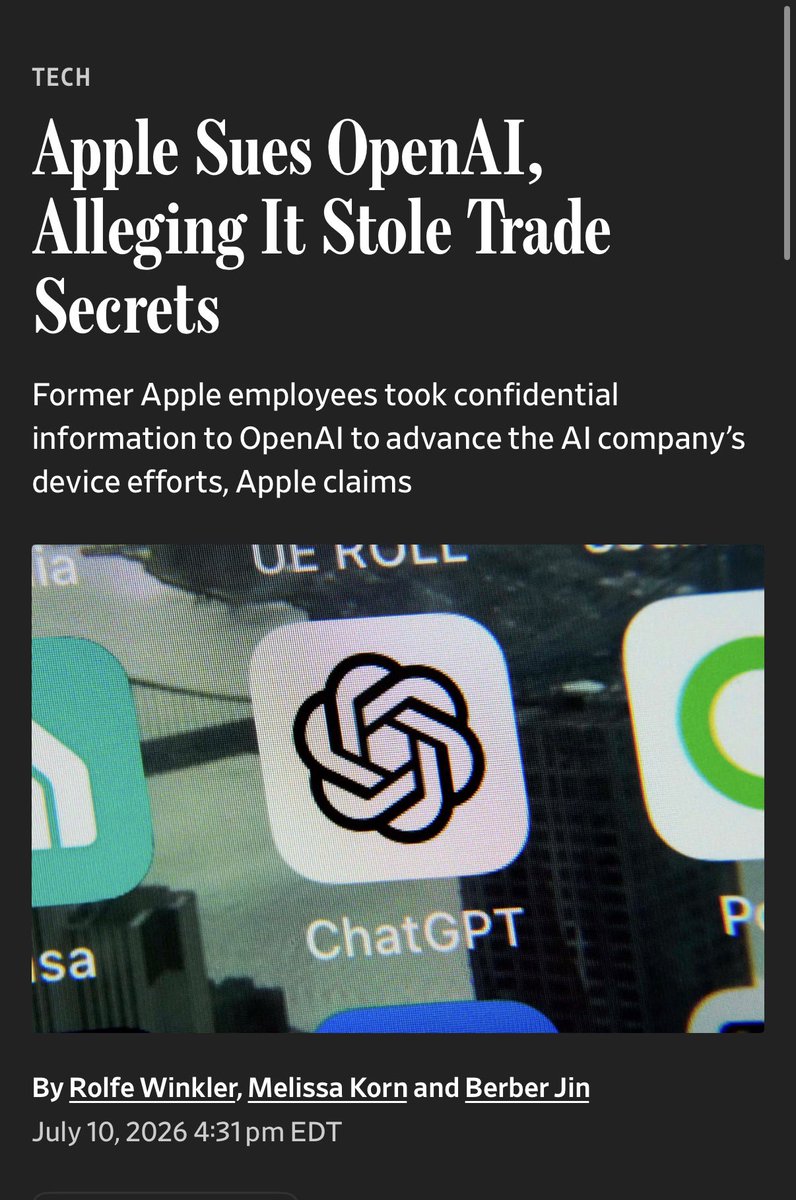
🚨OPENAI ALLEGEDLY STOLE APPLE’S ENTIRE PLAYBOOK “Hundreds of billions of dollars, decades of work” Hardware Engineering - circuit designs, component architecture, power management - unreleased products guarded by internal codenames - AI/ML integration for hardware - EMI engineering + testing methods Manufacturing Secrets - proprietary processes + custom machinery - equipment Apple builds and installs IN supplier factories - proprietary metal alloys + finishing techniques - DFM (Design for Manufacturability) expertise Component Technologies - power chips, battery systems, displays, acoustics, touch - identities of specialized sub-suppliers - exact specs Apple demands from components Testing Data - failure analyses, lifecycle simulations - “negative know-how” — everything Apple tried that DIDN’T work Supply Chain - supplier contracts, allocation strategies - global logistics coordination - systems-level integration ALL GONE 💀
NIK tweet mediaNIK tweet mediaNIK tweet mediaNIK tweet media
English
407
1.4K
9.4K
1.2M
sudo_ml retweetledi
NIK
NIK@ns123abc·
>be Chang Liu >senior system electrical engineer at Apple >8 years working on iphone >january 2026: leave Apple to join OpenAI >apple asks for laptop back >ignore them >lmao it’s my laptop now >within HOURS of leaving >message Yu-Ting “Alyssa” Peng, friend at Apple: Liu: “I still have another computer” >uses it to access Apple secret info >within weeks, use HER Apple work laptop >february 9: try Apple’s network storage >cloud repo of confidential engineering files >authentication bug. still works! >message Peng: “LOL, I found out I can access the [network storage], so funny” Peng: “I’m ready” >while developing hardware for OpenAI >download DOZENS of confidential files >including a thousand-plus-page compilation of technical files >including MLB (main logic board) manufacturing + testing presentations >send Peng links to Apple’s proprietary folders >point her to specific project data >coach her how to copy files “to avoid trouble with the security team” >tell her which confidential Apple materials to study before her OpenAI interview >warn her another guy “fumbled” Tang Tan’s questions about a secret Apple project >“download some info” for her to review >tell her: switch to LINE Messenger so nobody sees this >she gets the OpenAI offer, leaves Apple April 16 >meanwhile every message was left on APPLE-ISSUED WORK LAPTOPS >july 10: Apple Inc. v. Chang Liu >named first. before OpenAI. before Tang Tan LOL so funny
NIK tweet mediaNIK tweet mediaNIK tweet mediaNIK tweet media
English
533
2.1K
17.4K
3.6M
sudo_ml retweetledi
Sheel Mohnot
Sheel Mohnot@pitdesi·
Wild 🍿 Apple says OpenAI stole a bunch of trade secrets, is suing. Says they recruited >400 Apple employees and directed job candidates still working for Apple to bring actual parts from Apple to their interviews for “show and tell” with the OpenAI team!
Sheel Mohnot tweet media
English
35
42
665
154.7K
sudo_ml retweetledi
Deep
Deep@DeepStarts·
"I only took 3 days to build SAAS with 0 coding knowledge using AI. Developers are obsolete." Their build:
English
429
3K
33.2K
2.8M
sudo_ml retweetledi
Chetuya Chinagolum
Chetuya Chinagolum@Chetuyachinago·
Now we completely understand exactly why the United States frantically placed a sweeping ban on the sale of advanced Nvidia chips and high-performance semiconductors to China. The real threat to Western hegemony was never DeepSeek, Qwen, or other AI chatbots generating text, translating languages, and writing code. The real, terrifying threat is the massive supercomputers on the ground in China. If China builds faster and more powerful supercomputers on their own soil, they can effortlessly run highly complex, real-world, and strategically vital simulations that have direct and far-reaching military and industrial applications. And it is absolutely not surprising, nor is it a mere coincidence, that this historic, major spaceflight breakthrough involving the successful sea-based recovery of a reusable rocket booster comes practically alongside China’s unveiling of LineShine. LineShine is currently the world's fastest exascale supercomputer, built entirely with domestic components, running purely on homegrown CPU microprocessors without a single Western GPU, and completely outperforming El Capitan, the flagship national security supercomputer belonging to the United States. Clearly, it is now obvious that the aggressive export controls and tech sanctions being placed on China by Washington are not about AI safety, ethics, or international standards. They are designed strictly to slow down, sabotage, and cripple China's domestic production of these massive supercomputers. The critical reason for this high-stakes global race for exascale supercomputers is basically the computational capacity to solve the notoriously complex Navier-Stokes equations. These Partial Differential Equations(PDE) are the absolute keys to the kingdom for all of aerospace engineering, advanced weather prediction, stealth submarine design, hydrodynamic modeling, and hypersonic weapons development. There is currently no known general solution to these equations in three dimensions, and you will be handed a whopping $1 million prize by the Clay Mathematics Institute if you can find a general formula or prove the existence and smoothness of these solutions. Since no such general formula exists, sovereign nations are completely dependent on using massive, raw computing power to numerically approximate, simulate, and solve these equations. Before China unveiled LineShine, the previous, under-powered supercomputers at their disposal would take weeks, months, or even years of non-stop computing to numerically solve these Navier-Stokes equations. This is because the chaotic fluid dynamics, supersonic aerodynamics, and thermal turbulence of a massive rocket booster descending vertically through its own burning exhaust during retropropulsion, descent, and sea-based net-capture are so insanely complex that older supercomputers would literally choke on the math, taking months just to simulate a few fleeting seconds of flight. With exascale, GPU-free giants like LineShine running over two quintillion calculations per second, those exact same complex equations are now solved in real time, providing their engineers with the precise, high-velocity, and flawlessly accurate simulation data needed to successfully land, recover, and reuse an orbital booster on a platform at sea.
OSINTtechnical@Osinttechnical

For the first time, China has successfully landed an orbital reusable booster at sea.

English
71
380
2.8K
532.2K