Marek Supa

400 posts

Marek Supa

Marek Supa

@supasound

Slovenská republika Katılım Temmuz 2009
1.3K Takip Edilen197 Takipçiler
Marek Supa retweetledi
Szabolcs Panyi
Szabolcs Panyi@panyiszabolcs·
‼️Statement on the Orbán Government Accusing Me, an Investigative Journalist, of Espionage‼️ Today, the Hungarian government has filed a complaint against me for espionage. Accusing investigative journalists of espionage is virtually unprecedented in the 21st century for an EU member state. This is typical of Putin’s Russia, Belarus, and similar regimes. I have spent over a decade documenting how Russian spies and interests have penetrated Hungarian politics, so I am probably the least surprised by this. Despite growing signs that the Hungarian government acts as a Kremlin ally and copies the Russian model, I still trust that parts of the Hungarian state—and the judiciary—follow the Hungarian constitution, not that of the Russian Federation. I have never engaged in espionage. I see my work as journalistic counterintelligence—from exposing the hacking of the Hungarian Foreign Ministry by Russian actors to revealing the activities of Hungarian pro-Kremlin propagandists. Defending myself publicly would be easier if I were not bound by source protection. But that remains my top priority. I cannot reveal who provides me information or what I receive, including from within Hungarian state structures. If I were not a journalist, I could list many facts proving it is impossible for the Hungarian state to genuinely believe I am spying. Certain meetings, contacts, and information gathering could never have happened otherwise. This baseless accusation now forces me to share details of a specific investigation, including a conversation with a confidential source that appears to have been wiretapped. Normally, this would appear in a finished article or my upcoming book—not here. (It will appear there as well.) Since 2023, I have investigated whether the relationship between Péter Szijjártó and Russian officials exceeds legal limits. The published audio, where I’m heard talking to a source, mentions that communication between Szijjártó and Sergey Lavrov is recorded by EU intelligence services. Less attention has gone to my point that this relationship raises strong suspicion of political intelligence activity and influence operations in Russia’s interest. These are serious claims and hard to prove. As a journalist, I cannot force anyone to speak or hand over documents. That is why gathering this information has taken so long—and why I spoke to that sensitive source (while the conversation was secretly recorded). Serious claims require serious evidence, and I believe I have gathered some. I have not engaged in espionage. I have not cooperated with any foreign intelligence service in surveilling Szijjártó. Instead, I tried to verify earlier fragments of information about Szijjártó–Lavrov communication. I sought to identify the channels and phone numbers used, and whether a secret channel—possibly used by Russian intelligence—exists. In other words, whether Szijjártó uses a hidden device or number unknown even within the Hungarian Foreign Ministry. This was only one part of my research. The other, more serious topic is this: Since at least 2016–2017, EU and NATO intelligence services have had indications that large amounts of cash and precious stones may have been transported from Russia on Hungarian government aircraft or private jets used by government figures. Officials from at least six countries made such claims to me. These signals did not come from monitoring Hungarian targets, but, for example, from intercepting Russian officials discussing or preparing such shipments. Alongside Szijjártó–Lavrov communication, I examined how baggage screening and handling works on such flights, which officials travel with what luggage, whether more packages arrive from Moscow than depart, and how such shipments could be handled discreetly. I know how serious this is, and I would not have written even this much—but since I do not know what else may be taken from the edited recording, or what fabricated accusations (like, for example, that I was seeking such details to commit terrorism) may follow, I believe I must share this now. Why do I investigate all this? According to many sources familiar with the Hungarian state and counterintelligence, there is no independent body in the Orbán system able to investigate or act if a senior official is suspected of espionage. Government members direct intelligence services and set expectations. The services lack both tools and authority to investigate a government member. I knew this would be difficult when I chose to pursue it. But few people in Hungary can or dare to do this, so I felt it was my duty. We have now reached the point where the Orbán government—of which Szijjártó is still a member—aware of my reporting plans and the risk they pose, has preemptively accused me of espionage. I am a Hungarian patriot. I serve the public. As an investigative journalist, my job is to hold power accountable. Neither political theater nor legal threats will deter me.
Szabolcs Panyi tweet media
English
308
2.8K
7.8K
558.2K
Marek Supa retweetledi
Ben Hodges
Ben Hodges@general_ben·
Most insightful and poignant analysis I’ve read today.
Gandalv@Microinteracti1

This video should unsettle anyone who takes the United States seriously as a nation. Because it exposes something dangerous: the trivialization of the world's most consequential office. It shows how carelessly the power, credibility, and accumulated moral authority of a superpower can be squandered for a few seconds of viral attention. In any other major democracy, this behavior from a head of state would trigger a constitutional crisis. Paris would burn. Berlin would convene emergency sessions. In the Nordic countries, resignation would follow within hours. Across functioning democracies, the public, institutions, and political class would recognize this for what it is: an assault on the dignity of the state itself. Leaders are not free to perform as entertainers without consequence. National honor is not personal property, it's held in trust. But the United States is not just another country with a provocateur in charge. It is the linchpin of global order. It maintains formal alliances and security guarantees with forty to fifty nations. It underwrites the financial architecture, trade systems, and diplomatic frameworks that billions of people depend on daily. When the American president speaks—or posts—it doesn't land as satire, meme, or personal whim. It reads as a signal about what the country is becoming. American power has never relied solely on carrier strike groups or economic output. It has rested on something more fragile and more valuable: trust. The belief that beneath domestic turbulence lies institutional seriousness, predictability, and a baseline commitment to dignity. That belief is now disintegrating in real time. Millions of American companies operate globally. They negotiate multibillion-dollar contracts in environments where reputation is currency. Boardrooms in Frankfurt, Singapore, and Dubai aren't debating whether a post was clever—they're asking whether the United States remains a reliable partner. Whether agreements signed today will be honored tomorrow. Whether American leadership has devolved from institutional to purely theatrical. Consider tourism, which sustains millions of American jobs—airlines, hotels, restaurants, museums, entire regional economies. Soft power isn't an abstraction. It materializes in flight bookings, conference locations, study-abroad programs, and decades of accumulated goodwill. A quiet, decentralized boycott doesn't require government action—only a collective sense that a nation no longer respects itself. Now picture this image being studied by foreign ministers, central bank governors, defense strategists, and sovereign wealth fund managers. Picture them asking a coldly rational question: How do we write binding thirty-year agreements with a country whose public face will be this, relentlessly, for years to come? How do we plan for the long term when the tone is impulsive, mocking, and unbound by the gravity of office? This is where the real calculus begins. Trillions in foreign capital depend on confidence that America is stable, credible, and rule-governed. That confidence is now being traded for what, exactly? Applause from an online mob? A dopamine rush from manufactured outrage? Content designed to dominate the news cycle rather than serve the national interest? Every serious nation eventually confronts this choice: burn long-term credibility for short-term spectacle, or safeguard the reputation previous generations bled to build. The United States spent eighty years constructing an image of reliability, restraint, and leadership under pressure. That image wasn't born from perfection—it came from a visible commitment to standards that transcended impulse. This isn't a partisan issue. Europeans who value democratic norms recognize something ominously familiar here. Americans—Democrat and Republican alike—who believe in responsibility and restraint should see it too. Power attracts scrutiny. Leadership demands discipline. A superpower cannot behave like a reality TV contestant without paying a price. The presidency is not a personal broadcast channel. It's a symbol carried on behalf of 330 million people and countless international partners who never voted but whose lives are shaped by American decisions anyway. Every post either reinforces or erodes the idea that America can be counted on when it matters most. So the question is no longer whether this is offensive. The question is whether this is who America chooses to be: a nation that trades a century of hard-won reputation for viral moments. A country that replaces statecraft with content creation. A republic governed like a season of reality television. History offers a harsh lesson here. Great powers don't fall because enemies mock them. They collapse when they begin mocking themselves—publicly, proudly, and without grasping the cost until it's far too late. Stay connected, Follow Gandalv @Microinteracti1

English
173
1K
6.9K
1.6M
Paul Sims
Paul Sims@SimslearnAi·
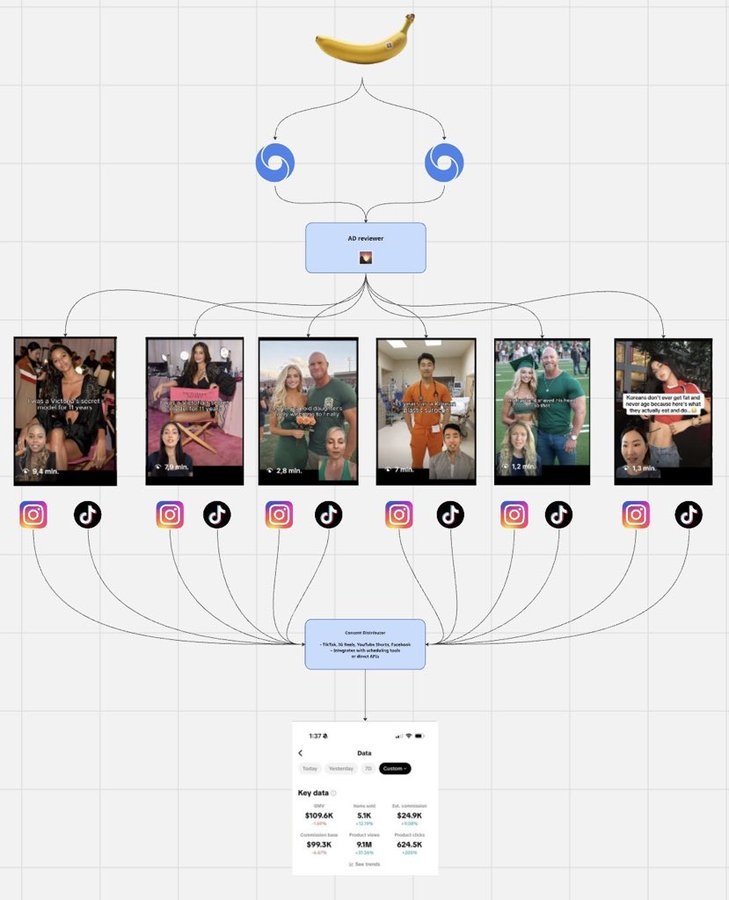
Nano Banana + MakeUGC + Veo3 = AI content Factory This agent pumps out hundreds of ads daily — fully automated. - No $300 creators - No $10K/month agency fees - No products Comment “HK” and I'll send it for FREE! (must be following)
Paul Sims tweet mediaPaul Sims tweet media
English
644
115
685
65.8K
Marek Supa retweetledi
Miloslav Šindelář
Miloslav Šindelář@Milosval1·
1/25 Několikrát jste mě označovali pod nedávným postem od @ilblog, kde Ivo doporučuje 4 vybrané knihy a shrnuje poznatky z nich. Vlákno uvádí: "Pokud chcte zit dlouho a byt pri tom zdravi dejte si vlakno". Vlákno má přes 460k views! Co si o těchto knihách a doporučeních myslím?
Miloslav Šindelář tweet media
Čeština
31
211
1.4K
213.2K
Easlo
Easlo@heyeaslo·
My All-In-One Social Media Planner: ✍️ Content planning 🗓️ Posting schedule 🤝 Personal CRM 💼 Sponsorships 💡 Bookmarks 📂 Swipe files 💰 Affiliates Made in @NotionHQ
Easlo tweet media
English
15
59
515
85.8K
Marek Supa retweetledi
Alex Banks
Alex Banks@thealexbanks·
Microsoft 365 has over 345 million paid users. Last week they announced AI Copilot for Word, Excel, PowerPoint, Outlook and Teams. 7 breakthrough features that change the future of work forever:
English
194
2.2K
11.4K
3.4M
Marek Supa retweetledi
Jenny
Jenny@jennyAI·
Today I met with the Global Media team to discuss Generative AI. The excitement was insane! Never seen a topic like this at work before. Here are the 14 examples of AI in Media I shared with them & why: 🧵
English
44
273
1.3K
438.8K
Marek Supa retweetledi
Linus ✦ Ekenstam
Linus ✦ Ekenstam@LinusEkenstam·
🚨🚨 Tutorial: How to make Game Assets in Midjourney 🚨🚨 🕹️ A quick and easy way to start making your own game asses for your next game or your next Dungeon on Dragons Campaign. 🔥 Today I'll cover inventory items, and how to get them into Figma 🧵 Let's start
Linus ✦ Ekenstam tweet mediaLinus ✦ Ekenstam tweet mediaLinus ✦ Ekenstam tweet mediaLinus ✦ Ekenstam tweet media
English
63
263
1.9K
608.1K
Marek Supa retweetledi
Linus ✦ Ekenstam
Linus ✦ Ekenstam@LinusEkenstam·
RIP website designers Here are a few new AI UI Design tools, that will flip the industry upside down. 👇👇👇
English
165
1.4K
7.4K
1.3M
Marek Supa retweetledi
Miles Deutscher
Miles Deutscher@milesdeutscher·
Pantera Capital just released their 2023 outlook report: "The Year Ahead". It's packed full of alpha. I read through its 10,000 words so you don't have to. 🧵: Here are the top 10 takeaways. 👇
English
171
912
3.2K
1M
Marek Supa retweetledi
Rob Lennon 🗯 | AI Whisperer
Rob Lennon 🗯 | AI Whisperer@thatroblennon·
Most new ChatGPT users are making simple mistakes. (And they don't realize results could be TWICE as good.) 8 problems with your AI prompts to stop right now:
English
176
914
5.3K
1.2M
Marek Supa retweetledi
Max Hertan
Max Hertan@maxhertan·
Bryan Johnson sold his company to PayPal for $800 million in 2013. Since then, he's been investing millions to reduce aging. In 2021, he reduced his epigenetic age by 5.1 years in 7 months (World Record) Here’s a breakdown of his “Blueprint” and my own experience with it: 🧵
Max Hertan tweet media
English
2.4K
5.3K
38K
0
Marek Supa retweetledi
Antonio Reza
Antonio Reza@theantonioreza·
I'm a Head of Finance at Google. I've interviewed 100s of candidates in my career and I know my decision within the first 7 minutes. Do these 5 things to prepare for the interview and I guarantee you'll impress recruiters and hiring managers at your dream company:
English
1.7K
20.8K
83.2K
0
Marek Supa retweetledi
Lenny Rachitsky
Lenny Rachitsky@lennysan·
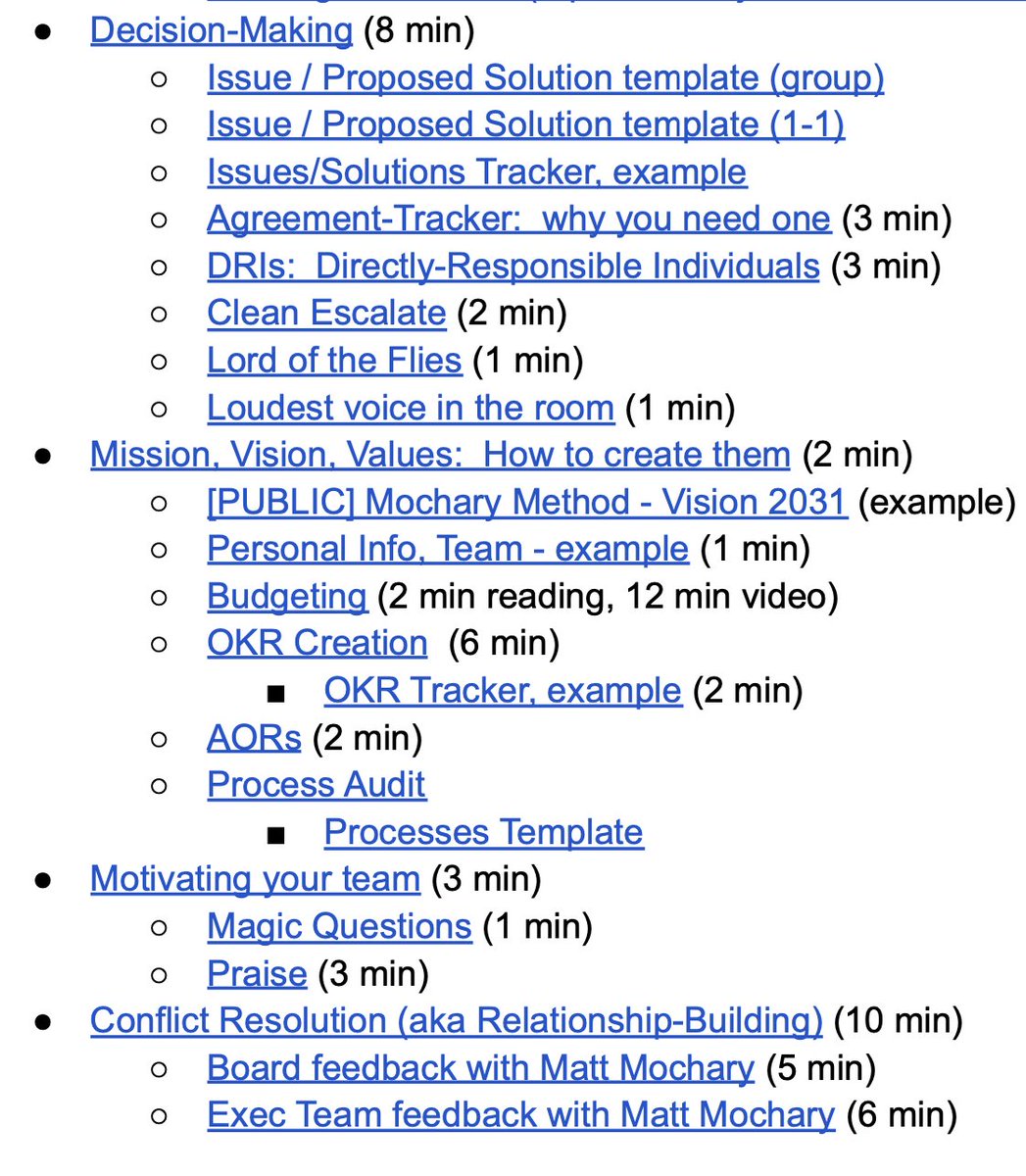
Matt Mochary has been CEO coach to @naval, the founders of OpenAI, Notion, Rippling, Robinhood, Coinbase, Reddit, Plaid, Flexport, Opendoor, partners at Sequoia, YC, Benchmark, and many others. He also open-sourced his entire curriculum, templates and all. Here's a link 👇
Lenny Rachitsky tweet media
English
491
2.5K
18.1K
0
Marek Supa retweetledi
Lex Sokolin | Generative Ventures
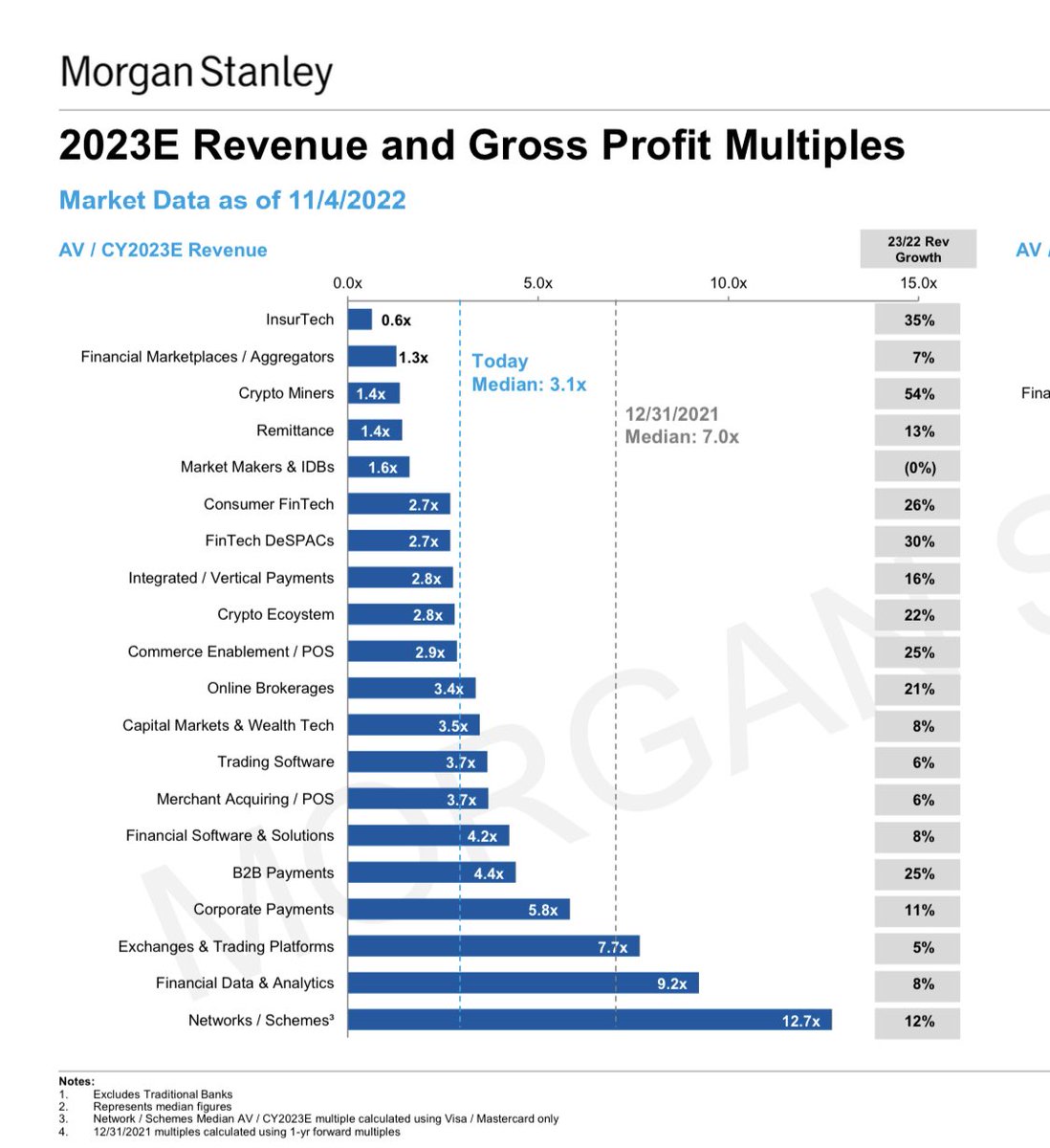
Fintech multiples getting a tiny bit better Consumer and crypto still crushed 2-3x
Lex Sokolin | Generative Ventures tweet media
English
8
19
57
0
Marek Supa retweetledi
Yishan
Yishan@yishan·
One of the things we work on at Terraformation is seed banking: creating low-cost working seed banks and educating others on how to do seed banking. I'm going to explain why that's a crucial element of forest restoration as a climate solution.
Yishan tweet media
English
10
84
407
0
Marek Supa retweetledi
Fury
Fury@HooaFury·
The ever moving mind. a monk thread.
Fury tweet media
English
7
86
406
0
Marek Supa retweetledi
Dan Go
Dan Go@CoachDanGo·
More than 7 billion people use their core every day. But most don't know how to unlock their full power. Here are 3 powerful moves that will help you build a bulletproof core:
English
96
796
5.8K
0