Sabitlenmiş Tweet

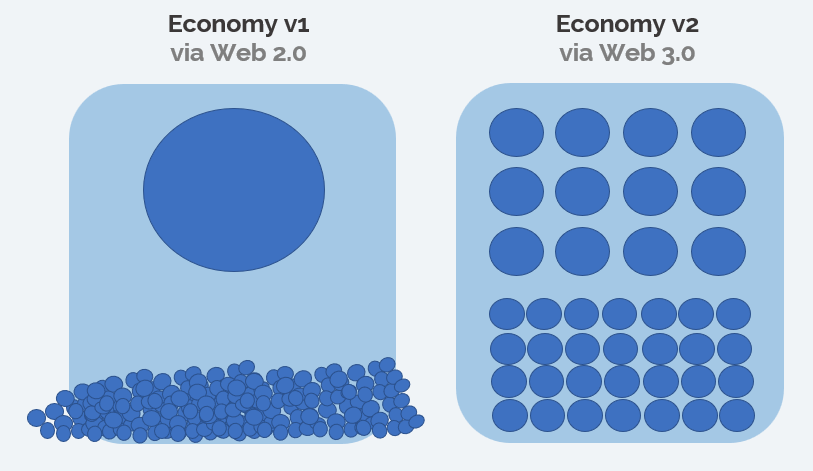
The degree to which someone can accumulate wealth should be bounded by the holdings of the weakest wallet. At a certain point, you can earn more only if you pull everyone up.
A thread on "bounded capitalism":
English
symbolpunk
1.9K posts
@symbolpunk
start with utopia, work backwards to the mechanism design ✨🤖🌱🌞💖✌ ← nonviolent economics ← bounded capitalism ← web3 ← web2



What's one thing you want to be able to do with Ethereum in 2 years that you can't do today? What about 5 years?



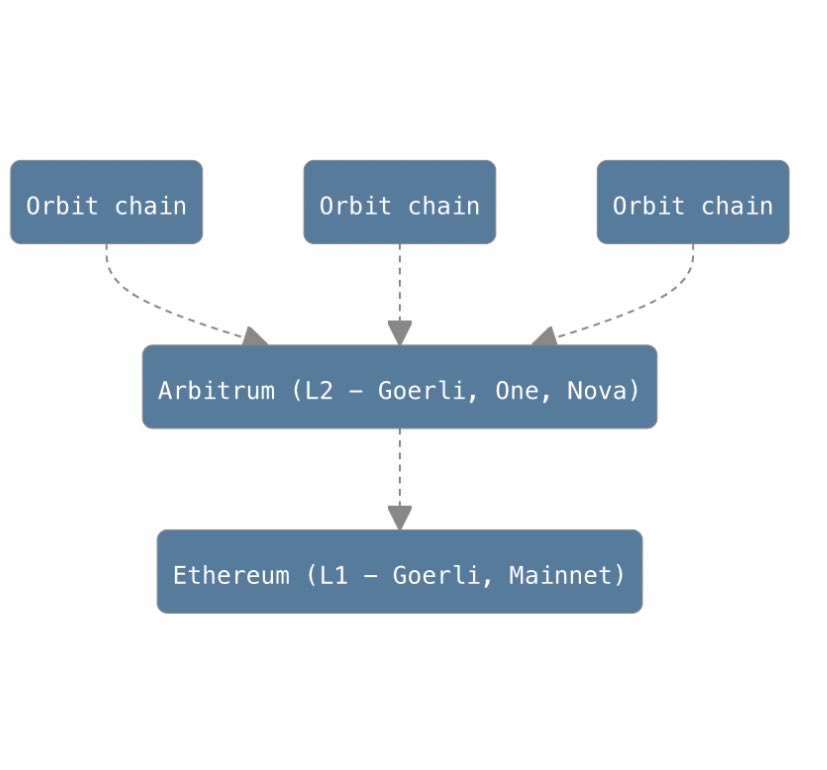
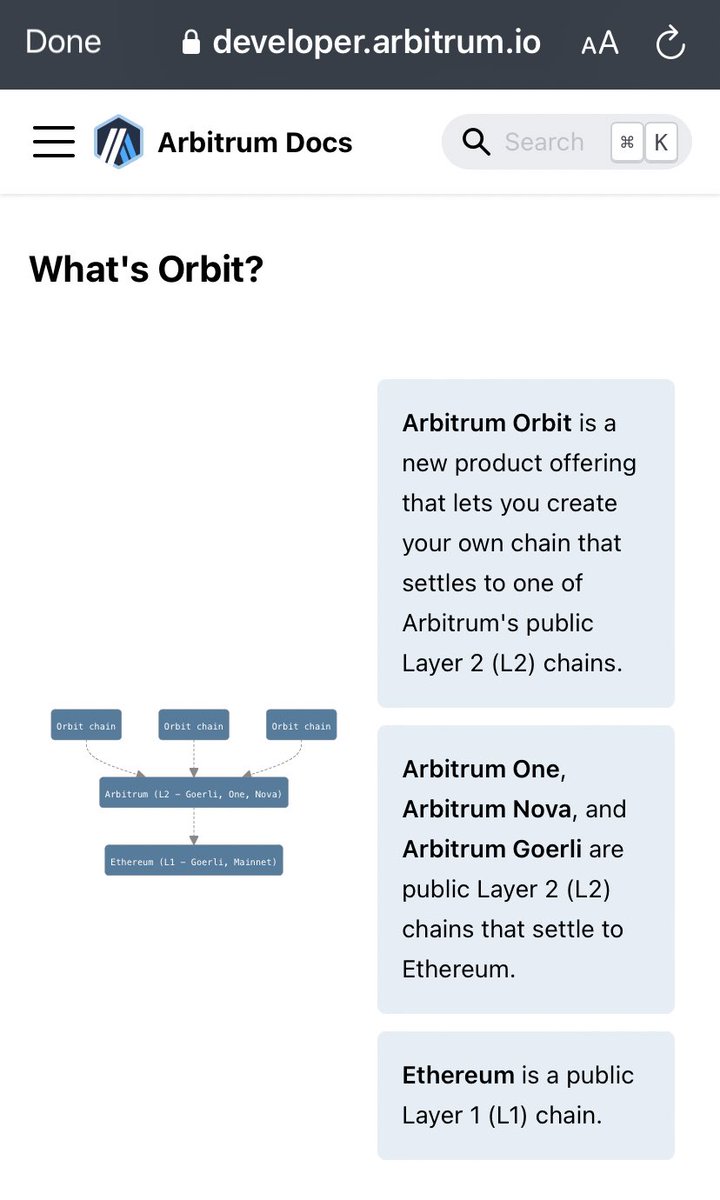
Today, we're releasing tooling that will make building your own Arbitrum Orbit chain easier than ever. To start, we're providing a quickstart guide & tools to help you with building your Orbit DevNet chain! 🔗 start building via docs: developer.arbitrum.io/launch-orbit-c…


I am intrigued there is so much debate around: rollup != bridge Let's jump back a bit and consider the two key takeaways of the debate: 1) There is an off-chain database with a social consensus for all assets defined on it. 2) There are bridge operators who can lock funds into an off-chain database and they are responsible for protecting the bridged assets. The entire debate is really about who is responsible for protecting assets. - Yes, if you define an asset on the off-chain database, then its ultimately up to that database to protect it and the social consensus around it. After all, the value of any assets defined on a blockchain system is ultimately derived from the social consensus that defines it AND the market for buying/selling the assets. There is nothing "new" here. We have known how to build systems like that for the past 10 years -- going the whole way back to namecoin, colored coins, litecoin, the various L1s, etc. What makes rollups absolutely incredible is not the off-chain database. This brings me to the second point: - Yes, if you bridge an asset from one blockchain to the off-chain system, then its the BRIDGE OPERATOR who is responsible for protecting it. Today, off-chain systems, leverage multiple bridges with various trade-off's on security. The Validating Bridge, is only one type of bridge. We may very well see a "power play" or a "battle of bridges" as they fight to acquire the most funds and take on the responsibility of protecting the funds locked into an off-chain system. But the most important and single takeaway is that the Validating Bridge is the GREATEST bridge for protecting users assets that we know how to build. @jon_charb has a good description on why the validating bridge is so important: "That’s why these bridges are amazing - I don’t have to trust another chain or its social consensus. I can always force withdrawal back to Ethereum if that’s the only social consensus I wanted to opt into." It allows software, not a threshold/majority of humans, to protect the funds. It has the BEST trust assumption possible: ---> The base chain's social consensus + 1 honest party. It allows a humble user to retain the security of the blockchain that defines their assets. It protects the human user from an ALL POWERFUL adversary including the off-chain system's social consensus. And... it is hard as shit to build. As a community, we are still in the early stages of exploring the full design space of a validating bridge. It remains the most interesting part of what makes a rollup, as a technology stack, great. So, while the rollup != bridge is an important distinction to make, my warning is not to take away the significance of a validating bridge. It is a testament to the crypto, and mostly the Ethereum community, on their ability to deploy a validating bridge. It has the potential to protect users, at global scale, from malicious operators and malicious social consensus. Rollups that are not pursuing a validating bridge are just not that interesting, to me at least.