GoBigRed12

5.6K posts

GoBigRed12 banner
GoBigRed12

GoBigRed12

@tHeFlyingAce12

Nebraska football 🏈 is life. Go Big Red 🌽 and Go Pack Go 🧀 Keep looking up...that's the secret of life.-Snoopy. views are my own

Katılım Kasım 2015
618 Takip Edilen103 Takipçiler
GoBigRed12 retweetledi

Super 70s Sports
Super 70s Sports@Super70sSports·
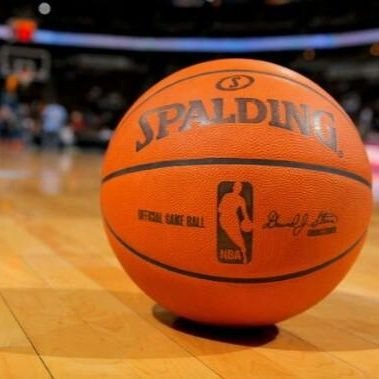
Michael Jordan went 25-1 in the last 26 playoff series of his NBA career. Read that again. Absorb it.
Super 70s Sports tweet media
English
237
887
7K
2.6M
GoBigRed12 retweetledi
Gabriel 🌩️
Gabriel 🌩️@Countcristo44·
The little fox outmaneuvered death all 3 times that day.
English
104
325
4.8K
108.5K
GoBigRed12 retweetledi
chaotic memes
chaotic memes@memechaotic·
A tear ran down my eye
English
101
1.4K
39.9K
2M
GoBigRed12 retweetledi
Sasquatch Unfiltered
Sasquatch Unfiltered@sasquatchvlogtv·
Getting free HBO on the weekend was the best!!
English
107
377
2.7K
85.2K
GoBigRed12 retweetledi
Marjorie Taylor Greene 🇺🇸
It’s not an antisemitic conspiracy theory when a foreign lobby openly brags that they bought two congressional seats with candidates who will be loyal to Israel.
Marjorie Taylor Greene 🇺🇸 tweet media
English
4.7K
26.1K
99.3K
1.7M
Kalshi Football
Kalshi Football@KalshiFB·
The greatest CFB coaches of all time.
Kalshi Football tweet media
English
815
120
1.1K
1M
GoBigRed12 retweetledi
Ihtesham Ali
Ihtesham Ali@ihtesham2005·
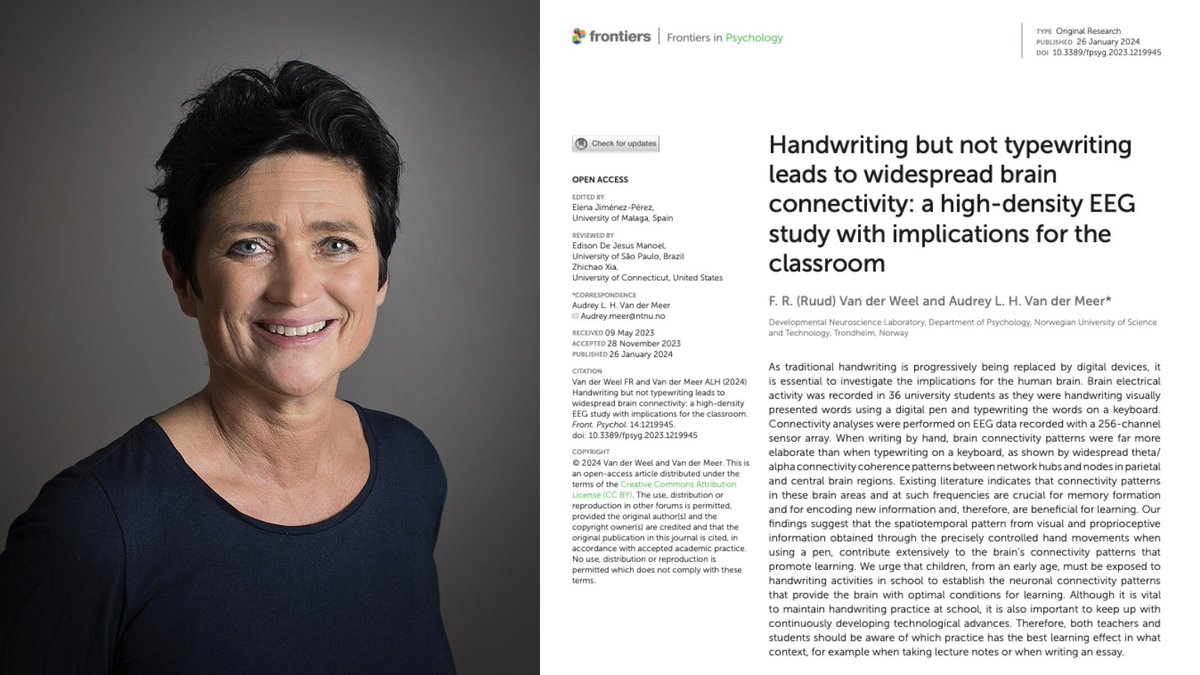
A Norwegian neuroscientist spent 20 years proving that the act of writing by hand changes the human brain in ways typing physically cannot, and almost nobody outside her field has read the paper. Her name is Audrey van der Meer. She runs a brain research lab in Trondheim, and the paper that closed the argument was published in 2024 in a journal called Frontiers in Psychology. The finding is brutal enough that it should have changed every classroom on Earth. The experiment was simple. She recruited 36 university students and put each one in a cap with 256 sensors pressed against their scalp to record brain activity. Words flashed on a screen one at a time. Sometimes the students wrote the word by hand on a touchscreen using a digital pen, and sometimes they typed the same word on a keyboard. Every neural response was recorded for the full five seconds the word stayed on screen. Then her team looked at the part of the data most researchers had ignored for years, which is how different parts of the brain were communicating with each other during the task. When the students wrote by hand, the brain lit up everywhere at once. The regions responsible for memory, sensory integration, and the encoding of new information were all firing together in a coordinated pattern that spread across the entire cortex. The whole network was awake and connected. When the same students typed the same word, that pattern collapsed almost completely. Most of the brain went quiet, and the connections between regions that had been alive seconds earlier were nowhere to be found on the EEG. Same word, same brain, same person, and two completely different neurological events. The reason turned out to be something nobody had really paid attention to before her work. Writing by hand is not one motion but a sequence of thousands of tiny micro-movements coordinated with your eyes in real time, where each letter is a different shape that requires the brain to solve a slightly different spatial problem. Your fingers, wrist, vision, and the parts of your brain that track position in space are all working together to produce one letter, then the next, then the next. Typing throws all of that away. Every key on a keyboard requires the exact same finger motion regardless of which letter you are pressing, which means the brain has almost nothing to integrate and almost no problem to solve. Van der Meer said it plainly in her interviews. Pressing the same key with the same finger over and over does not stimulate the brain in any meaningful way, and she pointed out something that should scare every parent who handed their kid an iPad. Children who learn to read and write on tablets often cannot tell letters like b and d apart, because they have never physically felt with their bodies what it takes to actually produce those letters on a page. A decade before her, two researchers at Princeton ran the same fight using a completely different method and ended up at the same answer. Pam Mueller and Daniel Oppenheimer tested 327 students across three experiments, where half took notes on laptops with the internet disabled and half took notes by hand, before testing everyone on what they actually understood from the lectures they had watched. The handwriting group won by a wide margin on every question that required real understanding rather than surface recall. The reason was hiding in the transcripts of what the two groups had actually written down. The laptop students typed almost word for word, capturing more total content but processing almost none of it as they went, while the handwriting students physically could not write fast enough to transcribe a lecture in real time, which forced them to listen carefully, decide what actually mattered, and put it in their own words on the page. That single act of choosing what to keep was the learning itself, and the keyboard had quietly skipped the choosing and skipped the learning along with it. Two studies. Two countries. Same answer. Handwriting makes the brain work. Typing lets it coast. Every note you have ever typed instead of written went into your brain through a thinner pipe. Every meeting, every book highlight, every idea you captured on your phone instead of on paper was processed at half depth. You did not forget those things because your memory is bad. You forgot them because typing never woke the part of the brain that would have made them stick. The fix is the thing your grandmother already knew. Pick up a pen. Write the thing down. The slower road is the faster one.
Ihtesham Ali tweet media
English
2.4K
44.3K
119.3K
9.5M
GoBigRed12 retweetledi
NBA en español 🏀
Michael Jordan anoto 3,000 puntos en el 1987, ningun jugador ha podido anotar esa cantidad de puntos en una temporada casi 40 años mas tarde. Lo mas cercano ha sido: Michael Jordan 1988: 2,868 puntos Kobe Bryant 2006: 2,832 puntos James Harden 2019: 2,818 puntos Un jugador necesita jugar los 82 partidos en una temporada promediar 37.2 puntos por partido para superar ese record de Jordan. En esa temporada 1987 Jordan promedio: 37 puntos, 5 rebotes, 4 asistencias , 3 robos de balones y 1 bloqueo por partido
NBA en español 🏀 tweet media
Español
157
773
5.3K
357.4K
GoBigRed12 retweetledi
Antidepressant Content
Antidepressant Content@depressionlesss·
Bro thinks he is Harry Potter 😂
English
169
2K
22K
771K
GoBigRed12 retweetledi
Jeremy Wayne Tate
Jeremy Wayne Tate@JeremyTate41·
Cologne Cathedral took 632 years to complete. Construction began in 1248 and was finally finished in 1880, making it one of the longest building projects in architectural history.
English
107
713
8.5K
182.2K
GoBigRed12 retweetledi
Rothmus 🏴
Rothmus 🏴@Rothmus·
I still remember the first time I saw this chart. Something inside me died that day.
Rothmus 🏴 tweet media
English
638
4.2K
32.9K
3.3M
GoBigRed12 retweetledi
21 Clips 🎬
21 Clips 🎬@Clipsbaba21·
When the dogs randomly decide to bring home a new friend 😂🐶
English
138
2.5K
49.7K
1M
GoBigRed12 retweetledi
BaseballHistoryNut
BaseballHistoryNut@nut_history·
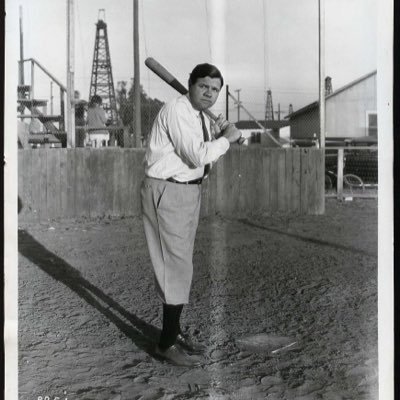
Joe DiMaggio 13 year career: 1936 - World Series 1937 - World Series 1938 - World Series 1939 - World Series 1941 - World Series 1943 - WW II 1944 - WW II 1945 - WW II 1947 - World Series 1949 - World Series 1950 - World Series 1951 - World Series
BaseballHistoryNut tweet media
English
224
843
8.7K
453.9K
GoBigRed12 retweetledi
John Rich🇺🇸
John Rich🇺🇸@johnrich·
The plan is to get everyone sick from bio-engineered ticks that make it impossible for you to eat meat, without getting violently ill. Then, they'll offer you a vaccine. Why is this not considered domestic terrorism?
TFTC@TFTC21

A peer-reviewed paper published last year in the journal Bioethics by two professors at Western Michigan University School of Medicine argues that it is "morally obligatory" to genetically engineer ticks to spread alpha-gal syndrome, a permanent condition that makes you violently allergic to red meat. The paper is called "Beneficial Bloodsucking." Their argument: if eating meat is morally wrong, then preventing the spread of a disease that forces people to stop eating meat is also morally wrong. Scientists should gene-edit lone star ticks to enhance their ability to carry alpha-gal syndrome and expand their range into urban environments to infect more people. They call this a "moral bioenhancer." They frame releasing genetically modified disease-carrying ticks as a "vaccination" that only "infringes" on your bodily autonomy rather than "violating" it. The distinction, apparently, is that a tick bit you instead of a government official holding you down. Alpha-gal syndrome is not mild. The CDC estimates up to 450,000 Americans are already affected. Cases have surged 100-fold in the last decade. Symptoms include anaphylaxis. There is no cure. Alpha-gal cases are exploding across the United States. The lone star tick's range is expanding far beyond its historical territory. And two academics at a medical school published a paper arguing this is a good thing that should be accelerated. At what point do we stop treating papers like this as fringe academic exercises and start asking whether anyone is already acting on them?

English
2.4K
19.4K
44.2K
1M