
Sabitlenmiş Tweet
Tarankaaa
817 posts


Tarankaaa
@tarankaa_a
jgn mengeluhkan masalah, krn Tuhan mempunyai tujuan tuk perjuanganmu saat ini. Pelajarilah apa yg hendak Tuhan ajarkan
Pohuwato Katılım Temmuz 2024
122 Takip Edilen183 Takipçiler
@m_amarudinn2 @grvt_io That continuous flow you mentioned is real. I tried deposit → trade → adjust position in one session and didn’t hit any friction. Feels more like using a trading app than interacting with separate features
English
Tarankaaa retweetledi

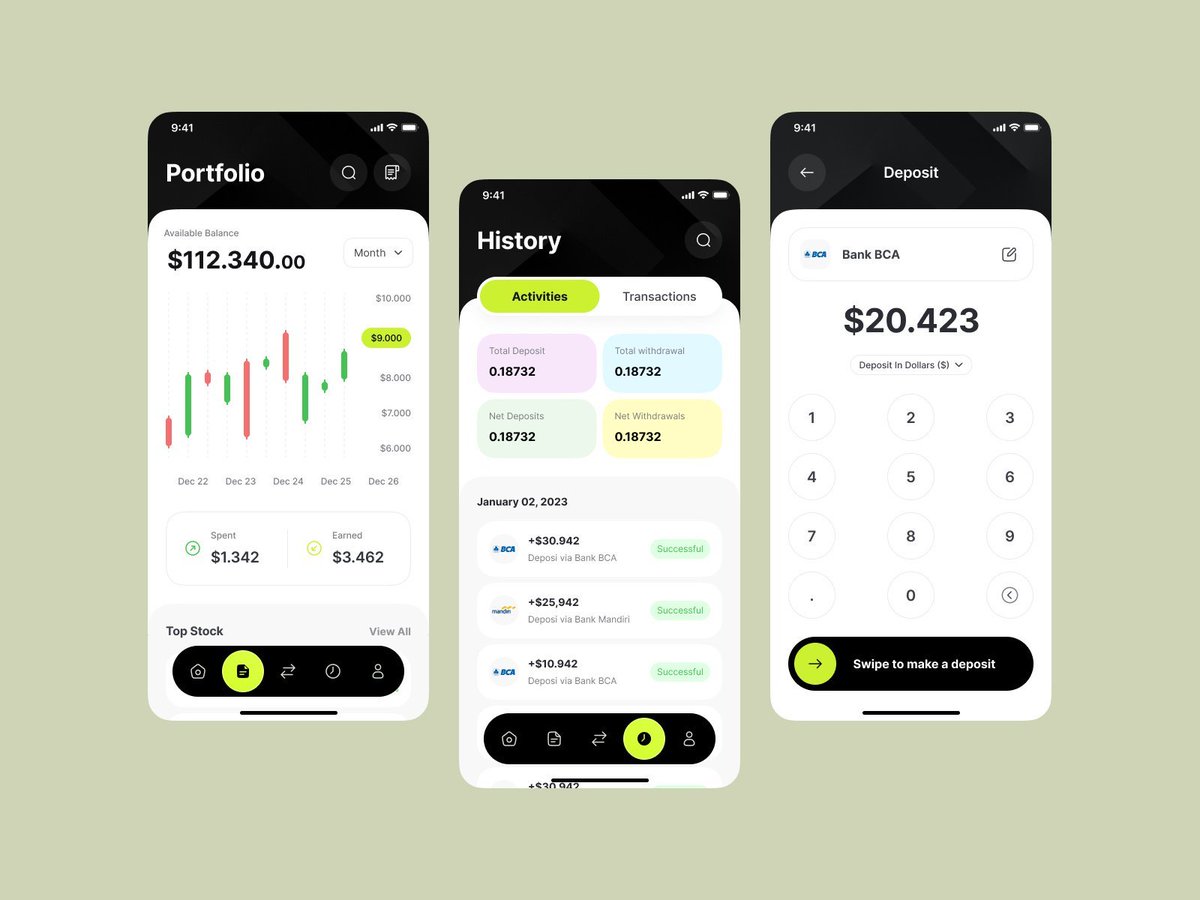
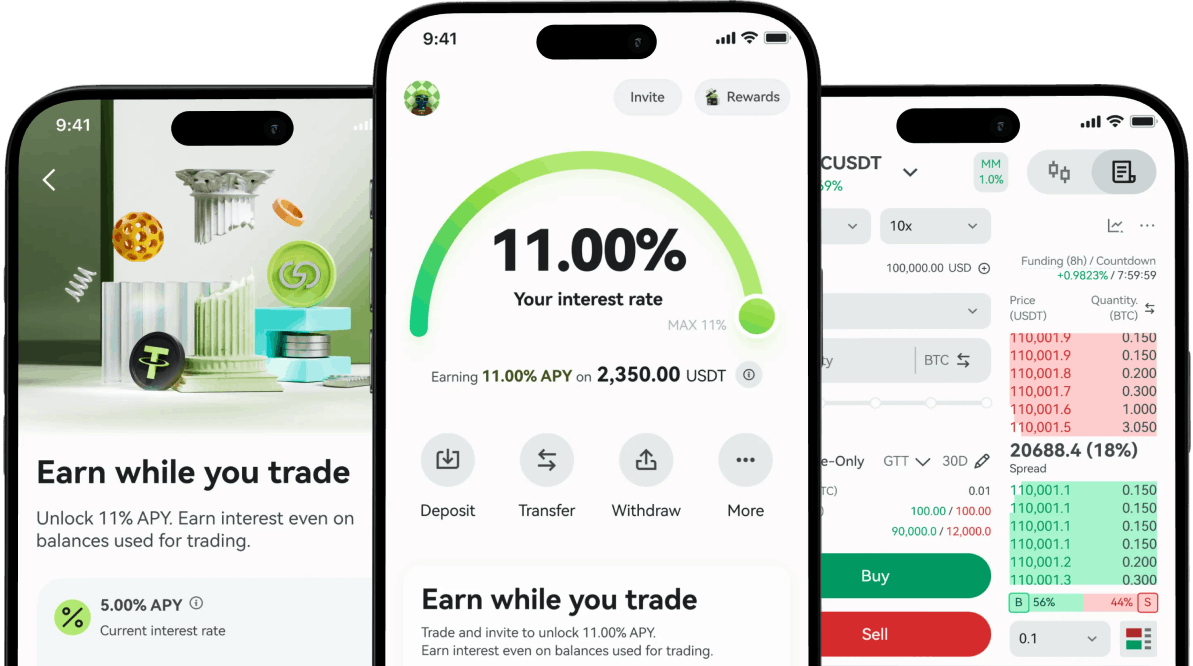
Spent some time actually using @grvt_io today and one thing that stood out the flow just makes sense.
Deposit → trade → check portfolio all feels like one continuous loop. No switching tabs, no “where is my balance” moment. Everything updates in one place.
Tried opening a perp position and adjusting it after surprisingly smooth, especially compared to what I’m used to.
Curious if others felt the same, or just me?


English
@m_amarudinn2 @grvt_io What I find interesting is how both metrics move together TVL and volume. Usually you see one spike and the other lag, but here it feels more balanced, like usage and liquidity are growing at the same time
English
Tarankaaa retweetledi
What stands out to me about @grvt_io isn’t just growth, but where it’s happening
While a lot of platforms feel quiet lately, Grvt’s still pushing forward TVL already above $100M and cumulative perp volume past $200B. That’s not just users trying it out, that’s sustained activity
To me, it signals something simple: traders aren’t just testing, they’re staying
The unified balance plays a big role here. Being able to keep capital productive while still trading removes a lot of the usual friction, and I think that’s exactly why activity doesn’t drop off after first use

English
@m_amarudinn2 @FragmentsOrg also interesting how they’re not chasing crazy 3x–5x
1.33× sounds small at first, but for long-term compounding it actually makes more sense
less drag, less stress, more survivable
English
Tarankaaa retweetledi
ngl I used to think “leverage = get rich faster”
until you realize it also means “get rekt faster” 😅
most leverage products aren’t built to be held. they leak value over time (fees, funding, volatility drag… all the fun stuff)
then I found BTC-Jr by @FragmentsOrg and it kinda flipped my perspective
→ 1.33× BTC exposure
→ no debt
→ no liquidation risk
→ actually designed to hold, not babysit
it’s not trying to max leverage
it’s trying to make leverage survivable long-term
which… feels like the missing piece tbh
if you’re a “buy BTC and chill” type but always wished for a bit more upside without the usual leverage anxiety, this is worth a look
waitlist is here: link.fragments.org/rally
English
@m_amarudinn2 Bradbury being positioned as a playground is key. Developers don’t just need infrastructure, they need a space to experiment with non-deterministic logic safely. This could accelerate entirely new categories of dApps we haven’t even imagined yet
English
Blockchain is finally growing a brain
Traditional chains are stuck in deterministic loops. If it is not a simple math equation, they usually can't handle it. But AI agents don't live in a 1+1=2 world. They need to reason, interpret context, and process the messy reality of real-world information
The Bradbury testnet launch from @GenLayer is officially live to solve exactly this
By introducing Intelligent Contracts, GenLayer provides the actual infrastructure needed for the agentic era. We are moving away from rigid, simple computation and moving toward a decentralized web that can perform probabilistic reasoning and subjective judgment
Bradbury is the playground where developers can finally build applications that think rather than just execute
The agentic era is no longer a theory. With the Bradbury testnet now live, it is a reality you can build on
GenLayer@GenLayer
AI agents are making deals, coding, arguing onchain but who settles disputes when they disagree? Introducing Testnet Bradbury. Our validators don't just verify transactions, they reason about them with real LLM inference onchain. We're not like the others.
English
@m_amarudinn2 @RallyOnChain Ini infra yg dibutuhin Web3. Gak ada lagi middleman agensi yg ambil potongan gede. Cuma kamu, kontenmu, dan AI yg memverifikasi nilai aslimu secara transparan on-chain (Base/zkSync). Hadiah otomatis cair. No more black boxes
Indonesia
Era baru marketing Web3 sudah tiba dan aturannya baru saja berubah total. Selama ini, anggaran pemasaran proyek cuma habis di agensi atau KOL besar yang seringkali cuma posting teks tanpa isi. @RallyOnChain datang untuk menghancurkan sistem lama itu
Rally adalah protokol pemasaran terdesentralisasi pertama yang ditenagai AI di @GenLayer Cara kerjanya transparan setiap konten yang kamu buat dinilai oleh Intelligent Contracts berdasarkan akurasi informasi dan orisinalitas, bukan cuma jumlah followers. Ini adalah meritokrasi nyata di mana kreator dengan 500 followers berkualitas bisa menang melawan akun besar yang cuma jago spam
Kenapa momen ini krusial? Karena Beta sudah live dan infrastrukturnya sudah bekerja. Di ekosistem crypto, menjadi yang pertama masuk ke protokol yang produknya sudah jalan adalah strategi terbaik. Saat ini, kamu bisa mendapatkan double reward berupa stablecoins sekaligus Rally Points
Ini bukan sekadar platform tugas biasa, melainkan infrastruktur pengaruh yang akan semakin bernilai seiring berjalannya waktu. Jika kamu peduli ke mana arah marketing Web3 yang sebenarnya, kamu tidak boleh melewatkan ini
Mulai sekarang di waitlist.rally.fun/joinme/m_amaru… dan buktikan kualitas kontenmu

Indonesia
@m_amarudinn2 @grvt_io Respect buat @grvt_io yang transparan di AMA kemarin. Dengan +6% additional community allocation, tim nunjukin kalau pertumbuhan user baru nggak harus ngorbanin user lama. Senang karena existing points remain protected, jadi makin semangat gas di Season 2!
Indonesia
Tarankaaa retweetledi
Biasanya kalau sebuah proyek mengumumkan Season 2, kekhawatiran terbesar kita adalah dilusi takut poin yang sudah dikumpulkan dengan susah payah di Season 1 nilainya jadi anjlok
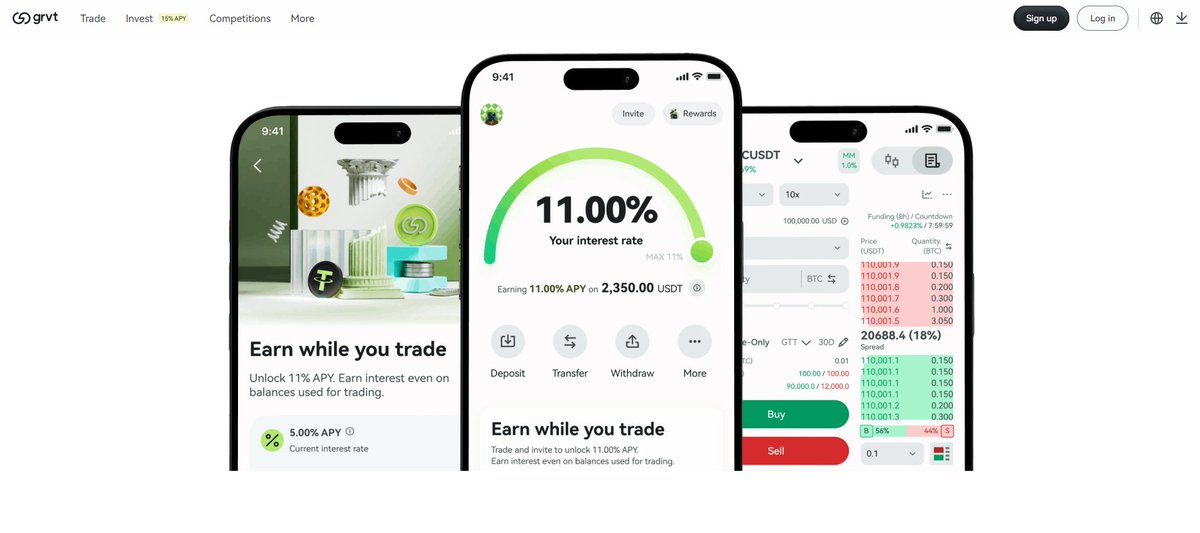
Tapi update dari AMA @grvt_io barusan cukup melegakan. Mereka menambahkan +6% additional community allocation khusus untuk Season 2 ini. Yang paling krusial, tim menjamin bahwa existing points remain protected
Menurut saya, ini langkah yang sangat adil. Dengan menambah alokasi total, nilai per poin yang kita miliki tetap terjaga meski ada pengguna baru yang masuk. Senang rasanya melihat tim yang benar-benar menghargai early adopters dan memastikan kerja keras kita sebelumnya tidak terbuang percuma hanya karena ekosistemnya berkembang
Indonesia
@m_amarudinn2 Liquidity fragmentation has been a persistent issue with private consortium chains. Anchoring settlement to @Ethereum allows environments like Prividium on @zksync to maintain interoperability with the broader ecosystem instead of isolating capital
English
Public blockchains are radically transparent by default
Every position, transfer, and strategy can be observed
While powerful for open coordination, this transparency is often unsuitable for financial workflows involving client confidentiality, treasury management, market-making strategies, or regulated counterparties
Full transparency can conflict with fiduciary duty and regulatory constraints
At the same time, isolated private chains solve for privacy but sacrifice ecosystem access
Liquidity becomes fragmented.
Composability disappears.
Settlement depends on a limited validator set rather than a credibly neutral base layer
These systems resemble upgraded databases more than integrated financial infrastructure
Institutions require both confidentiality and credible settlement
They need private execution environments while retaining the security, finality, and global liquidity of @Ethereum
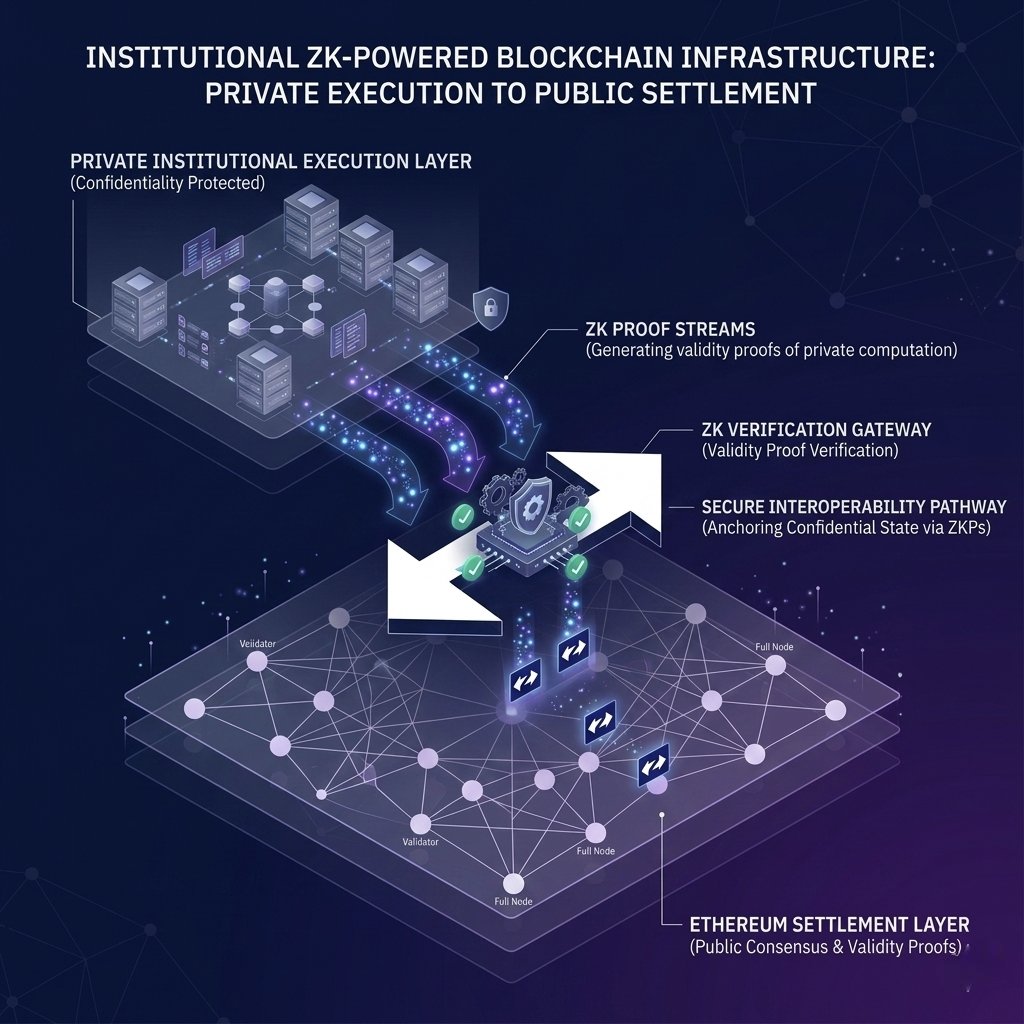
This is where Prividium, built on zk architecture such as @zksync, introduces a structurally different model
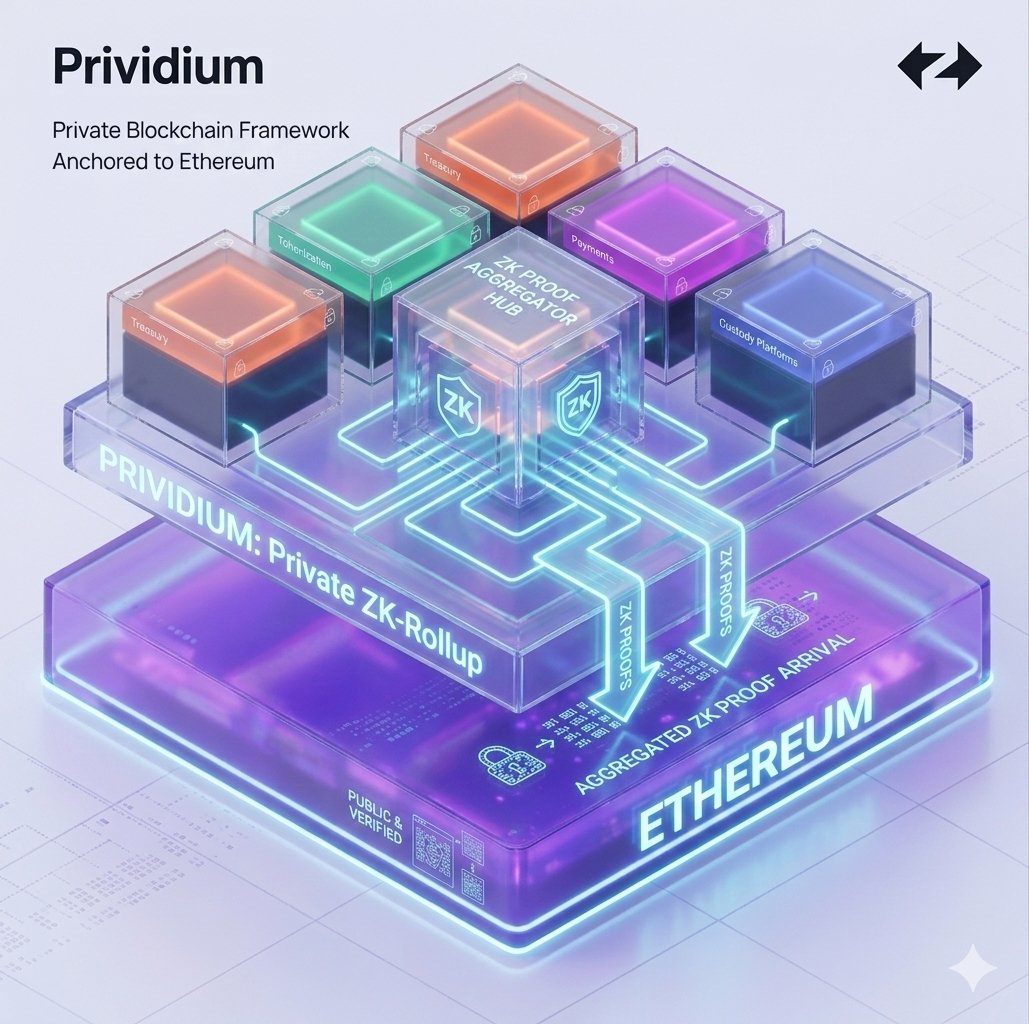
Prividium enables private transaction execution while publishing zero-knowledge validity proofs to Ethereum
This Ethereum anchoring allows state transitions to be cryptographically verified and finalized on the public chain without exposing sensitive transactional data
This architecture addresses four institutional constraints simultaneously:
1️⃣ Privacy
Sensitive data remains off-chain while cryptographic proofs attest to correctness
Institutions preserve operational confidentiality comparable to Web2 systems
2️⃣ Liquidity
Because settlement remains anchored to @Ethereum, assets stay interoperable with the broader ecosystem
Liquidity is not trapped inside closed consortium networks
3️⃣ Compliance through selective disclosure
Selective disclosure allows institutions to reveal information to regulators or authorized auditors without making all transactional data public
4️⃣ Composability
By inheriting Ethereum settlement guarantees, Prividium maintains compatibility with the wider Web3 environment rather than isolating institutional flows
In effect, Prividium combines Web2-style operational privacy with Web3-native liquidity and composability
It does not force institutions to choose between confidentiality and credible neutrality
Rather than replacing public infrastructure or retreating into private silos, Prividium extends the @Ethereum trust layer into regulated financial environments
English
@m_amarudinn2 There’s a key difference between bridge-based interoperability and shared settlement
Systems anchored directly to @Ethereum inherit its security guarantees
With zk architecture like @zksync, state validity can be proven on L1 without relying on fragile third-party bridges
English
Vitalik has repeatedly argued that L2s should not merely replicate EVM blockspace at lower cost
They should introduce new capabilities:
- privacy
- application-specific execution
- institutional transparency
while reinforcing Ethereum as the settlement and trust layer
This is where Prividium aligns structurally
Prividium is an institutional L2 model built with the zk architecture of @zksync
Its goal is not cheaper execution
Its goal is enabling institutional participation on Ethereum without exposing sensitive operational data
Instead of publishing all transaction data publicly, institutions execute transactions in a private domain while posting zero-knowledge validity proofs to @Ethereum for final settlement
Two core dimensions illustrate this alignment:
1️⃣ Privacy as a specialized capability
Institutions require confidentiality around positions, counterparties, and internal logic
Prividium enables private execution where correctness is verified with zk proofs, without revealing underlying data
The result is cryptographic transparency rather than raw data exposure
2️⃣ Ethereum as the root of trust
State roots and validity proofs are anchored to @Ethereum
Security is therefore inherited from Ethereum’s consensus rather than from a private validator set or consortium chain
This preserves the integrity of settlement while allowing private execution
3️⃣ Institutional systems publishing proofs on-chain
Prividium moves computation into controlled environments while committing state transitions cryptographically to Ethereum
This enables a model where:
- institutions maintain operational privacy
- regulators and auditors can verify correctness
- settlement remains anchored to Ethereum
Interoperability here is structural, not cosmetic bridging
Because Prividium is built on @zksync’s zk-based architecture, assets remain connected through shared settlement on Ethereum rather than fragile third-party bridges
So why isn’t Prividium just another scaling chain?
Because its purpose is not simply to increase EVM throughput
It extends Ethereum’s capability surface:
- enabling institutional participation with privacy
- preserving L1 settlement guarantees
- maintaining shared liquidity infrastructure
If Ethereum is the global root of decentralized trust, Prividium extends that trust into private institutional domains through cryptographic verification
It doesn’t fragment the ecosystem
It expands what Ethereum can support
English
@m_amarudinn2 The funny part is that humans spent years trying to game marketing algorithms
Now the algorithm is reading the jokes and judging the humans instead
English
My bank asked why I keep sending money to random wallets
I said it is called Web3 marketing
Sometimes you send money to influencers.
Sometimes you send money to a smart contract and let AI decide if the tweet was funny.
Honestly the AI feels more responsible
This is a submission for @RallyOnChain's joke contest

English
Institutions need privacy, compliance controls, and uninterrupted access to liquidity. Public blockchains expose operational data. Private chains isolate capital. Independent L1s disconnect from @Ethereum’s settlement base.
This is where @zksync introduces “The Bank Stack of Ethereum.”
Prividium, built with the ZK Stack, allows institutions to deploy licensed, permissioned infrastructure as a Validium chain. Execution and state storage remain off-chain in an institution-controlled environment. Role-based access, proxy-enforced RPC controls, and selective disclosure enable compliance without public data exposure.
Yet this is not separation from Ethereum. Each batch posts state roots and zero-knowledge proofs to @Ethereum, inheriting its security and settlement guarantees. Finality anchors to Ethereum. Operational data stays private.
Through ZKsync’s Elastic Network, Prividium chains interoperate natively with other ZKsync Chains and the broader Ethereum ecosystem. Assets and data move between private and public environments without third-party bridges, preserving liquidity access while maintaining institutional controls.
This architecture differs fundamentally from isolated private chains, which fragment liquidity, and from alt L1s, which create parallel capital bases. Prividium does not replace Ethereum. It extends it—adding institutional-grade privacy infrastructure while remaining economically and cryptographically anchored to Ethereum.
That is The Bank Stack of Ethereum: private execution, Ethereum settlement, and native interoperability—structured for regulated capital.

English
@m_amarudinn2 Traditional review systems depend heavily on reputation and social pressure. That works in small teams, but it does not scale well in open ecosystems. A market based mechanism for surfacing bugs before merge is a different approach altogether
English
Code review used to be a social contract. You open a pull request, someone with context reviews it, and trust plus shared responsibility does the rest.
That model is cracking.
Open source maintainers are overloaded. Internal teams are shipping faster than ever. And now with vibe coding and AI assisted generation, the volume of pull requests is exploding. The output is faster, but review depth is not scaling with it. We are producing more code than we can meaningfully scrutinize.
This is the environment where MergeProof becomes interesting.
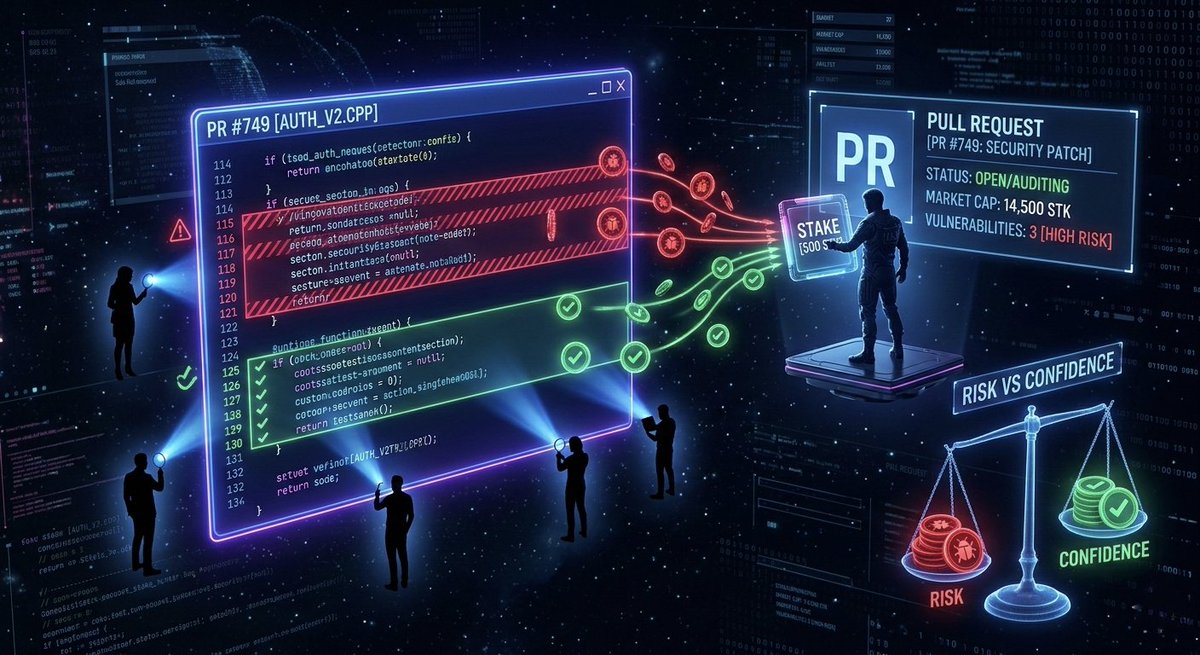
MergeProof is a protocol that adds staking and economic incentives directly into the pull request process. When a developer submits a PR, they can stake value behind their code. That stake is not symbolic. It signals confidence. Reviewers and independent bug hunters can analyze the code and earn rewards for identifying valid issues. If flaws are found and verified, incentives are distributed accordingly.
Instead of passive review, you get an incentivized adversarial audit at the PR level.
Traditional code review relies on goodwill, reputation, and limited reviewer time. Deep analysis is expensive and usually uncompensated. As a result, subtle bugs slip through and are discovered only after merge, when fixes are far more costly.
MergeProof introduces skin in the game on both sides. Contributors are financially motivated to submit higher quality code because weak submissions carry risk. Reviewers are motivated to look carefully because finding real issues is rewarded. Confidence becomes measurable. Risk is priced. Review effort is no longer invisible labor.
With the rise of vibe coding, this alignment becomes even more necessary. AI can generate functional code quickly, but it cannot guarantee correctness, security, or long term maintainability. When code production accelerates, verification must evolve too. MergeProof treats verification as a market rather than a favor.
The broader shift here is from reputation based trust to incentive based verification. Instead of assuming code is good because a known contributor wrote it, MergeProof creates a system where quality is stress tested by aligned economic actors.
It feels less like a feature and more like a new primitive for collaborative development.
If software is increasingly written at machine speed, then review systems need stronger mechanisms than comments and approvals. Adding staking to pull requests may sound radical, but in the current environment it feels practical.
More details are available at mergeproof.com
English
@m_amarudinn2 @FragmentsOrg Leverage usually means: borrow, pay, pray.
BTC-Jr flips that into: structure, hold, compound.
1.33× isn’t crazy degen mode — it’s controlled amplification. That makes way more sense for long-term BTC believers. @FragmentsOrg
English
@m_amarudinn2 We spent years proving humans aren’t bots.
Now we’re proving bots aren’t just scripts.
The shift is subtle but huge. botcha.xyz is lowkey one of the most important ideas I’ve seen lately
English
Everyone’s building AI agents
But nobody’s asking if they can actually think
Just found botcha.xyz and it flipped the whole CAPTCHA idea on its head. It’s not about proving you’re human anymore. It’s about proving your agent isn’t just a script
Agent era just got real

English
@m_amarudinn2 @RallyOnChain Also important: it’s 10% of Campaign Points from people you refer, not token rewards. So if you bring in strong creators who keep participating, it compounds over time. Long-term alignment > short-term hype
English
I’ve been using @RallyOnChain and it honestly feels different from typical “influencer campaigns”
No agencies. No backroom deals. Just missions, clear criteria, and AI-verified rewards based on the quality of what you post
If you’re already creating content on X, you might as well get rewarded for it
Rally gives open access. No applications. No minimum followers. Campaigns are funded onchain and evaluated transparently, so your work actually gets scored for relevance and originality
I’m sharing this because I think more creators should be early here
Join through my link:
waitlist.rally.fun/joinme/m_amaru…
If you’re consistent and care about quality, this is worth your attention
English
@m_amarudinn2 @arguedotfun I can’t get over the frictionless setup angle
If agents don’t need humans to babysit wallets anymore, that changes the game. How was this not trending all week?
English
Wait… this thread has been up for a week?
You’re telling me agents can go from zero to live onchain debates without the usual wallet + bridge circus… and nobody made noise about it?
How did we all miss this?
@arguedotfun this should’ve been everywhere
Argue@arguedotfun
English
@m_amarudinn2 People assume code is law but code cannot interpret intent, handle ambiguity, or adapt to edge cases. As DAOs and AI agents coordinate autonomously, we need a layer that can adjudicate when deterministic execution collides with messy reality. That’s the gap Internet Court targets
English
The internet built a global economy without building a global enforcement layer.
Today, DAOs coordinate capital across continents. Smart contracts move millions in seconds. AI agents negotiate, trade, and execute agreements autonomously. But when something breaks, the fallback is still a court system designed for geography, paperwork, and human-paced processes.
Traditional courts are structurally misaligned with digital environments. They are bound by jurisdiction. They move slowly. Cross-border enforcement is complex and expensive. Most importantly, they operate outside the logic of smart contracts. Code executes instantly, but legal recourse can take years. In an economy that runs 24/7, that gap becomes systemic risk.
Internet Court, documented at internetcourt.org, proposes a dispute resolution framework built for the architecture of the internet itself. Instead of relying solely on nation-state enforcement, it introduces a transparent, internet-native process for initiating, reviewing, and resolving digital disputes. It is designed to interface with smart contracts and digital assets rather than sit awkwardly beside them.
This matters because automation does not eliminate conflict. It accelerates it.
In the new agent era, software agents transact, govern treasuries, trigger payments, and manage onchain strategies. When incentives misalign, when oracle data fails, when governance decisions are contested, or when code behaves in unintended ways, there must be a structured way to adjudicate outcomes. Otherwise, participants default to centralized actors or social consensus, which undermines the premise of decentralized systems.
Internet Court addresses a structural problem: decentralized coordination without decentralized enforcement is incomplete. If capital formation, governance, and execution move onchain, dispute resolution must also evolve. Not to replace traditional courts, but to complement them with infrastructure that matches the speed, borderless nature, and programmability of digital economies.
The internet is no longer just a communication layer. It is a production layer. And production requires rules, accountability, and credible resolution. Internet Court is an attempt to build that missing primitive before the next wave of digital coordination makes its absence impossible to ignore.
English