Tasso Argyros

243 posts

Tasso Argyros banner
Tasso Argyros

Tasso Argyros

@tasso

entrepreneur & vp eng @ Databricks ··· founder of category defining cos: Aster Data (big data) and ActionIQ (customer data platform) ··· Stanford CS PhD dropout

NYC Katılım Ağustos 2008
113 Takip Edilen2.2K Takipçiler
Sabitlenmiş Tweet
Tasso Argyros
Tasso Argyros@tasso·
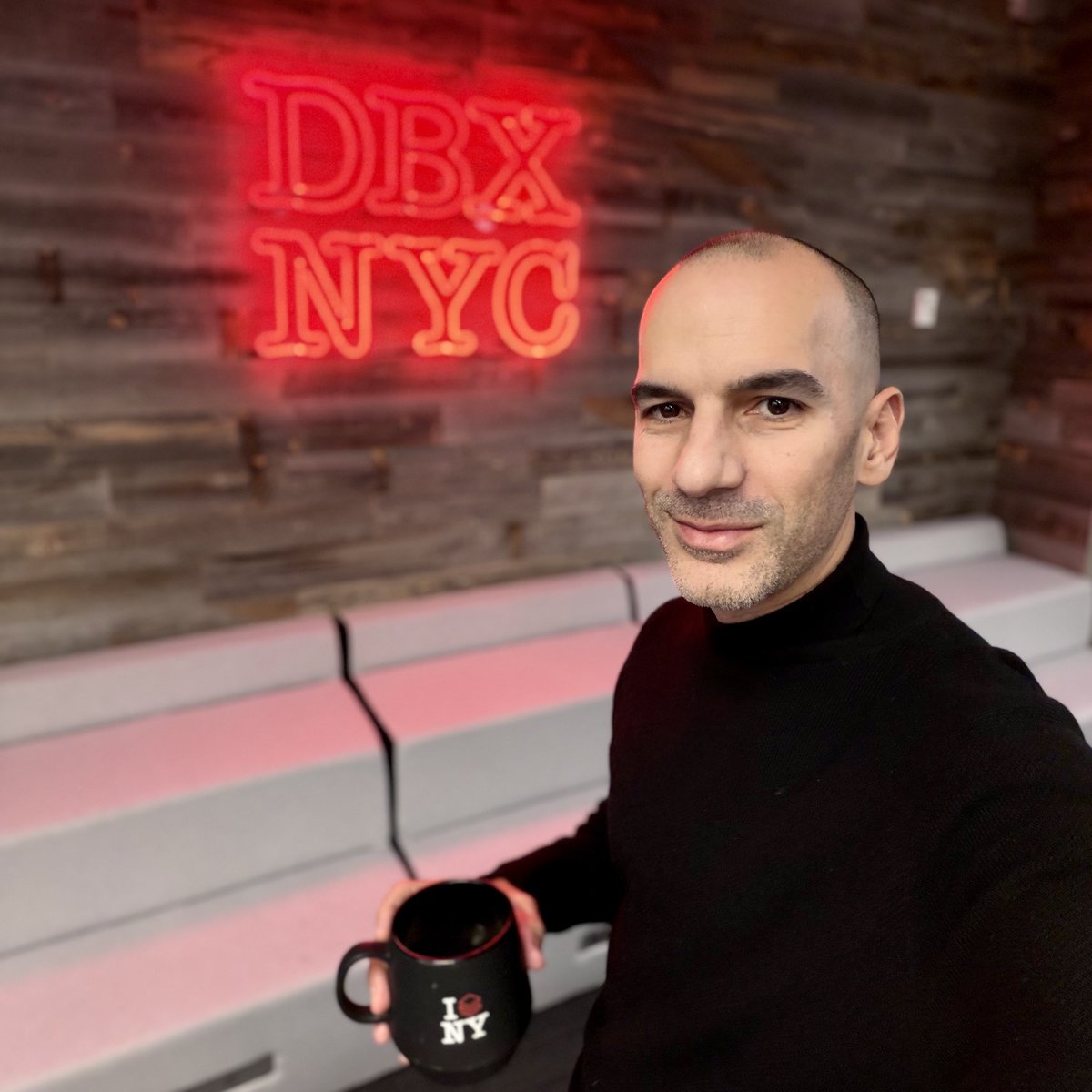
Big personal update 💥 After founding & exiting two companies (a database pioneer & a CDP powerhouse), I’m starting a new chapter: I've joined @databricks! I’m here to build and lead their brand-new engineering office, right here in NYC 🗽
Tasso Argyros tweet media
English
12
3
45
13.1K
Tasso Argyros retweetledi
Michael Bloch
Michael Bloch@michaelxbloch·
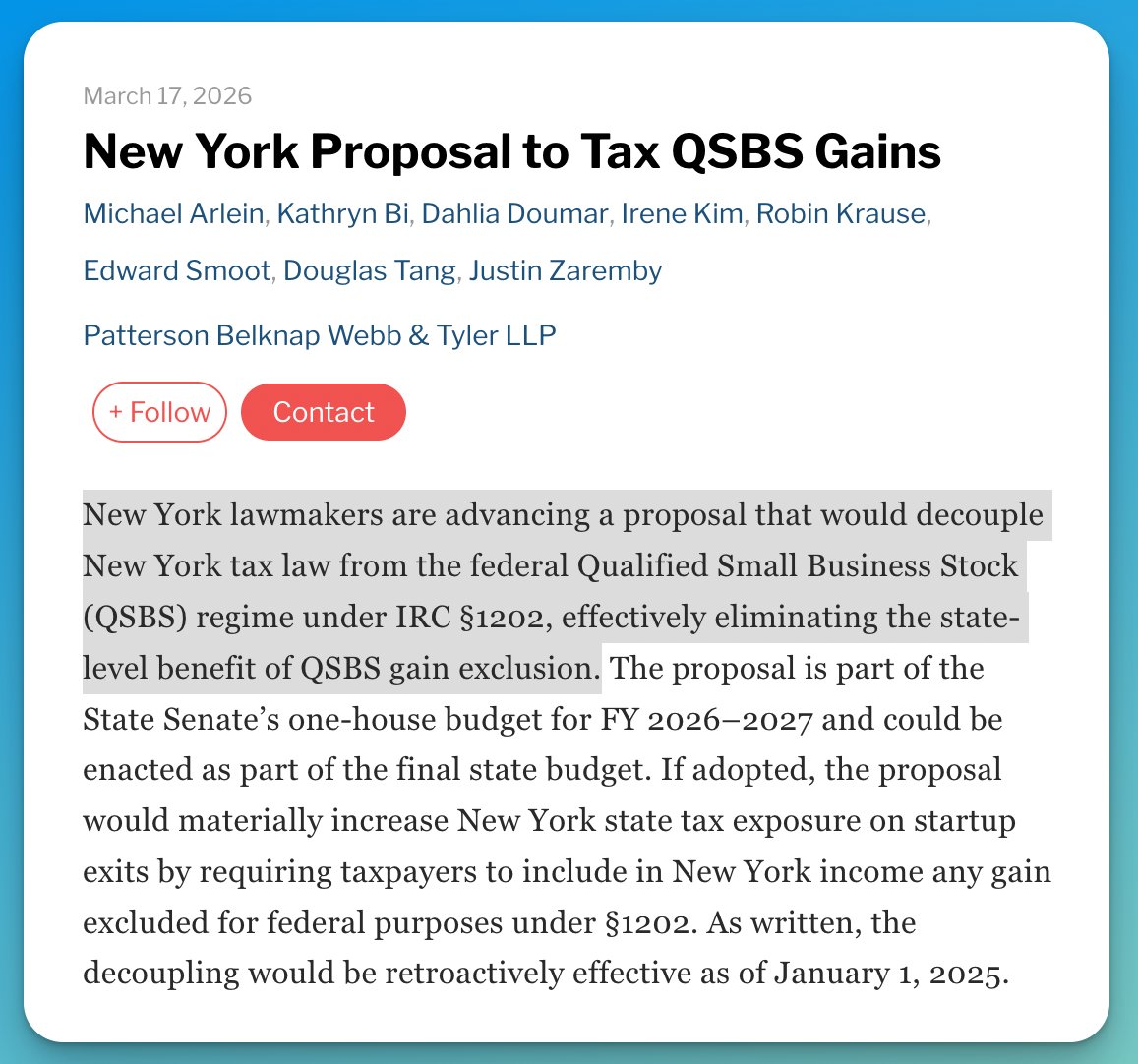
Any NY-based founders or investors tracking this? State Senate wants to kill QSBS at the state level, retroactive to January 2025. Budget vote is in weeks. Is anyone organizing pushback?
Michael Bloch tweet media
English
12
15
76
47.6K
Tasso Argyros
Tasso Argyros@tasso·
Very excited to launch this report on the future of the AI Marketing Stack with the one and only @scottbrinker! Key takeaway: AI completely changes what’s possible. And as a result, it forces us to rethink the way martech has been built for the past 3 decades. This report is one of the first to really frame what comes next. Not just what’s changing, but how marketing teams should start thinking about evolving their architecture over the next 3-5 years. Check it out! databricks.com/resources/eboo…
English
0
0
2
146
Tasso Argyros
Tasso Argyros@tasso·
@ttunguz Great points, another subtlety here is that snowflake decided to charge for storage whereas databricks went down the "Open Lakehouse" route which really resonated. Every time a DB vendor tries to charge for storage it loses the market because data grows faster than budgets.
English
1
0
10
1.1K
Tomasz Tunguz
Tomasz Tunguz@ttunguz·
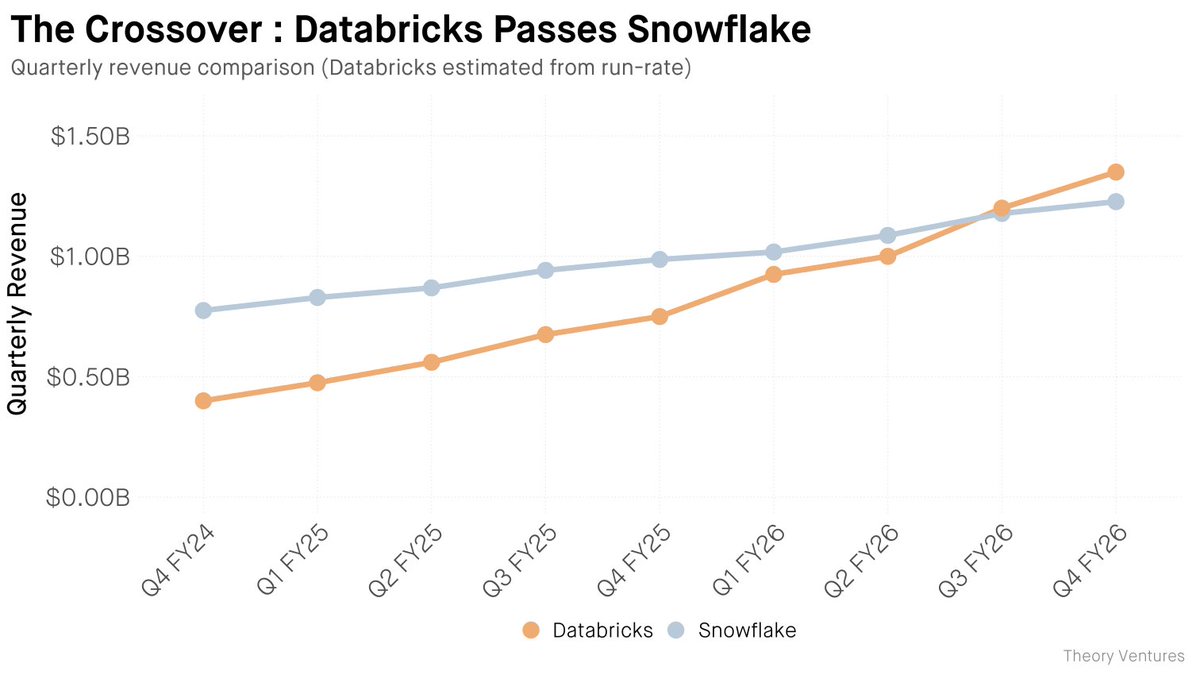
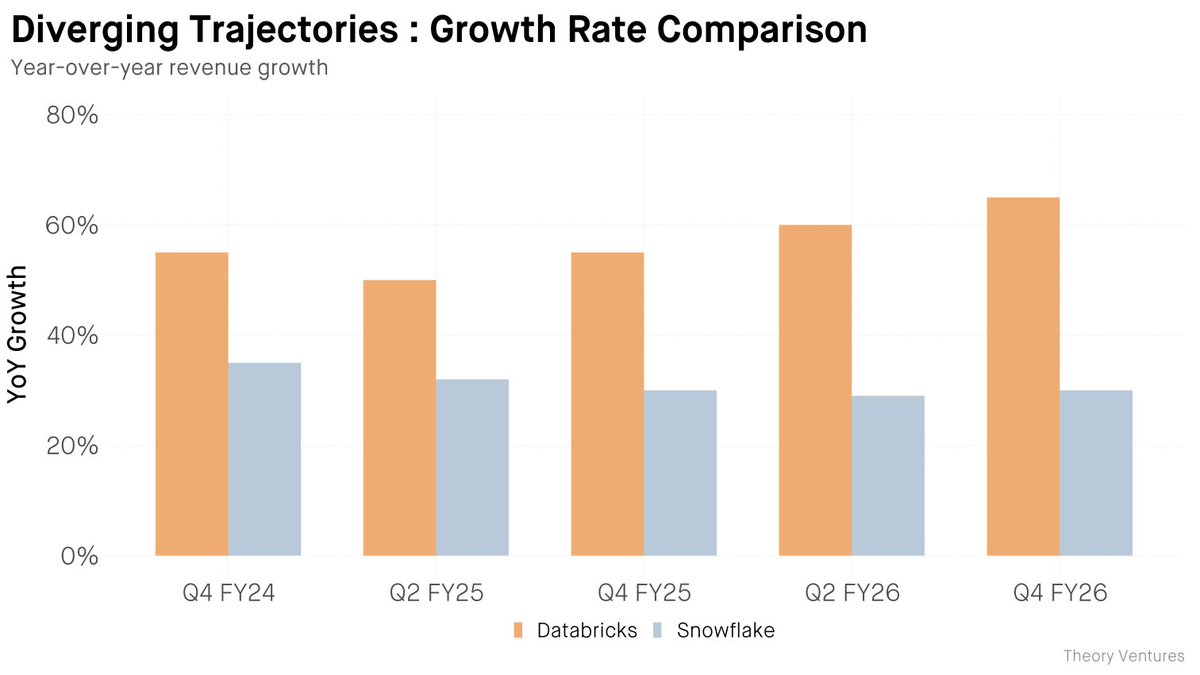
Databricks started later. It built a more complex architecture. It focused on unstructured data; images, documents, logs, audio. Though vast within the enterprise, this data had historically produced little insight. Too hard to process. Too messy to query. Too expensive to store in formats that mattered. Snowflake took the opposite bet. Structured data. Clean tables. SQL queries that ran fast & returned answers executives could read. The market agreed. Snowflake went public at a $70 billion valuation. Databricks raised private rounds at half that. Then AI arrived. Suddenly the data that was too messy to query became the data that models needed to train. Unstructured data wasn’t a liability. It was the asset. Databricks has overtaken Snowflake in revenue. Two years ago, Snowflake led by $220 million per quarter. Today, Databricks leads by $120 million. Databricks’ growth rate is accelerating at scale, from 50% to 55% to 65% year over year. Growth rates don’t accelerate at $5 billion in revenue. The crossover happened because AI is an architectural transition, not a feature addition. Most enterprise data never made it into Snowflake. It sat in object storage, unstructured, waiting. Databricks built tools to use it there. No migration required.
Tomasz Tunguz tweet mediaTomasz Tunguz tweet media
English
15
65
507
90K
Tasso Argyros retweetledi
Ali Ghodsi
Ali Ghodsi@alighodsi·
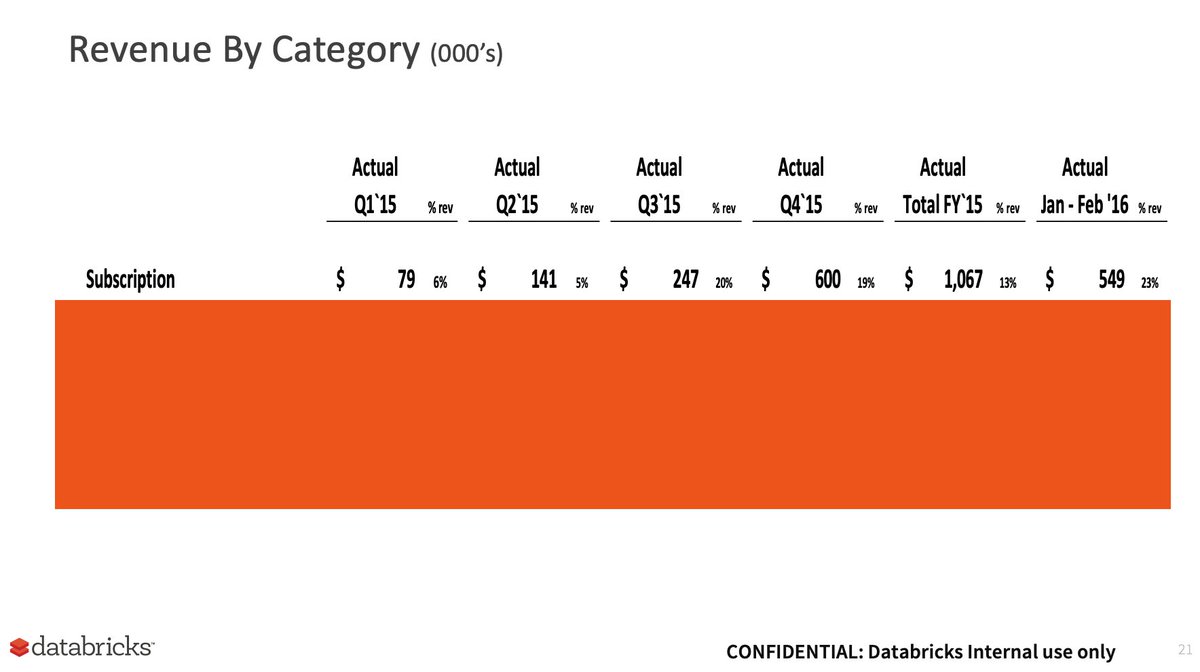
Exactly 10 years ago (Jan 2016), I stepped in as CEO. We had just closed out Q4 with a total of $600k in revenue (screenshot from board deck). Fast forward a decade. Q4 audited GAAP Revenue: $1,290M and over $5.4B revenue run-rate ending January. I’ve never tweeted our exact quarterly financials before, but seeing that $1.29B number cross my desk on my 10-year anniversary hit differently. To the team that built this: thank you. If you're following the data space, you know exactly what this milestone means. 🏗️
Ali Ghodsi tweet media
English
53
60
961
188.2K
Tasso Argyros
Tasso Argyros@tasso·
65% growth @ $5B+ ARR is outstanding and wouldn’t be possible without the AI disruption. AI and LLMs are cool, but they only work with good data, governance and evals. Databricks does all of that and helps AI deliver on its promise.
Ali Ghodsi@alighodsi

I now constantly get questions about the SAAS meltdown, role of AI, system of records etc. I don't have an answer to all these. But I do know that we saw an acceleration in our business in Q2, Q3, and now finished the year with accelerating Q4. The question is, why? Short answer: AI. But the underlying reason is subtle. We are growing fast because we are finally removing the biggest bottleneck in data: the technical barrier to entry. For years, if you didn’t know SQL, Python, you were locked out of the value chain. That has changed fundamentally with the 𝐆𝐞𝐧𝐢𝐞 𝐟𝐚𝐦𝐢𝐥𝐲, and it is the "secret sauce" behind our recent momentum: • 𝐆𝐞𝐧𝐢𝐞: Analysts can query data without any SQL. I use this every day myself. • 𝐃𝐚𝐭𝐚 𝐒𝐜𝐢𝐞𝐧𝐜𝐞 𝐆𝐞𝐧𝐢𝐞: Builds end-to-end AI models for you, similar to Cursor for ML on your data. • 𝐃𝐚𝐭𝐚 𝐄𝐧𝐠𝐢𝐧𝐞𝐞𝐫 𝐆𝐞𝐧𝐢𝐞: Write Spark pipelines, does plumbing, troubleshooting. We've been talking about DATA + AI democratization, but generative AI finally enabled it in a way that wasn't possible before. That's why we're seeing a market response. Take 𝐋𝐚𝐤𝐞𝐛𝐚𝐬𝐞 𝐏𝐨𝐬𝐭𝐠𝐫𝐞𝐬. We launched this serverless engine for agents and apps recently. At 8 months into its journey, its revenue is already 2x what our Data Warehouse product was at the same stage. All this taken together, we ended up with the following stats for Q4: 🚀 $5.4B Revenue Run-Rate, growing >65% YoY 🚀 $1.4B AI Revenue Run-Rate 🚀 FCF Positive for the year 🚀 NRR >>140% databricks.com/company/newsro…

English
1
3
46
8.8K
Tasso Argyros retweetledi
Andrew Drozdov
Andrew Drozdov@mrdrozdov·
Was a pleasure to give a lightning talk on “Search and Agents” at our NYC office tonight. Met an incredible group of passionate researchers and engineers. Looking forward to NYC continuing to grow as an R&D hub for @databricks !
English
0
2
12
1.2K
Tasso Argyros retweetledi
Neil Zeghidour
Neil Zeghidour@neilzegh·
Me defending my O(n^3) solution to the coding interviewer.
English
423
5.1K
49.7K
4M
Tasso Argyros
Tasso Argyros@tasso·
great thinking. but there’s a fundamental flaw. “It searches YouTube for conference talks…” “It cross-references those speakers with Twitter…” a human can do these things. but only gemini can search youtube, and only grok can search X. this is not a intelligence gap. it’s a legal and data access gap. not sure how we overcome this to achieve your AGI definition.
English
1
0
2
459
Tasso Argyros
Tasso Argyros@tasso·
this is such a powerful statement. i’d put it though a bit different: not “software”, but *coding* is no longer the bottleneck. great software engineering remains a rare and highly paid skill. you can see it in the most advanced users of ai coding here on X: - they know how to properly specify software requirements - they understand how to test/evaluate software - they review and make all key arch / tech stack decisions - they are entrepreneurial in how they approach *what* to build coding skill maybe is headed towards the grave, but software skill is more valuable than ever.
martin_casado@martin_casado

Software is no longer the bottleneck.

English
0
0
7
655
Tasso Argyros
Tasso Argyros@tasso·
@MohapatraHemant yes bundling is the one trick msft really knows how to do well - Internet Explorer in Windows -> killed Netscape - PowerBI in Office -> killed Tableau - Teams in Office -> killed Slack
English
1
0
0
55
Hemant Mohapatra
Hemant Mohapatra@MohapatraHemant·
Hard to speculate. My point, that I have high confidence on, was that no matter what, msft's distribution was always going to be very very hard to beat. At GCP, we had all the independence and resources, but they came from behind and bundled it into existing msnd channels and got ahead
English
1
0
1
71
Hemant Mohapatra
Hemant Mohapatra@MohapatraHemant·
Extensive lived experience building better products ultimately losing out to better distribution. AMD vs Intel: x.com/i/status/18091… GCP vs Azure: x.com/i/status/13439… Teams rev today is between 8-13b. Tech Twitter loves to dump on teams, but outside of that bubble there is real usage. My sister's entire school runs on it, so do lots of very large enterprises. I know it having invested in several slack ecosystem startups - the moment you go up market, slack coverage thins out. It's a pity because no one wants a poorer product to win but that's the whole point. Cognitive biases are real. You're welcome!
Arjun Sethi@arjunsethi

Venture capital has a recurring problem. It keeps measuring the wrong thing with great confidence. Distribution is not fake but it is often a terrible proxy for usage. Something being installed by default does not mean it is used in any meaningful way. If default presence equaled engagement then everyone would be a power user of Apple Calendar simply because it ships with the phone. We all know that is not how behavior works. You can touch a product without choosing it. You can open it once a quarter without relying on it. Default availability measures proximity not pull. Proximity is a very weak signal for product market fit. This is where the Slack versus Teams framework keeps getting recycled as wisdom when it is really just convenience. Teams benefited from bundling. That made it visible everywhere. It did not magically make people love it. It did not make it indispensable. It made it unavoidable. Those are very different things. Venture capital loves proprietary distribution because it is legible. You can put it in a spreadsheet. You can count seats provisioned. You can point to rollout numbers and feel smart in a partner meeting. Engagement by contrast is messy. It requires looking at behavior instead of slides. It requires asking uncomfortable questions like would anyone be upset if this disappeared tomorrow. Engagement is how you actually quantify product market fit. That is not a new idea. It is why I got into this business in the first place. Ironically it is also why some of my best investments did not need much venture capital from me or from anyone. When engagement is real capital is an accelerant not a crutch. When it is not capital just papers over the truth for a few more quarters. We invested in Slack at a 250M post. Slack later exited to Salesforce for roughly 27.7 billion dollars. Hardly a failure by any reasonable definition of venture outcomes. Despite the annual obituary tweets plenty of remote teams and modern companies still actively choose Slack over Teams today. They choose it despite Teams being free in a bundle. They choose it because it is used deeply inside workflows every single day. Voluntarily. Intensely. Yes you can touch Teams because it is bundled. You can also touch the unused exercise bike in your garage. That does not mean you are fit. It just means you own equipment. If you measure properly real usage depth of collaboration willingness to pay retention over time and expansion within teams I would still bet Slack wins on engagement and lifetime value over the framework that keeps getting retweeted. This is why venture capital keeps making the same mistake globally. Indian VCs are not uniquely doomed here. They are just inheriting the same outdated measurement systems with more enthusiasm and fewer scars. Installed base looks impressive. Engagement compounds quietly. So we get confident tweets instead of careful analysis. Headlines instead of homework. Distribution slides instead of behavioral truth. That is fine. But let us not confuse legibility with correctness. Worth doing a bit of work instead of retweeting the framework

English
7
1
69
22.5K
Tasso Argyros
Tasso Argyros@tasso·
NYC and SF almost at par at this point in terms of enabling entrepreneurs to create Unicorns per YC data and that’s just a point in time view. the trend is that NYC has been closing the gap very fast and has momentum to overtake NYC is just a great place to build!
Garry Tan@garrytan

@DonniHonig We haven’t done it yet because it is much more likely that people create successful PMF unicorns staying in SF Bay Area at a rate of 2.5x more NYC is about 2x

English
0
0
3
356
Tasso Argyros
Tasso Argyros@tasso·
@lennysan agreed but this is easier said than done. PMF doesn’t arrive overnight. Most startups found PMF after many iterations and failures. if founders were to quit after a couple tries, very few would succeed in the end.
English
0
0
1
165
Lenny Rachitsky
Lenny Rachitsky@lennysan·
"We talk in Silicon Valley about never quit. But that is complete, absolute, venture capital bullshit. The incentive of venture capitalist is to put money into your company and milk you dry. The only logical desire that they would have is for you to keep trying against all odds. The Silicon Valley mindset is not pro entrepreneur—it's pro venture capitalist. It's important to say out loud that you should f*cking quit. You should reset the clock. You should reset the cap table. Because trust me, product market fit, when it arrives, is insane. And it's exciting. And you should pursue it. And never delude yourself into believing you have it when you don't." — Matt MacInnis (@stanine)
Lenny Rachitsky@lennysan

“Extraordinary results demand extraordinary effort” A powerful conversation with Matt MacInnis (@stanine), long-time COO and newly minted CPO at @Rippling We discuss: 🔸 Matt’s transition from COO to CPO and what surprised him about leading product 🔸 The “high alpha, low beta” framework for evaluating people, processes, and products 🔸 Why you should deliberately understaff projects 🔸 Why you should treat escalations as gifts 🔸 Why processes exist to reduce volatility—and why it will also suppress creativity 🔸 When founders should quit their startups (hint: much earlier than VCs want you to) 🔸 Much more Listen now 👇 • YouTube: youtu.be/O_W76LR77Vw • Spotify: open.spotify.com/episode/1IdiYw… • Apple: podcasts.apple.com/us/podcast/10-… Thank you to our wonderful sponsors for supporting the podcast: 🏆 @GeminiApp — Your everyday AI assistant: ai.dev 🏆 @datadoghq — Now home to Eppo, the leading experimentation and feature flagging platform: datadoghq.com/lenny 🏆 @gofundme Giving Funds — Make year-end giving easy: gofundme.com/lenny

English
30
33
481
109.3K
Tasso Argyros
Tasso Argyros@tasso·
@GergelyOrosz Makes sense, because once AI does most of the dev work, that turns engineers into product managers. Most technical founders do both eng & product, so they fit the bill.
English
0
0
0
37
Gergely Orosz
Gergely Orosz@GergelyOrosz·
I have noticed that software devs who are by far the most enthusiastic about building with AI are all… entrepreneurs. Experienced devs who are either starting their own company, or building *their own* side project. (And then those working at AI labs / AI tools startups!)
Ed Andersen@edandersen

Lots of experienced devs are not going to get through “their grief cycle”, they’ll just leave the industry or move into real management. Coding with AI is not intrinsically enjoyable unless you have an ownership stake in the outputs. It’s not why we got into coding.

English
103
62
1.1K
99.8K
Tasso Argyros
Tasso Argyros@tasso·
🔥🔥 Great opportunity to join a top AI research team in NYC! Doing AI research at Databricks is special because our customers can deploy your work directly in the Lakehouse that hosts all enterprise data! AI + data *together* is the key to real impact!
Jonathan Frankle@jefrankle

I'm hiring interns for next summer at @databricks! Specifically on (1) empirical RL at scale on non-verifiable tasks and (2) enabling real people specify the behaviors they want out of AI (e.g., through evals) on highly complex tasks. 🧵

English
0
2
17
4.9K
Tasso Argyros
Tasso Argyros@tasso·
@xyz3va I find it nuts that we’re still using environment variables to store critical/sensitive data like tokens as if we’re at Bell Labs in 1970
English
0
0
1
761
Tasso Argyros
Tasso Argyros@tasso·
DBX founders have nailed this. Makes the company truly anti-fragile. Sounds easy, but it's not! Requires: - market foresight so that you make investments early; - a steady hand (patience and focus) to see through the investments; and - the ability to identify and attract talent that builds products that win markets
Matei Zaharia@matei_zaharia

People often ask me why we think Databricks can succeed in new areas we expand to. This is the recipe why: we build stellar teams in areas where we think we can greatly improve on the status quo. Lakehouse was one, Lakebase is next, but there's more coming, especially in AI.

English
0
0
3
393
Tasso Argyros
Tasso Argyros@tasso·
@ConorMcCarter Good point. Agents are very comfortable operating on data, they don't need a UI. But humans will stay in the loop for the forseeable future, and they will absolutely need a UI—just not anything like the UIs we had before.
English
0
0
1
20
Conor McCarter
Conor McCarter@ConorMcCarter·
@tasso I've been interpreting that quote to mean "UI is for humans, the future is AI agents which won't use a traditional UI". For that interpretation, I think we also need to invent new standards for documenting intended UX, in a way that we previously encoded in a thoughtful UI
English
1
0
1
69
Tasso Argyros
Tasso Argyros@tasso·
"UI is pre-AI" is a powerful statement but I believe is wrong. An empty AI chat box with a blinking cursor and no interactivity or feedback is BAD, intimidates the user and feels like "pre-UI AI". We need to invent new UI primitives that are AI native. We're not there yet.
English
1
0
2
312