
Sabitlenmiş Tweet
Le Fleur
65.2K posts

Le Fleur
@tbflowers
💘🇺🇸🇮🇱🇹🇼🇺🇦⚽🚓🚀🛩🚛⚓📟🧊 Bisweptual, T1D & MS caregiver;❤️🔥 sports,books,movies,games,drink,T&A; Anti:Commie+Nazi+Theocracy+GreatReset+WEF+de-growth
Petersburg, GA Katılım Ağustos 2009
2.8K Takip Edilen1K Takipçiler

Former CDC director on Ebola outbreak: ‘I suspect this is going to become a very significant pandemic’
thehill.com/policy/healthc…
English
Le Fleur retweetledi


Le Fleur retweetledi
Coca-Cola commercial from 1976
The past is a foreign country
English

"This is what drinking water in Georgia looks like after Meta began data center construction in the community." - AOC
English
Le Fleur retweetledi
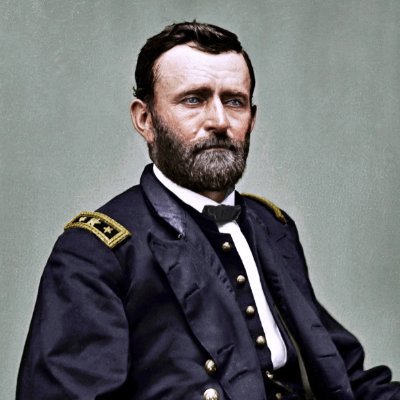
Forget everything you think you know about the American Revolution at sea.
The Continental Navy was a punchline. Across eight years of war, it commissioned around 65 ships total. Most got captured, blockaded, burned, or simply rotted at the wharf. Meanwhile, the British Royal Navy was the most powerful military machine on Earth, with over 270 ships of the line, more than 100,000 trained sailors, the best gunnery in the world, and a long tradition of obliterating every navy it had ever faced.
So how did a brand new country with no real navy actually fight the war on the ocean?
It legalized piracy.
In March of 1776, the Continental Congress passed a resolution authorizing private citizens to attack British shipping. The mechanism was called a Letter of Marque. It was, in practice, a permission slip signed by Congress or a state governor that turned any merchant captain into a legal raider. Capture a British ship, drag it back to an American or French port, sell the ship and the cargo in a prize court, split the silver among the crew. By the end of the war, around 1,700 American vessels were sailing under these letters, crewed by somewhere between 55,000 and 70,000 men. That is more sailors than George Washington ever had soldiers in the field at any single point in the entire Revolution.
And these were not Navy crews. They were Marblehead fishermen, Nantucket whalers, runaway apprentices, free Black sailors, escaped slaves, Irish smugglers, French volunteers, dockside brawlers, Quaker farm boys, and Spanish renegades. Powder boys as young as nine were taken on as crew. The deal, written into every privateer's "Articles of Agreement," was brutally simple: no prize, no pay. Come home with empty holds and you came home with empty pockets. Come home with a fat British East Indiaman packed with sugar, silk, mahogany, gunpowder, and silver dollars and you came home a wealthy man for life.
They came home wealthy a lot.
American privateers captured roughly 2,000 British vessels during the Revolution. They snatched prizes in the Caribbean, off the Grand Banks, in the Bay of Biscay, along the coast of West Africa, in the Mediterranean, and inside the English Channel itself, sometimes within musket shot of British villages. They burned shipping in the Irish Sea. They seized British troop transports headed for America before they ever reached the fighting. They captured the personal correspondence of British generals. They intercepted recruitment ships full of Hessian mercenaries.
London marine insurance rates tripled, then quadrupled on some routes. Lloyd's of London nearly buckled. West Indian sugar planters flooded Parliament with petitions begging for peace before they went bankrupt. One member of the House of Commons stood up and complained, on the record, that the rebel privateers were costing the empire more in lost shipping than the entire land war was costing in soldiers. The Royal Navy, stretched thin fighting France, Spain, and the Dutch on top of the Americans, simply could not be everywhere at once.
Then there were the legends.
Jonathan Haraden of Salem sailed a converted merchant brig called the General Pickering, mounting only sixteen small guns and crewed by men he had personally recruited off the wharves. In June of 1780, off the Spanish coast, he ran straight into three British privateers cruising in company. He attacked all three at once. He won. A few weeks later, while taking on cargo near Bilbao, he was challenged by a heavily armed British raider called the Achilles, a 42 gun monster crewed by 140 men. Haraden had 45. He weighed anchor and sailed out to meet her anyway. The two ships dueled for hours in clear summer weather while thousands of Spanish villagers crowded the cliffs above the bay, watching the entire battle unfold below them like a colosseum match. When the smoke finally drifted off the water, Achilles was a splintered wreck limping for the horizon. Spanish fishing boats rowed out and towed the General Pickering back into port. Haraden walked ashore to a hero's reception from people who were not even his countrymen.
Joshua Barney, a Baltimore boy who had first gone to sea at twelve and commanded his own ship at fifteen, was captured by the British and locked inside the notorious Mill Prison in Plymouth, England. He talked a sympathetic British officer's wife into smuggling him a complete British uniform, walked out the front gate of the prison saluting the guards as if he owned the place, hiked overland to the coast, paid a fisherman to row him across the English Channel to France, returned to America, and went straight back to sea. In April of 1782 he commanded a small Pennsylvania privateer called the Hyder Ally and faced down a heavier British warship, HMS General Monk, in Delaware Bay. At the climax of the battle Barney shouted a deliberately wrong order to his helmsman, loud enough that the British captain could hear it across the water. The British ship reacted to the fake command, swung into the wrong position, got raked from bow to stern by Barney's full broadside, and surrendered in twenty six minutes. It is still studied at the Naval Academy as one of the most brilliant single ship actions ever fought under an American flag.
Gustavus Conyngham, nicknamed "the Dunkirk Pirate" by furious London newspapers, captured or burned close to 60 British ships in European waters in less than two years. The British declared him an outlaw, posted bounties on his head, hunted him across the continent, eventually caught him, and threw him in irons inside a stone fortress prison. He tunneled out with a spoon. He was recaptured at sea. He escaped a second time. By the end of the war the British had imprisoned him three separate times and he had broken out of every one of them.
Lambert Wickes, sailing the Continental cutter Reprisal, became the first American warship to take prizes in European waters and personally carried Benjamin Franklin to France in 1776 through stormy seas, dodging British frigates the entire way. He then spent 1777 raiding the British coast so aggressively that London diverted an entire squadron of warships to chase him through the Irish Sea. Wickes ran them ragged for months and finally turned for home. He never made it. The Reprisal went down in an Atlantic gale off Newfoundland in October of 1777 with all hands. Only the cook survived to tell the story.
Luke Ryan, an Irish smuggler who switched sides and signed on as an American privateersman, took command of two of the most successful raiders of the entire war, the Black Prince and the Black Princess, operating out of the French port of Dunkirk. In a single year his crews captured 114 British ships, many of them in sight of the British home coast. When Ryan was finally caught, he was tried for piracy in London, convicted, and sentenced to hang. At the last possible moment he produced documents claiming American citizenship, was reclassified as a prisoner of war instead of a pirate, escaped the rope, and walked out of England a free man at the end of the war.
James Forten, a fourteen year old free Black boy from Philadelphia, signed onto the privateer Royal Louis as a powder boy in 1781. After two cruises he was captured by HMS Amphyon. The British captain's young son took a liking to Forten and his father offered to bring the boy back to England, educate him alongside his own children, and treat him as part of the family. Forten refused, saying he could never betray his country. The captain, moved but unable to take a defiant rebel into his household, spared him from being sold into West Indian slavery and instead transferred him to the prison hulk Jersey, moored in Wallabout Bay off the Brooklyn shore. The Jersey was a floating tomb. More American sailors died inside the British prison hulks in New York harbor than were killed in every single land battle of the Revolution put together. The most accepted estimate is around 11,500 dead, their bones still washing up on the Brooklyn waterfront for decades after the war ended. Forten survived seven months aboard that ship, came home walking on shoes made of rags, learned the sailmaking trade, invented a new device for handling sails that made him rich, became one of the wealthiest Black men in early America, and poured much of his fortune into bankrolling the abolitionist movement that would eventually help end slavery itself.
The money the privateers brought home, top to bottom, was almost impossible to believe.
A single successful voyage could turn a fourteen year old powder boy into a wealthier person than his own father. A captain's share from a fully loaded British East Indiaman could buy a mansion outright with money left over for a fleet of carriages. Elias Hasket Derby of Salem, who financed and at times personally captained privateers throughout the war, ended the Revolution as quite possibly the richest man in the United States, and his wife Elizabeth Derby ran the business end of the family fleet with a precision that would have impressed any modern hedge fund manager. Salem itself, a quiet fishing village in 1775, exploded into one of the wealthiest cities per capita in the entire world by the early 1780s. The mansions paid for with looted British sugar, rum, silver, and gunpowder still stand on Chestnut Street today, two and a half centuries later, monuments built out of the cargo holds of a stolen empire.
Behind the captains stood a strange new financial machine. Shares in privateer voyages were bought and sold in coffee houses up and down the seaboard like modern stocks. Widows invested their late husbands' savings. Quaker merchants who refused to bear arms quietly bankrolled the raiders. Robert Morris, the financier of the Revolution, owned stakes in dozens of privateers and made and lost personal fortunes on their voyages. Prize courts in every state worked night and day adjudicating captured cargoes. An entire shadow economy bloomed around the war, complete with insurance, speculation, futures trading, and outright fraud.
It also got men killed in horrifying ways. Naval combat in the age of sail was pure butchery. Cannonballs sent oak splinters as long as a man's forearm scything across decks, killing and maiming more crewmen than the shot itself. Boarding actions were fought at point blank range with pistols, axes, pikes, and cutlasses in choking gunsmoke. Fire was the constant terror, because a single spark in the powder magazine could turn a ship into a fireball that lit the horizon for thirty miles. Surrendered prisoners were not always taken alive, and those who were often ended up in floating graves like the Jersey, where dysentery, smallpox, and slow starvation killed faster than any broadside ever could.
But the survivors changed the war.
By 1781, British merchants in London, Liverpool, Bristol, and Glasgow were openly demanding peace. Insurance on a single Atlantic crossing had become almost unaffordable. Sugar from the West Indies was rotting in Caribbean warehouses because no captain would risk the run home. The Royal Navy, stretched across half the planet fighting France, Spain, and the Dutch as well as the rebels, simply could not protect every convoy on every ocean. Privateering had done what no Continental Army victory could ever quite manage on its own. It had made the war unprofitable to keep fighting.
History remembers the Minutemen at Lexington Green.
It remembers Washington crossing the Delaware on Christmas night.
It remembers Yorktown, and the world turned upside down.
It forgot the 1,700 ships full of teenagers, ex convicts, freed slaves, Irish smugglers, Salem fishermen, Quaker investors, Philadelphia powder boys, and runaway apprentices who sailed straight into the teeth of the most powerful navy on Earth carrying nothing but cannons, cutlasses, courage, and a piece of paper from Congress that turned them, legally, into pirates.
They did not just help win the Revolution.
They bled the British Empire white.

Dave@surlydave_40
@EchoesofWarYT I kid, but I learned about the legal cut quartermasters took from @SalinaBBaker writing and teaching me about Nathaniel Greene. Hope I’m speaking correctly about this.
English

@cowlonfull Weird halftime shows? Meh, whatever.
The clock? Interesting. A minor tinker that means in theory i get 90 actual minutes of the ball being in play.
Not fundamental changes that make the game look different.
English

The thing that nobody ever seems able to deal with is that most Americans that like soccer like the sport the way it is. FIFA putting in weird halftime shows and MLS changing the clock are both examples of missing what people want
Adam Booker@abooker17
MLS is poor at attracting American soccer fans who wake up every Saturday morning at 7am to watch hours of European football, and that’s an audience they need to capture in this country. The last thing they should do is make the sport unrecognizable to the rest of the world.
English

Secret Weapons of the Luftwaffe for MS-DOS PC (Lucasfilm Games/1991) is a World War II air-combat flight simulator where you can fight against or fly famous German secret jets such as Horten Ho 229 and Me 262.
It's the 3rd title in this classic WWII combat trilogy, preceded by Battlehawks 1942 and Their Finest Hour.
English

Chris Richards has torn two ligaments in his ankle, according to Crystal Palace manager Oliver Glasner.
The USMNT open their World Cup campaign in 22 days 🤕


English
Le Fleur retweetledi
If you believe everyone who disagrees with you is a paid Israeli operative, you are an antisemite.
Sorry to break it to you.
English
Le Fleur retweetledi

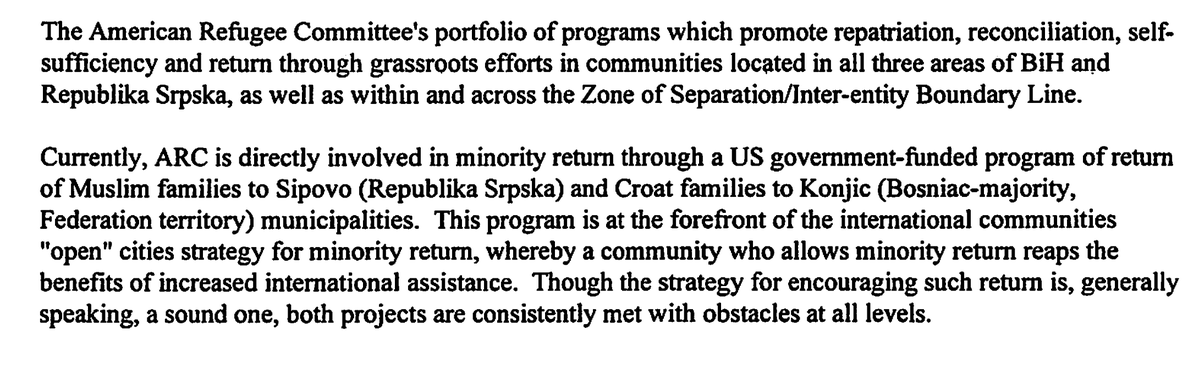
🇺🇸💰 Ever wonder why European cities accepted so many refugees?
Today, I'm over my jet lag and processing the documents I scanned this week. Already it's pretty shocking.
The refugee influx into Europe began as a U.S. taxpayer-funded subsidy. The U.S. government literally paid European cities to take them in, using Soros-backed operations like ARC (American Refugee Committee) as the middlemen.
Yes, ARC, co-founded with money from the Soros Humanitarian Fund, was running programs directly for the U.S. government.
It goes even deeper and darker than that. Stay tuned.

English
Le Fleur retweetledi

If a Republican candidate proposed putting Jews in work camps it would be a national media story for days.
There is no version of America where rhetoric like this is acceptable.
Michael Karlis@MichaelKarlis
TX-35 Democratic candidate Maureen Galindo says she will convert ICE detention center in Karnes County into an internment camp for "American Zionists." "It will also be a castration processing center for pedophiles, which will probably be most of the Zionists," she added.
English
Le Fleur retweetledi
Le Fleur retweetledi

TX-35 Democratic candidate Maureen Galindo says she will convert ICE detention center in Karnes County into an internment camp for "American Zionists."
"It will also be a castration processing center for pedophiles, which will probably be most of the Zionists," she added.
English
BREAKING: Cambridge Council votes 5-2 to disable gunshot detectors to protect black residents and migrants
English

As many as 19 members of the Congressional Black Caucus — almost a third of its membership — are at risk of losing their seats through the 2028 cycle. abcnews.link/e3DwXOc
English

We can't give the public facts. They might develop their own conclusions, and it might not agree with what we desire.
San Diego: More Facts, Please pjmedia.com/eric-florack/2…
English

I didn't know Helen of Troy could generate so much conflict.
English