T. Koffi

14.3K posts

T. Koffi banner
T. Koffi

T. Koffi

@tchiebley

Full stack developer, System Administrator @blockchain enthusiast #DevOps

TOGO Katılım Nisan 2009
5K Takip Edilen1.8K Takipçiler
T. Koffi retweetledi
Kube Architect
Kube Architect@K8sArchitect·
Skiperator is a Kubernetes operator that lets developers deploy applications through a simple Application resource while the platform handles secure and reliable setup around it ➤ ku.bz/T-j7BM-H3
English
0
4
16
1.7K
T. Koffi retweetledi
Kube Architect
Kube Architect@K8sArchitect·
Helm-exporter exports Helm releases, charts, and version statistics in the Prometheus format ➤ ku.bz/T9Y1Vh5Mn
English
0
9
38
2.9K
T. Koffi retweetledi
yourclouddude
yourclouddude@yourclouddude·
10 Networking Tools Every Beginner Should Know • Ping – test connectivity • Traceroute – track packet paths • Netstat – inspect network connections • Wireshark – analyze packets • Nslookup – troubleshoot DNS • Curl – test APIs & endpoints • SSH – securely access servers • IPConfig / IFConfig – inspect network configs • Speedtest – measure bandwidth • Nmap – scan networks & ports You don’t need to memorize everything. Learn these tools → troubleshoot like a real engineer.
English
6
20
151
5.6K
T. Koffi retweetledi
Tech Fusionist
Tech Fusionist@techyoutbe·
K8s Operators 🔥🔥
Tech Fusionist tweet media
2
29
138
4K
T. Koffi retweetledi
Ayaan 🐧
Ayaan 🐧@twtayaan·
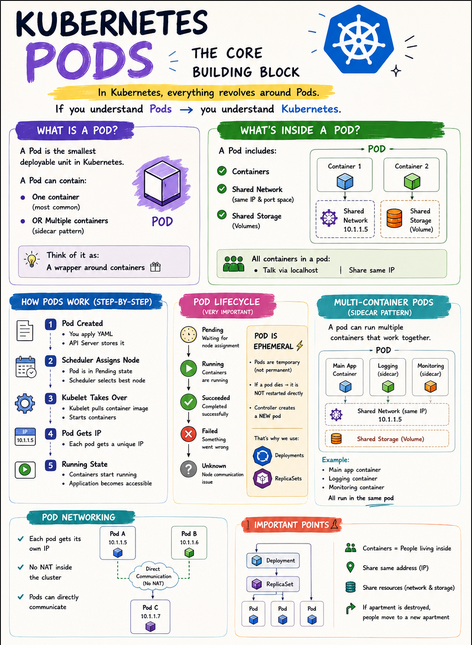
Kubernetes Pods 📦 Pods are the smallest deployable unit in Kubernetes and the foundation of every application running inside a cluster. → A Pod can run one or multiple containers → Containers inside a Pod share the same network and storage → Every Pod gets its own unique IP address → Pods can directly communicate with each other inside the cluster → Pods are ephemeral and can be replaced anytime → kubelet manages Pods on worker nodes → Deployments and ReplicaSets keep Pods running automatically → Multi-container Pods use the sidecar pattern for logging, monitoring, etc. → Services provide stable access to changing Pod IPs → Understanding Pods makes Kubernetes much easier to understand
Ayaan 🐧 tweet media
English
6
44
167
4.3K
T. Koffi retweetledi
Idriss J. Aberkane Ph.D x3
Idriss J. Aberkane Ph.D x3@idrissaberkane·
Il a généré le vrai wikipedia du coup…
Nav Toor@heynavtoor

THIS GUY BUILT AN ENTIRE WIKIPEDIA THAT IS 100% AI HALLUCINATIONS AND IT'S OPEN SOURCE ON GITHUB it's called Halupedia. nothing on the site existed before you clicked. every article was generated the second you arrived. the site has one rule: the universe only exists when you visit it. it looks exactly like wikipedia. same fonts. same layout. same scholarly citations. same "stumble" button for random articles. the only difference is none of it is real. here are some actual articles currently in the encyclopedia: > the great pigeon census of 1887 > the ministry of slightly wrong maps > chaldic arithmetic — a branch of mathematics where subtraction is forbidden > armund the river mapper — a cartographer who mapped 14,000 leagues of river without leaving his chair > the society for the prevention of unnecessary tuesdays every article page also tells you how many people are reading it right now. it says: "you alone are consulting this folio at present." the creator's own tagline for the site is the most unhinged sentence i've read this year: "an encyclopedia of a universe that does not exist until you visit it" the entire backend is a single open source repo called vibeserver. one guy. one description on github: "a little webserver making things up just in time." we built the largest knowledge base in human history and the very first thing a guy did with it was make a hallucinated mirror universe and put it on the open web. the internet is healing.

Français
8
28
195
22.2K
T. Koffi retweetledi
Kube Architect
Kube Architect@K8sArchitect·
Nelm is meant to be a direct replacement for Helm 3, providing first-class Helm chart support yet improving on what Helm 3 offers Nelm is based on Helm 3 — some parts of it improved and some, like the deployment subsystem, are rewritten from scratch ➜ ku.bz/PXsCVWS96
English
1
9
40
4K
T. Koffi retweetledi
Ayaan 🐧
Ayaan 🐧@twtayaan·
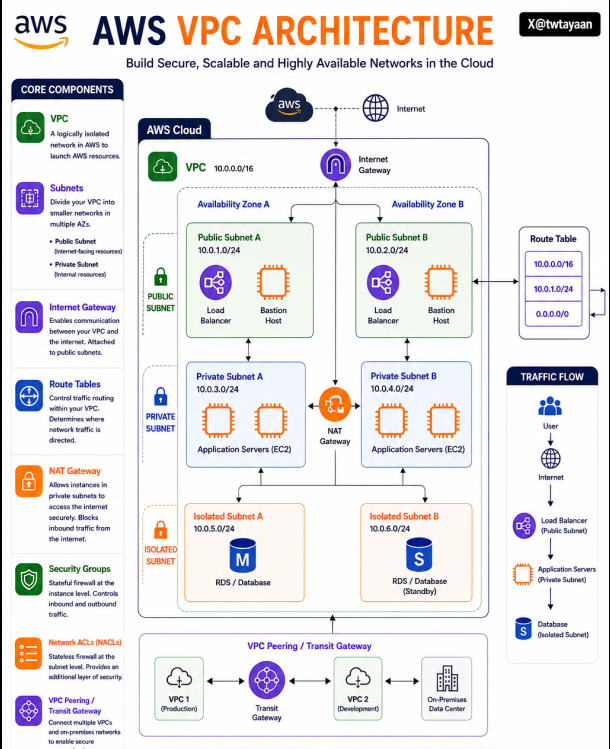
AWS VPC Architecture 🏗️ Amazon VPC helps you build isolated, secure, and scalable networks inside AWS for running cloud applications reliably. → Public subnets expose internet-facing resources like Load Balancers → Private subnets securely host internal application servers → Isolated subnets protect sensitive databases from direct internet access → Internet Gateway enables communication between VPC and the internet → NAT Gateway allows private instances to access the internet securely → Route Tables control how network traffic flows inside the VPC → Security Groups act as stateful firewalls for EC2 instances → NACLs provide subnet-level traffic filtering and security → Multi-AZ deployment improves availability and fault tolerance → VPC Peering and Transit Gateway connect multiple networks securely
Ayaan 🐧 tweet media
English
4
46
196
5.1K
T. Koffi retweetledi
yourclouddude
yourclouddude@yourclouddude·
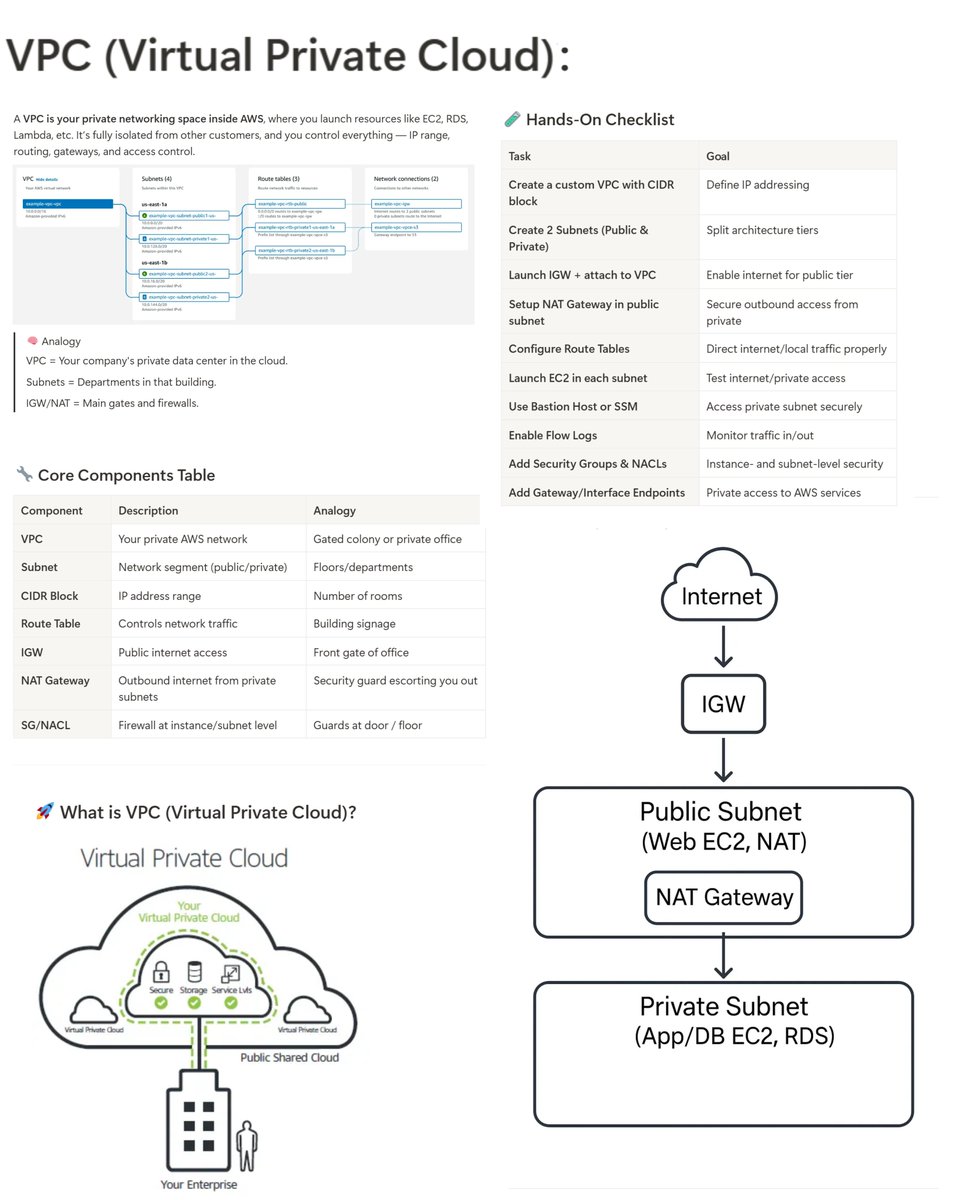
AWS SAA is not about memorizing 200 services. It’s about knowing which service to choose, when, and why. ☁️
yourclouddude tweet mediayourclouddude tweet mediayourclouddude tweet mediayourclouddude tweet media
English
1
4
47
1.7K
T. Koffi retweetledi
Sanya Jain - Your Grad Coach
Sanya Jain - Your Grad Coach@yourgradcoach·
Cover letter template used by my students who received PhD admits from universities like Oxford🇬🇧, Cambridge🇬🇧, EPFL🇨🇭, and Stanford🇺🇸. DM me “guidance” on +91 9999389760 (WhatsApp) if you want to win fully funded scholarships in 2026.
Sanya Jain - Your Grad Coach tweet media
English
0
12
85
4.3K
T. Koffi retweetledi
Ayaan 🐧
Ayaan 🐧@twtayaan·
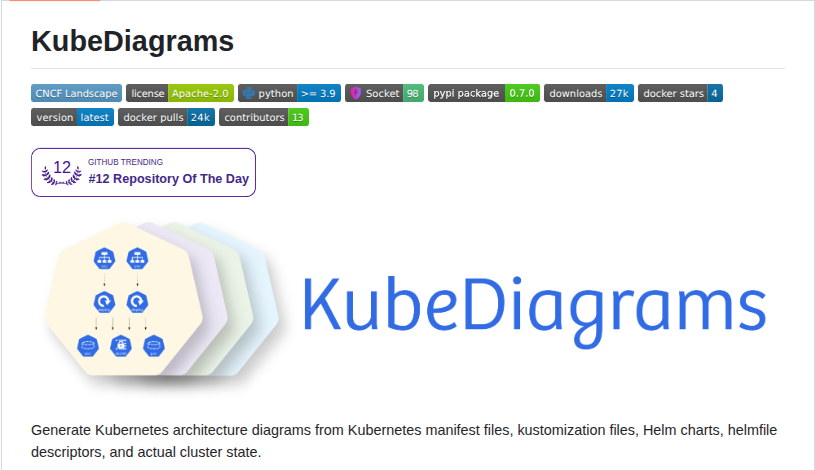
Just found this awesome free tool for generating Kubernetes diagrams automatically. KubeDiagrams turns your manifests, Helm charts, and even live clusters into clean architecture diagrams in seconds. → Generates diagrams from YAML, Helm, Helmfile, and Kustomize → Can visualize live cluster state → Supports custom resources → Exports to PNG, SVG, PDF, and draw.io → Free and open source Super useful for docs, onboarding, and understanding cluster architecture fast. Repo: github.com/philippemerle/…
Ayaan 🐧 tweet media
English
13
105
612
29.4K
T. Koffi retweetledi
Ayaan 🐧
Ayaan 🐧@twtayaan·
🚨 OpenAI is officially on AWS. Yesterday (April 28, 2026), AWS and OpenAI announced a massive expansion to their partnership. It includes: → GPT-5.5 on Bedrock: Access frontier models via standard Bedrock APIs → Codex on AWS: Native coding agents for CLI and VS Code → Managed Agents: OpenAI-powered agents running inside your AWS VPC → Unified Billing: Usage counts toward your existing AWS cloud commitments → 0ms Egress: Eliminate data transfer fees between S3 and OpenAI/Azure You no longer have to choose between the best models and the best infrastructure. The Microsoft Azure exclusivity is officially over. Source: share.google/rM15XYWGgBtYU7…
Ayaan 🐧 tweet media
English
6
3
30
2.4K
T. Koffi retweetledi
Nandkishor
Nandkishor@devops_nk·
Before appearing for an interview, understand the Kubernetes components. Master these fundamentals. 👇 Pod → The smallest deployable unit in Kubernetes; wraps one or more containers. Node → A machine (VM or physical) where pods are scheduled and run. Cluster → A set of nodes managed by a control plane. Deployment → Manages rolling updates and ensures desired number of pod replicas. ReplicaSet → Ensures a specified number of identical pods are running. StatefulSet → Used for stateful apps with persistent identity and storage. DaemonSet → Ensures a pod runs on all (or selected) nodes. Job → Runs pods that complete a task and then exit. CronJob → Schedules jobs at specific times (like cron). Service → Exposes a stable network interface to access pods. ClusterIP → Default service type; accessible only within the cluster. NodePort → Exposes service on a static port across all nodes. LoadBalancer → Exposes service externally via cloud provider LB. Ingress → Manages HTTP(S) routing to services. ConfigMap → Stores non-sensitive config data for pods. Secret → Stores sensitive data like API keys/passwords. Volume → Persistent storage attached to pods. PersistentVolume (PV) → Storage provisioned for the cluster. PersistentVolumeClaim (PVC) → Request for storage by a pod. Namespace → Logical separation of cluster resources. Kubelet → Agent on each node managing pod lifecycle. Kube-Proxy → Handles networking rules and traffic forwarding. API Server → Central control plane component for all communication. Controller Manager → Ensures desired state via background controllers. Scheduler → Assigns pods to nodes based on resources. cAdvisor → Collects resource usage metrics on nodes. etcd → Distributed key-value store for cluster data. Taints → Prevents pods from scheduling on certain nodes unless tolerated. Helm → Package manager for Kubernetes applications. Kubernetes Dashboard → Web UI for managing clusters. Follow for more !
Nandkishor tweet media
English
6
93
379
13.1K
T. Koffi retweetledi
Ayaan 🐧
Ayaan 🐧@twtayaan·
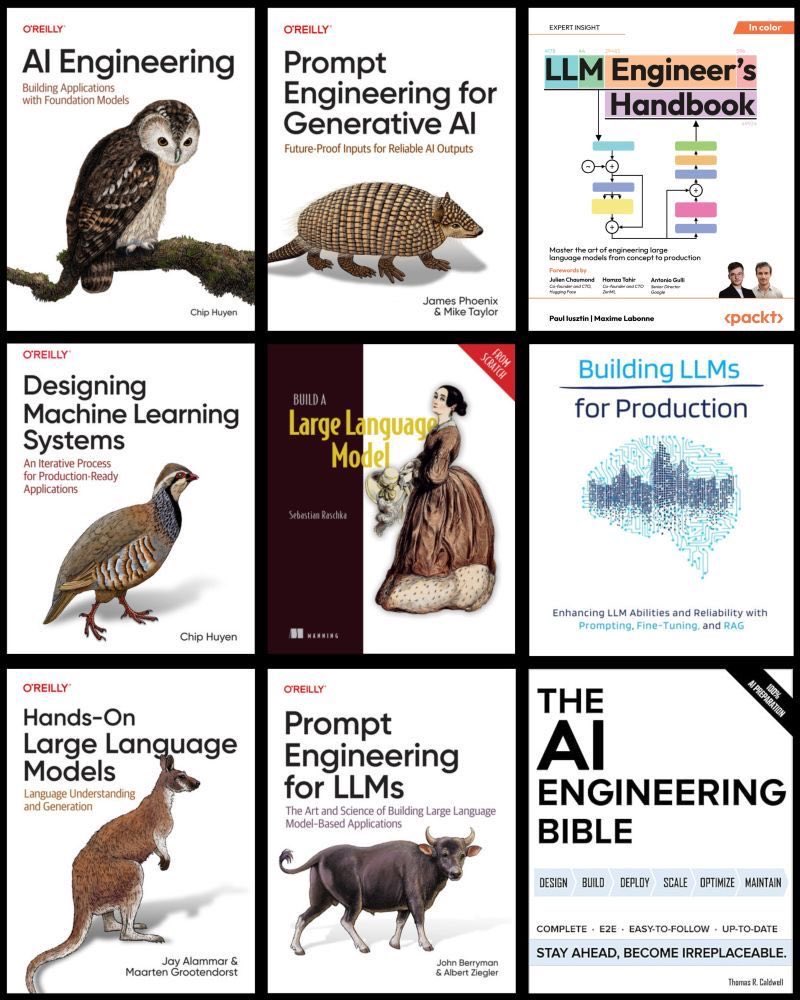
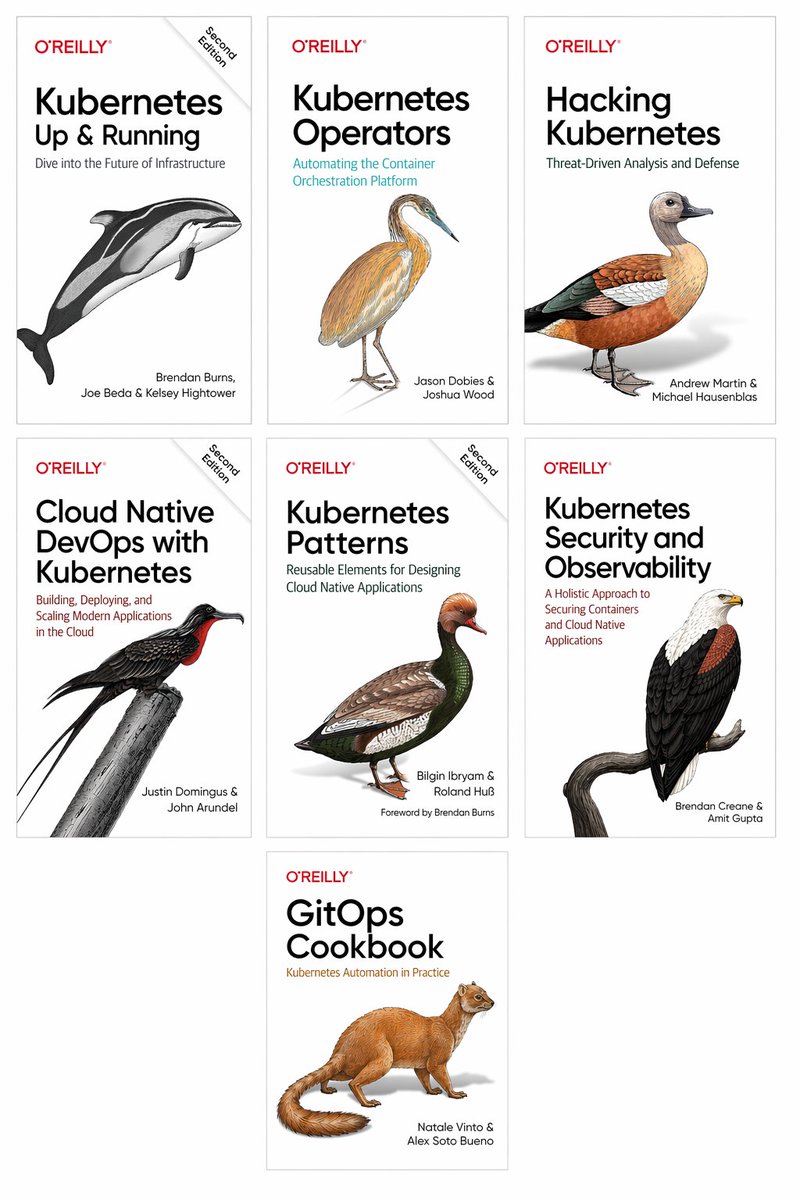
7 O’Reilly FREE Books for Kubernetes 📚 1. Kubernetes Up & Running digtvbg.com/files/LINUX/Ku… 2. Kubernetes Operators oreilly.com/library/view/k… 3. Hacking Kubernetes book.huihoo.com/pdf/10-oreilly… 4. Cloud Native DevOps with Kubernetes oreilly.com/library/view/c… 5. Kubernetes Patterns oreilly.com/library/view/k… 6. Kubernetes Security and Observability oreilly.com/library/view/k… 7. GitOps Cookbook devopschina.org/wp-content/upl… Most of these are free via O’Reilly trial or community releases.
Ayaan 🐧 tweet media
Dansk
5
83
442
16.1K
T. Koffi retweetledi
Kube Careers
Kube Careers@kubecareers·
Kube Careers tweet media
ZXX
1
2
4
933
T. Koffi retweetledi
Dhanian 🗯️
Dhanian 🗯️@e_opore·
KUBERNETES (K8S) QUICK STRUCTURE kubernetes/ ├── fundamentals/ # Core concepts │ ├── architecture # Master, Node, Cluster │ ├── pods # Smallest deployable unit │ ├── services # Networking & exposure │ └── namespaces # Resource isolation │ ├── workloads/ # Running applications │ ├── deployments # Stateless apps │ ├── statefulsets # Stateful apps │ ├── daemonsets # Node-level workloads │ └── jobs # Batch processing │ ├── networking/ # Communication │ ├── cluster-ip # Internal access │ ├── nodeport # External access │ ├── loadbalancer # Cloud exposure │ └── ingress # HTTP routing │ ├── storage/ # Persistent data │ ├── volumes # Storage units │ ├── persistent-volumes # PV │ └── persistent-volume-claims # PVC │ ├── configuration/ # App configs │ ├── configmaps # Non-sensitive data │ └── secrets # Sensitive data │ ├── scaling/ # Auto scaling │ ├── hpa # Horizontal scaling │ └── autoscaling # Resource scaling │ ├── security/ # Cluster security │ ├── rbac # Access control │ ├── network-policies # Traffic control │ └── pod-security # Pod restrictions │ ├── observability/ # Monitoring │ ├── logging # Logs │ ├── metrics # Performance data │ └── tracing # Request tracing │ ├── devops/ # Deployment │ ├── helm # Package manager │ ├── ci-cd # Pipelines │ └── gitops # Declarative delivery │ ├── manifests/ # YAML configs │ ├── pod.yaml │ ├── deployment.yaml │ ├── service.yaml │ └── ingress.yaml │ ├── .gitignore # Ignored files ├── README # Documentation └── roadmap # Learning roadmap Master Kubernetes with this complete ebook: codewithdhanian.gumroad.com/l/jwjls
Dhanian 🗯️ tweet media
English
4
63
281
9.3K
T. Koffi retweetledi
Mark Gurman
Mark Gurman@markgurman·
New Apple CEO Ternus to employees on AI: “It’s going to allow us to do some things that, honestly, were previously in the realm of science fiction, and now we see a path to being able to do it, which is incredibly exciting.” bloomberg.com/news/newslette…
English
34
106
1.6K
116.5K
T. Koffi retweetledi
Shraddha Bharuka
Shraddha Bharuka@BharukaShraddha·
Most developers “use APIs.” Very few understand how APIs actually power systems. That’s the difference between writing code… and building scalable products. Here’s how APIs really work 👇 APIs │ ├── Open APIs (External systems) │ ├── REST API │ │ ├── Weather data │ │ ├── Login/auth systems │ │ └── Product information │ │ │ ├── SOAP API │ │ ├── Bank transfers │ │ ├── Insurance claims │ │ └── Government records │ │ │ └── GraphQL API │ ├── Social feeds (Facebook, etc.) │ ├── GitHub stats │ └── Custom queries (fetch only what you need) │ ├── Internal APIs (Your system backbone) │ ├── Frontend ↔ Backend │ │ ├── Login requests │ │ ├── Profile fetch │ │ └── Live search │ │ │ ├── Backend ↔ Backend │ │ └── Microservices communication │ │ │ └── Service ↔ Database │ ├── User insert/update │ └── Reports & queries │ └── Partner APIs (Business integrations) ├── B2B Integrations │ ├── Payment gateways │ ├── Airline / hotel booking │ └── External service data │ ├── Affiliate Systems │ ├── Product links │ ├── Commission tracking │ └── Click analytics │ └── Data Sharing APIs ├── Health records ├── Finance data └── Logistics tracking Now the important part: Most people stop at “calling APIs.” But real engineers think like this: → Where does this API fit in the system? → Is it external, internal, or partner-level? → How does data flow between layers? → Can this scale when users grow 10x? Because in real-world applications: • Open APIs bring data • Internal APIs run your product • Partner APIs grow your business That’s how companies build: → SaaS platforms → Marketplaces → Fintech systems → Scalable products The shift is simple: Amateurs → Call endpoints Professionals → Design API architecture If you understand APIs like this, you don’t just build features… You build systems. ♻️ Repost to help someone
GIF
English
11
144
590
21.6K