Some Native American tribes scalped and mutilated their enemies so they could not properly enter the afterlife.
They believed a crippled or disfigured spirit could not enter or enjoy the afterlife.
The ultimate sign of disrespect and contempt.
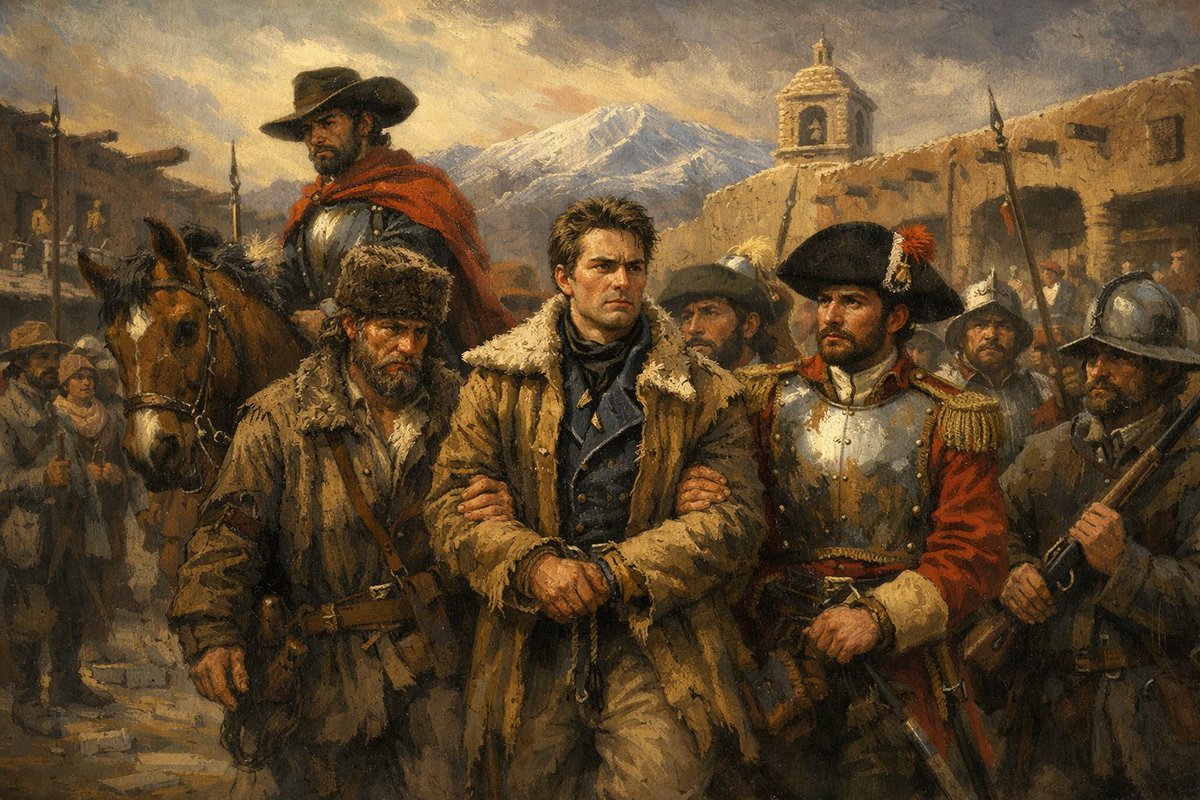
A lot of people were asking for more on my earlier post about Zebulon Pike’s route through the West, so here it is.
This one has been in the making for the last few weeks.
Because the deeper I got into Pike, the clearer it became: this wasn’t just some footnote expedition. It was one of the wildest journeys in early American history — through the plains, up the Arkansas, into the mountains, across the dunes, down the Rio Grande, and straight into Spanish hands.
Most people know Pikes Peak.
Almost nobody knows what Zebulon Pike and his men actually went through.
I wrote the full story here: chroniclesofhistory.com/american-histo…
For centuries, the rugged lands of northern Scotland were ruled by a people the Romans called the Picts, a name often translated as “the Painted Ones.” Classical writers believed they decorated their bodies with blue pigments—possibly woad—creating a striking image of warriors emerging from misty highlands.
From roughly the 3rd to the 9th centuries, the Picts controlled much of northern Britain. They built fortified hill settlements and left behind hundreds of carved stones scattered across Scotland. These stones display distinctive symbols—spirals, animals, mirrors, and enigmatic geometric designs—whose meanings are still debated by historians and archaeologists today.
Yet among the many mysteries surrounding the Picts, one possibility stands out.
Several historical sources suggest that Pictish society may have followed matrilineal succession—meaning royal authority could pass through the mother’s lineage rather than the father’s. While the exact structure of Pictish inheritance is still debated, medieval chroniclers believed that kings often claimed legitimacy through their mothers.
If true, this would have been unusual in early medieval Europe, where power typically passed through male lines.
Women in Pictish society appear to have held significant influence. Historical traditions describe queens who commanded armies, governed territories, and played key roles in diplomacy and ritual life.
One such figure recorded in Roman sources was Boudica’s northern counterparts—warrior queens who inspired both fascination and fear among Roman observers. Although the historical details are often blurred by legend, Roman writers repeatedly emphasized the prominence of women among Britain’s northern tribes.
The Picts themselves remained fiercely independent.
Despite repeated Roman campaigns beyond Hadrian's Wall, the empire never permanently conquered the Pictish north. For centuries the Picts maintained their autonomy, resisting both Roman expansion and later attempts at political domination.
Eventually, however, their identity transformed.
By the 9th century, the Picts merged politically and culturally with the Gaelic kingdom of Dalriada, helping form the early medieval kingdom of Alba, the foundation of later Scotland.
Their symbols, however, remain.
Carved into standing stones across the Highlands, the images left by the Picts still whisper fragments of a culture that once ruled the northern world—where warriors fought beneath stormy skies, and women may have shared the power of kings.
#drthehistories
@AkhilKumarSaho8@Katejsm1@Dr_TheHistories Not sure which part is “ludicrous” but Kate is a bit of a squirrel..
Eh? On the part where there was no Europe prior to the 7th c AD.
@tgeiser97@Dr_TheHistories You are not telling me, please, that you believe that fictitious nonsense about the XI, surely? Are you really that stupid & ignorant?
@Dr_TheHistories Strange not to mention the Pictish tribes being roundly defeated by Agricola in 89AD at Mons Graupius before proceeding unhindered to meet the Roman fleet near Burghead. Pretty obvious the Romans had freedom of movement across non-Highland Caledonia but chose not to colonise it.
@Dr_TheHistories@archeohistories Rumor has it that ancient women ran things until ancient man used brute force to change that. We know Egyptians rewrote history by defacing monuments. So perhaps it’s no wonder that a story like this seems unusual.
@western_lives@HistoryWJacob I’m sure the 22nd Amendment will have something to say. Prior to FDR presidents stepped down voluntarily after 2 terms, but after he won his 4th term, the 22nd was ratified.
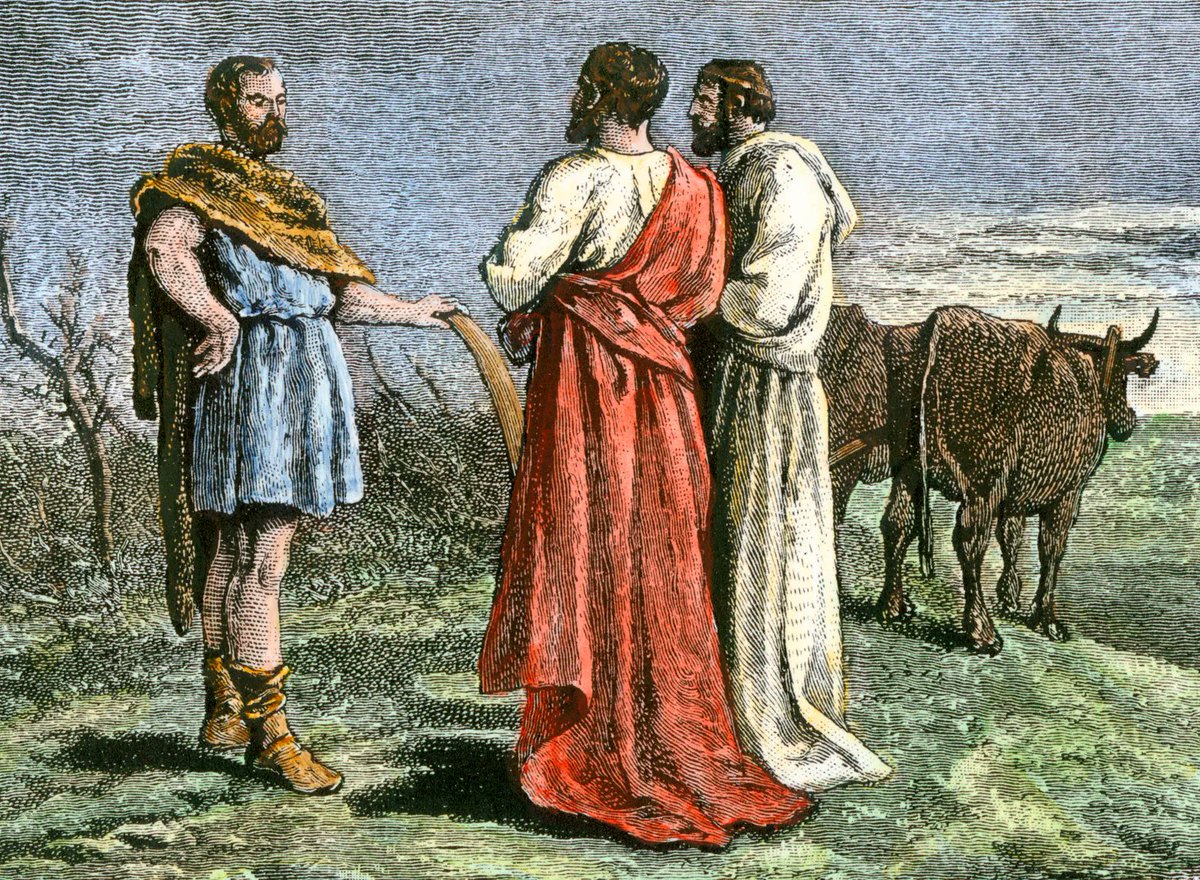
George Washington is often called the American Cincinnatus
Cincinnatus was a Roman farmer who twice accepted dictatorial power to save his republic in moments of crisis and then immediately relinquished it to return to his plow.
Just as Washington voluntarily returned to his farm after leading the Revolutionary War to victory, refusing any chance at kingship and only serving two terms as President.
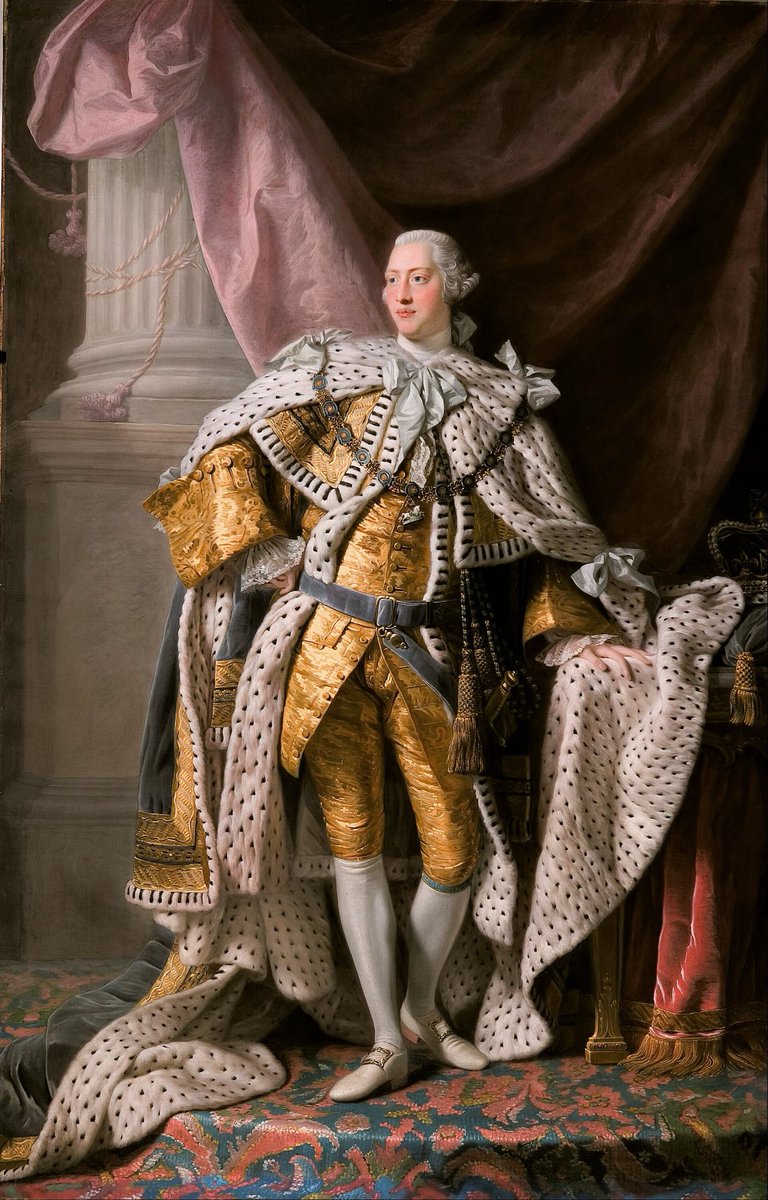
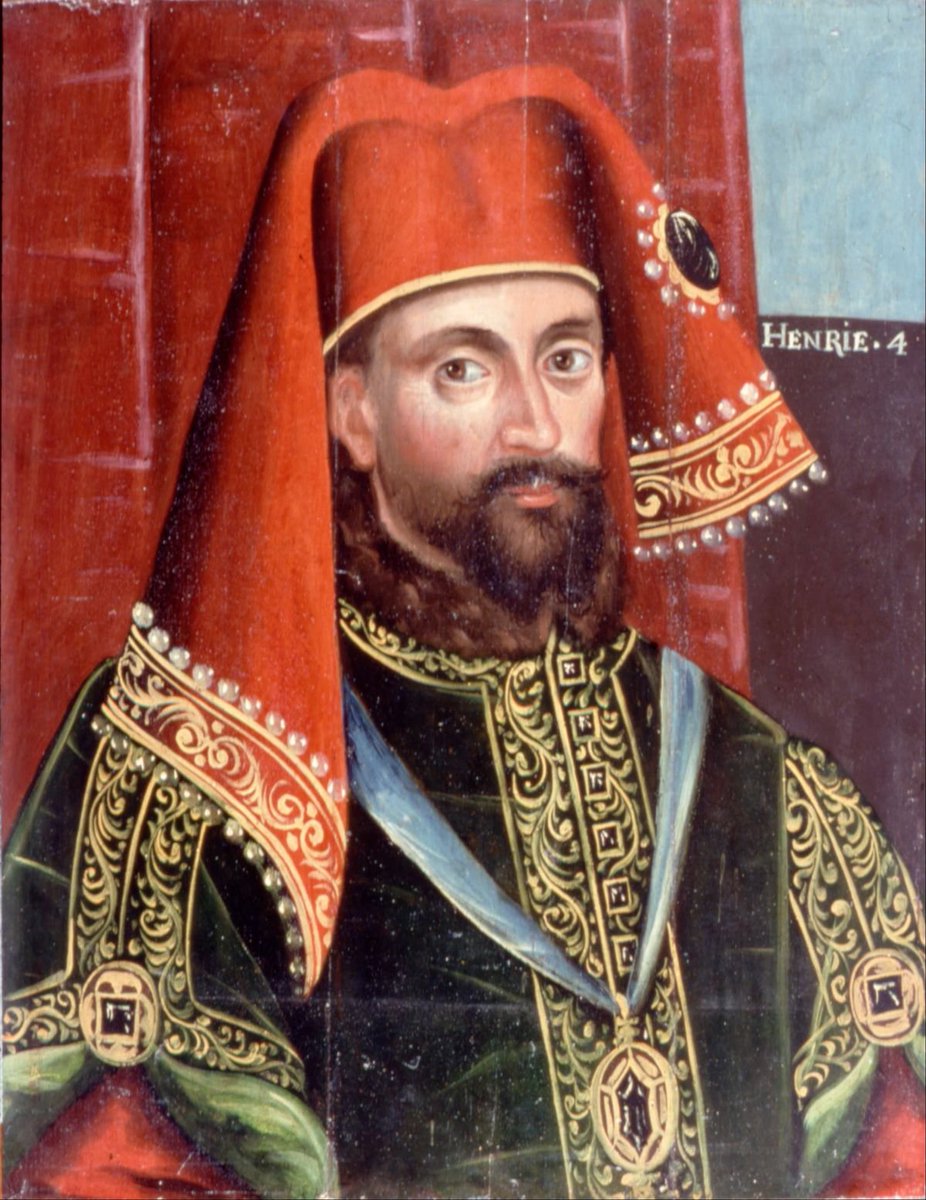
Henry IV (reigned 1367–1413) was actually the first English king whose mother tongue was English.
All previous monarchs since 1066 spoke French as their first language.
Just hit 1,000 followers here on X.
Thank you to every single one of you for following along as I share America's true heritage, history, and classic art. I’m so grateful for the growing community of Patriots and proud history lovers who value one nation and one posterity. Here's to the next 1,000 and beyond.
Last year, troopers pulled over 2,540 people for driving in the passing lane of a 65 mph roadway when they weren’t passing or turning left. Keep the passing lane open. #KnowYourLane
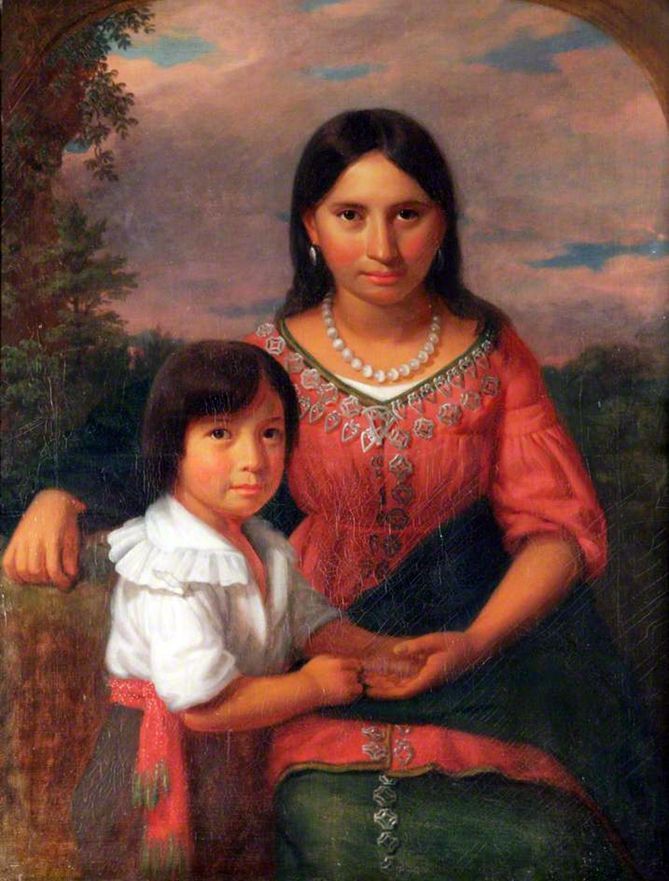
Edith Bolling Galt Wilson, one of Thomas Rolfe's descendants, effectively ran the United States government for nearly two years. When Woodrow Wilson suffered a severe stroke in October 1919, she controlled access to the president, filtered all communications, and made decisions about which matters required his attention, a role she later described as a "stewardship" but which critics called a de facto presidency.
The great-great-granddaughter of Pocahontas became arguably the most powerful unelected woman in American history, and almost nobody knew it was happening.
Thomas Rolfe (1615–c.1680) was the only child of Pocahontas and English settler John Rolfe, making him a link between the Powhatan people and the early Virginia colony. Born at his family's plantation in Virginia, he traveled to England as an infant with his parents, but his mother died there in 1617. Too ill to return to Virginia, Thomas was left in the care of relatives and did not reunite with his father again.
He grew up in England under the guardianship of his uncle, Henry Rolfe, and returned to Virginia as a young man around 1635. Once back in the colony, he inherited land from his father and step-grandfather and began establishing himself as both a planter and a man connected to his mother’s Native lineage. In 1641, he even asked permission to visit his Powhatan relatives, including his “aunt and kinsman Opecancanough.”
Thomas later married Jane Poythress, and they had one daughter, Jane Rolfe, whose descendants include notable Americans such as Edith Bolling Galt Wilson and actor Edward Norton. His last known record appears in 1658, and he likely died before 1681. Today, an estimated 100,000 people may descend from him, reflecting his unique place in early American history.
Learn more: bit.ly/4pxGafa