
shivangi

589 posts

shivangi banner
shivangi

shivangi

@th3_lazy_cod3r

ex-SDE 2 @letsblinkit (formerly Grofers) | Solving new problems every day Other places you can follow me : https://t.co/LNQrfZTnP8

Bengaluru, India Katılım Kasım 2018
1.5K Takip Edilen152 Takipçiler
shivangi retweetledi
Abhishek Singh
Abhishek Singh@0xlelouch_·
CTO: We lost our strongest backend engineer today. Founder: The one handling infra and outages? CTO: Yes. Founder: Did a bigger company hire him? CTO: No. Founder: Then why quit? CTO: He said he was exhausted. Founder: From the workload? CTO: Not exactly. From watching the same database bottleneck, same queue lag, same deployment mistakes come back every month. Founder: That happens in fast moving teams. CTO: He agreed. What he could not accept was that every fix was temporary because nobody wanted to slow down and clean the system properly. Founder: We had deadlines. CTO: He had standards. Founder: So he left because the work was hard? CTO: No. He left because he was not doing engineering anymore. He was just containing damage. The best engineers do not hate hard problems. They hate preventable problems that management keeps normalizing.
Javarevisited@javarevisited

Manager: We lost our best engineer today. CEO: The one leading payments? Manager: Yes. CEO: Did another company offer more money? Manager: No. CEO: Then why leave? Manager: He said he was tired of fixing the same production issues every week. CEO: That’s part of the job. Manager: He didn’t mind fixing issues. He minded that nobody wanted to fix the root cause. CEO: We prioritized speed. Manager: He wanted quality. CEO: So he left over that? Manager: He left because he felt like a firefighter, not an engineer. Good engineers don’t just want to solve problems. They want to eliminate them.

English

63
339
3.7K
819K
shivangi retweetledi
Nancy Chauhan
Nancy Chauhan@_nancychauhan·
Seeing some of my brilliant friends fail FAANG interviews makes me believe that rigid processes and fixed rules can sometimes overlook great talent.
English
1
1
10
568
shivangi
shivangi@th3_lazy_cod3r·
@Siddhant_K_code These topics are the need of the hour for enterprises adopting AI
English
0
0
2
53
shivangi retweetledi
Siddhant Khare
Siddhant Khare@Siddhant_K_code·
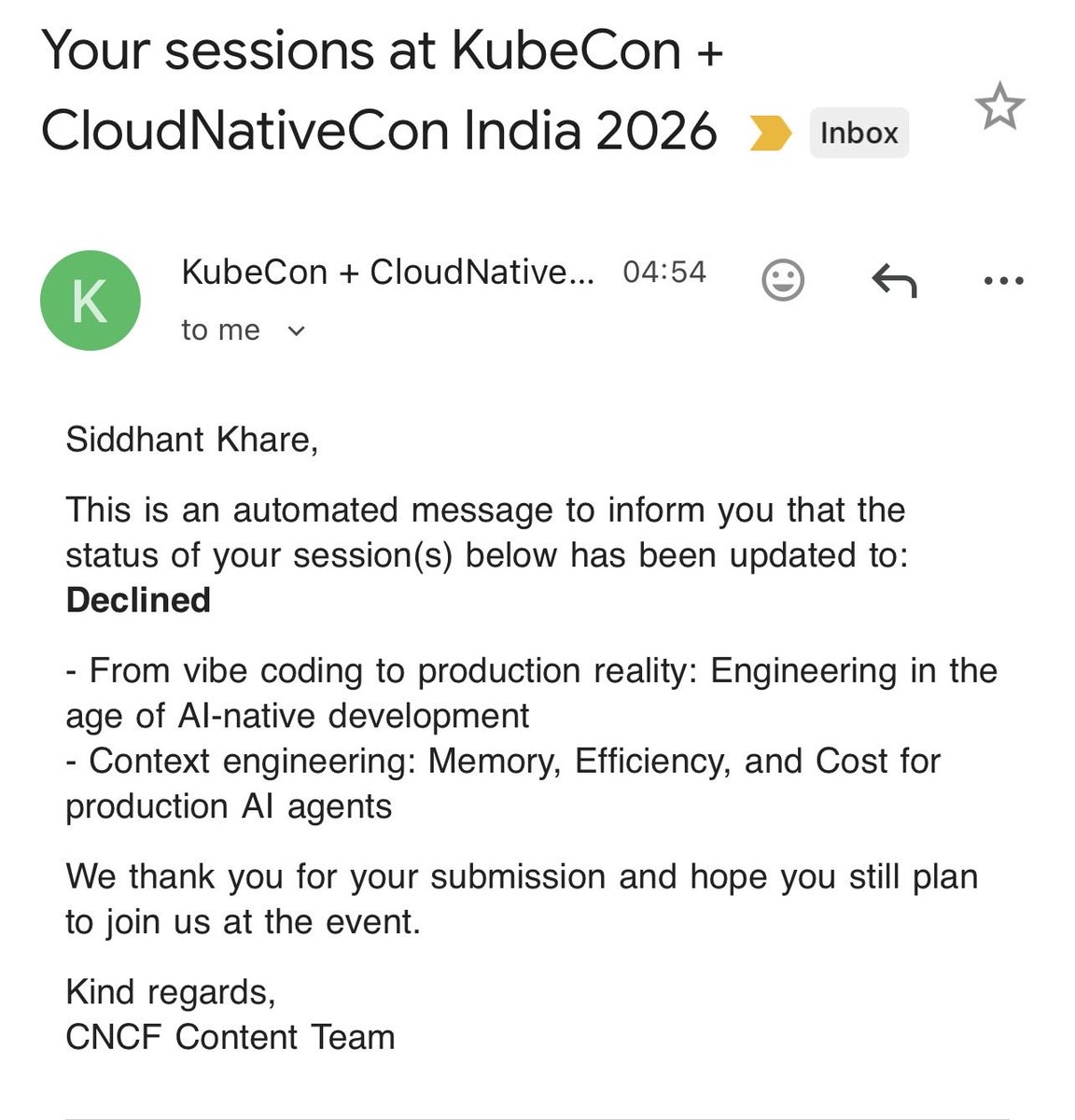
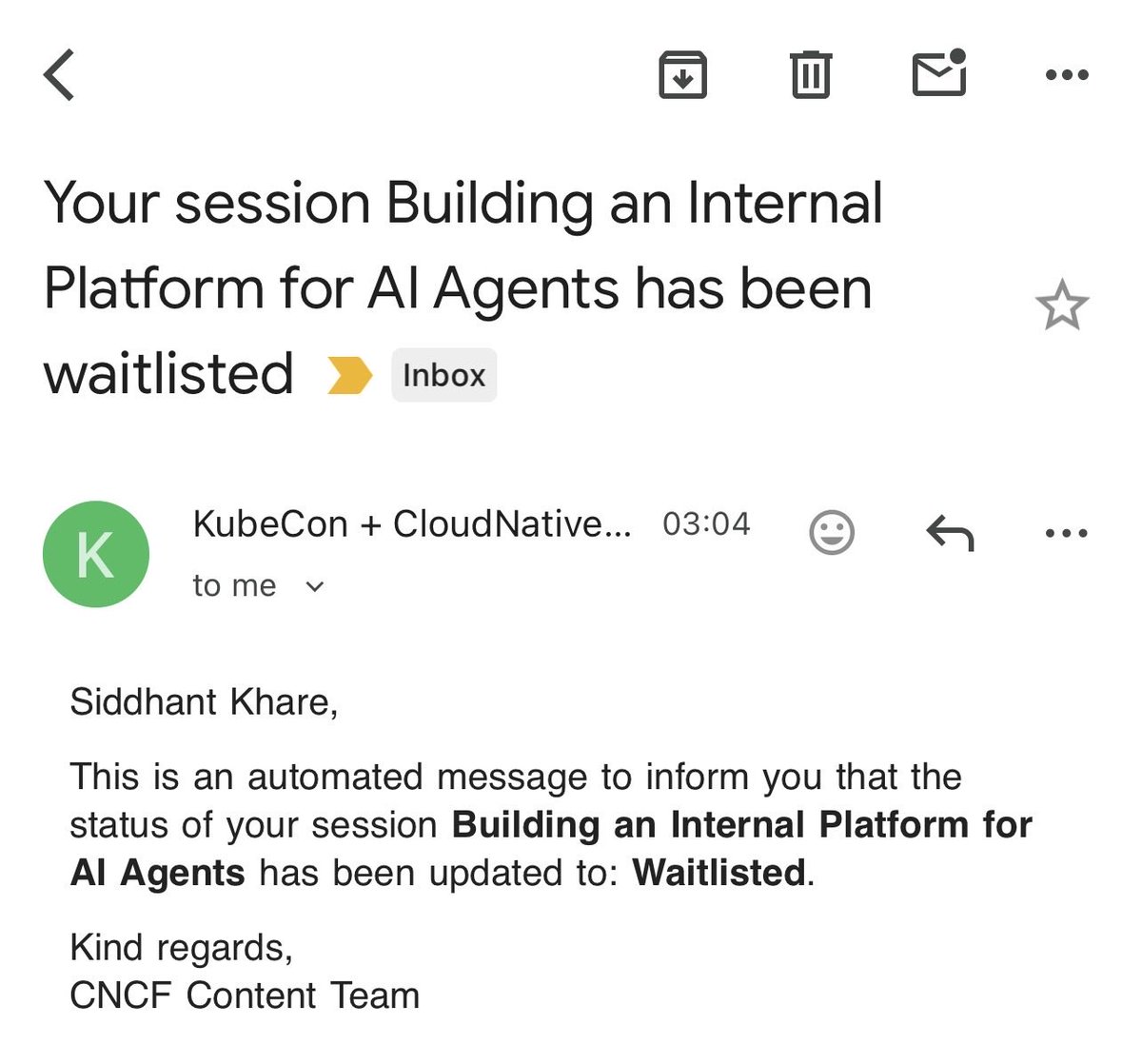
KubeCon India 2026 Committee thinks these topics are not worthy of a stage. I'm happy to give a talk on any of these at an APAC / EU conference. If not, I will publish a YT Video or something in a blog form. IMO, it is important for enterprises. Pls correct me if I am wrong
Siddhant Khare tweet mediaSiddhant Khare tweet media
English
10
3
33
3.6K
shivangi
shivangi@th3_lazy_cod3r·
@Siddhant_K_code Very useful and insightful, the amount of tokens and resources that gets wasted for even smallest tasks not to mention time. Persisting context becomes very crucial at enterprise level
English
0
1
3
256
shivangi retweetledi
Siddhant Khare
Siddhant Khare@Siddhant_K_code·
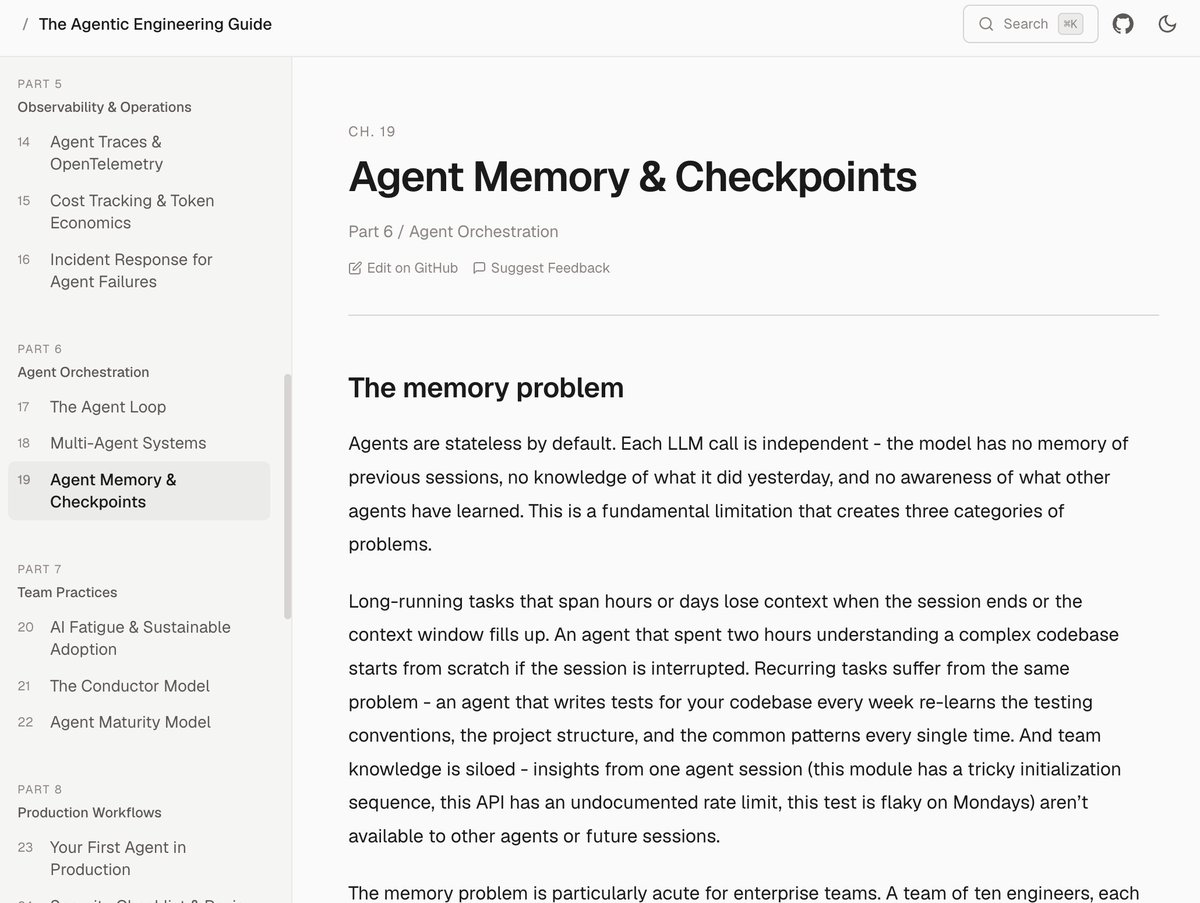
This might be interesting for teams running agents on the same codebase every day. Most agents start every session from scratch. No memory of yesterday. No knowledge of what other agents learned. No awareness of past mistakes. A team of ten engineers running five agent sessions a day generates fifty sessions of institutional knowledge daily. And throws all of it away. Three types of memory that change this: 1. Session memory. The conversation history within a single run. Simple, but it grows with every step. By turn 20, you're sending 200K tokens per turn. The cost grows quadratically, not linearly. 2. Persistent memory. Survives across sessions. When an agent finishes, it saves what it did, what it learned, what went wrong. Next time, it loads those summaries instead of rediscovering everything. The simplest version is an AGENTS.md file. The sophisticated version uses a vector database. 3. Shared memory. One agent's knowledge available to others. The code review agent discovers a tricky initialization sequence. The code generation agent working on the same module should know about it. Without shared memory, every agent is a new hire on their first day. The most valuable form: learning from mistakes. When a human corrects agent output, that correction is signal. Store it. Retrieve it next time. An agent that repeats the same mistake twice is a tool problem. An agent that repeats it once is a memory problem. I wrote about this in Chapter 19 of the Agentic Engineering Guide
Siddhant Khare tweet media
English
11
18
119
7K
shivangi retweetledi
Akanksha Priyadarshini
Akanksha Priyadarshini@itsAkankxa·
The part of being the strong one no one warns you about. When you finally admit you’re barely holding it together, people still say, “You’ve got this.” Not because you do. Because they need you to.
English
0
2
3
47
shivangi retweetledi
Nancy Chauhan
Nancy Chauhan@_nancychauhan·
🤯 I subscribed to 30+ AI newsletters and still missed what mattered for my work. So I built a side project - skillfeed.dev - a daily brief that's different for every reader. 🚀
English
3
3
5
441
Aseem Shrey
Aseem Shrey@AseemShrey·
I made Claude and Codex argue until my code plan was actually good. ⚡️ Built a Claude Code skill where Codex reviews Claude's plans. They go back-and-forth until Codex approves. 🎯 3 rounds. 14 issues caught. Zero manual review. Skill & Blog : aseemshrey.in/blog/claude-co…
English
54
75
1.3K
103.9K
Nancy Chauhan
Nancy Chauhan@_nancychauhan·
Keep building. Keep showing up 💪 Grateful to be in the top 3% of most active speakers in 2025 🙏 Thankful for all my amazing co-speakers, I learned so much from each of you.
Nancy Chauhan tweet media
English
4
0
12
636
shivangi retweetledi
Nancy Chauhan
Nancy Chauhan@_nancychauhan·
Hey folks! Is anyone in Bangalore willing to foster two cats for few months ? Please let me know or DM me. 💛🐾
English
0
5
9
1.2K
shivangi retweetledi
Nancy Chauhan
Nancy Chauhan@_nancychauhan·
What's the easiest way to hack into your system? 🤔 That's the first question attackers ask. And it's exactly what security teams try to answer with attack trees. I was experimenting with threat modeling this weekend and ended up building a tool 🛠️
English
3
1
15
768
shivangi retweetledi
Siddhant Khare
Siddhant Khare@Siddhant_K_code·
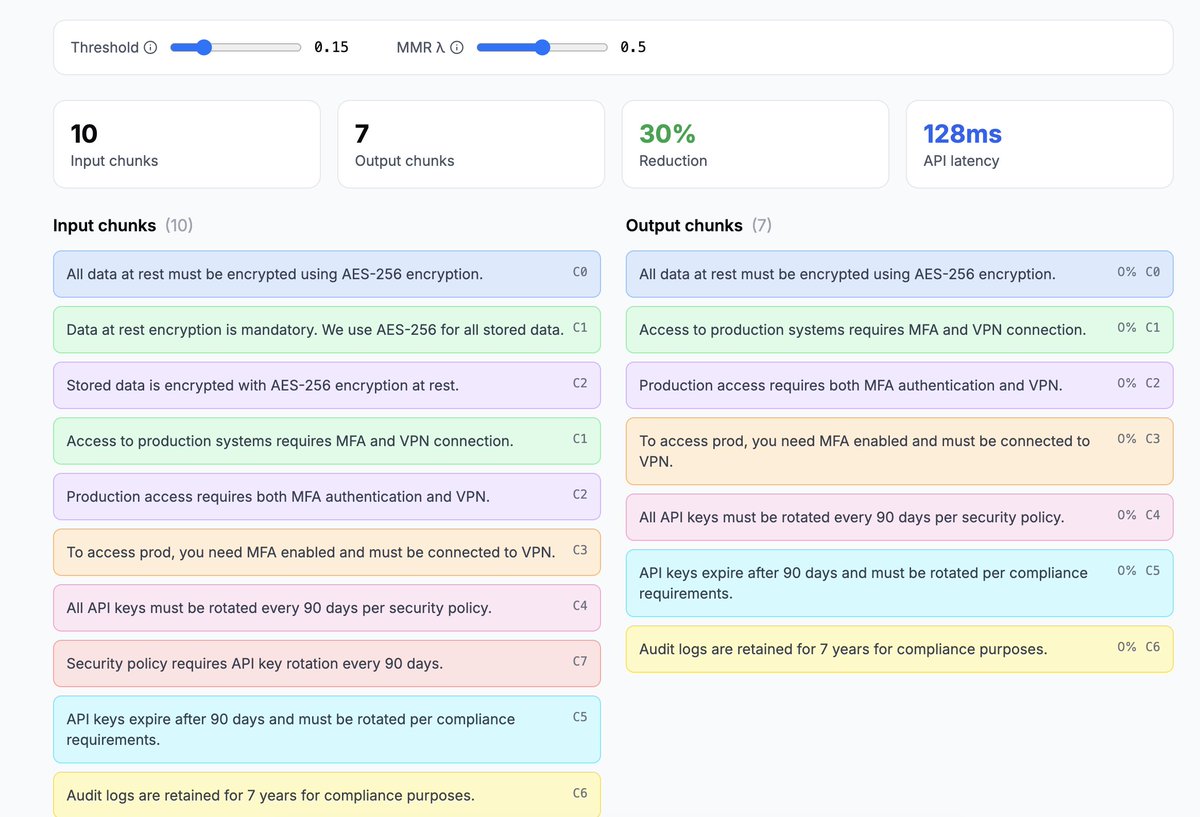
Distill playground is live - Paste your own chunks or use sample data - Real API with OpenAI embeddings - See clustering + deduplication in action Running on @render free tier - first load wakes the server (~30s), then ~500ms-2s incl. embedding gen. distill.siddhantkhare.com/playground
Siddhant Khare tweet media
English
0
1
7
381
shivangi retweetledi
Akanksha Priyadarshini
Akanksha Priyadarshini@itsAkankxa·
In dysfunctional families, the one who names the unhealthy patterns becomes the “difficult” one. Why? Because they disrupt long-standing generational trauma. So if you’re the blacksheep in your family, I know how much it hurts to be rejected for standing up for yourself and your values. But you’re not the problem. Hold your ground. You’re the cycle-breaker.
English
0
2
3
84
shivangi retweetledi
Nancy Chauhan
Nancy Chauhan@_nancychauhan·
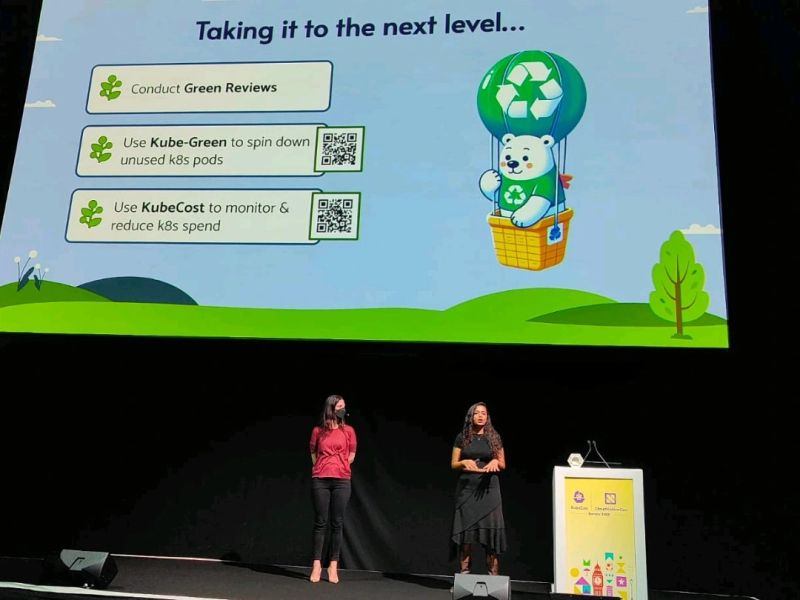
2025 Wrap! 🎓 Graduated from @Cornell (Master’s program) 🎙️Gave 10+ talks across conferences, meetups, and online events (London, US, virtual) on AI, Observability, Sustainability, and MCPs!
Nancy Chauhan tweet mediaNancy Chauhan tweet mediaNancy Chauhan tweet mediaNancy Chauhan tweet media
English
5
1
46
2.3K